Reliable wireless connectivity is a critical part of modern system design. Engineers need solutions that reach beyond the limitations of traditional Wi-Fi while maintaining the flexibility of IP networking. Whether monitoring remote equipment, connecting sensors across large industrial sites or extending wireless coverage into difficult environments, long-range communication can simplify deployment and reduce infrastructure costs.
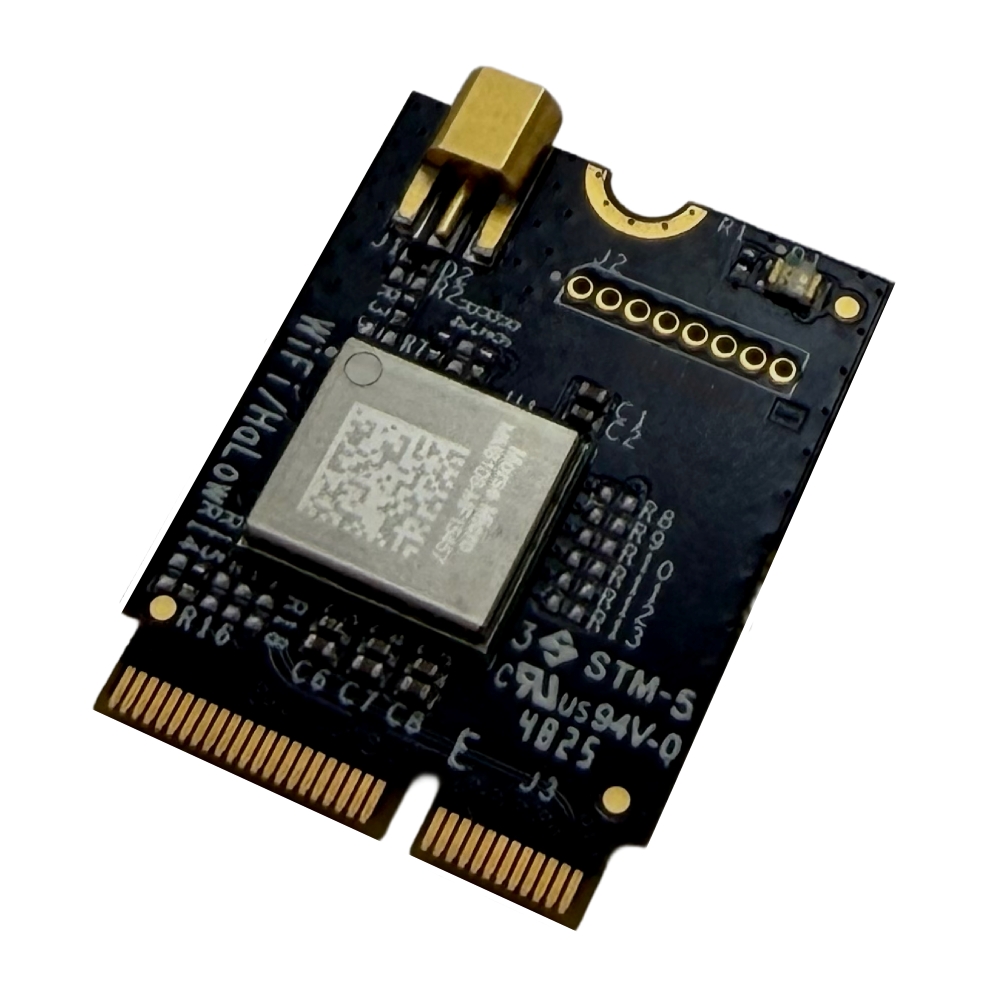
The new Gateworks GW16170 High-Power Wi-Fi HaLow M.2 Card was designed to meet these challenges for applications in North America. Powered by the Morse Micro MM8108-M20 chipset, the GW16170 combines the long-range advantages of IEEE 802.11ah Wi-Fi HaLow with the rugged reliability expected from Gateworks embedded solutions. The result is a compact wireless module that helps developers build scalable Industrial IoT networks with greater range, improved penetration, and seamless IP connectivity.
Traditional Wi-Fi performs well in many applications, but coverage can become a challenge as devices spread across warehouses, manufacturing facilities, agricultural operations, transportation infrastructure and utility installations. Higher-frequency wireless signals naturally lose strength over longer distances and struggle to penetrate walls, machinery and other physical obstacles.
Wi-Fi HaLow addresses these limitations by operating in the license-exempt 902–928 MHz frequency band. Lower-frequency signals travel farther and penetrate common obstacles more effectively than conventional Wi-Fi frequencies. This enables broader wireless coverage while preserving the familiar benefits of standards-based Wi-Fi networking.
Unlike many proprietary long-range wireless technologies, Wi-Fi HaLow supports native IP networking. Developers can leverage existing networking tools, simplify system integration, and build secure wireless architectures using familiar software environments.
The GW16170 is a high-power M.2 2230 E-Key Wi-Fi HaLow radio built around the Morse Micro MM8108-M20 chipset. The module delivers up to 28.5 dBm transmit power and supports theoretical data rates up to 43.3 Mbps, making it an excellent choice for industrial applications that require both long-range communication and meaningful data throughput.
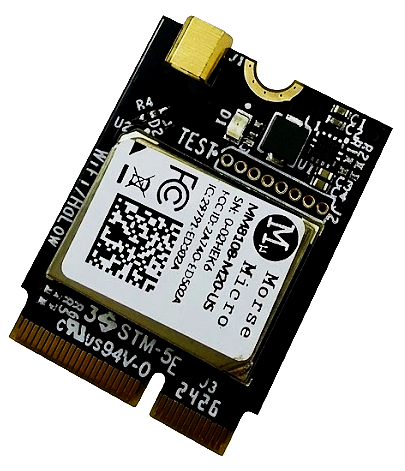
Key features include:
These capabilities allow developers to extend wireless coverage while maintaining a compact hardware footprint suitable for embedded systems.
Industrial environments demand wireless technologies that remain reliable over long distances and in challenging conditions. The GW16170 helps engineers connect equipment where traditional Wi-Fi infrastructure may be difficult or expensive to deploy.
Typical applications include:
Many of these applications require communication with devices located hundreds of meters or even kilometers apart. Wi-Fi HaLow helps bridge these distances while supporting reliable wireless communication using familiar IP protocols.
At the heart of the GW16170 is the Morse Micro MM8108-M20, a second-generation Wi-Fi HaLow solution engineered specifically for next-generation IoT connectivity.
The MM8108 supports channel bandwidths from 1 MHz to 8 MHz and delivers improved performance while maintaining the power efficiency that makes Wi-Fi HaLow attractive for Industrial IoT deployments. It also supports dense device deployments, allowing more connected endpoints to operate across a single wireless infrastructure.
This combination of long range, low power operation, and scalable connectivity makes Wi-Fi HaLow well suited for applications where reliability and network coverage are equally important.
The GW16170 integrates directly with Gateworks Single Board Computers through its USB 2.0 M.2 interface. For Venice platforms without an onboard M.2 E-Key connector, developers can utilize the GW16151 adapter to add compatibility.
Gateworks also provides software support for the MM8108 within its Ubuntu Linux and OpenWrt Board Support Packages. Developers can begin evaluating Wi-Fi HaLow quickly while leveraging the same software ecosystem used across Gateworks embedded computing platforms.
This tight hardware and software integration helps reduce development time and allows engineering teams to focus on application development rather than wireless integration.
Industrial wireless hardware must perform consistently under demanding operating conditions. The GW16170 is designed with the same industrial focus found throughout the Gateworks product portfolio.
Its industrial temperature rating of -40°C to +85°C allows deployment in outdoor enclosures, transportation systems, industrial equipment, energy infrastructure, and other environments where commercial wireless hardware may not be suitable.
Combined with its compact M.2 2230 form factor, the GW16170 provides a flexible solution for space-constrained embedded designs without compromising wireless performance.
As Industrial IoT applications continue to expand, engineers need wireless technologies that deliver greater range, simpler integration and reliable performance in demanding environments. The GW16170 brings these capabilities together in a compact, industrial-grade module designed specifically for embedded systems.
By combining Gateworks’ rugged embedded computing expertise with Morse Micro’s advanced Wi-Fi HaLow technology, the GW16170 enables developers to extend network coverage, simplify wireless deployments, and build scalable Industrial IoT solutions with confidence.
Whether connecting remote sensors across a manufacturing campus, monitoring utility infrastructure, enabling smart agriculture, or deploying next-generation edge computing systems, the GW16170 provides the long-range wireless foundation needed to support tomorrow’s connected industrial applications.
Ready to add long-range Wi-Fi HaLow connectivity to your next embedded design?
Visit the GW16170 Gateworks product page to explore specifications, software support, and compatibility with Gateworks Single Board Computers. Learn more about Wi-Fi HaLow technology by visiting Morse Micro.
Buy evaluation units through DigiKey HERE. Also available through Braemac Americas, Avnet and directly through Gateworks.
Adds Ruggedized SBC Engineering for Defense, Aerospace and Industrial customers to Ezurio’s growing portfolio
Ezurio, a leader in wireless connectivity and embedded compute solutions, today announced the acquisition of Gateworks Corporation, a California-based designer and manufacturer of industrial single board computers (SBCs) engineered for rugged, remote, and regulated environments.
Headquartered in San Luis Obispo, California, Gateworks holds AS9100D and ISO 9001 certifications, operates a U.S.-based SMT manufacturing facility, and brings an established customer base across defense, aerospace, railway, smart energy, and industrial automation. Gateworks’ SBCs are powered by NXP processors, including the latest i.MX 95-based Catalina family, with options for AI acceleration, Wi-Fi HaLow, precision GPS, and satellite connectivity.
“We have long served high-criticality markets such as healthcare infrastructure, with defense platforms and avionics systems representing new areas for growth”, said Mark Pugerude, CEO of Ezurio. “These are markets where reputation matters as much as performance, and where customers need a partner who can commit to the full lifecycle of a program. Gateworks gives us additional engineering depth and credentials to compete in those environments. For customers in defense, aerospace, and healthcare who require a long lifecycle, ‘Made in America’ solution, that partner is Ezurio.”
The Gateworks acquisition reflects Ezurio’s ongoing strategy to grow through targeted acquisitions that expand its embedded compute portfolio and open new high-value markets. Ezurio has built a strong foundation as a U.S.-based designer and manufacturer of standard SMARC and OSM system-on-modules and custom SBC solutions on NXP, TI, and MediaTek platforms. Gateworks extends upon this foundation with a distinct, complementary capability: AS9100D-certified SBC engineering for the most demanding environments on earth, built in partnership with customers to meet their unique specifications.
“We built Gateworks on a simple belief that American engineering, held to the highest standards of quality and long-term commitment produces better outcomes for customers in the markets that matter most,” said Gordon Edmonds, President, Gateworks Corporation. “That philosophy is exactly what drew us to Ezurio. Together, we can offer customers a depth and breadth of domestic embedded compute capabilities that neither of us could deliver alone.”
Ezurio’s certified RF module portfolio, spanning Wi-Fi, Bluetooth LE and multi-protocol connectivity, is now directly available to Gateworks’ customers as a fully supported connectivity solution. As “Madein-America” requirements and supply chain resilience become decisive factors in program awards, Ezurio stands uniquely positioned as a domestic partner where origin, regulatory compliance, and long-term support matter as much as technical performanc
The future of long-range wireless connectivity was on full display at Wi-Fi World Congress 2026, where industry leaders, innovators, and ecosystem partners gathered to discuss the next phase of connected systems. One message stood out clearly: Wi-Fi HaLow has moved beyond early curiosity and into real-world deployment momentum.
Across industrial automation, utilities, transportation, security, and smart infrastructure, organizations are adopting Wi-Fi HaLow to solve connectivity challenges that traditional wireless technologies often struggle to address. With long range, lower power consumption, strong signal penetration, and native IP networking, Wi-Fi HaLow is proving to be a practical solution for modern Industrial IoT environments.

For Gateworks, the event was especially meaningful as Kelly Peralta took the stage to present “Wi-Fi HaLow for the Long Run.” Her presentation used a marathon theme to illustrate the persistence, engineering discipline, and long-term commitment required to bring transformative wireless technologies to market.
Kelly highlighted that many companies entered the market early, but few stayed committed through technical hurdles, certification requirements, and the patience required for industrial adoption. Gateworks remained focused on delivering production-ready embedded platforms that help customers move from evaluation to deployment faster.
Built on the IEEE 802.11ah standard, Wi-Fi HaLow was designed for environments where conventional Wi-Fi can fall short, including large industrial campuses, remote infrastructure sites, utility networks, warehouses, and facilities with dense walls or interference challenges.
Wi-Fi HaLow is no longer theoretical. It is now being deployed in markets where range, reliability and scalability matter most.
Examples discussed at the event included:
These applications often require fewer access points, lower infrastructure costs, and the ability to connect many endpoints across wide coverage areas. Wi-Fi HaLow helps meet these demands while preserving simple IP-native integration.
Industry forecasts expect annual Wi-Fi HaLow-enabled device shipments to exceed 100 million units by 2029, reinforcing the momentum now building across multiple vertical markets.

A major contributor to this growth is Gateworks partner Morse Micro. Their MM8108 chipset continues to advance Wi-Fi HaLow performance and efficiency for next-generation devices.
Key advantages of the MM8108 include:
Gateworks integrates this technology into the GW16167 M.2 module, giving OEM customers a production-ready path to deploy Wi-Fi HaLow across Gateworks Venice, VeniceFLEX, and Catalina single board computers.
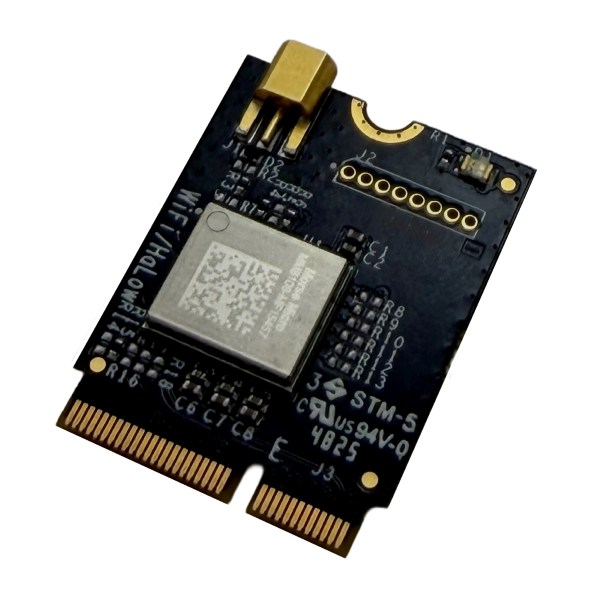
Early deployments continue to validate the promise of Wi-Fi HaLow in demanding environments.
“The reliability of the HaLow network under extremely demanding conditions exceeded our wildest expectations—we have not been able to break it. We evaluated multiple HaLow technology partners, and it is clear that Gateworks was and remains the best choice for our requirements. Gateworks has exceeded our expectations across the board; it is rare to find a partner that delivers both top-tier technology and a genuine commitment to our success, but Gateworks does exactly that.”
Scott Carter, Chief R&D Engineer, Gatekeeper Systems
“Many conventional wireless technologies struggle to simultaneously deliver the long-range coverage, device density, and bandwidth efficiency required in these environments. The IEEE 802.11ah Wi-Fi HaLow platform from Morse Micro uniquely addresses this gap by providing sub-GHz connectivity optimized for long-range, low-power, and large-scale IoT deployments.
Combined with the robust embedded computing platforms and support from Gateworks, this solution enables scalable communications across large solar sites while maintaining system simplicity and cost efficiency. We see this technology partnership as a key enabler in advancing the next generation of intelligent, distributed energy infrastructure.”
Shreyas Kukanni, Senior Director, Engineering & Technology, Gigagrid
In the applications I’ve deployed thus far the HaLow hardware and software have performed far beyond what I had originally hoped for. HaLow is a remarkably useful and versatile specification, and fits our applications like a glove.
Curtis Johnson, Chief R&D Engineer, Southern US Rail Company
By embedding Gateworks’ cutting-edge Wi-Fi HaLow technology, we have effectively erased the boundaries of traditional wireless, sparking a revolution in long-range, IP-native connectivity. By harnessing unparalleled signal penetration, we maintain operational continuity in the shadows where traditional systems simply go dark.
Gateworks sub-GHz powerhouse serves as the core backhaul for our IP Mesh MANET radio, where HaLow’s ability to pierce through concrete, steel, and dense foliage meets our high-performance architecture.
While our high-powered competition (consuming 2000mW to over 4000mW) fails at non-line-of-sight ranges of less than half a kilometer, we achieve that same performance on our lowest transmit power setting of only 63mW while also maintaining a stable HD video steam. This ensures ultra-low power consumption and a minimal RF footprint for low-detection operations.
Gateworks represents more than an incremental upgrade; its elite engineering at its finest; a definitive, unbreakable, and discrete solution for today’s most demanding mission-critical environments.
Serafin, Owner/Engineer, Off Grid Solutions
Wi-Fi HaLow momentum is no longer just a forecast. It is now visible in shipping products, active deployments and growing ecosystem support.
Gateworks remains committed to helping customers bring rugged, production-ready Wi-Fi HaLow systems to market with trusted embedded computing platforms, Linux support and long lifecycle availability.
As the market continues to scale, Gateworks is proud to be in it for the long run.

Outdoor autonomous systems require more than just accurate positioning, especially in mission-critical environments. In UAVs, defense applications and remote infrastructure systems, GNSS must continue operating under interference, degraded signals and dynamic conditions, while providing high data confidence.
The Septentrio mosaic-X5 GNSS M.2 receiver module is designed for this class of problem. It combines multi-frequency GNSS tracking with interference mitigation, signal authentication and integrity monitoring. When integrated with Gateworks industrial single board computers, it enables a modular architecture for high-integrity positioning at the edge.
The mosaic-X5 is a multi-band, multi-constellation receiver tracking GPS, Galileo, GLONASS, BeiDou and NavIC across multiple frequency bands. Multi-frequency operation improves positioning robustness and reduces susceptibility to ionospheric errors and signal degradation. It supports RTK positioning and update rates up to 100 Hz, allowing it to maintain low-latency tracking for dynamic systems such as UAVs and mobile platforms. These characteristics are essential for maintaining control fidelity in real-world environments.
For defense and mission-critical systems, the key question is not just “how accurate is the position?” but “can the system trust it?”
The mosaic-X5 integrates Septentrio’s AIM+ (Advanced Interference Mitigation) technology, which actively detects and suppresses interference across both narrowband and wideband signals. This includes resilience against pulsed and complex jamming scenarios.
It also incorporates:
These capabilities position the mosaic-X5 within the broader concept of assured PNT, maintaining reliable and trustworthy positioning in contested environments.
High-precision positioning depends on correction data. The mosaic-X5 supports standard methods such as NTRIP as well as satellite-delivered corrections.
Services like u-blox PointPerfect GNSS correction service provide PPP-RTK corrections over IP or L-band, enabling centimeter-level positioning without requiring local base stations. This model simplifies deployment for distributed systems and mobile fleets.
For example:
This flexibility allows system designers to align correction strategies with operational constraints.
Unmanned and defense systems operate in environments where GNSS degradation is expected, not exceptional. Positioning systems must maintain accuracy, continuity and integrity under these conditions. The GW16160 Mosaic x5 M.2 is industrial grade and engineered to perform in -40°C to +85°C temperatures and extreme environments.
The mosaic-X5 supports:
It is also included in the Blue UAS Framework, a program led by the U.S. Department of Defense to identify trusted components for unmanned systems. This reflects both technical capability and supply chain trust, two critical requirements for defense deployments.
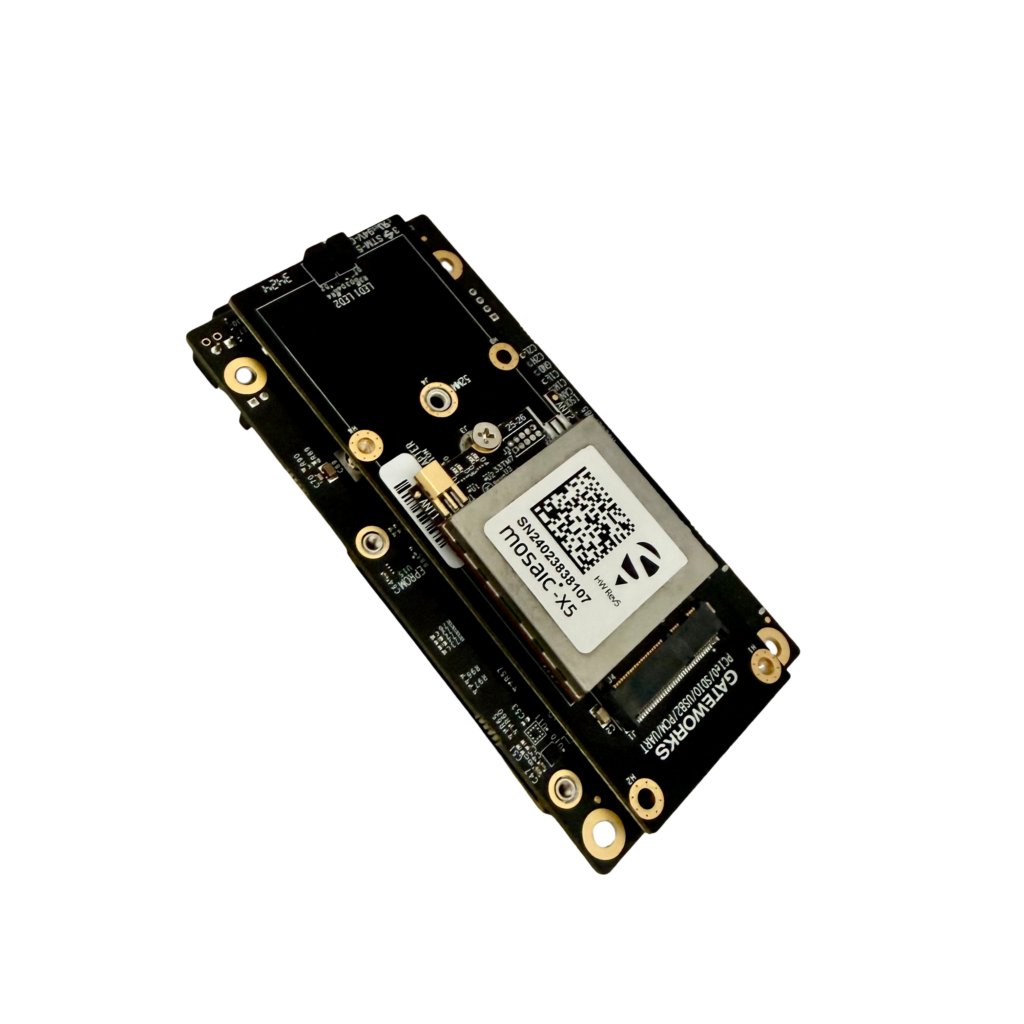
The Gateworks GW16160 GNSS M.2 module integrates the mosaic-X5 into a compact, deployable form factor. It provides a plug-and-play GNSS solution for Gateworks SBCs using a standard M.2 interface.
This reduces:
GW16160 pictured with the GW8100 VeniceFLEX
The GW16160 is for use in autonomous systems, robotics, drones and outdoor asset tracking, where reliable GNSS is a foundational capability.
Gateworks platforms provide the compute and connectivity layer:
The NXP i.MX95 application processor enables AI-accelerated processing, advanced security and real-time system integration, supporting GNSS as one component within a broader autonomy stack.
For defense and infrastructure deployments, hardware selection includes more than performance; it includes traceability, security and lifecycle control.
We design and manufacture all of our products in the United States, with a vertically integrated production process that emphasizes:
Gateworks products are assembled, tested and tracked within a single facility, with serialized components and real-time process visibility. These factors support deployments where supply chain transparency and long-term support are required. https://www.gateworks.com/company/manufacturing/
In practice, GNSS is one part of a larger system:
This modular architecture allows systems to scale across deployment environments while maintaining positioning performance and system flexibility.
For mission-critical outdoor systems, GNSS must deliver more than accuracy; it must deliver resilience, integrity and trust.
The mosaic-X5 addresses these requirements through multi-frequency tracking, interference mitigation, anti-spoofing and integrity monitoring. Gateworks single board computers combined with the GW16160 module allow for a practical path to deploying high-integrity positioning within embedded edge systems.
This approach aligns with the needs of modern autonomous and defense systems, where positioning is not just an input but a trusted foundation for decision-making.
SAN LUIS OBISPO, Calif., March 10, 2026
Gateworks Corporation, a leader in industrial embedded technology, announced the expansion of its Catalina Single Board Computer (SBC) family. Engineered around the high-performance NXP® Semiconductors i.MX 95 applications processor, the Catalina platform is designed to bring transformative Edge AI, machine vision and autonomous capabilities to the harshest industrial environments.
NXP will feature the i.MX 95 processor with live application demonstrations at Embedded World, March 10-12th in Nuremberg, Germany.
The Catalina SBC is optimized for three primary pillars of modern industrial technology:
The Catalina series marks a deepening of the collaboration between Gateworks and NXP. As an NXP® Semiconductors Gold Partner, Gateworks ensures seamless integration of the NXP i.MX 95 SoC’s advanced features, including the integrated eIQ® Neutron NPU and ISP.
At NXP, we focus on enabling secure, scalable edge intelligence across industrial and embedded markets. Gateworks brings proven engineering expertise, high-quality USA manufacturing, and a ruggedized platform approach to the i.MX 95 applications processor. Together, we will continue to empower customers to deploy sophisticated AI applications with confidence and speed.
Robert Thompson, Director, Smart Connected Edge Ecosystem, NXP Semiconductors
The Catalina family introduces a “no-compromise” architecture for high-bandwidth industrial applications. Available in the compact GW9200 (90 x 100mm) and GW9400 (170 x 100mm), the platform combines extreme networking with field-proven reliability:
Recognizing the rapid evolution of AI models, Gateworks is designing modular expansion paths based on NXP’s AI technology. This allows customers to scale AI performance as requirements grow without redesigning their base compute architecture.
Catalina provides the ‘industrial-grade’ backbone that edge AI and intelligent automation have been waiting for. By pairing NXP’s cutting-edge silicon and AI acceleration with our US-based manufacturing and design expertise, we are helping our customers deploy smarter, more resilient systems at scale.
Kelly Peralta, VP of Sales and Business Development, Gateworks Corporation
NXP will showcase application-driven demos focusing on industrial vision and robotics-ready architectures powered by the i.MX 95 SoC. Meet NXP at Embedded World, Booth 4A-222
Gateworks’ i.MX 95-based Development Kits and production quantities are available now through distribution and directly through Gateworks.
For more information or to get started with an evaluation, view the Catalina GW9200 Product Page.
We are excited to announce our next-generation Wi-Fi HaLow M.2 module built with the Morse Micro MM8108 chipset. The USA-made GW16167 delivers unmatched long-range connectivity, high throughput and wall penetration. These features significantly reduce infrastructure costs and enhance system reliability for global Industrial IoT and Edge AI deployments.
Engineers can integrate the GW16167 as a drop-in solution with any single board computer (SBC) featuring a standard M.2 socket. It operates plug-and-play with Gateworks’ SBCs based on NXP Semiconductors’ i.MX 8M Mini, 8M Plus and i.MX 95 processors. Together, these platforms create a powerful, scalable foundation for long-range wireless connectivity and edge computing for advanced industrial, autonomous and edge AI-driven systems.
The reliability of the HaLow network under extremely demanding conditions exceeded our wildest expectations—we have not been able to break it.
We evaluated multiple HaLow technology partners, and it is clear that Gateworks was and remains the best choice for our requirements. Gateworks has exceeded our expectations across the board; it is rare to find a partner that delivers both top-tier technology and a genuine commitment to our success, but Gateworks does exactly that.
Scott Carter, Chief R&D Engineer, Gatekeeper Systems
Demand for Wi-Fi HaLow has surged as industries seek to solve the challenge of IoT connectivity at scale. The Gateworks GW16167 is the first to address these needs while enabling truly global operation in the 850 to 950 MHz range. Operating in the sub-GHz band delivers superior range and wall and object penetration compared to standard 2.4/5 GHz Wi-Fi.
This eliminates costly issues such as interference, congestion and coverage gaps, often replacing expensive cellular or legacy proprietary systems. By extending range and reducing the density of required infrastructure, this technology dramatically reduces the Total Cost of Ownership (TCO) for large-scale deployments by minimizing the quantity of required Access Points and simplifying network architecture.
The GW16167 delivers data rates up to 43.3 Mbps, maintains exceptional power efficiency and guarantees uninterrupted data flow for mission-critical applications:
Our partnership with Morse Micro is critical to delivering a robust, complete solution to the industrial market. Together, we have accelerated the adoption of high-performance Wi-Fi HaLow across the globe. This joint effort directly solves real wireless challenges for customers who need performance, reliability, and enterprise-grade WPA3 security in their most complex industrial environments.
Kelly Peralta, Vice President of Sales & Business Development, Gateworks Corporation
The GW16167, powered by our MM8108 chipset, is a prime example of how Wi-Fi HaLow is maturing into a critical technology for the industrial sector. Gateworks is ensuring system integrators have access to a reliable, long-range solution for their most challenging robotics and edge deployments.
Michael De Nil, CEO and Cofounder, Morse Micro
Morse Micro showcased the GW16167 at CES 2026, highlighting the rise of Wi-Fi HaLow adoption across industrial markets. Gateworks will continue to expand its industrial embedded technology portfolio and work closely with Morse Micro to accelerate Wi-Fi HaLow adoption across industrial markets.
The GW16167 is available now through us and authorized channel partners such as DigiKey, Braemac, Farnell and RoundSolutions.