All-new LinkRunner 100G – professional-grade performance and precision tool network engineers need to troubleshoot and upgrade critical 100G fiber links.
COLORADO SPRINGS, Colo., Sept. 9, 2026 – NetAlly today announced LinkRunner® 100G, a handheld tester built to validate and troubleshoot high-speed fiber links increasingly moving beyond data centers and into enterprise networks. With the press of a single button, LinkRunner 100G AutoTest tells a network technician whether a 100G link is healthy — and if it isn’t, exactly what’s wrong. At $8,999 plus an AllyCare Pro subscription, LinkRunner 100G delivers the professional-grade diagnostics network engineers expect from a 100G tester at a price built for enterprise IT.
“AI is driving a networking super-cycle, pushing higher-speed networks beyond the data center and into the enterprise,” said Jeff O’Mara, CEO of NetAlly. “Until today, the tools to support those networks were expensive and highly specialized for big telco providers. Enterprise IT is different. We built LinkRunner 100G to give enterprise network professionals the tool they need to deploy, fix, and upgrade these networks.”
As 25G, 40G, 50G, and 100G networks become more common in enterprise environments, IT teams are being asked to manage fiber networks that operate differently from the lower-speed connections they have traditionally supported. Troubleshooting networks running on twisted-pair copper up to 10G has been eased by rich automation specified by IEEE standards for auto-negotiation of speed, power, and polarity. None of this automation exists for 100G networks, resulting in brittle, hard-coded configurations. Vendors further complicate the space with proprietary and complex transceivers which modify encodings and bit rates to gain advantages in fiber efficiency and bandwidth.
LinkRunner 100G is designed specifically for these new challenges faced by network support teams, allowing technicians to run a full diagnostic at the push of a button, with no specialized fiber training required.
With LinkRunner 100G, network pros solve problems on 100G networks with simple, automated steps:
Catch configuration mismatches that can leave a Quad Small Form-factor Pluggable 28 (QSFP28) port down even when nothing is actually broken. QSFP Insights identifies the transceiver, fiber type, speed and Forward Error Correction (FEC) settings, helping uncover mismatches that can be difficult to spot through the switch alone.
Pinpoint the problem to make the fix, rather than guessing. NetAlly’s EZ Wired app validates the link speed, FEC, interfaces, network services and application connectivity as well as transceiver operation. Since each parameter must be set by the user on the switches, knowing the exact set of parameters provides the network pro with the recipe for success.
See where the traffic is actually getting stuck, rather than assuming the problem is the link being tested. Path Analysis traces the network path from the tester to its destination, hop by hop, revealing when a slowdown originates elsewhere, such as an overloaded switch several hops away.
Identify when a 100G link is trending in a bad direction and may be close to failing – before it does. Forward Error Correction (FEC), which enables higher-speed fiber connections by correcting damaged bits, can mask a degrading link while the network continues to operate. AutoTest catches failures before your users do and captures the information in Link-Live.
Verify that the network performs as specified and prove that you are getting the performance you paid for. Use Performance Test to validate newly deployed infrastructure, troubleshoot existing networks, and confirm expected throughput.
“Higher-speed fiber is quickly becoming part of the enterprise network, and IT teams need to be ready for it,” O’Mara said. “If you’re responsible for links above 10G, LinkRunner 100G belongs in your toolkit.”
LinkRunner 100G is handheld and battery-powered, so technicians can take it on any call, not just escalations. Results are translated into plain-language answers rather than error codes and can be uploaded to Link-Live, NetAlly’s collaboration and reporting platform, so a technician can share a full report instead of a screenshot.
Pricing and Availability
LinkRunner 100G is now available for $8,999, plus an AllyCare Pro subscription, through NetAlly’s network of authorized resellers. For full details, visit www.netally.com.
If you’ve been following along with our 100G Ethernet series, you’ve run into a lot of vocabulary that gets used correctly but rarely explained: NRZ, PAM4, insertion loss, Type A versus Type B polarity, and a half-dozen acronyms that all seem to start with a letter that stands for “fiber.” This post is the answer key.
Nothing here is exotic. Most of it is old physics and older standards wearing new urgency, because the same conditions that a 10G link shrugged off for a decade will take down a 25G lane without warning. Bookmark this one — we’ll link back to it instead of re-explaining the same term in every post.
ASIC (Switch ASIC)
The dedicated chip inside a switch that actually moves traffic. Its design and the module you plug in decide which combinations of port speeds a switch can run at once.
BER (Bit Error Rate)
What fraction of bits arrive wrong, written in scientific shorthand: 1e-12 is one bad bit per trillion and healthy; 4e-5 is one per 25,000 and a lane about to become a ticket.
Cassette, Trunk, Patch Cord
The three pieces of a fiber channel. A trunk is the permanent multi-fiber cable running between rooms; a cassette is the panel-mounted box that breaks the trunk out into connectors; a patch cord is the short jumper from panel to equipment. Polarity has to be right across all three, and swapping one can break a channel that worked yesterday.
Clause 82 / Clause 91
Two sections of the IEEE 802.3 standard: one covers how a 100G stream is encoded and split across lanes, the other covers how its errors are corrected. You don’t need the internals — the operationally relevant fact is that on links using this encoding, FEC is a setting a human turns on at each end, and nothing in the protocol reconciles the two ends if they disagree.
CRC / FCS Errors and Discards
Three things your switch counts, and none of them mean quite what they sound like at 100G. A CRC error — which is what most switch CLIs print, though the more precise term is FCS (Frame Check Sequence), and an FCS is a type of CRC — means bit errors exceeded what FEC could correct, and the frame arrived bad. A discard means a frame was dropped on purpose, usually for congestion. FEC repairs damage before either counter is ever checked, so a lane can be bleeding errors quietly while both read zero.
CWDM (Coarse Wavelength Division Multiplexing)
Putting several signals on one fiber by giving each its own color of light. “Coarse” means the colors are spaced far enough apart to keep the optics cheap.
DAC (Direct Attach Copper)
A copper cable with a transceiver permanently attached at each end — no separate optic, no fiber required. Cheap and low-latency over short runs (typically a few meters), but heavier and less flexible than fiber, which is why you’ll find it inside a rack and rarely between racks.
FEC and RS-FEC
Forward Error Correction is extra data sent alongside the real data so the receiver can repair damaged bits itself, with no retransmission. RS-FEC is the specific Reed-Solomon scheme used at 25G and 100G, and it’s strong enough that a badly degraded lane gets repaired completely — which is exactly why the switch’s counters can read zero on a link that’s actually in trouble.
HCL (Hardware Compatibility List)
Your vendor’s official list of exactly which modules, cables, and configurations are supported together. Skipping it doesn’t always break something — but when it does, you’ll be troubleshooting alone instead of with a support contract behind you.
Insertion Loss
How much signal strength is lost end to end across a channel, measured in decibels. Every connector and splice costs a little; the question is whether the total stays inside the budget for the speed you’re running.
Margin
How much abuse a link can absorb and still work — the gap between the signal quality you have and the minimum you need. A 10G lane had enough margin to swallow a dirty connector without anyone noticing; a 25G lane doesn’t, so the same connector now causes errors. Margin is invisible on a healthy-looking link, which is the whole problem: it has to be measured rather than inferred.
MPO / MTP Connector
One connector housing many strands of fiber at once — typically 12, of which a 100GBASE-SR4 link only uses 8. MPO is the generic push-on interface; MTP is a trademarked, higher-performance version of it made by US Conec. It’s what makes parallel-fiber links practical, and it means one reseating mistake can affect several lanes at once.
Multimode and Single-Mode Fiber (MMF / SMF)
Multimode has a wide glass core and is used for short runs inside a building; single-mode has a narrow core and carries a signal much further. OM4, for example, is a multimode grade rated for 100G to about 100 meters — a rating on the glass, not on the current condition of your connectors.
NIC (Network Interface Card)
The network adapter inside a server. A 100G NIC only delivers 100G if everything behind it in the server — the PCIe slot included — can keep up.
NRZ (Non-Return-to-Zero)
The simplest way to send bits over light: on for a one, off for a zero, one bit at a time. Both 10G and 25G lanes use it, but the 10G lanes inside a 40G link run it with far more headroom than the 25G lanes inside a 100G link do.
OTDR (Optical Time-Domain Reflectometer)
An instrument that fires a pulse of light down a fiber and times what comes back, mapping every connector, splice, bend, and break by distance. It rules the cable plant in or out — necessary but not sufficient evidence that a link will actually carry 25G per lane.
PAM4 (Pulse Amplitude Modulation 4)
A way of encoding two bits per symbol instead of one, using four signal levels instead of two. It doubles the data rate over the same signaling rate as NRZ — which is how 25G electrical lanes become 50G and 100G optical links — but it also shrinks the margin between one signal level and the next. That shrinking margin is exactly why FEC becomes mandatory at these speeds instead of optional.
PCIe Gen3 x8
The server slot a network card sits in, described by generation and lane count. That combination tops out near 63 Gbps of real throughput — so a 100G NIC in one of these slots cannot actually reach 100G, no matter how healthy the network on the other end of the cable is.
Polarity, Type A / Type B
Polarity is making sure each transmitting strand lands on a receiving strand at the far end. Type A and Type B are standardized wiring methods that differ in how fiber positions are arranged inside the cable; neither is “correct” on its own, but the cassettes, trunks, and patch cords in a single channel all have to agree, or the link simply won’t come up.
Spine-Leaf
A network design where every access (leaf) switch connects to every core (spine) switch, and leaf switches don’t connect to each other. The leaf-to-spine uplinks are shared paths, so one degraded lane on one uplink can affect a lot of applications at once.
Strand
One individual fiber: a single thread of glass carrying light in one direction — except when using a BiDi (bidirectional) transceiver, which, despite what your instincts about light might tell you, sends signals in both directions over the very same strand at once. An SR4 link uses eight strands, and any single one of them can degrade without the link ever going down.
WDM / DWDM (Wavelength Division Multiplexing)
The general technique behind CWDM: stacking multiple signals on one fiber using different wavelengths of light. DWDM (Dense WDM) packs those wavelengths much closer together than CWDM does, which means more channels per fiber, pricier optics, and typically long-haul or carrier use rather than inside a data center.
Most of these terms only matter the moment something goes wrong — which is exactly when nobody wants to be looking them up for the first time. Keep this page handy.
If your infrastructure predates 2016, you built it around a simple mental model: more speed means a bigger, faster version of the same thing. That model breaks completely once you cross into 25G-and-up territory. The lane architecture changes, the optics change, the error-correction requirements change, and the failure modes change. None of it is a firmware update away.
This is the first post in a series on high-speed Ethernet. Before we get into transceivers, polarity, and FEC in detail, here’s the architecture you need to understand first.
Lanes Are the Unit That Matters, Not “Speed”
A lane is a single electrical or optical path running at a fixed signaling rate. Everything above 10G is built by bundling lanes, not by cranking up a dial.
10G = one 10G lane
25G = one 25G lane (802.3by, ratified 2016)
40G = four 10G lanes (802.3ba)
100G = four 25G lanes (802.3bm, and later 802.3cd variants)
This is where a lot of confusion starts, because “four lanes” doesn’t mean the same physical thing across every variant. 40GBASE-LR4 and 100GBASE-LR4/ER4 genuinely do run multiple wavelengths over a single strand of single-mode fiber using CWDM (Coarse Wavelength Division Multiplexing – several wavelengths spaced far enough apart that the lasers don’t need precise temperature control, combined and split inside the transceiver itself) , that’s true WDM. But the short-reach variants most data centers actually deploy, 40GBASE-SR4 and 100GBASE-SR4, use parallel fiber: four separate transmit/receive fiber pairs inside one MPO/MTP connector, each carrying its own lane on multimode fiber. No wavelength multiplexing involved. Mixing these two models up is one of the most common misunderstandings people carry into their first 100G deployment, and it matters the moment you’re troubleshooting a link and trying to figure out whether you’re chasing a wavelength problem or a fiber-pair problem. In short, SR4 and LR4 both say “4,” but one means four fibers and the other means four colors , which is exactly what determines whether a bad link is a fiber-pair problem or a wavelength problem.
And for anyone about to ask “what about 50G” , 50G doesn’t scale the way 40G and 100G do. Those two bundle more lanes at a fixed per-lane rate , four 10G lanes and four 25G lanes respectively. Single-lane 50G (802.3cd) keeps one lane and changes the modulation instead, using PAM4 signaling (four amplitude levels per symbol, carrying two bits per signaling interval) on one lane to hit 50 Gbps, versus four lanes of NRZ signaling (the older two-level scheme that carries one bit per interval) for 100GBASE-SR4. Different modulation, different lane count, different electrical characteristics. It’s architecturally its own thing, not a stepping stone between 25G and 100G.
Why 40G Isn’t Dead
Speed adoption moves from the core outward , financial trading floors and hyperscalers push 100G first, everyone else follows on a slower curve. Right now 40G and 25G are sitting in the price/performance sweet spot for campus aggregation, hospital networks pushing real-time imaging and patient data, and on-prem data centers that don’t have hyperscaler budgets or hyperscaler traffic volumes.
Two practical reasons 40G survives:
The server is usually the bottleneck before the link is. Swapping a NIC from 40G to 100G does nothing if the application, the PCIe bus, or the storage backend can’t feed it.
QSFP+ (40G) modules are mechanically compatible with QSFP28 (100G) ports. You can often upgrade a core switch to 100G and keep 40G distribution switches hanging off it , assuming the switch ASIC and firmware actually support mixed-rate operation, which isn’t universal and is worth confirming with your vendor before you assume it. Where it works, it lets you upgrade the core surgically instead of ripping out the whole plant at once.
25G: The Base Unit, and Why It’s Sensitive
25G per lane became the industry’s building block because the math scales cleanly , 4x25G gets you 100G, 4x100G gets you 400G. It’s also economically attractive: 25G optics have come down in price enough that they’re now routinely deployed at scale in leaf-spine fabrics, commonly in a 48x25G-server / 6x100G-uplink rack layout, all running the same underlying lane technology.
The catch is signal tolerance. A 25G lane is far less forgiving of loss and reflection than a 10G lane running over the same physical plant.
Pro Tip:
Pro tip: OM4 multimode fiber that’s carried 10G cleanly for years is not automatically ready for 25G or 100G-SR4. A connector that’s slightly dirty or has minor end-face damage will barely register as a problem at 10G and will cause consistent packet loss at 25G. Clean and inspect your connectors, and test the actual link before cutover , don’t assume a fiber plant “passes” just because it’s been quiet at a lower speed.
100G Doesn’t Get New Problems, It Gets 25G’s Problems, Four Times Over
Because 100G-SR4 is four independent 25G lanes, any marginal condition that a single 25G lane tolerates gets multiplied across the link. A cabling plant that was “good enough” for 40G (4x10G, NRZ, more forgiving) can fail outright at 100G with random packet loss and flapping links , not because anything changed, but because the margin for error that existed at 10G-per-lane never existed at 25G-per-lane.
Two specifics worth knowing before you deploy:
FEC often has to be configured manually, not negotiated. For optical modules using clause 82/91 encoding, FEC is typically a manual setting on both ends of the link , mismatched FEC settings between two devices is a classic cause of a link that “should work” but doesn’t. (Backplane/copper links using clause 73 autonegotiation are the exception , FEC there can be negotiated automatically.) Check both ends explicitly; don’t assume. (Note these clause numbers are section numbers within IEEE 802.3, not vendor settings.)
There’s no auto-MDIX equivalent on fiber. Auto-MDIX is a copper concept. On fiber, TX/RX polarity has to be managed correctly across the MPO cassette, trunk, and patch cords, and getting it wrong doesn’t throw an obvious error , it just doesn’t link, or links with faults that look unrelated to polarity. We’ll dedicate a full post in this series to sorting this out.
Interoperability and Testing
The IEEE standard is the floor, not the ceiling , vendors regularly build proprietary features on top of it. BiDi optics are a good example: early proprietary BiDi implementations locked you into a single vendor’s transceivers, though standards-based BiDi from multiple transceiver vendors is now interoperable in many cases. Worth confirming compatibility explicitly rather than assuming either way, since it varies by vendor and product line.
Where mixed-vendor risk is still very real is troubleshooting: if you’re running third-party optics and a link fails, vendor support will often point at the module first, whether or not it’s the actual cause. That’s the practical case for vendor-neutral test equipment , something that lets you validate the physical layer, confirm FEC settings on both ends, read pre-FEC bit error rate per lane, and verify end-to-end performance with the actual modules you’re deploying, before anything touches production. The pre-FEC number is the one worth insisting on. FEC will mask a marginal lane completely: the link looks flawless after correction while error correction is quietly running near its limit, and then it falls over the first time anything on the plant shifts , a patch cord reseated, a temperature swing, a connector that picks up dust. Post-FEC clean tells you the link works today. Pre-FEC tells you how much margin you have left, which is the whole question at 25G per lane. We’ll come back to this later in the series. It turns “swap parts and see if it goes away” into an actual diagnosis.
Ready to get into the technical details? Follow along with our complete series to make sure your next network upgrade actually works the way you expect it to:
Now included with AllyCare Pro, Ally Intelligence guides any network engineer with step-by-step guidance for resolving network issues, reducing time to fix from hours to minutes for many common issues.
Available as a free update for customers with an active AllyCare Pro support subscription.
Transforms diagnostic test results into step-by-step guidance to help even junior IT professionals quickly resolve network issues in the field.
Expert advice built on three decades of NetAlly troubleshooting expertise and millions of network tests — directly on the handheld tester.
Rogue device and open port detection now available across the NetAlly portfolio at no additional cost.
COLORADO SPRINGS, Colo., July 28, 2026 – NetAlly, a leader in handheld network testing solutions, today announced Ally Intelligence, a new service that embeds expert troubleshooting guidance directly into its handheld network testers, enabling frontline engineers of any experience level to diagnose and resolve network problems faster without escalation.
“Uptime just got a whole lot easier,” said Jeff O’Mara, CEO of NetAlly. “Ally Intelligence helps organizations scale network engineering expertise to every field tech with expert step-by-step instructions to fix complex issues right at the port without escalation.”
An Expert in Every Hand
Ally Intelligence empowers field engineers to resolve complex network issues on the spot, eliminating costly escalations to senior engineers or centralized operations teams that slow time for resolution. Built on 30 years of real-world networking expertise, it transforms NetAlly’s diagnostic results into guided troubleshooting workflows, with contextual guidance and recommended next steps, to help even junior IT professionals move from problem identification to verified results, all from the handheld tester.
With a single EZ Test, a technician reaches one of two fast outcomes. If the network is proven healthy, NetAlly documents the result so the team can rule it out and move on. If there is an issue, Ally Intelligence delivers step-by-step instructions to fix it in the field, without an escalation or a return trip to the site.
Ally Intelligence is an expert system built on the millions of network tests NetAlly devices have done over three decades. It’s the fastest way to fix a network problem, and there are no tokens to track or AI slop to contend with.
Scaling Expertise Across the Team
One of the biggest challenges facing network operations teams is extending the knowledge of experienced engineers across a distributed workforce. Ally Intelligence helps make proven troubleshooting guidance available directly on NetAlly testers, giving technicians access to contextual recommendations that improve consistency and confidence in the field.
For managed service providers, systems integrators, and distributed enterprise teams, Ally Intelligence helps reduce unnecessary escalations while streamlining troubleshooting, enabling senior engineers to focus on the most complex network issues.
Enhanced Security Capabilities Across the Portfolio
In addition to including Ally Intelligence free with the AllyCare Pro subscription, the company is also expanding advanced network discovery capabilities across its product portfolio. Nmap and Discovery Monitoring, previously available only on CyberScope®, are now supported on EtherScope® nXG, AirCheck® G3, and the LinkRunner® AT 4000 for customers with active AllyCare subscriptions.
“Our goal is to help technicians solve problems faster with the tools they already carry every day,” said O’Mara. “By bringing Nmap and Discovery Monitoring to more of our testers, we’re giving network teams greater visibility into connected devices and network changes without requiring additional tools or workflows.
Available Now with AllyCare Pro
Organizations with an active AllyCare Pro subscription can begin using Ally Intelligence today on AirCheck G3, CyberScope, EtherScope nXG, and most LinkRunner products. Customers renewing AllyCare also gain access to Ally Intelligence, Link-Live collaboration, ongoing software updates, and the latest platform enhancements.
About NetAlly
For decades, the NetAlly® family of network test and analysis solutions has helped network and cybersecurity professionals deploy, manage, maintain and secure complex wired and wireless networks. Since introducing the industry’s first handheld network analyzer in 1993, NetAlly has continued to advance portable network testing and cybersecurity assessment through solutions including EtherScope nXG, AirMagnet, LinkRunner, LinkSprinter, and AirCheck.
NetAlly solutions simplify network testing, accelerate problem resolution and improve collaboration between field personnel and remote experts.
At NetAlly, we believe informed decisions start with complete transparency. This page presents accurate, verifiable information about LinkRunnerand competitive solutions, highlighting both strengths and limitations. Your trust matters more than any sale, and we’re confident that when you have the facts, you’ll choose the right tool for your needs.
In this guide, you’ll learn:
The difference between cable certification, qualification, and troubleshooting
Which type of tester fits each job
Where popular tools differ when things go wrong
Which Network Tester Fits Your Work?
Not every network tester is built for the same job. Choosing the right tool depends on what you’re solving for:
Cable Certification: When you need to verify that a new cable installation complies with industry standards.
Cable Qualification: When you need to know whether a cable can support a specific speed.
Troubleshooting and Performance Qualification (PQ): When you need full visibility, fast troubleshooting, and want to see how traffic performs in real network conditions
Ask yourself: Are you verifying cabling quality or solving live network issues?
Certification: Ensures your cabling meets industry standards. Ideal for new installations and warranty signoffs.
Qualification: Confirms if your cabling supports required speeds (like 1G or 10G).
Troubleshooting: Goes beyond compliance checks—diagnoses real-time network issues so you can fix problems faster.
Think of it this way: Certification = “Does it follow the rules?” Qualification = “Will it handle my speed?” Troubleshooting = “Why isn’t it working right now?”
Comparison of Measurement Methods
Measurement Area
Certification
Qualification
Troubleshooting and PQ
Wiremap
✔ Full wiremap with shield, DC resistance, pair-to-pair mapping
MACs, Troubleshooting intermittent or persistent issues
Cost
High ($$$$)
Moderate ($$)
Low–Moderate ($–$$)
Network Testers Compared
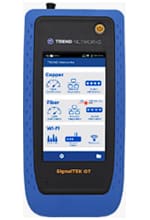
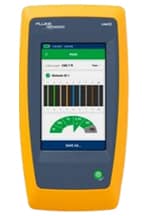
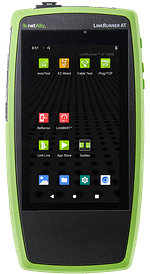
We compared three popular handheld network testers (NetAlly LinkRunner AT 3000, Fluke Networks LinkIQ, and TREND Networks SignalTEK QT) to give you an honest, practical view of their strengths and limitations.
Each tester can quickly validate cable quality and confirm supported link speeds, but where they differ is how deep they go if something is wrong.
• Supports copper and fiber qualification.
• Offers basic Wi-Fi scanning and connectivity checks.
• Supports cloud reporting.
• Useful for technicians who need quick validation that a link can support a specific application.
• Supports coppercable qualification.
• Offers basic Wi-Fi scanning.
• Useful for technicians who need quick validation that a link can support a specific application.
• Supports copperand fiberperformance qualification1.
• Offers basic Wi-Fi scanning and connectivity*.
• Provides comprehensive AutoTest verifying all aspects of copper/fiber network connectivity.
• Supports cloud reporting and collaboration.
• Useful for technicians who need to fix problems faster.
Limitations
• Focused mainly on proving link performance, not deep troubleshooting.
• Limited insight into VLAN configuration and DHCP issues.
• Advanced features like fiber and Wi-Fi make this a more expensive model.
• Primarily focused on cable qualification, with relatively limited network diagnostics.
• Wi-Fi testing (Duo model) is basic compared with dedicated analyzers.
• Provides less visibility into end-to-end network behavior when troubleshooting.
• Requires tethering to a laptop/PC to extract test data.
• More feature-rich, which can make it more complex to use (includes an EZ mode for fast results).
• Performance tests require the use of a far end device (enables bi-directional testing).
• Designed more for fast network troubleshooting than strict cable qualification.
*With use of optional third-party USB Wi-Fi adapter and apps. 1Up to 1 Gbps using the LANBERT app and a second paired tester.
What’s the Difference Between High Level Info and Deeper Diagnostics?
Many testers list similar features. But the depth of information and ease-of-use can be dramatically different.
Here are a few real-world examples:
VLANs: Some testers show basic VLAN IDs discovered through CDP/LLDP. LinkRunner AT goes further by showing trunk port VLAN membership, observing VLAN-tagged traffic to show all VLAN’s on a trunk, and monitoring VLAN traffic.
PING Testing: Intermittent problems are notoriously hard to catch.
SignalTEK and LinkIQ can run simple ping tests.
LinkRunner AT can run ping monitoring for up to 24 hours, including response time trends. This helps identify sporadic network connectivity and performance issues.
TCP Connection Testing: Many networks block ICMP ping.
A TCP SYN/SYN-ACK test mimics application traffic to confirm port-level connectivity. This feature is not available on SignalTEK QT or LinkIQ.
DHCP: All testers can request an IP address. But LinkRunner AT also logs DHCP Offer timing, acknowledge timing and server response details. This makes diagnosing DHCP issues much faster.
So Which Tester Should You Choose?
Choose SignalTEK QT if you primarily need link qualification for copper and fiber.
Choose Fluke LinkIQ if your focus is cable qualification for copper only.
Choose LinkRunner AT if you need to troubleshoot the entire network connection, not just the cable.
The LinkRunner® AT 1500 provides fast copper network link and cable testing for frontline network technicians, including PoE++ validation up to 90W
FAST FACTS
NetAlly announced the LinkRunner AT 1500, a new model in the LinkRunner family of network and cable testers.
At $1,495 MSRP this essential network cable tester offers pro-level testing at a technician-level price.
It offers fast, automated testing for copper network links and cables designed for frontline network technicians.
NetAlly’s LinkRunner handheld testers help IT teams troubleshoot Power over Ethernet (PoE) issues quickly and accurately for all PoE standards.
Colorado Springs, Colorado, USA – March 23, 2026 – NetAlly, the company behind the industry’s first handheld network analyzer, today announced the LinkRunner® AT 1500, an essential network link and cable tester in the LinkRunner family. It provides fast and comprehensive validation of copper network links and cables for everyday troubleshooting, moves/adds/changes, and fault isolation. It’s designed for frontline network technicians, IT teams and managed service providers.
“The 1500 brings pro-level testing to frontline techs at just $1,495 MSRP. It draws on our twenty-five-plus years of experience building innovative troubleshooting tools for network engineers and technicians,” said Dan Klimke, NetAlly Director of Product Marketing. “The goal is simple: put fast, definitive answers in the hands of the technicians closest to the problem, so issues get solved at the source, not escalated up the chain. With Wi-Fi 7 access points, smart building systems, and modern IoT devices increasingly demanding higher power levels that only PoE++ can deliver — the LinkRunner AT 1500 validates full 90W PoE performance to ensure those devices are fully powered upon deployment.”
In a 2025 survey, NetAlly customers reported completing installs and repairs up to 60% faster using these tools. The LinkRunner AT 1500 can verify connectivity, link speed, VLAN, and Power over Ethernet (PoE) with one tap, without a bulky laptop or extensive training. Detailed results and screenshots are automatically uploaded to Link-Live, NetAlly’s free collaboration, reporting, and analysis platform. This allows junior techs to diagnose issues more confidently with less oversight, and IT teams to handle more work with the same headcount.
LinkRunner AT 1500 delivers fast, automated testing across every layer of the network link:
Detects cable length, common mis-wires, and distance to fault.
Automatically discovers the nearest switch name and port.
Verifies link speed and duplex, up to 10 Gig.
Validates VLANs, network services, and connectivity to on- and off-net devices.
Measures PoE voltage, wattage and active pairs to pinpoint issues and confirm power delivery before device installation.
About NetAlly
Since creating the industry’s first handheld network analyzer in 1993, NetAlly has been helping network and cybersecurity professionals better deploy, manage, maintain and secure today’s complex wired and wireless networks. The NetAlly family of network test and analysis solutions simplifies network testing and cybersecurity assessments, provides instant visibility for efficient problem resolution, and enables seamless collaboration between site personnel and remote experts. To learn more and see how NetAlly helps network and security professionals get their jobs done faster, visit https://www.netally.com/, follow us on Facebook, Bluesky, LinkedIn, Instagram, X, or YouTube.
To most users, Wi-Fi is invisible magic. To network engineers, that invisibility is a constant challenge. You can’t fix what you can’t see. When users complain that “the Wi-Fi sucks” in the conference room, staring at the access point (AP) won’t tell you if it’s a coverage gap, a channel conflict, or just the microwave in the breakroom nuking the 2.4GHz band.
This is where Wi-Fi heatmaps come in. They turn invisible RF chaos into actionable data you can analyze and fix. Think of it like an MRI for your network – stripping away the guesswork and showing you exactly where your signal is strong, where it’s weak, and where interference is impacting performance.
In this guide, we’ll break down exactly what a heatmap is, why you need one, and how to use a professional Wi-Fi analyzer to create one that provides genuine insight rather than just pretty colors.
What is a Wi-Fi heatmap?
A Wi-Fi heatmap – often called a Wi-Fi coverage map or visualization – is a visual representation of wireless data overlaid on a floor plan of your site. It uses a color-coded spectrum – usually blue for “good” (strong signal) and red for “bad” (weak signal) – to show how radio frequencies (RF) behave in the real world.
However, effective heatmapping requires understanding the two main categories:
Design-Phase (Predictive) Heatmaps: This is the “theoretical” map used for Wi-Fi planning. You use Wi-Fi heatmap software like AirMagnet® Survey PRO to draw walls, place virtual APs, and simulate how the signal should propagate. It’s the blueprint you create before drilling a single hole.
Validation (Real-World) Heatmaps: This is the “reality check.” You use a tool like the EtherScope® nXG, AirCheck® G3 or CyberScope® to walk the site and measure the actual RF environment. Concrete walls often contain metal rebar you didn’t account for, and that “open space” might now be filled with metal filing cabinets.
Why use a Wi-Fi heatmap?
Simply placing APs where they look good isn’t a strategy. Beyond saving you from troubleshooting headaches, heatmaps offer serious business ROI.
Stop the Blame Game: When the network is slow, the network engineer is usually the first suspect. A heatmap gives you hard data to prove the network is performing correctly (and that the issue might be the client device).
Visualize the Invisible: Instantly spot dead zones, bleed-through from neighboring floors, and channel overlap.
Smarter Planning: Instead of the “spray and pray” method of adding more APs (which often worsens interference), you can place them exactly where they’re needed.
Save Time & Money: NetAlly users report cutting troubleshooting time by up to 60% just by having the right visibility. That’s less time chasing ghosts and more time working on strategic projects.
Types of Wi-Fi heatmaps
Most people stop at “Signal Strength,” but that’s just scratching the surface. If you’re using NetAlly’s Link-Live™ collaboration platform, you have access to 14 different visualizations that tell the whole story. Here are the heavy hitters:
Signal Strength: The classic view. This Wi-Fi signal strength map shows RSSI (Received Signal Strength Indicator) in dBm.
Signal-to-Noise Ratio (SNR): The truth-teller. A strong signal means nothing if the noise floor is high. This map shows the quality of the connection.
Noise: Visualizes ambient RF energy that could drown out your Wi-Fi signals.
Co-Channel Interference: Shows where APs are stepping on each other’s toes by talking on the same channel.
Adjacent Channel Interference (ACI): Highlights interference from APs on overlapping channels (a common killer in the 2.4GHz band).
AP Coverage: Visualizes redundancy. If an AP dies, who picks up the slack?
Min Basic Rate: Shows the minimum speed required for management traffic.
Beacon Overhead: Is your airtime being hogged by APs just announcing they exist?
Max TX/RX Rates: The theoretical speed limit of your Wi-Fi network.
Max TX/RX MCS: Visualizes the complexity of the data coding scheme (higher is better/faster).
QBSS Utilization: Provides visibility into how busy the channels being used are (low is better/faster).
QBSS Station Count: Shows how many client devices are connected to your network.
First AP Coverage: Ensures your primary coverage meets minimum requirements (e.g., -65 dBm).
Secondary AP Coverage: Verifies you have backup coverage for seamless roaming.
Pro Tip:
Don’t ignore the “Noise” heatmap. Everyone obsesses over signal strength, but noise is the silent killer of Wi-Fi performance. You can have a screaming loud signal (-40 dBm), but if your noise floor is also high due to non-Wi-Fi interference (like Bluetooth, microwaves, or security cameras), your SNR will tank, and your users will suffer. Always validate SNR alongside Signal Strength.
How to create a Wi-Fi heatmap
Creating a heatmap isn’t just walking around aimlessly. To get data you can trust, you need a process. Here’s how we do it with AirMapper™ Site Survey:
Prep the Floor Plan: Get a clean image of the map.
Upload it: Create a new site survey project in Link-Live and upload the map.
Crop: Remove areas of the floor plan that you won’t be surveying by cropping the image.
Calibrate: This is crucial. Draw a line on the map (like a wall) and tell the tool “this is 10 feet long.” If you skip this, your site survey data will be inaccurate.
AutoSampling: You walk, the tool records. Good for large open spaces.
Click-to-Sample: You stop, tap the screen, and it records. Better for those new to the world of Wi-Fi site surveys, or spot checking.
Walk the Walk: Move through the site. Don’t just stick to the main hallways – go where the users sit. Go into the corners.
Upload & Analyze: Push the data to Link-Live. This is where you can toggle between those 14 different heatmap types we mentioned earlier.
How to read and interpret a Wi-Fi heatmap
Once you have your data, look for specific patterns that indicate trouble.
Look for the “Swiss Cheese” Effect: On your AP Coverage map, look for holes. If you see yellow or orange spots in areas where people actually work, you’ve found your dead zones.
Check for “Traffic Jams”: Pull up the Co-Channel Interference map. If you see bright orange areas, it means too many APs are shouting over each other on the same channel. This causes contention, meaning devices have to wait their turn to speak, slowing everything down.
Analyze Data Rates: Compare your Signal Strength map with your Max TX/RX Rates map. If you have strong signal (green) but low data rates (orange), you might be dealing with legacy devices dragging the network down, or hidden interference forcing devices to shift to slower, more robust modulation schemes.
Common Wi-Fi problems revealed by heatmaps
Heatmaps are excellent at exposing the gremlins hiding in your RF environment:
Dead Zones: Usually caused by physical obstructions you didn’t account for, like a new concrete elevator shaft or metal-lined breakroom walls.
Roaming Issues: If your Secondary AP Coverage map is blank, your users will drop calls when they walk down the hall because there’s no backup AP to hand off to.
Bleed-Through: Seeing a strong signal from the floor above? That’s not a bonus; that’s interference. It ruins your channel planning.
The “Sticky Client” Problem: Sometimes a heatmap shows you have too much power. If an AP is blasting at full volume, devices will cling to it even when they’re far away, rather than roaming to a closer AP that provides better performance.
Pro Tip:
Don’t have time to analyze heatmap data, or need help identifying the root cause of Wi-Fi network performance problems? The InSites engine in Link-Live simplifies the process by automatically comparing your site survey data against a set of customizable thresholds and giving you a quick pass or fail.
Choosing the right Wi-Fi heatmap tool
This really comes down to where you are in the project lifecycle. When selecting a Wi-Fi heatmap tool, consider your specific needs:
For Planning & Design:
You need AirMagnet® Survey PRO. This is the industry standard for predictive modeling. You can simulate walls, materials, and AP placement to get a “Bill of Materials” before you even buy the hardware. It’s about getting it right the first time.
For Validation & Troubleshooting:
You need a robust Wi-Fi site survey solution like AirMapper™ Site Survey. This runs on our handheld tools. It’s for when the network is live and you need to see what’s actually happening. Unlike a basic Wi-Fi heat mapping tool that might run on a laptop or phone, dedicated hardware ensures you measure what the network really looks like, not just what your laptop antenna sees.
Wi-Fi heatmap best practices
To ensure your data is reliable, follow these rules:
Calibrate, Calibrate, Calibrate: If your scale is wrong, your heatmap is fiction.
Survey All Bands: 2.4GHz and 5GHz (and 6GHz!) behave very differently. 2.4GHz punches through walls; 5GHz bounces off them. Surveying only one band gives you half the picture.
Mind Your Body: Your body is a bag of salt water that blocks RF signals. Don’t hunch over the tester. Hold it up and away from you.
Mimic the User: Don’t hold the tester near the ceiling if your users are sitting at desks. Survey at the height where the actual devices will be used.
More is Better: Collect as many site survey data points as possible. The more data you have, the more accurate and colorful your heatmaps will be.
Conclusion
A Wi-Fi heatmap isn’t just a pretty chart to put in a report; it’s the difference between guessing and knowing. It turns the invisible physics of RF into actionable data that saves you time, money, and frustration. Whether you’re planning a new deployment or hunting down a ghost in the machine, you need the right visibility.
Ready to stop guessing? Check out our professional tools that make mapping simple:
AirMapper™ Site Survey: The app that runs on our handhelds for fast, easy, professional surveys.
Running dedicated power cables to every single device on a network is a waste of time and budget. Finding an available outlet near a ceiling-mounted access point or drilling through exterior walls to power a security camera is expensive, frustrating, and limits where you can deploy infrastructure.
Power over Ethernet (PoE) solves this problem by allowing you to transmit both data and electrical power over a single Ethernet cable.
For network engineers and IT professionals, PoE is a fundamental technology that simplifies network deployment, reduces installation costs, and enables the modern smart building. Whether you are deploying a simple VoIP phone system or a complex mesh of Power over Ethernet devices like IoT sensors and LED lighting, understanding the mechanics, standards, and equipment behind PoE is critical for maintaining a reliable network.
What is Power over Ethernet (PoE)?
Power over Ethernet is a technology defined by the IEEE 802.3 standards that allows Ethernet cables (Cat5e, Cat6, and above) to deliver DC power to devices while simultaneously transmitting data.
Before PoE became a standard, installing a network device required two separate connections: a data cable for network communication and an electrical cable for power. This double-cabling requirement limited where devices could be placed and significantly increased installation costs due to the need for qualified electricians to run conduit and AC power.
PoE eliminates this constraint. By leveraging the twisted pairs of copper wires within a standard Power over Ethernet cable, PoE creates a streamlined “single-cable” solution.
Key Concepts: PSE and PD
To understand PoE, you must distinguish between the two main roles in the power delivery process:
PSE (Power Sourcing Equipment): The device that supplies power. This is typically a Power over Ethernet switch or an injector.
PD (Powered Device): The device that receives the power. Common examples include IP phones, wireless access points, and security cameras.
How Power over Ethernet Works
Sending electrical power down data cabling might sound risky for delicate electronics, but standard PoE is designed to be inherently safe. It uses a sophisticated negotiation process – often called a “handshake” – to ensure power is only sent to compatible devices.
When you connect a device to a PoE-enabled port, the Power Sourcing Equipment (PSE) does not immediately transmit full power. Instead, it follows a strict sequence:
Detection: The PSE sends a low voltage pulse to check for a specific resistance signature (typically 25 kΩ) on the connected device. This confirms that a valid Powered Device (PD) is connected. If you plug in a standard laptop or non-PoE device, the PSE will not detect this signature and will not send power, protecting the device from damage.
Classification: Once a PD is detected, the PSE determines how much power the device requires. The PD signals its “Power Class” (ranging from Class 0 to Class 8), telling the switch exactly how much wattage it needs to operate.
Power Delivery: After the handshake is successful and the power budget is confirmed, the PSE begins delivering the standard Power over Ethernet voltage (typically 44-57V DC).
Monitoring: The PSE continuously monitors the connection. If the cable is unplugged or the device stops drawing power, the PSE cuts the power output immediately.
Pro Tip:
Don’t Ignore the Power Budget.Just because a switch has 48 PoE+ ports doesn’t mean it can power 48 devices simultaneously. Exceeding the switch’s “Total Power Budget” causes random reboots and dropped connections. Always calculate your load first, and use the LinkRunner® AT 4000 to verify actual power availability under load.
PoE Standards Evolution
As network devices have become more powerful, PoE standards have evolved to deliver higher wattages:
Type 1 (IEEE 802.3af): Delivers up to 15.4W. Sufficient for basic VoIP phones and simple sensors.
Type 2 (IEEE 802.3at / PoE+): Delivers up to 30W. The standard for Wi-Fi 5/6 access points and PTZ cameras.
Type 3 & 4 (IEEE 802.3bt / PoE++): Delivers up to 60W (Type 3) or 90W (Type 4). Designed for high-performance Wi-Fi 6E/7 APs, digital signage, and building automation devices.
Confused by the alphabet soup of acronyms? Read our detailed breakdown of PoE vs. PoE+ vs. and UPOE/PoE++ to understand exactly which standard your network needs.
Common PoE Applications
While Voice over IP (VoIP) phones were the original driver for PoE adoption, the technology now powers a vast ecosystem of devices.
Core Network Devices
VoIP Phones: The most common application, allowing phones to be powered directly from the wall jack.
Wireless Access Points (WAPs): PoE allows APs to be mounted on ceilings or high on walls for optimal signal coverage without needing a nearby AC outlet.
IP Security Cameras: Enables easy deployment of surveillance cameras in remote corners, parking lots, and building exteriors.
Smart Buildings and IoT
The introduction of high-power PoE (802.3bt) has opened the door to advanced smart building applications:
Intelligent Lighting: PoE LED lighting systems can be powered and controlled over the network, allowing for automated scheduling, occupancy sensing, and energy savings.
Environmental Monitoring: IoT sensors for temperature, humidity, and air quality can be deployed densely throughout a facility.
Access Control: Smart locks, badge readers, and video intercoms are now commonly powered by the network.
Digital Signage & Kiosks: Tablets and display screens used for wayfinding or point-of-sale (POS) systems can run entirely on a single Ethernet cable.
PoE Benefits and Limitations
Understanding the strategic value of PoE helps in justifying infrastructure upgrades.
Benefits
Limitations
Cost Efficiency: Eliminates the need for expensive electrical work. You do not need a licensed electrician to run Ethernet cable (in most jurisdictions), and you avoid the cost of installing dedicated AC outlets for every endpoint.
Distance Limits: Like all standard Ethernet copper cabling, PoE is limited to a maximum distance of 100 meters (328 feet). Extending beyond this requires PoE extenders or a mid-span switch.
Flexibility: Devices can be installed exactly where they are needed for performance, rather than being tethered to existing power infrastructure.
Power Budget Constraints: As mentioned in the Expert Tip, switches have a finite amount of power. High-power devices (like PTZ cameras or high-performance wireless access points) can quickly deplete a switch’s budget.
Centralized Control & Reliability: Power comes from a central switch, which can be backed up by a UPS (Uninterruptible Power Supply). This ensures that critical devices like security cameras and phones stay online even during a building-wide power outage.
Equipment Cost: PoE switches are generally more expensive than non-PoE switches.
Safety: PoE uses low-voltage DC power, which presents significantly lower risks than high-voltage AC power.
Cable Quality Dependency: Delivering power generates heat. Poor quality cabling (such as Copper Clad Aluminum) can lead to excessive voltage drop and power loss, especially over long runs.
PoE Equipment: Switches vs. Injectors
When deploying PoE, you generally have two equipment options: using a dedicated switch or adding an adapter.
Power over Ethernet Switch (Endspan)
A Power over Ethernet switch looks and functions like a standard network switch but has the built-in capability to inject power into the Ethernet cable.
Best for: New installations, scalable networks, and environments with multiple PoE powered devices.
Advantage: Provides a clean, centralized solution with management capabilities (on managed switches) to monitor power usage and remotely control ports.
Disadvantage: It creates a single point of failure. If the switch power supply dies, every connected phone and camera goes dark instantly. Also, replacing an entire switch just to get higher wattage for a few new APs is a painful hit to the budget.
PoE Injectors (Midspan)
A PoE injector (sometimes called a Power over Ethernet adapter) is a device that sits between a non-PoE switch and the PD. It takes the data signal from the switch, adds power from a wall outlet, and sends the combined signal to the device.
Best for: Retrofitting existing networks or powering a single device (like one specific camera) without replacing an entire non-PoE switch.
Advantage: Cost-effective for single-device additions.
Disadvantage: Can become messy and difficult to manage if used for many devices, resulting in a cluttered rack with multiple power bricks.
Choosing the Right Cable for PoE
The physical quality of your cabling infrastructure is vital for PoE performance. As power travels down the wire, resistance causes some of that energy to be lost as heat (known as insertion loss).
Cat5e: The minimum requirement for most PoE standards. It is generally sufficient for Type 1 and Type 2 PoE (up to 30W).
Cat6 and Cat6a: Highly recommended for modern deployments, especially for Type 3 and Type 4 (60W-90W) applications. These cables typically use thicker copper conductors (lower gauge, e.g., 23 AWG), which reduces resistance and heat buildup, ensuring that the voltage delivered to the device remains within spec.
Choosing the wrong cable can lead to intermittent power issues, where a device works fine on a short patch cable but fails when deployed at the end of a 90-meter run.
Power over Ethernet has transformed from a niche telephony feature into the utility that powers the modern enterprise. By converging data and power onto a single part of the infrastructure, it offers unmatched flexibility and control for network engineers.
However, simply plugging in a device and hoping for the best is not a strategy. Successful PoE deployment requires understanding power budgets, cable quality, and the specific requirements of your Powered Devices.
Ensure your PoE network is delivering the power you need.
LinkRunner® AT 4000: Validate TruePower™ delivery under load (up to 90W) to ensure your PSE can handle the demand.
EtherScope® nXG: The all-in-one handheld network analyzer for comprehensive wired and Wi-Fi troubleshooting.
New EZ mode test apps and enhanced Wi-Fi 7 Multi-Link Operations insights empower faster, easier network diagnostics.
Colorado Springs, Colorado, USA – January 6, 2026 – NetAlly, a global leader in handheld network testing solutions, has released AllyWare™ v2.9, a major software update for its award-winning network testing portfolio including AirCheck® G3, CyberScope®, EtherScope® nXG, and LinkRunner®. Available immediately and free to AllyCare™ customers (NetAlly’s premium support service), this release delivers streamlined workflows and cutting-edge Wi-Fi 7 insights that accelerate troubleshooting for junior IT professionals without requiring deep networking expertise.
“Version 2.9 is about speeding and simplifying network testing and analysis,” said Julio Petrovitch, Senior Product Manager at NetAlly. “Unlike traditional network testing tools that require extensive training, AllyWare v2.9’s EZ mode apps enable technicians to perform expert-level diagnostics immediately. We’ve also made Wi-Fi 7 network validation easier by providing visibility into Multi-Link Operation (MLO) configuration and introducing a new AirMapper site survey mode that scans all Wi-Fi channels, including the 6GHz band, in under four seconds—a game-changer for deployment speed.”
Highlights of AllyWare v2.9 include:
EZ Mode Apps: Streamlined Wired and Wi-Fi Testing – New EZ Wired and EZ Wi-Fi apps simplify network diagnostics with streamlined workflows and a simplified user interface built for fast, reliable visibility—no advanced networking expertise required.
Wi-Fi 7 MLO Visibility – Visibility into Multi-Link Operations (MLO) configuration on Wi-Fi 7 (802.11be) APs gives WLAN professionals the real-time insights needed to validate new wireless deployments and identify the root cause of network performance problems.
“Quick” AirMapper Site Survey Mode – Mapping a Wi-Fi 7 network with NetAlly’s AirMapper app will now be even faster. The new “Quick” survey mode allows users to scan all 98 channels across the 2.4/5/6 GHz bands in about 4 seconds, allowing much faster data collection when using either the auto sampling mode or when performing “stop & go” surveys.
Enhanced Workflows – Testing workflows are improved with expanded third-party Wi-Fi USB adapter support for LinkRunner (enabling always-on Wi-Fi connectivity for wired testers), an automated selection process for AirMapper projects downloaded from Link-Live, new Cisco AP name element support, and multiple UI refinements.
Common Use Cases – AllyWare v2.9 addresses critical workflows including Wi-Fi 7 deployment validation, rapid network troubleshooting, wireless site surveys for enterprise environments, and network performance verification for hybrid work infrastructure.
“Customer feedback drives everything we do, and version 2.9 delivers exactly what network professionals asked for,” said Mike Parrottino, CEO of NetAlly. “Smarter workflows don’t just add convenience – they transform how teams diagnose problems, cutting test times from minutes to seconds and empowering technicians of all skill levels to deliver expert-level results.”
The update is free to all NetAlly customers with an active AllyCare premium support contract. Customers with expired contracts are encouraged to renew to take advantage of these new capabilities and ensure continued access to future updates.
Who is it for? Network technicians, WLAN professionals, IT network operations teams
What does it cost? Free for NetAlly AllyCare members
What problem does it solve? Simplifies network testing, accelerates Wi-Fi 7 deployment validation
When is it available? Available now (released January 6, 2026)
About NetAlly
For decades, the NetAlly® family of network test and analysis solutions has been helping network and cybersecurity professionals better deploy, manage, maintain, and secure today’s complex wired and wireless networks. Since creating the industry’s first handheld network analyzer in 1993, NetAlly continues to set the standard for portable network analysis and cybersecurity assessment with tools that include EtherScope® nXG, CyberScope®,AirMagnet®, LinkRunner®, LinkSprinter®, AirCheck®, and more. NetAlly simplifies the complexities of network testing and cybersecurity assessments, provides instant visibility for efficient problem resolution, and enables seamless collaboration between site personnel and remote experts. To learn more and see how NetAlly helps network and security professionals get their jobs done faster, visit https://www.netally.com/, follow us on Facebook, Twitter/X, LinkedIn, Instagram or YouTube.
It’s the complaint that sends shivers down every network engineer’s spine. But here’s the thing – when users say “slow”, they’re usually talking about four different problems at once: bandwidth, speed, throughput, and latency. Understanding the difference between these concepts isn’t just technical nitpicking. It’s the key to actually fixing the problem instead of throwing money at bigger pipes that won’t solve anything.
This guide breaks down what network bandwidth really means, how it affects your infrastructure, and, most importantly, how to optimize it so you can stop playing at network firefighter.
What is Bandwidth in a Network?
If you’re looking for a clear bandwidth definition, here it is: network bandwidth is the maximum amount of data that can be transmitted over a network connection within a specific time period. When people ask ‘what is bandwidth,’ they’re referring to volume: think of it as the maximum number of cars that can pass through a highway section in a given time, rather than how fast a single car is moving.
Bandwidth is measured in bits per second (bps), though you’ll more commonly see Mbps (megabits per second) or Gbps (gigabits per second) in modern networks. A 1 Gbps connection can theoretically handle up to one billion bits of data per second. But here’s the catch: it’s a theoretical maximum. Your actual performance depends on cable quality, how many users are online, and dozens of other factors.
Think of a 10-lane highway (high bandwidth) versus a 2-lane road. More lanes mean more capacity, but construction or accidents still cause slowdowns regardless of how many lanes you have.
Key aspects of bandwidth
Maximum capacity, not actual performance
Time-based measurement (data per second)
Measured in bps, Mbps, or Gbps
Directly impacts how many simultaneous operations your network can handle
Can determine whether applications run smoothly or start lagging
What is Good Network Bandwidth for Different Activities?
So, how much bandwidth do you actually need? The answer depends entirely on what you’re doing with it. Here’s a breakdown of bandwidth requirements for different use cases:
Basic Internet Use (3-25 Mbps)
Streaming & General Business Use (25-100 Mbps)
Advanced Use (100+ Mbps)
Email and web browsing
Cloud-based productivity tools
High-density user environments
Standard definition video calls
Standard file transfers
Large file transfers and backups
Basic cloud application access
Multiple simultaneous users
Data-intensive applications
HD video conferencing
4K video streaming
Enterprise Considerations
For organizations, multiply these numbers by your user count, then add 20-30% overhead for peak usage. A company with 100 users running video conferencing, cloud apps, and regular file transfers needs multi-gigabit capacity – not because each individual user needs that much, but because they all hit the network simultaneously.
Understanding how much bandwidth your specific environment requires prevents both over-provisioning (wasting money) and under-provisioning (frustrating users). Tools like the EtherScope nXG and LinkRunner 10G help verify you’re actually getting the speeds you’re paying for with performance testing up to 10Gbps.
Pro Tip:
Don’t just calculate average bandwidth needs – monitor your peak usage patterns. I’ve seen networks with plenty of average capacity that crumble during the 9 AM “everyone logs in at once” rush. Understanding your peak demands prevents those morning fire drills.
Network Bandwidth vs Speed vs Throughput vs Latency
When comparing bandwidth vs. speed, throughput, or latency, here’s what you need to know:
Bandwidth is your maximum potential capacity – think of it as the maximum number of cars that could pass through a highway section in a specific timeframe under perfect conditions.
Speed is how fast data moves from point A to point B – like how fast individual cars can drive. In data transmission, signals travel at roughly the speed of light. What changes is how much data you can pack into those signals.
Throughput is the actual amount of data successfully transmitted – how many cars actually reach their destination per hour. It’s always lower than bandwidth due to congestion, packet loss, and protocol overhead.
Latency is the delay before data transfer begins – like sitting at a red light before entering the highway. High latency means long waits before anything happens.
Here’s the complete picture: Imagine a highway designed to handle thousands of cars per minute (high bandwidth) where cars can drive 80 mph (high speed potential). However, you have to sit at a red light for 5 minutes before entering (high latency), and road construction causes only half the possible cars to get through per hour (low throughput). The capacity exists, but delays and congestion kill actual performance.
How to Test and Measure Network Bandwidth
Wondering how to check network bandwidth or how to determine bandwidth on your network? Testing bandwidth properly means going beyond simple speed tests. Here’s how to run a proper bandwidth test:
Types of Bandwidth Tests Speed tests measure peak data transfer rates at a specific moment. However, they aren’t reliable for Local Area Network (LAN) bandwidth, as results are capped by your ISP subscription rather than showing your network’s full internal capacity.
Capacity tests evaluate the maximum bandwidth your network can consistently handle under various conditions.
Stress tests push your network to its limits to see where it breaks and if your infrastructure can actually deliver what it promises.
Professional Tools for Measuring Network Bandwidth
NetAlly instruments like the EtherScope nXG and LinkRunner 10G feature Performance Test capabilities that go way beyond consumer-grade speed tests. These tools can:
Stress test critical network links with up to eight simultaneous data streams
Verify line-rate performance up to 10Gbps
Measure throughput, packet loss, latency, and jitter
Test compliance against service level agreements (SLAs)
Provide upstream and downstream analysis
Metric
What It Measures
Why It Matters
Download Speed
Data from server to device
User experience for file transfers and streaming
Upload Speed
Data from device to server
Video conferencing
Latency
Delay before transfer begins
Real-time application performance
Jitter
Variability in packet delivery
VoIP quality
What Uses the Most Bandwidth on Your Network?
Understanding bandwidth usage and identifying what uses most bandwidth is critical for network management. Let’s talk about bandwidth hogs – the applications and devices that consume excessive capacity.
The Big Offenders:
4K/UHD video streaming (25+ Mbps per stream)
Video conferencing, especially with multiple participants
Large file downloads and cloud backups
Software updates pushed to multiple devices simultaneously
The Sneaky Culprits:
Background cloud sync services
Security camera feeds
Smart home devices
Malware or compromised devices participating in botnets
NetAlly’s EtherScope nXG provides a complete inventory of connected devices via its Discovery app. However, its true power lies in measuring maximum achievable bandwidth. Instead of guessing if your infrastructure can handle the load, you’ll have hard data proving the actual capacity available across your network.
Factors That Affect Network Performance
Even with plenty of bandwidth, network performance can suffer. Understanding what causes low network performance helps you troubleshoot faster.
Physical Infrastructure:
Transmission medium (fiber vs copper vs wireless)
Cable quality and electromagnetic interference (EMI) affecting copper – route cables away from power lines if you’re seeing issues
Distance to servers increasing latency
Network Configuration and Design:
Router and equipment limitations – monitor CPU and memory usage; if consistently high, upgrade your hardware
Number of connected devices sharing bandwidth – implement QoS policies to prioritize critical traffic
Network congestion during peak hours
Device performance and configuration issues
Environmental Factors:
Interference from neighbors’ Wi-Fi networks – use AirCheck G3 or EtherScope nXG to analyze channel utilization and switch to less congested channels
Physical obstacles affecting wireless signals
How to Increase and Optimize Network Bandwidth
Start with bandwidth optimization before upgrading.
Quick Wins: Quality of Service (QoS) prioritizes critical traffic – give priority to video conferencing and business apps while deprioritizing streaming during business hours.
Traffic shaping and bandwidth limiting prevent applications or users from monopolizing resources.
Schedule bandwidth-intensive tasks like backups and updates during off-peak hours.
Router and Equipment Optimization:
Position routers centrally, switch to less congested WiFi channels, update firmware regularly, and verify your router can handle your internet speeds. Use wired connections for servers, workstations, Wi-Fi access points, and VoIP phones. Manage connected devices by disconnecting unused ones and limiting guest access.
Infrastructure Improvements:
Upgrade outdated equipment if it’s creating bottlenecks. Optimize network topology by reducing unnecessary hops. Use load balancing to distribute traffic across multiple connections.
When to Upgrade vs Optimize:
If you’re consistently hitting 80%+ utilization during business hours after implementing these strategies, upgrade your infrastructure. But if you’re maxing out because of streaming videos during work hours, fix the policy first.
Network Bandwidth Planning and Monitoring Best Practices
Effective bandwidth and network capacity planning prevent problems before they start.
Calculate Bandwidth Requirements
Identify applications your users need, determine each application’s bandwidth requirements, multiply by simultaneous users, then add 20-30% overhead.
Assess current usage with bandwidth monitoring tools to establish baselines
Identify peak periods when your network hits maximum utilization
Project growth based on planned headcount, new applications, and technology changes
Plan for redundancy – keep capacity below 80% for performance buffers
Growth Planning
Plan ahead for new office locations, cloud migrations, increased video conferencing, IoT deployments, and remote worker VPN connections. Quarterly network assessments keep your bandwidth planning ahead of business needs.
Why is Higher Bandwidth Better? Understanding the Benefits
Is higher bandwidth better? It depends. Higher bandwidth brings real benefits, but it’s not always the solution.
Benefits of High Bandwidth
More bandwidth means more simultaneous operations without slowdowns. Multiple users can run video conferences, transfer files, and access cloud applications at the same time. Bandwidth benefits include faster file transfers, smoother video conferencing, better cloud app performance, and support for more devices.
Does Higher Bandwidth Mean Faster Internet?
Not exactly. Higher bandwidth increases capacity, but actual speed depends on multiple factors. More lanes help, but high latency or packet loss still slow you down.
When High Bandwidth Won‘t Help
More bandwidth won’t fix high latency, packet loss, poor WiFi coverage, slow servers, or outdated network adapters. Real-time applications like video conferencing need low latency more than high bandwidth. A 100 Mbps connection with 200ms latency performs worse than 50 Mbps with 20ms latency.
When You Actually Need More Bandwidth
Upgrade when you consistently hit 80%+ utilization during business hours, monitoring shows sustained high usage, or planned growth will exceed capacity. Before upgrading, use tools like EtherScope nXG to verify bandwidth is really your bottleneck – often, fixing configuration or WiFi issues solves “slow network” complaints without needing more capacity.
Troubleshooting Common Network Bandwidth Issues
Dealing with low bandwidth or slow network speeds? Here’s how to diagnose and fix bandwidth issues.
Signs of Low Bandwidth
Slow file transfers, buffering video, choppy conferencing, websites taking forever to load, and multiple users experiencing slowdowns simultaneously.
Common Causes
Too many devices consuming bandwidth, background applications, network congestion during peak hours, ISP throttling, outdated equipment, or malware.
Troubleshooting Guide
Network feels slow despite plenty of bandwidth: Check latency and packet loss first. Use EtherScope nXG‘s Path Analysis to trace where delays occur.
Performance degrades during specific times: Network congestion. Run tests during peak and off-peak periods, then implement QoS policies or schedule intensive operations for off-hours.
Specific applications performing poorly: Application-specific issues, not bandwidth. Video conferencing needs low latency – even 2% packet loss ruins calls.
WiFi slower than wired: Check for interference, channel congestion, or poor signal coverage. Use AirCheck G3 to analyze signal strength, channel utilization, and identify non-wifi interference sources.
When to Contact Your ISP vs Optimize Locally
Contact your internet provider (ISP) when speed tests consistently show speeds well below your plan, but local area network services are not impacted. Optimize locally when only certain devices are affected, when speeds slow down accessing local servers, or Wi-Fi performs poorly but wired works fine.
NetAlly’s EtherScope nXG and LinkRunner 10G measure actual throughput and identify whether bandwidth or other factors cause your problems.
Conclusion
Network bandwidth isn’t just about Mbps numbers. It’s about understanding the difference between capacity, speed, throughput, and latency – then using that knowledge to solve actual problems.
Smart network engineers monitor usage patterns, plan for growth, optimize traffic flow, and troubleshoot systematically. They know when to upgrade bandwidth and when to fix configuration issues instead.
With proper planning, monitoring tools, and professional testing equipment like EtherScope nXG and LinkRunner 10G, you’ll spend less time reacting to complaints and more time on strategic improvements.
Need professional-grade tools to test, monitor, and optimize your network bandwidth?
EtherScope nXG – Complete wired and wireless network analysis with Performance Testing up to 10Gbps
AirCheck G3 – Wi-Fi specific testing to identify interference, analyze channels, and troubleshoot wireless bandwidth issues
LinkRunner 10G – Multi-gigabit testing and LANBERT media qualification to verify your wired infrastructure can handle the bandwidth you need
Link-Live – Cloud platform for collaborating with remote team members