Even in demanding, high-density environments, Wi-Fi 7 delivers speed, efficiency, and rock-solid reliability. At the crux of this breakthrough in wireless connectivity is the Multiple Resource Unit (MRU) feature and the way that Wi-Fi 7 integrates MRU to augment the Orthogonal Frequency Division Multiple Access (OFDMA) framework.
Originally introduced in Wi-Fi 6, OFDMA enables dynamic allocation and independent modulation of subcarriers across frequency resources, facilitating concurrent transmissions to multiple client devices. In this blog, we illustrate how MRU advances this methodology by implementing refined interference suppression mechanisms and optimizing multi-user scheduling.

How does Multiple Resource Unit (MRU) impact efficiency in wireless connectivity?
By selectively excising interfered spectral segments, MRU ensures that transmissions are confined to interference-free subchannels, thereby maximizing effective throughput and link reliability in congested radio frequency (RF) environments. One way to visualize this is to imagine a busy freeway where each vehicle represents a data packet. OFDMA, as introduced in Wi-Fi 6, is like redesigning the highway with multiple lanes that allow many cars to travel side by side, each heading to its own destination. Now, with MRU in Wi-Fi 7, it’s as if the highway can intelligently guide vehicles into express lanes to further reduce congestion and ensure a smooth journey for all—even in heavy traffic.
This optimization is accomplished through punctured resource units (RUs), which are structured aggregations of 78.125 kHz-wide subcarriers. These individual RUs are assigned to different stations, allowing wireless access points to serve each of them simultaneously during uplink and downlink transmissions. MRU is in effect when many RUs are assigned to a single user. This allows for the aggregation of RUs of varying sizes to better match data transmission needs.

MRU configurations are classified into small (< 242) and large (> 242). Small MRU configurations include 52+26-tone and 106+26-tone groupings, wherein “tone” denotes the subcarrier or small frequency segment into which the available spectrum is divided. Large MRU configurations comprise combinations such as 484+242-tone, 996+484-tone, 996+484+242-tone, 2×996+484-tone, 3×996-tone, and 2×996+484-tone.
This results in more efficient user allocation and bandwidth utilization. For instance, in 11ax with a 20 MHz channel (totaling 242 tones), when two clients each use 106 tones, the total utilization is (106×2)/242 = ~88%. In contrast with Wi-Fi 7, if one client is assigned RU106 and another is allocated MRU106+26, the total utilization increases to (106×2+26)/242 = ~98%.

Evaluating Wi-Fi 7’s MRU feature
To conduct this evaluation, we used a Cisco Wireless 9178I Access Point connected to a Cisco Catalyst 9800 Series Wireless LAN Controller (WLC) running firmware version 17.15.2. The 9800 Series provides centralized control and greater visibility over traffic segmentation, user access, and security. The test environment consists of 4x Wi-Fi 7 and 4x Wi-Fi 5 stations (STAs). This diverse mix allows us to assess how different wireless standards handle congestion and latency.

To put MRU to the test, we simulate a high-traffic scenario on each bandwidth.
We generate user datagram protocol (UDP) full buffer traffic, creating network congestion by continuously pushing data to the access point on Wi-Fi 5 STAs. This replicates a real-world environment where multiple devices compete for bandwidth, allowing us to analyze the impact of MRU on latency. We then generate 750 Kbps real-time transport protocol (RTP) downlink and uplink traffic streams, mimicking real-time applications like voice and video streaming.
Measuring latency: OFDMA vs. OFDMA+MRU performance
To quantify performance improvements, we measure latency in milliseconds (ms) across three different configurations or combinations of channel bandwidth:

Even with just four MRU-capable STAs, we consistently observe lower latency in both downlink and uplink directions. The improvements reach approximately 55% in downlink and 48% in uplink when using a 320 MHz channel.

Enhancing connectivity and eliminating blind spots with MRU
MRU revolutionizes next-generation wireless connectivity by boosting efficiency, increasing speed, and ensuring enhanced reliability—even in high-density environments such as offices, airports, and stadiums, as well as IoT networks with cameras and sensors. By complementing 5G, it strengthens indoor wireless connectivity where 5G signals may be weaker. Additionally, MRU unlocks seamless experiences for applications requiring ultra-low latency, including augmented reality (AR), virtual reality (VR), and cloud gaming.
All Cisco Wi-Fi 7 access points, including CW9178I and CW9176I, along with Cisco Catalyst 9800 Series Wireless Controllers, fully support multi-RU functionality starting with the IOS XE 17.15.2 release—and provide centralized control for greater visibility, faster troubleshooting, and ease of management.
Businesses today rely on robust, secure, and agile network infrastructures to power their operations and maintain a competitive edge. For global food and beverage leader Nestlé, addressing the limitations of legacy systems was critical to achieving these goals. By overhauling its network infrastructure with Cisco SD-WAN, Nestlé unlocked improved resiliency, agility, operational efficiency, and centralized control across 1700 offices, factories, and warehouses in 185 countries.
A recent Cisco webinar featuring special guest speaker Giovanni di Marzio, Senior Solution Architect, WAN – Connectivity, ITP C&V for Nestlé, explored the challenges Nestlé faced, the Cisco SD-WAN solution it adopted, and the transformative outcomes that enabled the company to future-proof its network and enhance its overall operational performance.
Click here to watch the on-demand webinar featuring Nestlé.
Navigating legacy network roadblocks
Nestlé’s IT team is tasked with managing a vast and complex global network that spans branch offices, manufacturing facilities, data centers, and cloud environments. However, several key obstacles have hindered their ability to scale, optimize performance, and deliver a seamless digital experience, including:
Faced with these hurdles, Nestlé recognized that a modern approach was essential to improve operational efficiency, reduce costs, and meet the needs of a digitally driven enterprise.
The solution: An innovative suite of networking technologies from Cisco
Nestlé adopted Cisco SD-WAN paired with Cisco ThousandEyes and Cisco 8000 Series Secure Routers that together are designed to enhance connectivity, digital experience, security, and automation. This strategic move enabled the company to manage its global network with greater efficiency and resilience.
The technologies that transformed Nestlé’s network include:
Transforming and unifying network operations
The adoption of Cisco SD-WAN with Cisco ThousandEyes has yielded remarkable results for Nestlé, driving significant improvements in both network performance and manageability.
Key outcomes for Nestlé include:
A unified vision for the future
Nestlé’s transformation journey highlights how modern, transformative network technologies drive agility, efficiency, and resilience. By adopting Cisco SD-WAN, Cisco ThousandEyes, and secure routers, the company has not only addressed its immediate challenges but also positioned itself for future success in a connected world.
When describing the impact of the company’s network transformation, di Marzio said,
“Cisco SD-WAN provides internet connectivity without any limitations. And instead of looking at every log for two thousand routers, we have a single dashboard to manage the network and a centralized platform for orchestrating configurations across all Nestlé sites.”
This centralized approach has empowered Nestlé to streamline its operations, optimize costs, and deliver a seamless digital experience to its global workforce and customers.
A blueprint for modern enterprises
Nestlé’s network transformation serves as a blueprint for other enterprises grappling with the limitations of legacy systems. The company’s decision to embrace Cisco SD-WAN demonstrates how modern technologies can simplify network management, reduce costs, and enhance performance—all while ensuring security and compliance.
For organizations looking to future-proof their network infrastructure, Nestlé’s journey underscores the importance of embracing innovation and partnering with trusted technology providers like Cisco. By doing so, businesses can unlock the full potential of their network and thrive in an increasingly digital and interconnected world.
Ultimately, Nestlé’s story is about more than just technology—it’s about aligning IT strategy with business goals to achieve operational excellence. Nestlé’s success is a testament to the power of innovation and a forward-looking vision for operational excellence.
It is estimated that there are 20 million shipping containers in transit, right now. In 2023, approximately 2.2 billion metric tons of cargo were shipped globally in containers, with the largest cargo being able to carry more than 24,000 containers.
Container ports are engines of regional growth, gateways to unlock industrial capacity. For port operators, and the local economies that rely on them, there is economic advantage in being able to unload and distribute containers quickly and efficiently.
It is a process that has become increasingly digital. While the containers may remain unchanged, rectangular boxes made of Corten steel with a marine-grade plywood floor, their movements are now governed by robotic cranes, autonomous vehicles, optical recognition and IoT sensors.
It is not enough for port operators to boast of having deep water access, modern rail links and miles of berthing. This counts for little without a solid network infrastructure.

With an annual capacity of two million TEU, DP World Evyap is vital to the Turkish economy. Its location, on the Sea of Marmara, connecting the Black Sea to the Aegean and Mediterranean Seas, is a crucial waterway for international trade.
“Any glitch in the network can create bottlenecks,” says Gokhan Erbas, IT Director, DP World Türkiye, and the man charged with overseeing the network upgrade of one of Türkiye’s most important ports.
DP World terminals currently manage 10 percent of Türkiye’s total container throughput. DP World plans to increase capacity and extend the quayside at Evyap. A reliable pervasive wireless network is a critical first step.
The 265,000sqm site had suffered from gaps in network connectivity. This hampered efficiency and created a lack of trust in digital applications. Erbas says the wireless network upgrade was vital for efficient operations and growth.
Eliminating Connectivity Dead Zones
Today, Cisco Ultra-Reliable Wireless Backhaul (URWB) covers the site with robust dependable connectivity, eliminating dead zones and restoring faith in digital workflows. Cisco URWB enables the smooth running of the Terminal Operating System (TOS), the lifeblood of any modern port.
The Evyap TOS manages everything from vessel schedules to gate access, storage planning to documentation. In an environment where over 150+ trucks are in constant motion, even a momentary network failure could have ripple effects across the global supply chain. Thanks to Cisco URWB’s zero-packet-loss architecture and ultra-low latency, DP World Evyap now operates with uninterrupted connectivity—ensuring real-time decision-making, accelerated automation, and seamless logistics flow.
Deploying ultra-reliable connectivity in an industrial port setting was a complex challenge. DP World Evyap’s dynamic operations demanded a resilient network infrastructure capable of overcoming the industry’s toughest conditions. Dense steel container stacks caused RF signal disruptions, requiring a solution that ensured uninterrupted communication. Extreme environmental factors, including temperatures exceeding 40°C, necessitated a system designed for seamless operation in harsh conditions. High-dust and high-moisture environments further emphasized the need for an ultra-durable and future-proof wireless infrastructure.
By leveraging Cisco URWB, DP World Evyap has established a cutting-edge network that not only enhances operational efficiency but also reduces maintenance costs, strengthens security, and delivers an unparalleled user experience.
“Seamless connectivity is everything,” Erbas says. “Cisco Ultra-Reliable Wireless Backhaul means operational efficiency, stronger security, lower maintenance costs and better experience for network users.”
For Evyap – Körfez, better global connections start with better local connections.
DP World Evyap in figures
The electric grid is the backbone of our modern society here in North America. Ensuring its reliability and security is paramount, which is where the North American Electric Reliability Corporation (NERC) Critical Infrastructure Protection (CIP) standards come in. These standards provide a framework for securing the Bulk Electric System (BES) against cyber threats.
However, with the grid undergoing significant modernization and increased connectivity, meeting these stringent cybersecurity requirements presents a complex challenge for power utilities. More connected devices mean a larger attack surface, demanding a robust and phased approach to security.
Cisco’s Phased Approach to Industrial Threat Defense
Cisco recognizes that enhancing your security posture is a journey. We advocate for a phased approach, building foundational security elements that support subsequent steps, allowing utilities to improve security at their own pace while demonstrating value. The Cisco Industrial Threat Defense solution offers a modular and comprehensive set of capabilities designed to address the unique challenges of securing operational technology (OT) environments and achieving NERC CIP compliance.
How Cisco Solutions Help Address Key NERC CIP Requirements:
Cisco just published a solution brief describing the key NERC CIP requirements and how our portfolio can help utilities to comply. Here is a quick summary:
A Unified Approach for Enhanced Security
Navigating NERC CIP compliance requires a strategic, solutions-based approach. Cisco provides the building blocks and integrated solutions to help power utilities secure their critical infrastructure, enhance visibility, and meet regulatory requirements effectively. Have a look at our NERC CIP Compliance Solution Brief to better understand the requirements and see how Cisco can help.
I will be presenting a webinar on July17th together with experts from Burns & McDonnell to discuss the new Internal Network Security Monitoring (INSM) CIP-015 standard and solutions available to help Utilities comply. Save the date and register now.
The AI enterprise is here, and it’s demanding more from our wireless networks than ever before. We’re seeing an explosion of AI agents designed to automate operations, an increase in bandwidth-hungry applications like 8K video streaming, and a growing need to protect an expanding attack surface that’s overwhelming IT. At Cisco, we understand these challenges and are committed to providing our customers with the tools needed not just to keep up but thrive in this new era.
That’s why I’m incredibly excited about three new, groundbreaking additions to our wireless portfolio that were just announced at Cisco Live San Diego. We’re expanding our Wi-Fi 7 portfolio with the Cisco Wireless 9179F Access Point for stadiums and large venues, delivering seamless, cloud-managed roaming for large campuses with the Cisco Campus Gateway, and connecting new critical wireless use cases with the integration of Ultra-Reliable Wireless Backhaul (URWB) together with Wi-Fi technology in a single access point. These aren’t just incremental upgrades; they represent fundamental shifts in how we approach campus networking. These new additions are designed to deliver the scalability, security, and simplicity that the AI enterprise demands.
Cisco Wireless CW9179F: Delivering unmatched wireless performance for high-density venues
This addition to our Wi-Fi 7 portfolio is all about delivering the best possible wireless experiences in the highest-density use cases like stadiums, large public venues, and convention centers.
Cisco Campus Gateway: Simplifying campus wireless with seamless cloud integration
For organizations with complex campus wireless networks, the Cisco Campus Gateway is a game changer. This solution is designed to facilitate a seamless transition to cloud management and deliver high performance and scalability without requiring costly and disruptive infrastructure changes.
Ultra-Reliable Wireless Backhaul (URWB) with Wi-Fi technology: The foundation for critical applications
AI-enabled applications across smart manufacturing, healthcare, retail warehouse automation, and more depend on predictable, reliable wireless connectivity. Our URWB standalone solution provides a proven, dedicated, high-performance wireless link for critical systems—ensuring seamless operation, even in the face of interference or network congestion.
Future-proofing your wireless network for the AI enterprise
Wi-Fi 7 is more than a network for connectivity—it’s the foundation you need to build truly smart spaces at every scale. That’s why Cisco Spaces is included as part of every wireless subscription license. Out of the box, you’ll have access to rich AI 3D mapping, dynamic IoT services, precise asset tracking, and more.
Paired with a Cisco Networking Subscription, you get the same seamless experience in one license—whether managing a network from the cloud, on-premises, or through a hybrid model. This enables greater operational simplicity and the freedom to evolve your network management approach as your needs change. We offer a truly smart, unified, and simple licensing model.
Now that the AI enterprise is here, it’s time to future-proof your network—especially in the most-demanding environments. With the Cisco Wireless CW9179F Access Point, Ultra-Reliable Wireless Backhaul (URWB) technology, and the Cisco Campus Gateway, you’re positioned to unlock the full potential of AI and transform your organization. Cisco wireless technologies empower you to scale, secure, and simplify your operations, so you can deliver exceptional experiences for fans, employees, and customers alike.
Digitizing and automating the network for energy utilities can lead to significant operational and financial benefits by reducing operational expenses (OPEX), capital expenses (CAPEX), human configuration errors, and time to deploy. Benefits will vary depending on the utility’s starting point, scale, and maturity of existing systems. However, based on industry insights, case studies, and vendor analysis (such as those from Cisco or other networking companies), the following approximate figures are often indicated:
Reduction in OPEX: 20%-30%
Reduction in CAPEX: 10%-20%
Reduction in Human Configuration Errors: 60%-80%
Reduction in Time to Deploy: 50%-70%
Why These Gains Matter for Energy Utilities:
Energy utilities face unique challenges such as aging infrastructure, regulatory compliance, and increasing demand for renewable energy integration. Digitizing and automating the network aligns with their need for:
Example from Case Studies:
Takeaways:
By digitizing and automating the network, energy utilities can achieve:
These improvements not only reduce costs but also enhance operational efficiency, improve service reliability, and accelerate the adoption of modern energy technologies.
Cisco offers end-to-end solutions to help utilities modernize their energy grids. These solutions create a reliable, secure, and intelligent infrastructure, enabling utilities to:
By adopting Cisco’s technology, utilities can tackle modern energy challenges, meet regulatory requirements, achieve sustainability goals, and provide resilient services.
Check-out our latest Cisco Utility Solution web page to discover more:
The world’s cybersecurity community is gearing up to meet at the RSAC™ 2025 Conference in San Francisco. I’m looking forward to reconnecting with old friends, making new ones, and discussing OT security needs with industrial organizations. Be sure you stop by the Cisco booth and say Hi!
We’ll be showcasing the latest features of Industrial Threat Defense, Cisco’s comprehensive and highly modular OT security solution. It uses the industrial network as the fabric to easily enable OT visibility and policy enforcement at scale. It’s a platform that unifies visibility across IT and OT domains to help detect advanced threats and orchestrate responses. Here is a brief overview of three new capabilities we’re demonstrating at RSAC.
1. Prioritizing OT Vulnerabilities with Threat Intelligence
Industrial networks have tens of thousands of connected assets; some can be very old and plagued with software vulnerabilities. Not all of them need patching, but operations and security teams need guidance to identify which ones do and which should be prioritized. Cyber Vision now utilizes threat intelligence from Cisco Vulnerability Management to help identify which OT asset vulnerabilities are actively exploited in the field, allowing industrial organizations to be more strategic when addressing OT vulnerabilities and reducing their attack surface.
2. Adaptive Industrial Zone Segmentation Using Cisco Secure Firewall
Protecting industrial operations by segmenting the network in small zones of trust is often challenging without disrupting production. Cisco Cyber Vision now shares industrial asset groups created by the line of business with Cisco Firewall Management Center. The plant firewall can enforce policies to protect operations without impacting production. When OT teams modify groups in Cyber Vision, firewalls are automatically informed so that policies can be adjusted in real-time to meet the needs of operations.
3. Unifying Security Data Across IT and OT to Better Detect Threats
A siloed approach is inefficient for industrial organizations to detect threats. With digitization, OT, IT, and cloud domains are becoming increasingly interconnected. Security teams need unified visibility across all domains to detect advanced threats. Cyber Vision and Splunk already work together to offer a unified view on IT and OT security events. Cyber Vision now also populates OT asset profiles into Splunk Asset and Risk Intelligence (ARI) to help organizations maintain an aggregated inventory of all assets across IT and OT, streamlining investigations, uncovering compliance gaps, and better managing risks.
Cisco is dedicated to empowering industrial organizations with robust cybersecurity solutions that meet the demands of today’s interconnected world. At RSAC 2025, we are eager to demonstrate how our latest capabilities can enhance your security posture and streamline operations. Don’t miss the opportunity to connect with our experts and explore how Cisco’s innovative solutions can support your organization’s journey toward stronger and more effective OT security. Join us in shaping a secure and sustainable digital future.
Safeguarding industrial control systems (ICS) from cyber threats is a critical priority, but transforming these intentions into effective actions can be challenging. Given the complexity of ICS and their networks, which often rely on outdated technologies and inadequate security measures, it can be difficult to determine the best starting point. Cisco Validated Designs (CVDs) are proven networking and security reference architectures that industrial organizations can use to build advanced capabilities and create a flexible foundation for the future.
The Cisco Validated Design for Industrial Security has been updated to create additional blueprints for securing critical infrastructure. Taking a phased approach to secure the industrial network, the Cisco Industrial Threat Defense solution comprises of OT asset visibility, zero trust access and segmentation, and cross-domain detection, investigation and response.
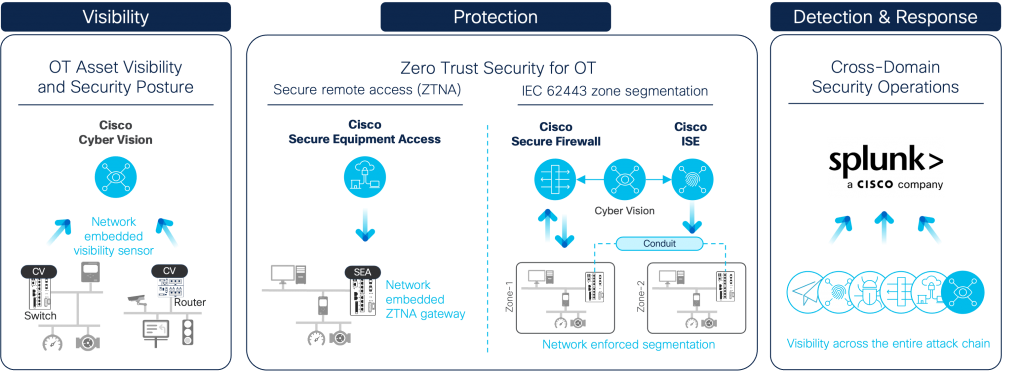
Cisco Industrial Threat Defense comprehensive OT/ICS security capabilities
Comprehensive OT visibility driving network segmentation
The previous version of Cisco’s Industrial Security Validated Design described how the Cyber Vision sensor software embedded in Cisco switches and routers could help gain visibility into connected industrial assets without having to deploy dedicated appliances or SPAN collection networks. It explained how control engineers and network managers could use this comprehensive asset inventory to implement adaptive zone segmentation in the industrial network by having Cyber Vision and Cisco Identity Services Engine to seamlessly work together.
The updated CVD now includes using the Cisco Secure Firewall to secure plant networks. Rising investments into AI and the virtualization of the plant floor is resulting in the industrial data center (IDC) becoming a critical component of operational networks. Virtual PLCs are an example of this shift, where virtual controllers allow for a more flexible and modular design of production plants.
In a traditional Purdue model architecture, the IDC would reside in level 3, the industrial operations zone. But many operational networks who have implemented some levels of network traffic control have done so at the IDMZ, or level 3.5. As the IDC becomes more modern, it also becomes more connected, relying on cloud connectivity for services to run as intended. More connectivity expands the attack surface, so placing the IDC behind a firewall is needed to protect it if an attack was to breach the boundary firewall.
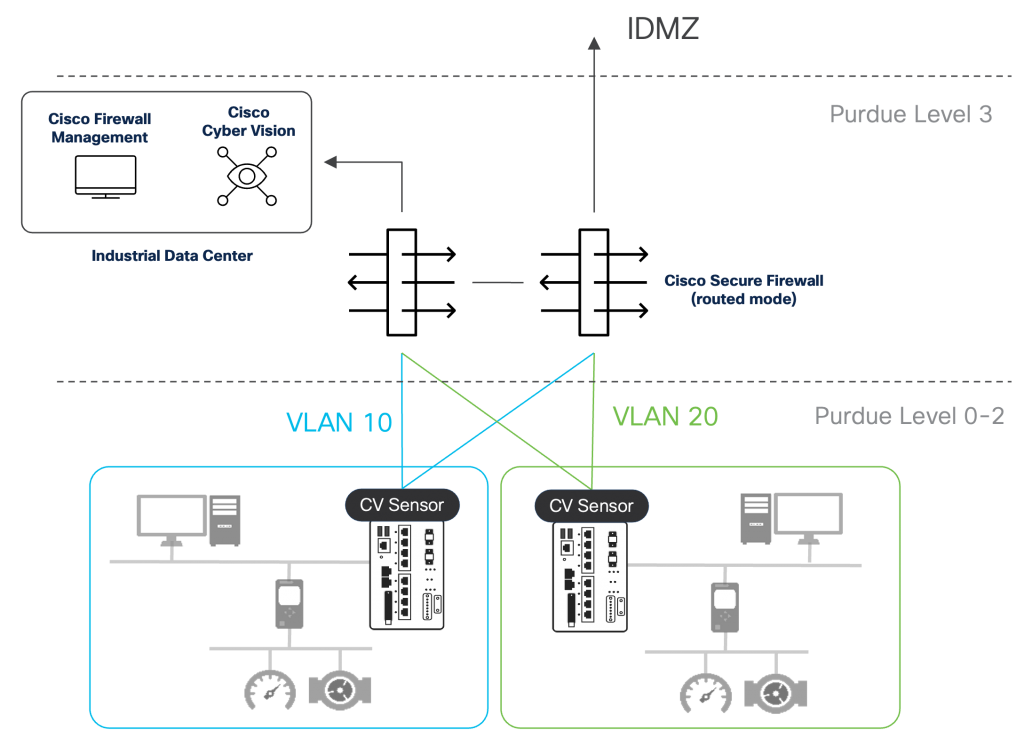
Cisco Secure Firewall for protecting the industrial data center and segmenting OT networks
The Cisco Secure Firewall, supplemented by an integration with Cisco Cyber Vision, can also be used to dynamically segment the industrial network and prevent cyber-attacks from spreading. The updated CVD explains how to use the Cisco Secure Dynamic Attributes Connector (CSDAC) to make OT asset groups created in Cyber Vision automatically available to the Firewall Management Center (FMC) as dynamic objects. Dynamic objects can easily be incorporated into access control policies to allow or deny communications based on source/destination, ports, protocols, and even Industrial Control System (ICS) commands using OpenAppID. Cisco Secure Firewalls installed in the industrial distribution frame, or Purdue level 3, will enforce these access policies, driving east-west and north-south segmentation with the need to deploy dedicated firewall appliances in each zone.
A blueprint for securing distributed industrial infrastructure
The second major update to the CVD provides design guidance for building a cyber resilient network for distributed field assets with Cisco Industrial Routers. While we often talk a lot about cybersecurity, which refers to the robust tools and policies implemented to prevent attacks from occurring in operational networks, we often overlook cyber resiliency. Cyber resiliency refers to an organizations ability to maintain its critical operations even in the face of cyber attacks.
Cybersecurity is of course part of a cyber resiliency architecture. Capabilities such as firewalls, segmentation, and the implementation of a zero-trust model means that if an attacker does get a foothold in the network, their reach is limited and both reconnaissance and lateral movement can be prevented. However, cybersecurity practitioners and networking teams often make the mistake of treating themselves as siloed entities in the organization. The network configuration is just as important as the security appliances deployed in the network. Quality of Service (QoS) ensures that critical traffic always has priority when the network is in a degraded state. Lossless redundancy protocols ensure that critical traffic meets latency metrics when network paths go down. Management plane security ensures only trusted users get access to the network infrastructure and cannot be taken down by malicious actors. Plug and play ensures that new network devices are onboarded with a secure configuration out of the box. While all these features are typically considered part of networking, it’s the combination of networking and security that results in a cyber resilient architecture.
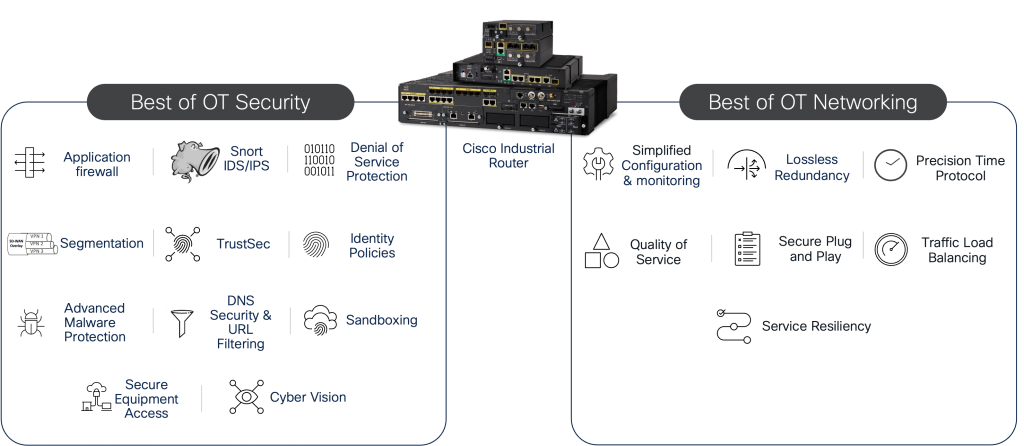
Cisco Industrial Router provides the best of OT security and rugged industrial networking
Zero trust remote access made for OT
Last, but not least, the CVD explores the various options for securing remote access to industrial networks and describes how to deploy Cisco Secure Equipment Access to enable zero trust network access (ZTNA) to the plant floor. Remote access solutions come in many forms, and it can often be confusing to understand which one will meet business needs. The design guide compares virtual private networks, the remote desktop protocol, and the evolution towards zero trust network access, ultimately leading to the deployment of Cisco SEA within a Purdue model architecture.
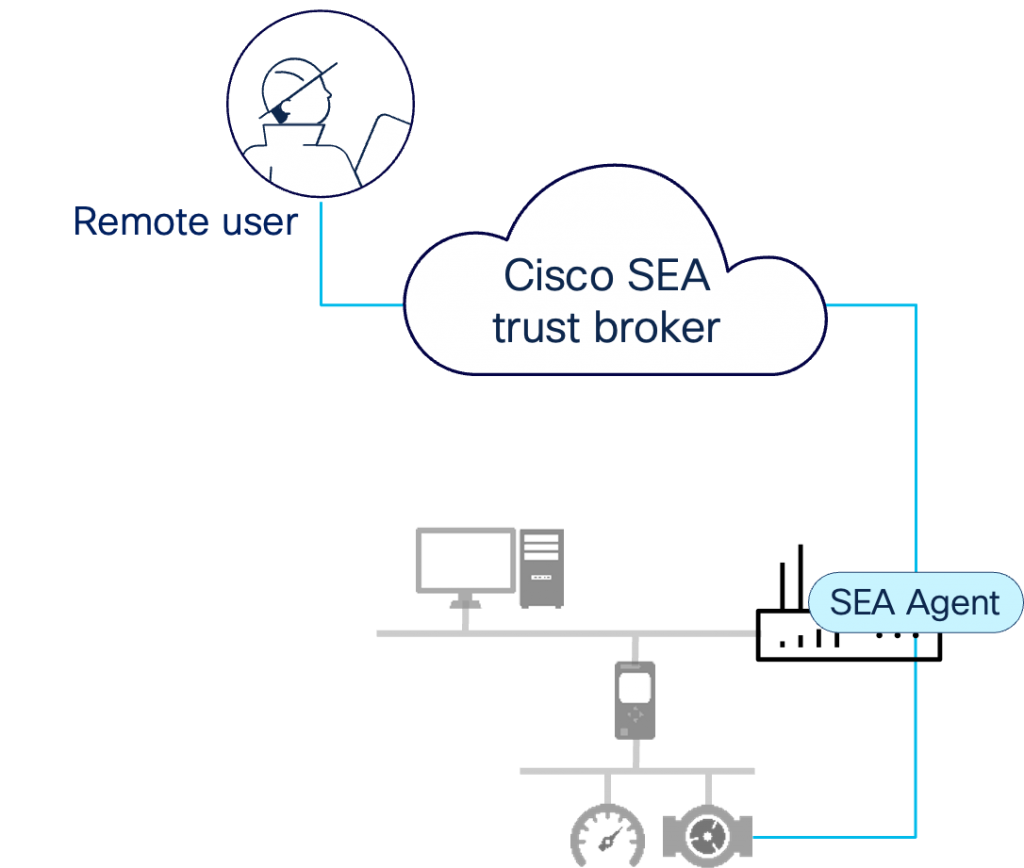
Cisco Secure Equipment Access enables ZTNA remote access in industrial settings
Learn More
The new version of the Cisco Industrial Security Validated Design is available now. It’s free to help everyone involved in building and/or securing industrial networks to implement advanced capabilities without fear of integration complexities or performance surprises. For further help, browse through a library of our industrial CVDs, or schedule a free, no-obligation consultation with a Cisco industrial security expert, and we will reach out to you.

Customers can take advantage of new capabilities of Wi-SUN FAN 1.1
With over 100 products certified by the Wi-SUN Alliance, Field Area Network 1.0 is a popular networking option for smart utility and smart city use cases. Electric utility metering, distribution automation, and municipal street lighting applications benefit greatly from FAN’s secure, self-forming, self-healing IPv6 wireless mesh networking which is able to support million scale deployments spanning large geographic areas.
Building on the strong foundation laid down by FAN 1.0, the Wi-SUN Alliance recently announced the availability of the first devices certified to support the new feature additions of FAN 1.1. These new FAN 1.1 capabilities include:
Figure 1 depicts an example multi-hop FAN 1.1 mesh. The mesh forms automatically between a set of deployed Routers and a Border Router providing WAN connectivity. A Router’s frequency hopping capabilities and ability to determine alternate data paths provide superior resiliency. Routers are further able to “parent” low power nodes.

The sub-GHz mesh RF links can individually stretch to several kilometers (depending upon local conditions), with multi-hop meshes able to span distances of 10s of kilometers. A single FAN 1.1 mesh can support thousands of Router nodes, each able to parent low power nodes. A classic utility deployment scenario is an electric meters (Router) parenting one or more low power water meters, gas meters, or environmental sensors. Adding additional meshes scales a deployment to millions of nodes.
The Catalyst IR8100 Heavy Duty Series Industrial Router will be the first member of the Cisco Resilient Mesh solution to be FAN 1.1 certified. Given its rugged design for harsh outdoor environments, flexible backhaul configuration, and security capabilities, the IR8140 is an ideal FAN 1.1 Border Router. An individual IR8140 can root a mesh of thousands of FAN 1.1 devices, with millions scale device networks achieved with the deployment of additional IR8140s. Following the IR8140, IR530 Range Extender, and Cisco Resilient Mesh Endpoint SDK will also be scheduled for FAN 1.1 certification, rounding out a complete Cisco FAN 1.1 portfolio of Border Routers, Routers, and endpoint design SDK.

Figure 2: Cisco IR8140 Border Router
Large FAN 1.1 networks require a network management system able to provide lifecycle management for million node networks. Cisco IoT Field Network Director is purpose built, and field proven to manage these large-scale networks.
“Wi-SUN 1.1 provides improved flexibility, security, and adaptive performance to unlock newer markets demanding high performance or low energy use cases in the growing Utility or Smart city landscape. Cisco’s Wi-SUN commitment has been focused on ease of use through simplified Zero Touch Provisioning, resiliency in varying RF conditions, interoperability and network management for endpoints and border routers through industry leading OpenCSMP to enable customers to build production networks with its industry leading solution at scale in a secure manner.” says Lakshmi Narayana Jammi, Sr Product Manager for Cisco IR8140 and Cisco Resilient Mesh SDK
“With the introduction of low power nodes and higher data rates, FAN 1.1 supports many new and exciting use cases. Cisco is well positioned to support this increase in utility and smart city network demand with OpenCSMP and Field Network Director, device and network management solutions that have proven ability to scale to millions of endpoints.” says Clay Stroud, Product Manager for Cisco Field Network Director.
“Wi-SUN FAN1.1 provides highly flexible communications capability allowing both high performance and low energy functionality on the same network, making it the obvious choice for an even broader range of industrial IoT applications such as utilities and smart cities” says Phil Beecher, President and CEO of the Wi-SUN Alliance. “We’re excited that Cisco will be supporting Wi-SUN FAN 1.1 communications infrastructure with its range of industrial routers, bringing proven reliability, scalability, and security to these critical infrastructure networks. “
For more information about the Wi-SUN Alliance and Field Area Network 1.1, head over to the Wi-SUN FAN information site.
Also see this additional information about Cisco Resilient Mesh products and Cisco Field Network Director.
Finally, if you are attending DISTRIBUTECH 2025, join us at Booth 1223 to see the Catalyst IR8140 and our IoT Field Network Director in person, as well key solutions to help utilities with their grid modernization projects in grid security, substation automation, distribution automation, renewable energy, and more.
Wi-Fi 7 offers a wealth of new services opportunities that go beyond the routine wireless upgrade. Recently, I assisted a local school, where my children attend, as they embarked on a wireless network refresh initiative. As the first school in the Catholic Diocese to upgrade, they sought to replace their outdated patchwork of Wi-Fi 4 and Wi-Fi 5 devices from various manufacturers; this inconsistency in design, performance, and management, is particularly common in various sectors like education, retail, and healthcare, and perhaps an overall pervasive problem with aging infrastructure that pre-dates Wi-Fi 6/6E and earlier installations.
The school’s primary goal was straightforward, to establish a secure, reliable, and easy to manage network infrastructure capable of supporting current and future demands. To achieve this, they invited proposals from various local IT providers, including resellers and Managed Service Providers (MSPs). As a Solutions Engineer in the IT industry working for Cisco Systems, I found it intriguing that all the solution proposals from the various vendors still centered around Wi-Fi 6E and older Wi-Fi 6 products — some of which would likely be announced soon for End-of-Life (EOL) or End-of-Sale (EOS)!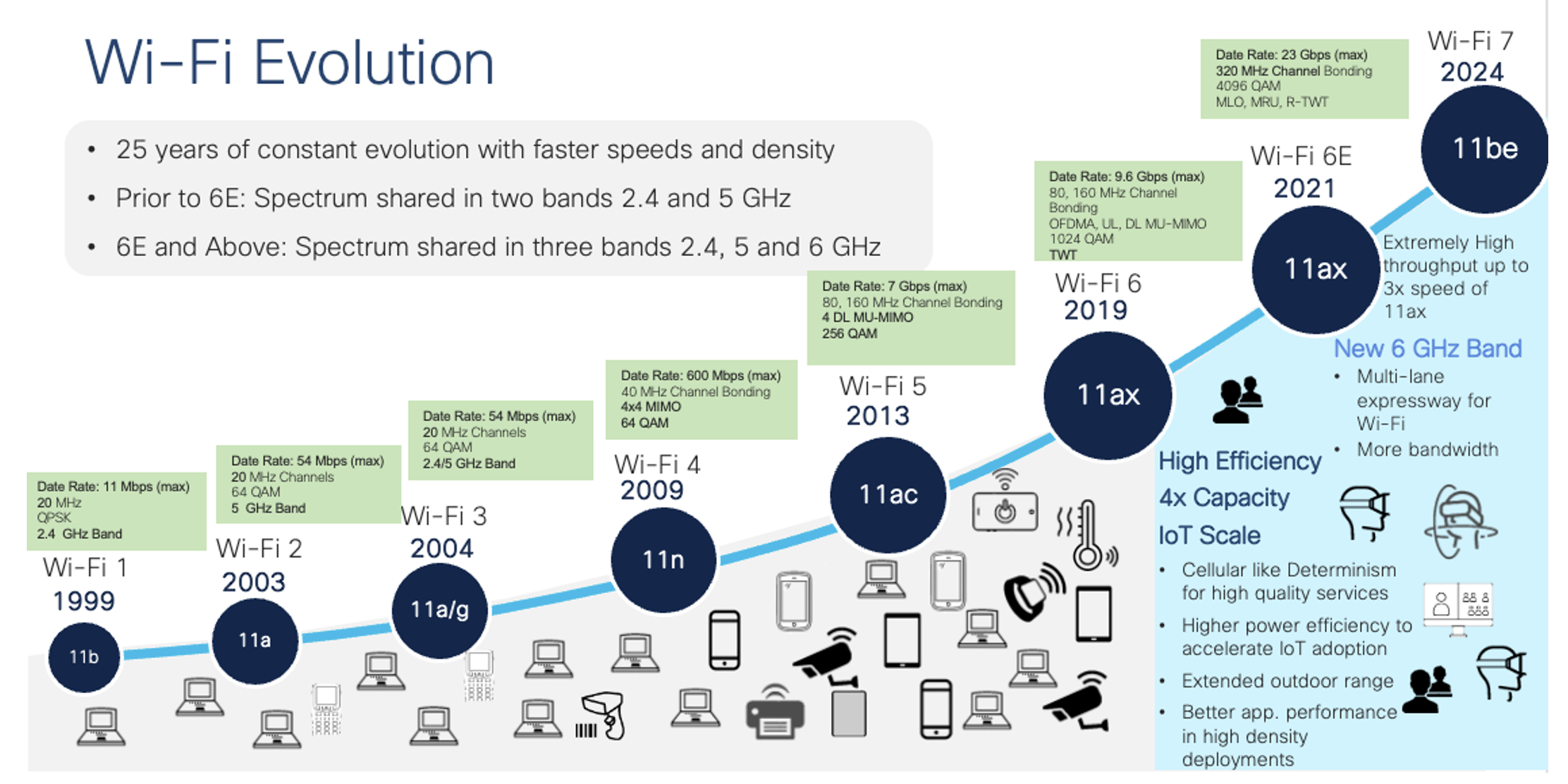
With Wi-Fi 7 entering its main adoption phase, I encouraged the school to look beyond Wi-Fi 6/6E. It became clear that information regarding Wi-Fi 7 was still trickling through the reseller and partner channels, and most were not well versed on the newer Wi-Fi 7 solutions. This prompted me to compile a summary of Cisco’s Wi-Fi 7 portfolio to highlight its transformative opportunities for end customers, resellers, and MSPs alike.
Focusing on the Key Takeaways regarding Cisco Wi-Fi 7
Cisco unveiled a comprehensive suite of Wi-Fi 7 products in November 2024 and followed up with additional product announcements in February 2025.
Key takeaways on Cisco’s Wi-Fi 7 product portfolio:
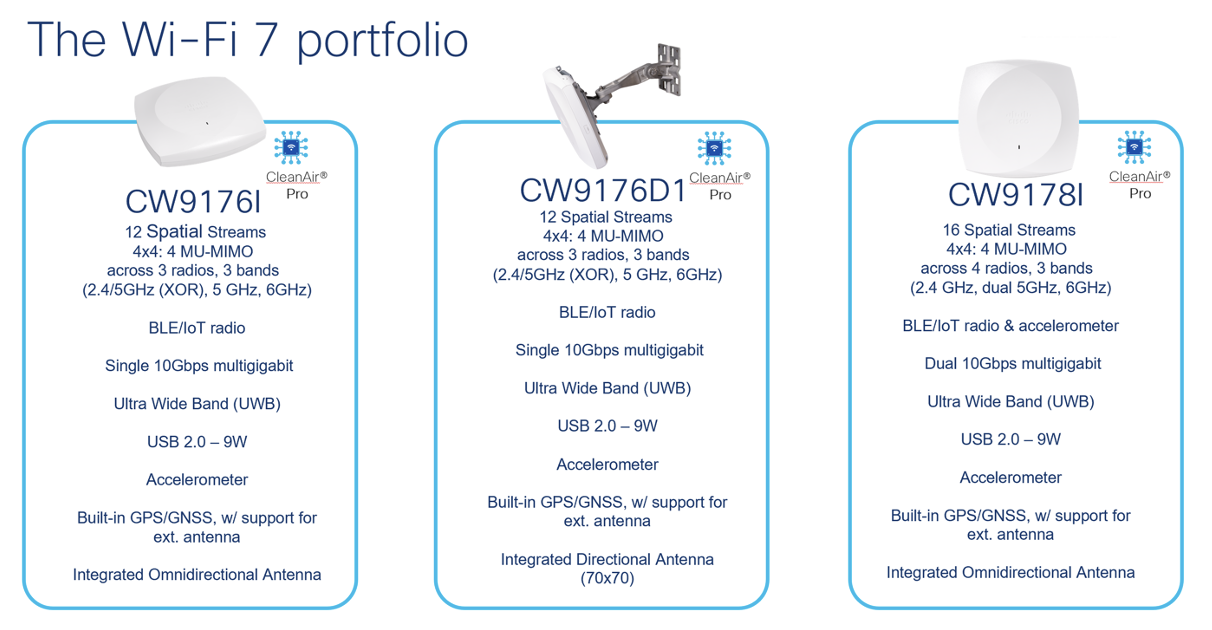
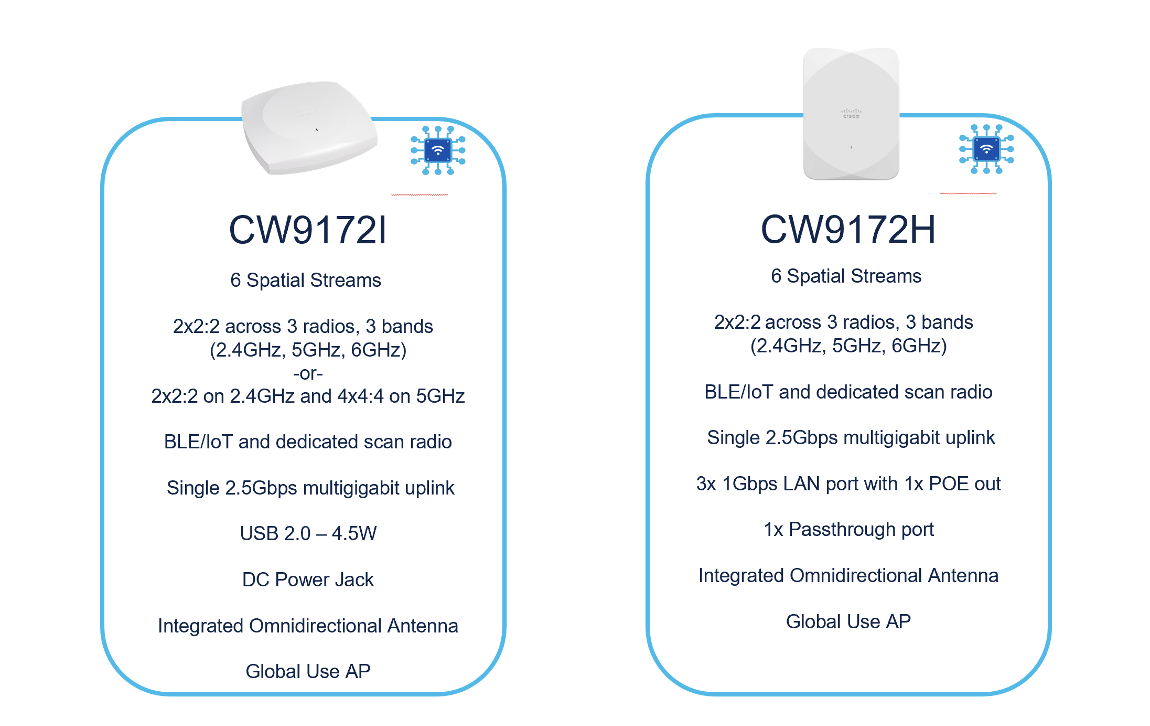
Opportunities that Wi-Fi 7 Brings for MSPs/Partners
Proposing a managed wireless service built around Wi-Fi 7 technology for an MSP can be compelling for several reasons:
By adopting managed wireless networking services centered on Wi-Fi 7 technology, MSPs are well-equipped to meet the growing demand for advanced wireless solutions, thereby enriching their service offerings and driving business growth.
In the context of my story, the school took the guidance to heart and conducted a thorough evaluation of their options. Recognizing the transformative potential of leveraging cutting-edge technology, they concluded that a Cisco-based Wi-Fi 7 deployment simply made more sense. This choice not only fulfilled their goals of establishing a secure, reliable, and easy-to-operate network, but also emerged as the more practical and overall, more cost-effective solution for the long run. The solution provided an excellent balance between current needs with future scalability, ensuring longevity from their investments.
By adopting this more forward-thinking strategy, the school positioned itself at the forefront of technological advancement, setting an example for other schools in the district. Their approach serves as a reference, illustrating the benefits of embracing new technology to enhance educational environments. This move ensures they not only meet the current demands of digital learning but also lead the way in setting new standards for educational connectivity.
Register for the upcoming Managed Services Voice of the Engineer session to learn more about Cisco’s innovative Wi-Fi 7 portfolio