There’s a great deal of talk around the capability of Wi-Fi 7 (IEEE 802.11be) to revolutionize the wireless experience. It’s not hype. A key feature that delivers this transformative impact is multi-link operation (MLO). A mandatory and defining component of 802.11be, MLO enables a multi-link device (MLD) to simultaneously operate across multiple frequency bands, including 2.4 GHz, 5 GHz, and 6 GHz.
Access point (AP) and non-AP MLDs learn each other’s MLO parameters and capabilities through the multi-link information elements exchanged in frames like Beacons and Association Request/Response. In this blog, I’ll illustrate MLO’s impact on wireless connectivity and show you how it works in simultaneous transfer/receive (STR) mode.
How does multi-link operation (MLO) enhance wireless connectivity?
MLO introduces significant benefits for a variety of use cases. Key enhancements include:
Type of MLO operation modes
Wi-Fi 7 defines several single and multi-radio MLO modes, with stations able to support these modes based on their respective hardware capabilities. Various software thresholds—such as bandwidth requirements, band preferences, RF congestion, and QoS—will influence and guide a station’s choice of operating mode.
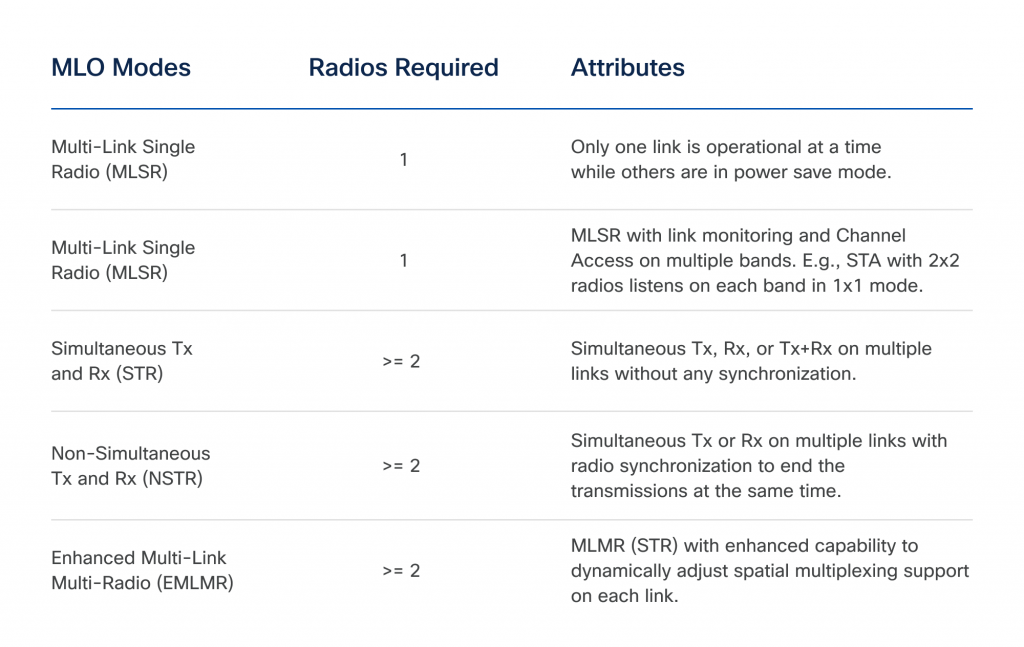
Among these modes, MLSR is required to be supported by all AP and non-AP MLDs. Support for EMLSR and STR modes is mandatory for AP MLDs, but optional for non-AP MLDs (stations). STR is currently incorporated by most vendors, making this mode an excellent starting place for dissection.
MLO’s STR mode in action
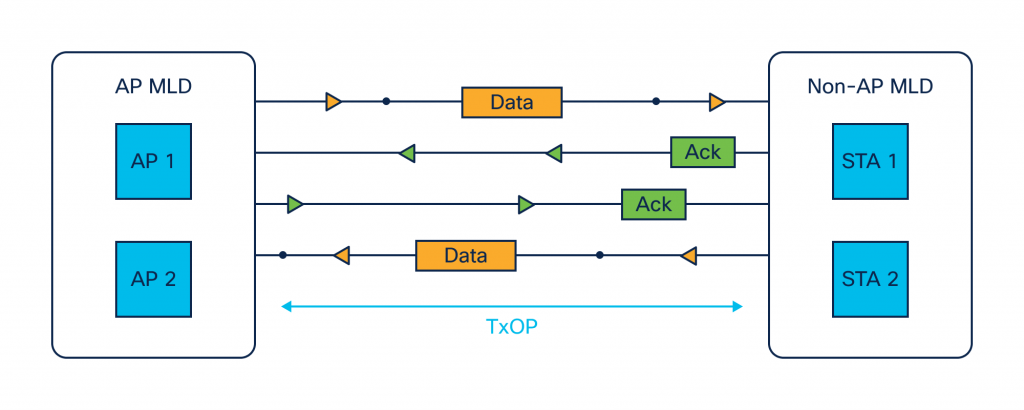
In STR operation, each link can be used to Tx or Rx concurrent physical layer protocol data units (PPDUs) without any synchronization. Figure 2 illustrates an example where an AP MLD and a non-AP MLD are operating over an STR link pair. Both devices contend for access to the wireless medium and engage in subsequent frame exchanges on those links.
After the AP MLD and the non-AP MLD complete a multi-link setup to successfully establish link 1 and link 2, and with the links enabled, AP 2 can receive data frames from STA 2 on link 2. Meanwhile, AP 1 contends for the wireless medium and, upon securing a transmit opportunity (TXOP), transmits data frames to STA 1 on link 1.
Next, let’s conduct a lab test using Cisco’s CW9178 AP running on Catalyst 9800 Wireless LAN controller (WLC) to demonstrate STR in action.
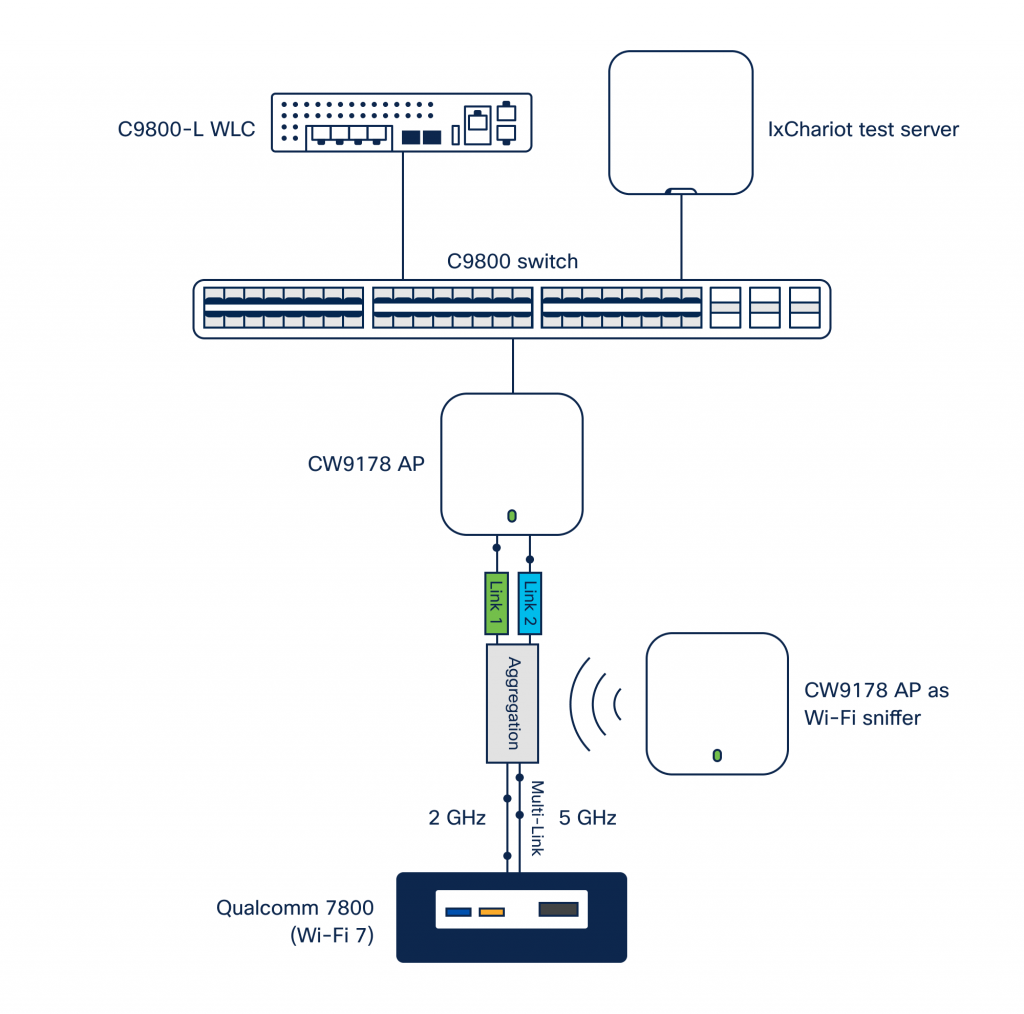
The access point under test (APUT) is configured to operate on 2.4 GHz (20 MHz) and 5 GHz (40 MHz) bandwidths with a WPA3-SAE WLAN. In the first step of the test, Wi-Fi 7/802.11be/MLO is enabled on both bands. We are using a Qualcomm 7800-based STR/MLMR-capable station, while the CW9178 AP serves as the sniffer—capable of capturing data across multiple bands and decoding Wi-Fi 7 frames.
Next, let’s associate the STAUT and check the capability details in both the WLC and Wireshark. During the association process, multiple elements are exchanged: the MLO information elements for the 5 GHz Association link, as well as the “Per-STA Profiles” information elements containing details about the non-association link (2 GHz).
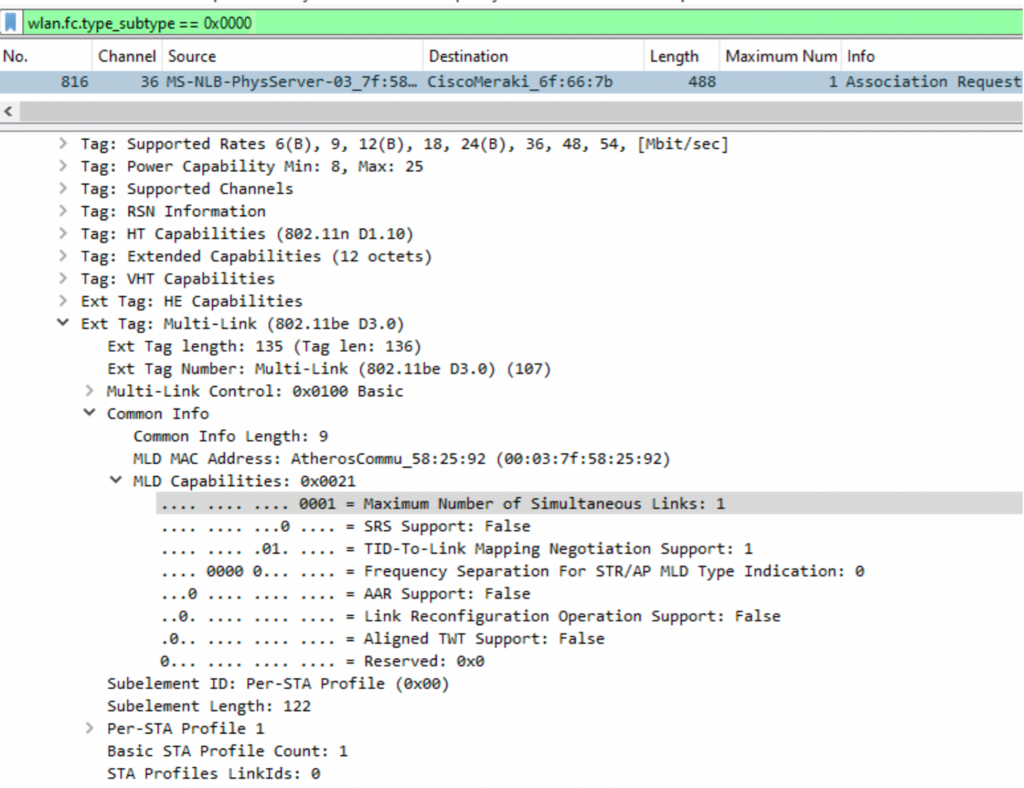
The WLC identifies the STA as STR capable if the “Maximum Number of Simultaneous Links” value in the ML information element of the association request is non-zero. This indicates the number of radios the station is using for its association. See Figure 4 below for the corresponding Wireshark capture.
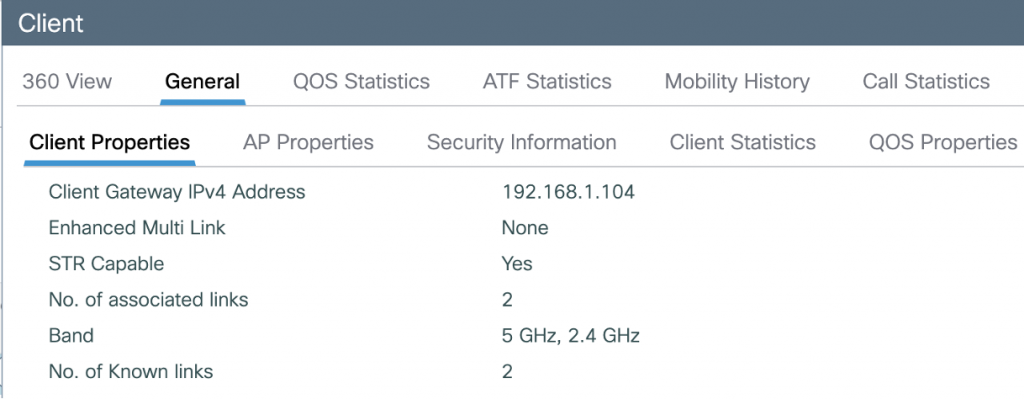
The Catalyst 9800 WLC provides a clear display of the STA’s 802.11be capabilities, including MLD links with Slot IDs and bands, MLO mode support (STR/eMLSR), and Tx/Rx RF and data statistics for each band. Equivalent CLI commands are also available, though not covered in this blog.

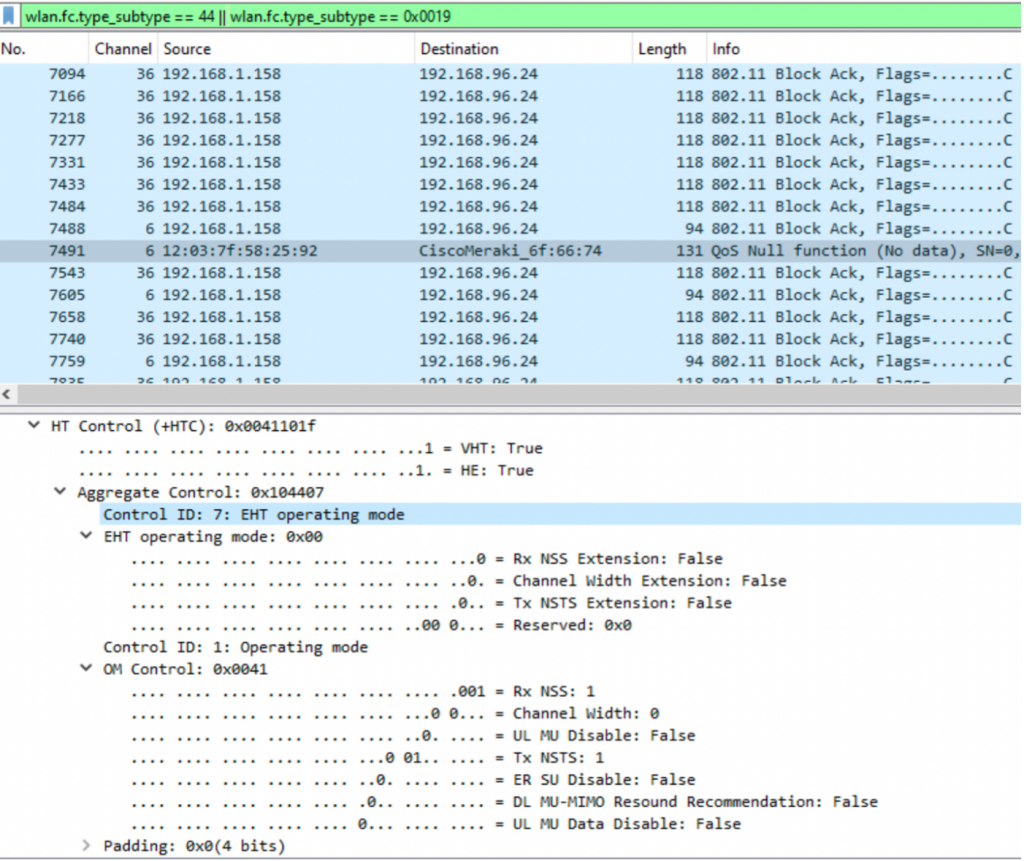
Now that the STA has associated on the 5G band with an STR link to both the 5G and 2G bands, let’s initiate traffic for one minute to verify STR operation. Using the IxChariot server, we will begin full-bandwidth Downlink UDP traffic. Initially, traffic will flow only on the 5G band, as it is the only active association link. However, the STA will soon assess the need for a secondary link to achieve higher bandwidth. It will then send a QoS Null data frame over the secondary (2G) link. The AP acknowledges this request and enables simultaneous data transmission across both bands.
Figure 6 shows the sequence starting with data on channel 36, followed by a QoS Null data frame on channel 6, and concluding with simultaneous data transmission on both channel 6 and channel 36.
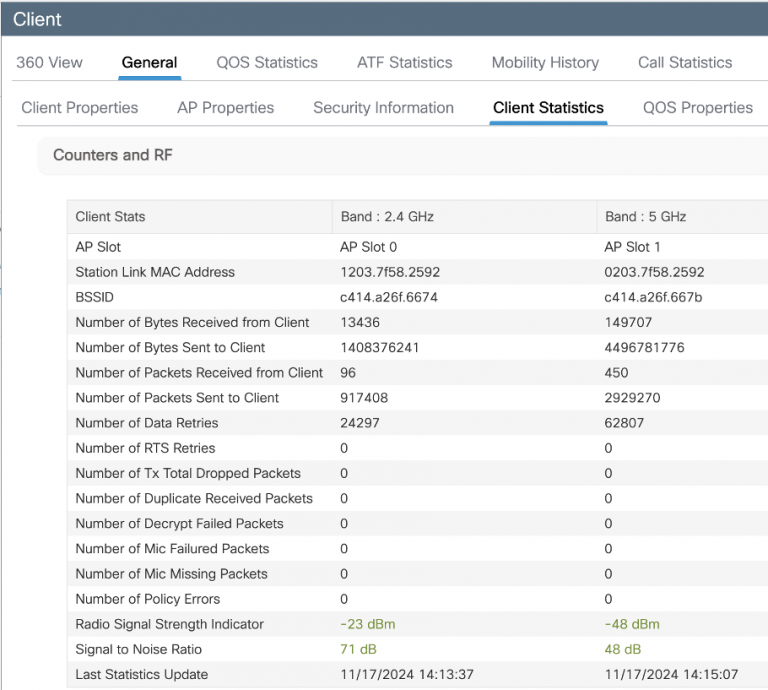
The Catalyst 9800 WLC offers a comprehensive view of the client’s performance on each MLO link, with monitors providing detailed Tx/Rx data along with RF statistics.
Following the one-minute traffic run, the average throughput measured is 747 Mbps, as shown in Figure 8.
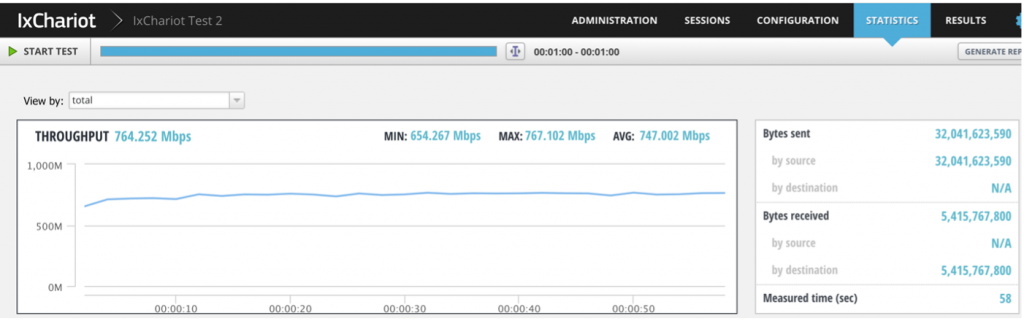
To provide a comparison, the test was repeated under the same conditions, but with 802.11be/MLO disabled, running in 802.11ax mode instead. The average throughput was 506 Mbps.
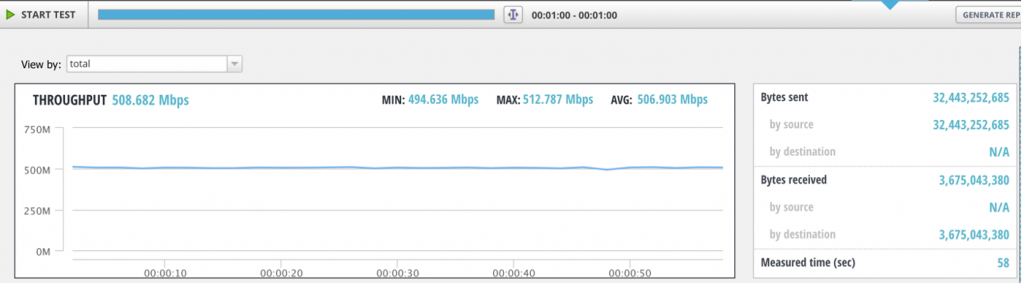
The table below summarizes the throughput comparison between clients. The impact is indeed transformative: Wi-Fi 7 with STR MLO significantly outperforms Wi-Fi 6, delivering a 47% throughput increase, along with more efficient spectrum utilization.The CW9178, CW9176I, and CW9176D APs, along with 9800 series wireless controllers, will fully support Wi-Fi 7 capabilities and features in the upcoming IOS XE 17.15.2 (currently in Beta) release.

The CW9178, CW9176I, and CW9176D APs, along with 9800 series wireless controllers, will fully support Wi-Fi 7 capabilities and features in the upcoming IOS XE 17.15.2 (currently in Beta) release.
The first in a series of blogs throughout 2025 highlighting the state of IPv6 across the industry, best practices to consider, and how Cisco is helping customers on their journeys with its products and services.
The complex history of IPv6
IPv6: a protocol with a long and winding history, and one that is sure to evoke a wide range of reactions upon mention – from skepticism to curiosity, from dismissal to openness, from indifference to fear, and everything in between. Most of the time, the first things I hear are either “It’s never going to happen” or “What’s going on with IPv6 anyway?” The first is quite easy to address – it is happening. The progress may not be uniform around the world nor across market segments, but the data is there, and it may come as a surprise to many.
The rise of IPv6 traffic
The percentage of global IPv6 traffic Google sees across all its properties from users did not cross the 1% threshold until 2013. Since then, it has risen dramatically, hitting around 48% at the end of 2024. Going by country, the United States is at 53%, while France, Germany, and India are at 78%, 76% and 72%, respectively. As of 2022, Akamai saw 52% of their US traffic as IPv6 and Facebook was seeing over 61% in the US. And yet when one digs into the data, you find that Residential and Mobile segments have driven a lot of these numbers, with Enterprise and Public Sector lagging.

Delayed adoption despite early promise
Given these prominent levels of adoption, it is natural to wonder why it has taken so long to deploy a protocol that is 30 years old (!). Many people have memories of the 1995-2015 time period where there was a lot of talk and hype around IPv6, but nothing ever seemed to materialize. Network professionals got rounds of training, it was incorporated into exam material, and we even had previous government mandates, but nothing ever seemed to get deployed.
Around the same time as the creation of IPv6, the industry also developed some life extenders for IPv4 – CIDR, VLSM, NAT and RFC 1918 private address space – that turned out to be so effective they delayed the need for IPv6 not just by a couple years, but by several decades. But as successful as they were, they still could not overcome the fact that 32 bits simply isn’t enough space for today’s global Internet. We ran out of new public IPv4 addresses to hand out in the mid 2010’s and are still feeling the consequences: Prices have skyrocketed on the secondary markets. ISP’s have had to increasingly deploy Carrier Grade NAT and shoulder the operational issues that accompany it. Enterprises have had to constantly re-address their networks to squeeze every last bit out of each subnet. Furthermore, many have had to deal with the pain of overlapping private address space, as different parts of their network started using the same address blocks independently. This forces more and more NAT just to achieve internal communication, let alone external connectivity.
The shift towards IPv6

The good news is we had a solution ready to go – it had just been in hibernation. However, it was going to require a team effort, an endeavor that has been working well in some areas, but that we still struggle with in others. Service Providers, both mobile and terrestrial, have IPv6-enabled many of their networks (with some choosing to run a single-stacked IPv6 core), large content providers have turned on dual-stack to serve as many potential customers as possible, and major operating systems vendors have ramped up their support. Combine these with developments like Happy Eyeballs (an algorithm built into most endpoints that will attempt IPv6 first, but quickly fail over to IPv4 without any noticeable delay to the user) and you begin to see why adoption has significantly increased.
However, more work is needed within Enterprises. There are a whole set of middleboxes, software suites, monitoring and management tools, identity and policy products, and other operational considerations that present challenges not faced by mobile and home users.
Governmental support and IPv6 moving forward
Many governments around the world, including the United States with OMB M-21-07, have seen this and are putting more emphasis behind closing these gaps [1]. They foresee an IPv6-only future and know that remaining in a dual-stack state indefinitely is the worst situation to be in, even though it is almost certainly required in the short-term. This future is not just about overcoming address exhaustion, but also presents new and exciting opportunities around architecture and operations that simply were not possible in a constrained IPv4 world. While Cisco has published a bit on this previously [2], my colleagues and I are going to use the rest of 2025 to lay out a series of blogs that will help you on that journey: how to think about and plan your new (nearly infinite) address space, how to transition from IPv4-only to IPv6-only, considerations for security and operations, the role of fabrics and other architectural designs, and what management and monitoring looks like in an IPv6 world. Stay tuned!

In today’s fast-paced digital landscape, IT efficiency and security are paramount. Many federal customers are realizing Enterprise Agreement (EA) benefits while adopting Cisco solutions at scale, saving millions of dollars annually and accelerating value and innovation. Without EA, customers plan for years, unable to prioritize and execute based on budget gaps alone. How can Cisco EA, FedRAMP Artificial Intelligence integrated solutions, and Cisco’s Expert Care National (ECN) Services enhance your organizational efficiency and trust?
Cisco Enterprise Agreements: Streamlining IT Management
Cisco Enterprise Agreements offer a comprehensive approach to software licensing, designed to streamline software procurement, management, and renewal. By consolidating various software purchases into a single agreement, organizations can achieve:
Cost Savings through Contract Bundling and Consolidation
Bundling services under Cisco’s Enterprise Agreements offers additional benefits:
FedRAMP: Ensuring Security in Cloud Software as a Service (SaaS) Solutions
Federal Risk and Authorization Management Program (FedRAMP) is crucial for government workforce enablement, ensuring cloud services meet stringent security requirements. Here’s how FedRAMP impacts efficiency and trust:
Expert Care National Services: Enhancing Operational Efficiency
Cisco’s Expert Care National Services complement the trust established by FedRAMP and the efficiency of Cisco EA Services by providing:
Alignment with Cisco Enterprise Agreements, FedRAMP compliance, and Cisco’s Expert Care National Services creates a robust framework for enhancing IT operations efficiency and trust. By leveraging these programs, organizations not only ensure compliance with federal standards but may also benefit from significant cost savings and operational agility. For those looking to transform their IT landscape, these options represent a strategic path forward, ensuring both security and efficiency in an increasingly digital world.
Call your Cisco account team today or contact us to validate which EA best fits your requirements and accelerate your IT efficiency!
Cisco is powering the world’s most connected venues
In recent years, there has been a significant increase in the need for robust and reliable high-speed Wi-Fi in sports and entertainment venues. Wi-Fi networks offer numerous opportunities to enhance both the attendee experiences and drive operational efficiencies for venues, but they also present challenges. It is crucial to deploy a Wi-Fi network that can meet the growing expectations of fans while keeping the total cost of ownership in check.
Here are some of the opportunities that Wi-Fi networks bring to sports and venues:
Enhanced Guest Experience
More than 82% of sports fans say they use their mobile phones in some way while at a live professional sporting event. Keeping fans connected and engaged by delivering a more convenient and customized fan experience through technology is essential in today’s event experience. The in-venue experience needs to compete with an ever-more-attractive at-home viewing experience. Fans expect a seamless mobile ticketing entrance, the ability to check fantasy and sports betting applications in real-time, and an easy social media sharing experience. Furthermore, interactive services like ordering food, wayfinding maps, real-time replays, and merchandise promotions add a level of personalization that guests value and keeps them coming back.
Operational efficiency and lower total cost of ownership
Innovative Wi-Fi networks bring significant benefits to venues by enhancing operational efficiency and reducing the total cost of ownership (TCO). With its improved data speeds, increased capacity, and lower latency, the technology’s ability to handle a higher density of devices ensures smooth operations during large events, minimizing downtime and improving customer experience. Additionally, energy-efficient designs reduce power consumption, helping stadiums lower operational costs in the long term. By providing faster troubleshooting, more seamless device management, and the ability to support a broader range of IoT devices, enhanced Wi-Fi networks enable stadiums to optimize their infrastructure and reduce maintenance expenses, while delivering a superior, modern experience for everyone.
Increased revenue and business growth
Wi-Fi networks offer new opportunities for monetization, such as digital advertising and promotions based on user data. The NFL’s 32 teams generated an estimated $2.35 billion in sponsorship revenue last season which was up 15% YoY. As the game day experience continues to evolve with technology so does the opportunities for sponsorable assets and content.
Wi-Fi 6E
Our best-in-class portfolio has been supporting successful deployments in sports, media and entertainment for more than 15 years. Beyond just wired and wireless networking, we offer collaboration tools, comprehensive cybersecurity, and management solutions that deliver enhanced insights and automation. This ensures a more secure, consistent, and scalable infrastructure that is easier to manage, more flexible, and more resilient than ever before.
We just added to our portfolio a Wi-Fi 6E solution tailored for high-performance in sports and entertainment venues. Our access points leverage Wi-Fi 6E technology with versatile hardware options to suit various venue configurations.

The Denver Broncos have implemented our Wi-Fi 6E solutions stadium-wide, enabling faster internet for fans to follow games, share images, videos, and more during events.
Learn more about our solution here.
Modern applications have transformed how the world conducts business — driving unprecedented agility and innovation that push the boundaries of what’s possible. However, as applications continue to extend beyond private data centers and spread across multiple cloud service providers and in edge devices, organizations have lost critical visibility into these distributed environments. This observability gap has made it increasingly difficult — if not impossible — for network teams to diagnose application availability issues across multicloud, hybrid environments. In words familiar to the CCIE, “How does one plug a packet sniffer into the cloud?”.
At Cisco, we believe that innovation doesn’t have to come at the expense of a resilient network, and we’re teaming up with like-minded technology partners who share this core value. I’m excited to announce new integrations between Cisco and Amazon Web Services (AWS) that give network teams the visibility they need to quickly and accurately troubleshoot application availability issues across today’s dynamic multicloud networks.
Kernel-level visibility delivers true network observability
Multicloud visibility starts with deep workload observability applied at the kernel level. Isovalent (recently acquired by Cisco) are the co-creators of eBPF, Cilium and Tetragon — technologies that are already the de facto standard for cloud-native networking and security. For Kubernetes users, including those running on AWS Elastic Kubernetes Service (Amazon EKS), eBPF-based Cilium delivers networking, security and observability natively within Kubernetes environments. Every time a process reads a file, spawns another process or opens a network connection, eBPF code embedded in Cilium executes in the kernel, allowing it to gather detailed telemetries — such as TCP and UDP protocol data, packet loss and latency. Cilium is an open-source community project supported by Cisco. In addition, Isovalent Enterprise is offered as a step-up with additional capabilities in networking, observability and security.
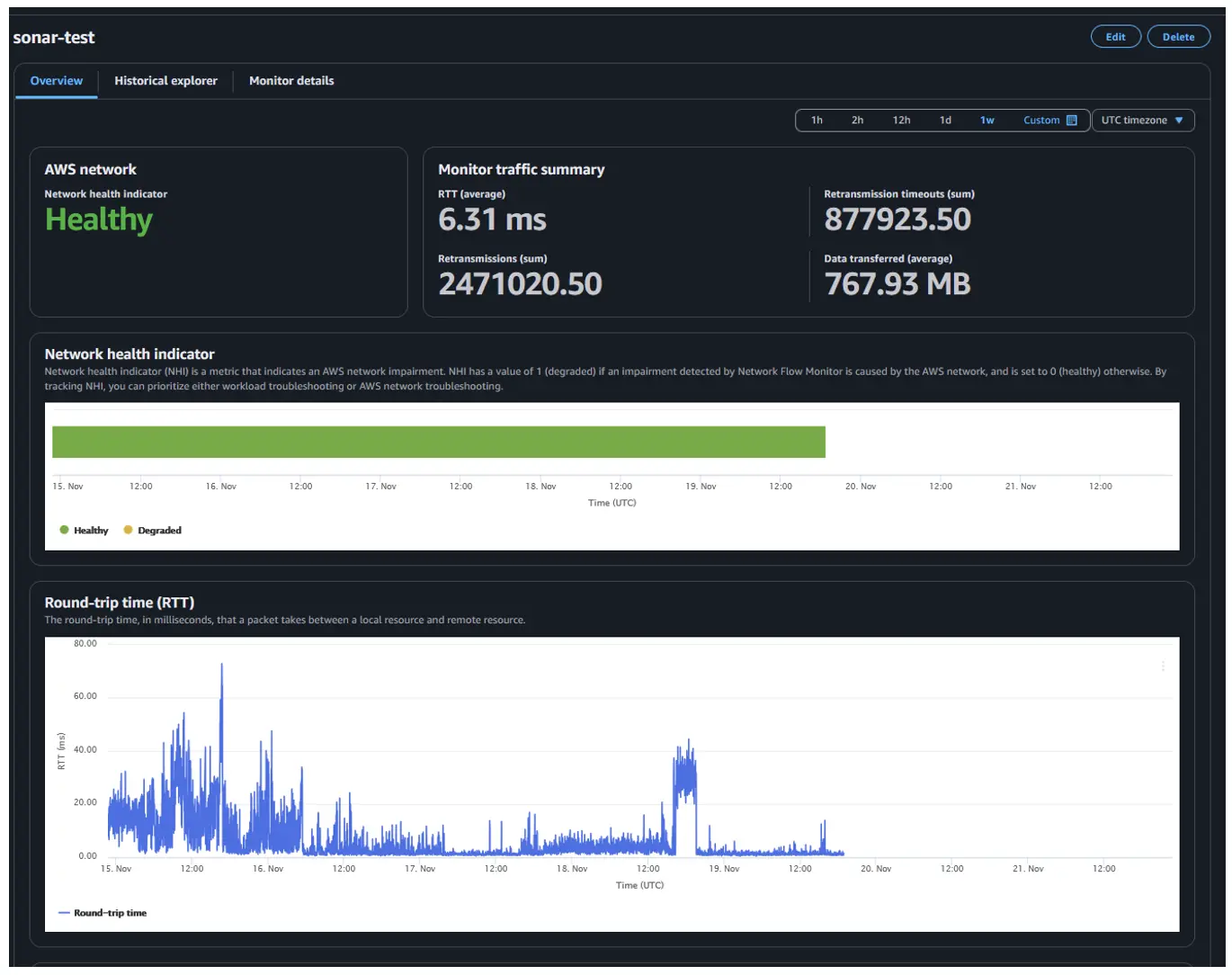
The new integration between Isovalent Enterprise and AWS pushes networking telemetry directly to Amazon CloudWatch Network Monitoring where workload data can be correlated to actual network performance metrics in AWS environments. These insights can also flow into Splunk, where network teams can create unified dashboards that combine metrics from on-premises networks, cloud networks and application performance, and security teams can leverage this data for threat detection and policy enforcement. Enriching workload visibility data with AWS network performance and making it available to Splunk enables real-time visibility into the entire AWS network fabric, giving network teams the level of observability and control they need to build and optimize truly agile environments that run today’s modern applications.
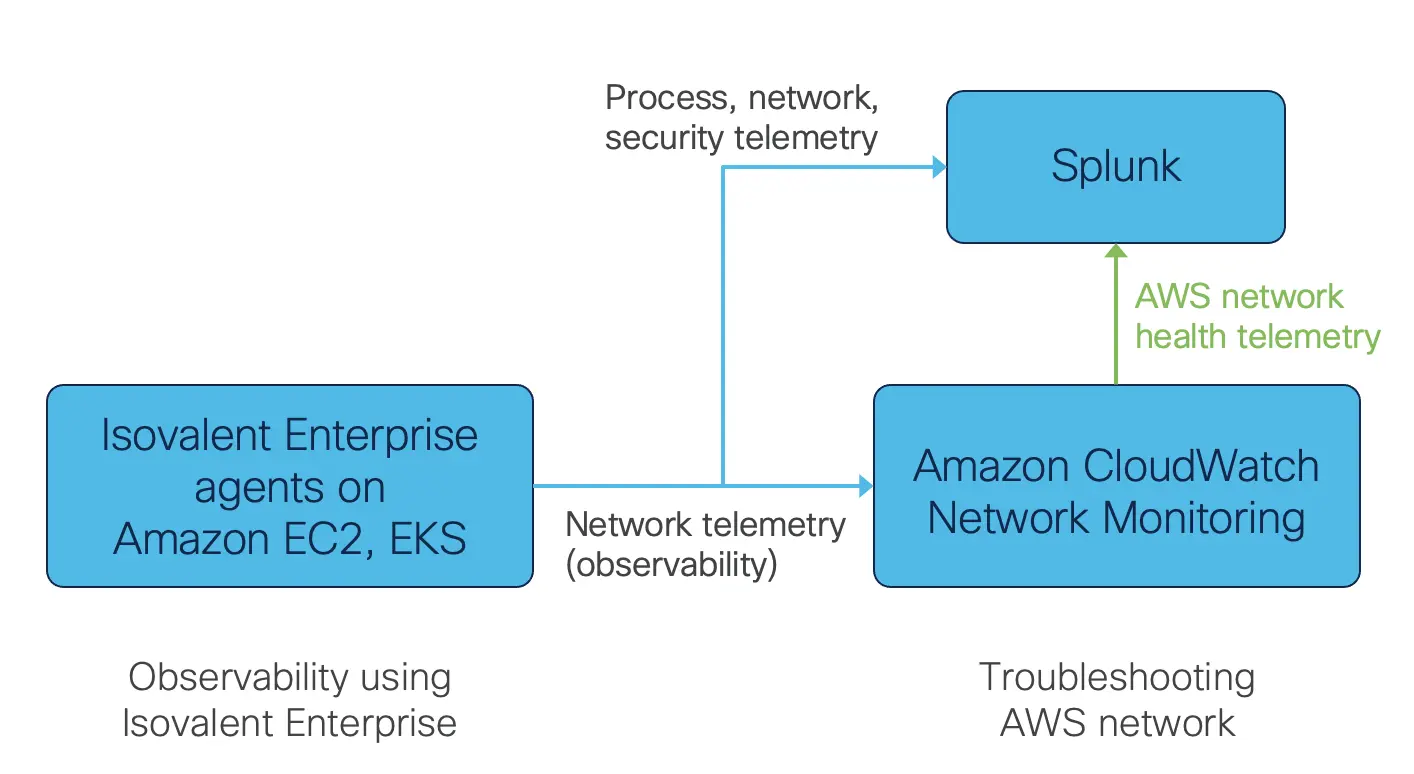
The deep integration in practice
Let’s see how the Cisco and AWS integration would work in the real world. One of our financial services customers recently migrated a critical trading application to AWS. The application was written so that certain workloads run in the cloud for scalability while keeping sensitive data on-premises for compliance. Their network team had sophisticated tools for monitoring on-premises performance but found that they had gaps in their network visibility when traffic moved to the cloud. It became difficult to distinguish between application issues and underlying network problems. When users complained about performance, the network team couldn’t tell if the problem was their application, the AWS network or somewhere in between. The new, deep integrations between Cisco and AWS give our customer’s networking team detailed insights into process-level activity within all workloads. This allows them to monitor network performance metrics, visualize the entire application path and correlate all the data for rapid troubleshooting — all in one central management plane. What used to take days of finger-pointing between teams now takes minutes to resolve.
“As the scale of customers’ networks on AWS and on-premises grows with modern distributed workloads, customers have told us that enforcing unified end-to-end security policies has been a significant challenge. Also, when network faults occur, customers require fast and accurate triangulation of the fault. To address this, we’ve worked with Cisco to unify end-to-end digital resilience by integrating Hypershield, Splunk, and Amazon CloudWatch Network Monitoring for hybrid workloads, enabling customers to accelerate cloud migration for such workloads.”
Robert Kennedy, VP, AWS Networking
Providing a breadth of assurance and security capabilities
In addition to the integration covered above, Cisco ThousandEyes is also announcing general availability of Cloud Insights, a new multicloud product aimed at extending cloud infrastructure discovery and configuration changes to application performance. This new solution extends ThousandEyes’ well known path visualization capabilities into the AWS network and also correlates how traffic flow impacts application performance. By combining this with ThousandEyes’ existing network and application synthetics, you get true end-to-end assurance — from your data center, across the internet or Direct Connect and deep into the AWS infrastructure.
Finally, Cisco Hypershield builds on top of Isovalent technology, delivers the visibility above, and provides security controls at the workload and network level across multi-cloud and hybrid environments. Hypershield uses enhanced telemetry, AI analysis and recommendations to simplify security via its first use cases: Autonomous Segmentation and Distributed Exploit Protection.
Our new approach
The Cisco and AWS integration is a radically new approach to ensuring the availability of modern applications in today’s multicloud, hybrid environments. Today’s announcement brings together deep workload visibility, network performance monitoring, and security in a way that’s never been possible before.
Are you at AWS re:Invent Dec 2–6,2024, Las Vegas, NV? Please visit us at Cisco booth #1332 and Splunk booth #1342.
For more information:
From the devices we carry and the buildings where we work to the millions of terabytes transmitted around the world every day, our world runs on wireless technology. With the arrival of Wi-Fi 7, a new era of connectivity is upon us, promising unprecedented speed, reliability, and innovation. Choosing the right partner to navigate this new chapter is crucial. Here is where Cisco stands out as your ideal choice.
Key features of Wi-Fi 7 and solutions from Cisco
1. Increased speed and capacity
Cisco Wi-Fi 7 solutions deliver speeds up to 46 Gbps, nearly four times faster than Wi-Fi 6, ensuring seamless performance for bandwidth-heavy applications like augmented reality (AR) and virtual reality (VR). This capacity allows for rich, lag-free user experiences.
2. Smart, immersive spaces with Cisco Spaces
Included with every wireless license, Cisco Spaces turns Wi-Fi 7 into the foundation of intelligent, connected spaces. With AI-powered 3D mapping, IoT services, and real-time asset tracking, businesses can create immersive experiences—think hospitals tracking critical equipment or offices guiding employees to available meeting rooms.
3. A reimagined, simplified licensing model
Cisco Networking Subscription introduces a streamlined approach to deploying and managing Wi-Fi 7 networks. This new model unifies network management, simplifying operations and allowing organizations to adapt seamlessly as their network needs evolve.
4. Multi-link operation (MLO)
A standout feature of Wi-Fi 7, MLO allows devices to use multiple frequency bands simultaneously. This capability enhances reliability and reduces latency, providing a consistent, high-performance experience. Cisco Wi-Fi 7 solutions leverage MLO to set a new standard for wireless networks.
5. Enhanced security across all bands
Cisco Wi-Fi 7 enforces advanced security protocols, moving beyond outdated encryption standards to reduce vulnerabilities and ensure your network remains secure and resilient.
Unique innovations for Wi-Fi 7
Cisco Wi-Fi 7 access points are engineered with the future in mind, ensuring that your network infrastructure meets current demands while being adaptable for the coming years. Our unified subscription and hardware provide unmatched flexibility, enabling a seamless wireless management experience across cloud, on-premises, and hybrid environments.
Moreover, the integration of ultra-wideband (UWB) radio technology allows Cisco Wi-Fi 7 access points to offer high-speed data transfer and centimeter-level location precision. This feature supports critical applications in logistics, healthcare, and manufacturing, enabling precise asset tracking and advanced location analytics.
Transformative potential spanning industries
Cisco Wi-Fi 7 solutions can unlock myriad new possibilities, with potential for:
A vision for a more connected world
These innovations and features contribute to a larger vision that Wi-Fi 7 will help bring to life: a world that is more connected, secure, and capable of delivering enhanced digital experiences. Cisco’s commitment to staying ahead of the curve with advanced technology, simplified operations, and robust security makes it the trusted partner for businesses looking to embrace the future of wireless connectivity.
Seamless, reliable connectivity isn’t just a nice-to-have anymore—it’s essential for modern business operations. As the demands on networks grow, Wi-Fi 7 takes the foundation laid by Wi-Fi 6 and elevates it further to deliver more consistent throughput and latency for higher-density networks. This reliability is important when using a 5G SIM credential for authenticating into a Wi-Fi 7 access network. The operator wants to know they are moving their users’ traffic to a good Wi-Fi network, and Wi-Fi 7 provides the capability to do that.
Key features such as Multi-Link Operation (MLO) allow devices to communicate over multiple channels simultaneously, reducing congestion and ensuring ultra-reliable, low-latency connections. This is crucial as businesses deploy more devices—from IoT sensors to augmented reality (AR) tools—and need networks that can handle the increased load without sacrificing performance.
For businesses, Wi-Fi 7 is not just about faster connections; it’s about creating smarter, more efficient networks that support modern applications and workflows. From retail to healthcare to logistics, Wi-Fi 7 is set to improve the way businesses operate by offering seamless connectivity and greater network reliability.
Wireless convergence: the future of seamless networks
Wireless convergence is the ability to use multiple access networks together for an optimal end-user or device experience. Wi-Fi and 5G are the world’s dominant wireless access networks. For carriers, the idea is to make the underlying network technology invisible to the user. Whether they’re connected via Wi-Fi or 5G, they experience the same fast, reliable service without noticing any transition.
This convergence is essential for industries like retail, healthcare, and logistics, where constant connectivity is crucial for both customer experiences and business operations. However, achieving seamless transitions between networks requires overcoming challenges like managing multiple access points, interference, and securing connections across both business and consumer environments. This is where OpenRoaming comes into play.
OpenRoaming: Simplifying connectivity across networks
Seamless wireless roaming, especially between Wi-Fi and 5G networks, has long been a challenge. While 5G offers global connectivity due to established business-to-business roaming agreements between carriers, Wi-Fi networks require a roaming methodology to seamlessly authenticate when accessing different Wi-Fi hotspots.
OpenRoaming, now an industry standard run by the Wireless Broadband Alliance, addresses this gap by using Wi-Fi Alliance (WFA)’s Passpoint technology to enable automatic, secure connections across millions of Wi-Fi access networks. This eliminates the need for manual log-ins or captive portals, making Wi-Fi as easy to access as cellular but using many different credentials you already have, like the SIM card in your phone or even your Apple or Google ID for authentication.
For businesses, this means reduced friction, streamlined connectivity for both customers and employees, and a boost in satisfaction as users experience seamless transitions across networks.
Wi-Fi 7 and wireless convergence in action
The convergence of Wi-Fi and 5G is not just theoretical—it’s already playing a critical role in various industries. Wi-Fi offload is a perfect example. When 5G signals are weak, such as inside buildings with signal-blocking materials, Wi-Fi 7 can offload traffic from the cellular network. This improves the user experience and reduces the load on 5G infrastructure, ensuring consistent connectivity for users while optimizing network performance.
With Wi-Fi 7, businesses can expect improved bandwidth, a cleaner spectrum, and a network architecture that supports high-density environments without bottlenecks. This is essential for modern applications like AR, IoT, and real-time data processing that are becoming increasingly vital across industries.
The business impact of Wi-Fi 7 and seamless roaming
Wi-Fi 7, combined with OpenRoaming and wireless convergence, delivers significant benefits across various business sectors:
Supporting advanced applications with Wi-Fi 7
The next generation of business applications, from augmented reality (AR) and virtual reality (VR) to 4K video streaming, will require networks that can handle vast amounts of data in real time. Wi-Fi 7 is built to support these high-bandwidth, low-latency applications, making it possible for businesses to adopt advanced technologies without sacrificing network performance.
For example, retailers can use AR to create immersive in-store experiences, while healthcare providers can rely on Wi-Fi 7 for telemedicine and real-time patient data. Similarly, manufacturing and logistics companies can leverage automation and IoT for more streamlined operations, knowing that their networks can handle the load.
Making business networks future-ready with Wi-Fi 7
One of the most significant advantages of Wi-Fi 7 is its ability to help businesses prepare for the future. As more devices and data-heavy applications come online, businesses will need networks that can scale accordingly. The improved capacity, efficiency, and support of Wi-Fi 7 for wireless convergence make it the ideal solution for businesses looking to stay ahead of the curve.
With the rise of technologies like IoT, 5G, and artificial intelligence (AI), businesses must ensure their infrastructure is capable of handling the growing data demands. Wi-Fi 7 offers the reliability and performance necessary to meet these challenges, preparing businesses for whatever the future holds.
A new standard for business connectivity
Wi-Fi 7 and OpenRoaming represent a fundamental shift in how businesses approach connectivity. By integrating Wi-Fi and 5G into a seamless, unified network, businesses can deliver the reliable, high-performance connectivity needed to drive customer engagement, improve operational efficiency, and support emerging technologies.
For businesses across industries, adopting Wi-Fi 7 is more than just an upgrade—it’s an investment in future-ready networks that will continue to deliver value as connectivity needs evolve.
Ready to learn more about how Wi-Fi 7 is shaping the future of business connectivity? Tune in to our Wi-Fi 7 podcast for an in-depth exploration of this revolutionary technology.
A leap forward in wireless: AI-native, self-configuring and built for resilient, secure connections
News Summary:
SAN JOSE, Calif., Nov. 12, 2024 – Today, Cisco (NASDAQ: CSCO) introduces new intelligent, secure and assured wireless innovations, with smart Wi-Fi 7 access points and unified subscription licensing that can enable smart spaces out-of-the-box. These innovations empower customers to solve for their connectivity, security and assurance challenges, while also providing a flexible foundation to future-proof their workplaces.
Wireless technologies have reshaped the world, from how and where work gets done, to how people shop and learn. Today, wireless innovations continue to blur the lines between physical and digital spaces, enabling organizations to transform their workspaces and create new digital experiences for an AI-driven era. While Wi-Fi 7 unlocks essential performance upgrades, a retailer reimagining the shopping experience, a manufacturer optimizing operations with precision asset tracking, or a hospital enhancing patient care all need more than just connectivity. They need an intelligent, secure and assured platform.
“Just about everything we do blends human behavior with sensors, cameras, or screens—physical experiences in an increasingly digital world. And Wi-Fi is at the center of it all,” said Jeetu Patel, Cisco Chief Product Officer. “With Cisco Wi-Fi 7 access points and Cisco Spaces, we are delivering the connectivity, assurance, and data that IT, real estate, and facilities teams need to reimagine employee and customer experiences everywhere.”
SIMPLIFIED LICENSING, FLEXIBLE DEPLOYMENTS
The new Cisco Wireless Wi-Fi 7 access points bring the latest wireless standard to customers everywhere. Cisco’s new smart access points are manageable on-premises or through the cloud, with the ability to switch seamlessly between both. This flexibility is enabled through Cisco’s unified networking subscription – a single license that covers Cisco’s entire Wi-Fi 7 solution. This new Cisco Networking Subscription simplifies how customers do business with Cisco and allows organizations to confidently invest in wireless networks that can grow and evolve with their business.
THE CISCO ADVANTAGE
The role of wireless is growing, as organizations rely on technology to enable their workforce and create differentiated experiences for their end customers. Cisco’s Wi-Fi 7-powered innovations provide customers a smart, scalable and experience-driven approach. Cisco’s offering is:
ECOSYSTEM EMBRACES CISCO’S PLATFORM APPROACH
Today’s innovations underscore Cisco’s journey to deliver on its Networking Cloud platform approach. With AI-native intelligence embedded throughout, Cisco demonstrates its commitment to operational simplicity and security for customers and partners.
“Fira de Barcelona hosts 270 events every year in Barcelona, including the flagship wireless connectivity technology event Mobile World Congress, and also conferences around the world” said Carlos Sanchez Baena, Telco Manager at Fira de Barcelona. “Executives from around the world convene to shape the future of wireless technology. So, it’s critical we provide seamless connectivity across 500,000 square meters of our exhibition space. Only the most reliable, predictable, and secure wireless experiences will do. As high-bandwidth technology proliferates, the ability to support AR/VR and live-streaming is even more critical. That’s why we’re so happy Wi-Fi 7 from Cisco is here. They are the only provider we collaborate with for the most reliable, large scale and secure connectivity.”
“Cisco’s new global use Wi-Fi 7 AP’s and Unified Licensing approach are an exciting and welcome change that simplifies their solution and makes it easier for clients to consume,” said Christine Fierro, Sr. Director, Edge & Core Solutions, World Wide Technology. “We are excited to aid our clients in better understanding these new offerings and how they can streamline operations and drive efficiency within their network.”
“Wi-Fi is a ubiquitous technology that is critical enabler of everyday and mission-critical communications for organizations across the world. In recent years, the industry has seen increased adoption of networking platforms to take advantage of simplified operations, powered by AI,” said Brandon Butler, IDC Senior Research Manager covering Enterprise Networks. “Cisco’s wireless offering and unified licensing approach demonstrate the value of a platform approach for customers, granting them access to more flexibility, continued optimization and innovation.”
Availability
The Cisco Wi-Fi 7 access points are available to order in November 2024 and will ship in December 2024.
Additional Resources:
About Cisco
Cisco (NASDAQ: CSCO) is the worldwide technology leader that securely connects everything to make anything possible. Our purpose is to power an inclusive future for all by helping our customers reimagine their applications, power hybrid work, secure their enterprise, transform their infrastructure, and meet their sustainability goals.
Discover more on The Newsroom and follow us on X (formerly Twitter) at @Cisco.
Cisco and the Cisco logo are trademarks or registered trademarks of Cisco and/or its affiliates in the U.S. and other countries. A listing of Cisco’s trademarks can be found at http://www.cisco.com/go/trademarks. Third-party trademarks mentioned are the property of their respective owners. The use of the word ‘partner’ does not imply a partnership relationship between Cisco and any other company.
Forward-Looking Statements: This release may be deemed to contain forward-looking statements, which are subject to the safe harbor provisions of the Private Securities Litigation Reform Act of 1995. These statements include, among others, statements regarding Cisco’s future strategic investment plans to expand and develop secure and reliable AI solutions. Readers are cautioned that these forward-looking statements are only predictions and may differ materially from actual future events or results due to a variety of factors, including, among other things, the ability of Cisco to achieve expected benefits of its investments, business and economic conditions and growth trends in its customer markets and various geographic regions, increased competition, global economic conditions and uncertainties in the geopolitical environment and other risk factors set forth in Cisco’s most recent reports on Form 10-K and 10-Q, respectively. Any forward-looking statements in this release are based on limited information currently available to Cisco, which is subject to change, and Cisco will not necessarily update the information.
The introduction of Cisco Routed Optical Networking transformed the optical networking industry, breaking a 20+ year multi-layer network architecture and paving the way to a converged IP+Optical network architecture. With the introduction of pluggable coherent optics just a few short years ago, we asked, “What benefits might result with a new network architecture?” And, the answer was “significant OpEx and CapEx savings results” with what is now known as Routed Optical Networking. Routed Optical Networking collapses the IP, OTN, and Optical layers with coherent optics plugged directly into router and switch ports. When combined with multilayer visibility, automation, and management, the solution simplifies operations and reduces total cost of ownership (TCO).
This makes the integration of optics and routing more efficient and economical and helps our customers simplify and reduce expenses, while also enabling faster time to market. According to the latest Cignal AI “Active Insight” report,” the market for router-hosted pluggables is already sizeable but will continue to further grow as operational issues are solved and new generations of optics evolve.
Today, Cisco Routed Optical Networking has been deployed by more than 200 customers in 400G metro and data center interconnect (DCI) applications. These customers have benefited from increased capacity, reduced energy consumption and lowered network costs, complexity, and footprint. For example, infrastructure provider Colt Technology Services, has reported a stunning 97% energy savings. Arelion, the provider with the world’s #1 ranked IP backbone, has saved 64% in CapEx and 76% in OpEx by streamlining its architecture.
Routed Optical Networking is gaining traction across industries as well. The Connecticut Education Network (CEN), a regional research and education network, is benefiting from network modernization with Cisco.
“CEN will connect nearly 700 sites at 400G on a Cisco Routed Optical Network, decreasing costs to provide 400G everywhere, and serve as the backbone provider for a statewide shared service platform,” said Ryan Kocsondy, Director, CEN.
Expanded Use Cases for Routed Optical Networks
Key developments in Cisco’s market-leading portfolio of coherent pluggable optics are enabling new use cases for Routed Optical Networking that can be used by Hyperscalers, Service Providers, and Large Enterprises.
Cisco Routed Optical Networking 3.0
The release of Routed Optical Networking 3.0 further enhances the solution to enable new simplified optical deployments with the new ONS-QDD Pluggable Line System and continues to add unmatched open standards-based IP+Optical automation.
The ability to extend the reach and capacity of a single fiber span in the Cisco Routed Optical Networking architecture is the standout value of the QSFP-DD OLS solution, regardless of which interface is being used. The 3.0 release also introduces enhanced versions of the Routed Optical Networking automation components.
Economic Benefits of Routed Optical Networks for DCI, Metro and Long-Haul Applications
With Routed Optical Networking widely deployed and the pluggable coherent optics technology advancements, ACG Research recently conducted a TCO report leveraging these newer technologies for DCI short-haul, metro medium-haul, and long-haul applications. The detailed analysis revealed a TCO savings of up to 48% for DCI, 56% for metro, and 62% for long-haul. It also revealed that the adoption of Routed Optical Networking architecture reduces environmental expenses (power and facilities costs) by up to 83% across all three scenarios1.
This report further demonstrates the substantial financial and operational advantages of adopting Routed Optical Networking across different network applications. This is something that is well known by Hyperscalers, and we believe will drive the inevitable adoption by other network operators who will want to take advantage of the space, power, and cost benefits. With proven benefits in real-world deployments, it’s now a mature and widely adopted solution that’s able to meet the evolving needs of modern network infrastructures. As always, Cisco is here to help our customers remain agile and adjust quickly to technology changes.
If you’d like to learn more, join Cisco at these upcoming events:
In my three-decade-long career, I have had the privilege of undergoing extensive training in various aspects of cybersecurity, network security, and computer forensics. With numerous certifications and over 900 hours of specialized training from the NSA and the National Cryptographic School (NCS), and more than 600 hours from the FBI and the FBI Academy in Computer Forensics, I have always been committed to staying at the forefront of this ever-evolving field. As a result, I’ve found that to be successful in cybersecurity, it is crucial to remain committed to continuous learning and stay aware of industry developments. That’s why I recently completed a course that stands out as one of the best I have ever taken: “Performing CyberOps Using Cisco Security Technologies” at Cisco University. I’d like to share my thoughts with you about the value it has added to skills set, and can add to yours as well.
The Cisco University experience
First off, Cisco University offers a plethora of courses designed to enhance your skills and knowledge in various networking, security domains, forensics, incident response and more. The great thing is you can join “Cisco U” for free, and they offer a massive amount of free courses offerings. So, you can dive right in without any expense. And although some courses do involve a fee, I have found they are well worth the expense.
Cisco University’s “Performing CyberOps Using Cisco Security Technologies” course was particularly exceptional. I learned so much. Despite the early mornings and late nights working around my day job, the experience was incredibly rewarding. The course was definitely challenging, but the knowledge and skills I gained were well worth the effort.
Why Cisco University training is Worth your time
Having accumulated a significant amount of training and certifications over the years, I can confidently say that Cisco University training programs are unparalleled. The “Performing CyberOps Using Cisco Security Technologies” course utilized Cisco’s security portfolio in a Security Operations Center (SOC) environment, making the learning experience both real and hands-on. This practical approach is what sets Cisco University training apart from others.
Cisco University provides engaging labs and learning through Cisco dCloud. The dCloud lab provided an unparalleled hands-on experience that helped bridge the gap between my theoretical knowledge and practical Security Operation Center (SOC) applications, playbook, and processes using the powerful Cisco Security Portfolio tools that Cisco uses in their SOC.
Cisco dCloud provided a dynamic, cloud-based platform where I was able to
access a wide array of preconfigured virtual environments tailored to both
the course content and the various Cisco security technologies and solutions.
This immersive learning environment allowed me to experiment with real-world
scenarios during the course, troubleshoot issues, and implement real security and
incident response solutions in a risk-free setting.
The virtual classroom instruction was fantastic, but by leveraging Cisco dCloud, I had the ability to gain invaluable experience that enhanced my understanding of complex concepts. The course prepared me for real-world challenges and will definitely help me in my everyday job.
My advice after taking this class is, whether you’re a seasoned security professional or new to the field, the interactive classes and labs on Cisco dCloud at Cisco University are an essential resource for deepening your expertise and staying ahead of adversaries with cybersecurity and incident response technologies.
Course highlights: Performing CyberOPS using Cisco security technologies
The course offered by Cisco University covered a wide range of topics essential for anyone involved in cybersecurity operations. The best part was that I got to use our great Cisco Security portfolio. Here are some of the key areas covered in the class that helped expand my skills set.
Threat hunting and incident response
What I learned at Cisco University: Threat hunting and incident response involve proactively searching for and identifying potential security threats within an organization’s network (threat hunting) and systematically addressing and mitigating security incidents when they occur (incident response). Threat hunting aims to uncover hidden threats that may have bypassed automated defenses, while incident response focuses on containing, eradicating, and recovering from detected security breaches. Together, these practices enhance an organization’s ability to detect, respond to, and prevent cyber threats effectively.
Performing CyberOPS using Cisco security technologies
What I learned at Cisco University: Performing CyberOPS using Cisco security technologies involved leveraging Cisco’s suite of security tools and solutions to conduct cybersecurity operations and incident response. This included monitoring, detecting, analyzing, and responding to security threats within an organization’s network. Utilizing Cisco’s advanced technologies, such as firewalls, intrusion detection systems, and security information and event management (SIEM) platforms and XDR, enhanced the effectiveness and efficiency of cybersecurity efforts, ensuring robust protection against cyber threats.
Performing incident investigations and response
What I learned at Cisco University: Performing incident investigations and response involved systematically examining security incidents to determine their cause, scope, and impact, followed by taking appropriate actions to mitigate and resolve the issue. This process included identifying the affected systems, collecting and analyzing evidence, containing the threat, eradicating the root cause, and recovering normal operations. I learned that effective incident investigations and response are crucial for minimizing damage, preventing recurrence, and improving an organization’s overall security posture.
Threat hunting basics
What I learned at Cisco University: Threat hunting basics involve the proactive search for cyber threats that may have evaded existing security defenses. This process includes using advanced techniques and tools to identify unusual patterns, behaviors, and indicators of compromise within an organization’s network. The goal is to detect and mitigate threats before they can cause significant harm. Mastery of these basics is essential for enhancing an organization’s security posture and staying ahead of potential attackers.
Threat investigations
What I learned at Cisco University: Threat investigations involve the systematic process of examining and analyzing potential security threats to determine their nature, origin, and impact. This includes gathering and analyzing data, identifying indicators of compromise, and understanding the tactics, techniques, and procedures (TTPs) used by threat actors. The goal is to uncover the full scope of the threat, mitigate its effects, and prevent future incidents. Effective threat investigations are crucial for maintaining an organization’s security and resilience against cyberattacks.
Malware forensics basics
What I learned at Cisco University: Malware forensics basics involve the fundamental techniques and methodologies used to analyze and investigate malicious software (malware). This includes identifying, isolating, and examining malware to understand its behavior, origin, and impact. The goal is to uncover how the malware operates, what it targets, and how it can be mitigated or removed. Mastery of these basics is essential for effectively responding to and recovering from malware incidents.
Performing security analytics and reports in a SOC
What I learned at Cisco University: Performing security analytics and reports in a SOC involves analyzing security data to identify trends, detect anomalies, and uncover potential threats. This process includes using advanced analytical tools and techniques to interpret data from various sources, such as network traffic, logs, and threat intelligence feeds. The findings are then compiled into comprehensive reports that provide insights into the organization’s security posture, helping to inform decision-making and improve overall security strategies.
Threat research and threat intelligence practices
What I learned at Cisco University: Threat research and threat intelligence practices involve the systematic study and analysis of cyber threats to gather actionable information about potential and existing security risks. This includes identifying threat actors, understanding their tactics, techniques, and procedures (TTPs), and monitoring emerging threats. The insights gained are used to inform and enhance an organization’s security posture, enabling proactive defense measures and more effective incident response.
Implementing threat tuning
What I learned at Cisco University: Implementing threat tuning involves adjusting and optimizing security tools and systems to improve their accuracy in detecting and responding to threats. This process includes fine-tuning detection rules, filters, and thresholds to reduce false positives and ensure that genuine threats are identified promptly. Effective threat tuning enhances the efficiency and effectiveness of a SOC by ensuring that security alerts are relevant and actionable.
Investigating endpoint appliance logs
What I learned at Cisco University: Investigating endpoint appliance logs involves analyzing the log data generated by endpoint devices, such as computers, mobile devices, and IoT devices, to identify and understand security events and incidents. This process helps in detecting anomalies, tracking malicious activities, and gathering evidence for incident response. Effective log investigation is crucial for maintaining endpoint security and ensuring the integrity and safety of an organization’s network.
SOC operations and processes
What I learned at Cisco University: SOC operations and processes encompass the day-to-day activities and workflows carried out within a SOC to monitor, detect, analyze, and respond to cybersecurity threats. These processes include threat detection, incident response, vulnerability management, and continuous monitoring of an organization’s IT environment. Effective SOC operations and processes are critical for maintaining robust security, minimizing the impact of security incidents, and ensuring the overall protection of an organization’s digital assets.
Understanding SOC development and deployment models
What I learned at Cisco University: SOC development and deployment models refer to the strategies and frameworks used to design, implement, and manage a SOC. This includes determining the SOC’s structure, operational processes, technology stack, and staffing requirements. Understanding these models is essential for creating an effective SOC that can efficiently monitor, detect, and respond to cybersecurity threats, tailored to the specific needs and resources of an organization.
Understanding APIs
What I learned at Cisco University: Application Programming Interfaces (APIs) are sets of rules and protocols that allow different software applications to communicate and interact with each other. APIs enable the integration of various systems and services, facilitating data exchange and functionality sharing. Understanding APIs is crucial for developing, managing, and securing applications, as they play a key role in enabling interoperability and enhancing the capabilities of software solutions.
Understanding cloud service model security
What I learned at Cisco University: Cloud service model security involves the strategies and practices used to protect data, applications, and infrastructure associated with different cloud service models—such as Infrastructure as a Service (IaaS), Platform as a Service (PaaS), and Software as a Service (SaaS). Each model has unique security requirements and responsibilities shared between the cloud service provider and the customer. Understanding these security measures is essential for ensuring data privacy, compliance, and protection against cyber threats in cloud environments.
Understanding analytical processes and Playbooks
What I learned at Cisco University: Analytical processes in cybersecurity involve systematically examining data to identify patterns, anomalies, and potential threats. These processes use various techniques, such as data mining, statistical analysis, and machine learning, to transform raw data into actionable insights. Understanding these processes is crucial for making informed decisions, improving threat detection, and enhancing overall security posture. Playbooks in cybersecurity are predefined, step-by-step guides that outline the procedures and best practices for responding to specific types of security incidents or threats. They provide a standardized approach to incident response, ensuring that actions are consistent, efficient, and effective. Playbooks help streamline operations, reduce response times, and improve coordination among security teams.
Understanding risk management and SOC operations
What I learned at Cisco University: Risk management in cybersecurity involves identifying, assessing, and prioritizing potential threats to an organization’s information assets. It includes implementing strategies to mitigate or manage these risks to ensure the confidentiality, integrity, and availability of data. Effective risk management helps organizations minimize the impact of security incidents and maintain business continuity. SOC operations refer to the processes and activities carried out within a SOC to monitor, detect, analyze, and respond to cybersecurity threats in real-time. SOC operations involve the use of advanced tools and technologies to ensure continuous surveillance of an organization’s IT infrastructure, enabling rapid incident response and threat mitigation to protect against cyberattacks.
Wrapping up: Final thoughts on Cisco University
If you are looking to elevate your cybersecurity, network security, forensics and/or incident response skills, Cisco University is the place to go. The “Performing CyberOps Using Cisco Security Technologies” course is a great example of the high-quality training that Cisco offers. It is challenging, rewarding, and incredibly informative. I highly recommend it to anyone serious about advancing their career in this very complex field.
Investing your time and effort in Cisco University training is undoubtedly worth it. The skills and knowledge you gain will not only enhance your professional capabilities but also prepare you to tackle all the hard challenges in the cybersecurity and computer forensics fields.