Next-generation wireless infrastructure from RUCKUS, optimized by AI, sets new standard for fan experience and stadium connectivity
Los Angeles Football Club and RUCKUS Networks Deploy Next-Generation Wi-Fi 7 Network at BMO Stadium
Next-generation wireless infrastructure from RUCKUS, optimized by AI, sets new standard for fan experience and stadium connectivity
Richardson, TX, March 3, 2026 – Vistance Networks (NASDAQ: VISN), a global provider of intelligent network solutions, announced that its RUCKUS® Networks business, in collaboration with the Los Angeles Football Club (LAFC), has completed the deployment of a next-generation Wi-Fi 7 network at BMO Stadium. This early industry installation for Major League Soccer (MLS) establishes a new benchmark for high-density wireless connectivity in sports venues, designed to elevate every facet of the fan journey.
“From day one, our vision at BMO Stadium has been to merge world-class sport with world-class technology. Selecting RUCKUS to build the first Wi-Fi 7 network in MLS was a strategic decision to extend our leadership on and off the pitch,” said Christian Lau, CTO, LAFC. “Having partnered with RUCKUS since 2018, we trust their expertise in delivering robust, innovative infrastructure. This network is the backbone for our entire digital ecosystem—ensuring seamless experiences from mobile ticketing and concessions to immersive fan engagement for every one of our 22,000 guests.”
The BMO Stadium deployment leverages a strategic mix of RUCKUS Wi-Fi 7 Access Points (APs), including the high-performance T670 for under-seat coverage and the T670SN with hyper-directional antenna technology for precise, high-density targeting in concourses and club spaces. This architecture provides blanket, high-speed coverage capable of supporting thousands of concurrent connections.
The network is autonomously managed and optimized by the RUCKUS AI™ platform, an intelligent management and assurance solution that provides real-time analytics, predictive issue resolution, and dynamic optimization for the complex stadium environment. RUCKUS Professional Services orchestrated the seamless integration of the new Wi-Fi 7 infrastructure with the venue’s existing network systems.
“LAFC consistently pushes the boundaries of what’s possible in sports venue technology. Partnering with them to deliver this landmark Wi-Fi 7 deployment is a testament to our shared commitment to innovation and exceptional fan experiences,” said Bart Giordano, SVP and president, RUCKUS Networks. “This installation isn’t just about faster Wi-Fi; it’s about providing a reliable, enterprise-grade digital foundation that LAFC can build upon for years to come—powering new applications and revenue opportunities that engage a new generation of fans.”
—END—
Vistance Networks, Ruckus Networks and their logos are trademarks of Vistance Networks, Inc. and/or its affiliates in the U.S. and other countries. For additional trademark information see https://www.vistancenetworks.com. All other product names, trademarks and registered trademarks are property of their respective owners.
For more information on RUCKUS Wi-Fi 7 solutions and the AI-driven RUCKUS AI Management and Assurance Platform, visit: www.ruckusnetworks.com/solutions/wi-fi-7
About Vistance Networks
Vistance Networks (NASDAQ: VISN) shapes the future of communications technology, pushing past what is possible. We deliver solutions that bring reliability and performance to a world always in motion. Our global team of innovators and employees are trusted advisors who listen to customers first, then deliver value. Discover more at www.vistancenetworks.com.
About RUCKUS Networks
RUCKUS Networks, a Vistance Networks (NASDAQ: VISN) business, delivers purpose-driven enterprise networks that enable superior business outcomes in demanding environments. Our solutions combine AI-powered automation, proactive network assurance, and context-aware security, providing exceptional performance with simplified management. Discover more at www.ruckusnetworks.com.
About the Los Angeles Football Club (LAFC)
The Los Angeles Football Club (LAFC) is a first-division professional soccer club and stadium events business that has redefined what a modern sports franchise can be. Since 2018, the Club has won four major domestic trophies—including the 2022 MLS Cup, two Supporters’ Shields, and the 2024 U.S. Open Cup—while becoming the first in league history to surpass $1 billion in valuation. LAFC operates BMO Stadium, one of the world’s top-grossing concert venues, and has built a global brand through a data-driven commercial model, a deep commitment to community impact, and a diverse ownership group rooted in entertainment, technology, and Los Angeles itself. LAFC is committed to uniting the world’s city through the world’s game.
Richardson, TX, February 3, 2026 – RUCKUS Networks, a Vistance Networks (NASDAQ: VISN) business, today announced it has expanded its Pro AV ICX® network switch portfolio and introduced an AV-enhanced update to its management platforms. These advancements support the global market shift away from legacy video transport solutions toward Ethernet-based systems. RUCKUS Networks has also formed strategic partnerships with communications solutions leader Crestron, and joined as an adopting member of the SDVoE Alliance, a nonprofit consortium of technology providers collaborating to push the adoption of Ethernet to transport AV signals in professional AV environments.
The new Pro AV ICX switches are AV-optimized and pre-configured out-of-the-box, providing a broad compatibility with existing AV solutions across the industry and reduction in the resources needed to configure the switch to support AV protocols and endpoints. The expanded ICX portfolio can be managed by RUCKUS One®, SmartZone™ and as a standalone switch, allowing for integration across various commercial environments including professional residential, hospitality and education.
Pre-configured switches lower risk and enable faster deployments and effortless scaling of AV networks. Network operators can quickly onboard AV devices and manage AV traffic through our existing cloud or on-prem management platform, which also manage our standard switches and access points.
The expanded portfolio is also fully interoperable with Crestron’s DM NVX AV-over-IP platform. Crestron creates innovative content, collaboration, and control technologies for the Pro AV industry.
“At RUCKUS Networks, we pride ourselves on building advanced networking solutions, and our expanded Pro AV portfolio goes beyond the ordinary to make AV networking even simpler and easier to deploy for our customers,” said Bart Giordano, SVP & president, RUCKUS Networks. “We’re excited to be joining Crestron and the SDVoE Alliance in accelerating the transition to AV-over-IP for AV transport.”
“Crestron’s DM NVX is the industry-leading AV-over-IP solution, providing flawless distribution of networked video, audio, USB, and control,” stated Bob Bavolacco, strategic partnerships director at Crestron. “Our partnership with RUCKUS Networks is built on rigorous testing of their switches with DM NVX to ensure our mutual end clients experience the best in video and audio distribution paired with one of the industry’s leading switch manufacturers.”
The SDVoE Alliance is a nonprofit consortium of Pro AV technology providers collaborating to standardize the use of Ethernet-based, software-defined AV-over-IP systems to transport AV signals in professional AV environments.
For more information, please visit the RUCKUS website.
—END—
Vistance Networks, Aurora Networks, Ruckus Networks and their logos are registered trademarks of Vistance Networks, Inc. and/or its affiliates in the U.S. and other countries. For additional trademark information see https://www.vistancenetworks.com. All other product names, trademarks and registered trademarks are property of their respective owners.
About Vistance Networks:
Vistance Networks (NASDAQ: VISN) shapes the future of communications technology, pushing past what is possible. We deliver solutions that bring reliability and performance to a world always in motion. Our global team of innovators and employees are trusted advisors who listen to customers first, then deliver value. Discover more at www.vistancenetworks.com.
Big events can turn a campus into a small city overnight—doubling population and straining networks. Learn how RUCKUS delivers reliable, high-density Wi-Fi and scalable solutions to keep fans, students, and staff connected
As our blog series progresses, comparing a college campus to a small city seems sort of obvious. But this can become even more apparent when big sporting or entertainment events comes to campus. In large universities, the campus population can easily double, sometimes swelling to more than 100,000—making the school campus greater than the size of the biggest cities in Wyoming, West Virginia or Vermont.
Wi-Fi Challenges at Campus Sporting and Entertainment Venues
We all know that traditional universities usually support a number of sporting and entertainment venues—from football, soccer, baseball and track stadiums to basketball, volleyball and gymnastic facilities, a fieldhouse, a natatorium, tennis courts, a golf course, as well as amphitheaters, Greek theatres, band halls and concert arenas. And, as in a mini-metropolis, these locations become the nerve centers of city life—where tens of thousands of residents, families and fans come together to share in recreation and excitement.
To heighten this experience, venues operate scoreboards, digital signage and live-action monitors that are all dependent on the wireless network. Add to that digital tickets, cashless payment systems and the thousands of guests using apps to follow the action, and you’ve got a high-density challenge that could negatively impact the fan experience should anything go wrong. It’s here that Wi-Fi® shows itself as the lifeblood of these venues.
How Big Campus Events Can Strain University Networks
Because of this concentrated influx of alumni, fans and guests, the network can easily be strained if nothing is done. Some colleges resort to provisional remedies during game days or graduations, such as carrier offloading, pop-up Wi-Fi, and bandwidth throttling. But these adjustments only provide temporary relief; they don’t solve the core challenges that can linger and taint the campus experience. Plus, what happens if two smaller events occurring on the same weekend draw larger-than-expected crowds?
As a proven leader in networking, RUCKUS® offers reliable solutions that are ideal for high-density, high-capacity environments. For example, our access points (APs) are stuffed with patented innovations like BeamFlex+® adaptive antenna technology, ChannelFly® active channel management technology, and RUCKUS Airtime Decongestion to manage and optimize Wi-Fi traffic in real time. This ingenious applied science is the reason we outperform the competition in the latest stress test, and it’s why colleges like Butler University and venues like Chicago’s United Center both selected RUCKUS Networks for their recent network refresh.
But our goal to deliver a robust and scalable network doesn’t stop at our APs. Our high-performance ICX® switches stand out amongst the competition by being highly efficient using PoE+ technology, more fault tolerant with Multi-Chassis Trunking (MCT), and the best stackable options of up to 12 units and as far as 10 kilometers apart. It’s also why colleges like Penn State University and Harper Adams University selected RUCKUS switches for their small city campuses.
Scalable Wireless and Network Management for Event Traffic
To be able to offer a complete networking system, RUCKUS also offers a cloud native network assurance and intelligence platform that thrives in complex, high-density surroundings. Built from the ground up using our own proprietary AI, RUCKUS One® not only monitors and optimizes your network, it also identifies the root causes of connectivity issues and recommends fixes.
For a campus-city, this is like having several full-time IT experts working on your network without sleep or breaks. Best of all, it can easily be managed from a single, unified dashboard—even from off-campus. It’s what helped Del Mar College improve network performance over their 45-building campus.
Want to learn more on RUCKUS designs networks for higher education?
As districts plan their 2026 Wi-Fi and switching refreshes, RUCKUS is committed to supporting the networks that keep classrooms connected and learning uninterrupted.
CITE in California brought clear momentum around modernizing school networks. Across conversations with district technology leaders, several priorities surfaced repeatedly:
With Year 1 of the E-Rate cycle underway, districts see this as a rare window to make foundational upgrades that can support the next 5–7 years of growth.
RUCKUS AI™ also generated strong interest, especially the Digital Systems Engineer (DSE). Being able to troubleshoot with natural-language commands resonated with teams that need faster ways to understand what’s happening across their networks.
K-12 environments are among the most demanding. IT teams support:
When switching falters, classrooms slow down, testing is disrupted, and support teams get buried in urgent issues. When switching stays stable, everything runs smoothly. RUCKUS ICX® was engineered specifically for these real-world school conditions.
ICX switches include wire-speed forwarding, non-blocking architectures, fast failover, and flexible stacking. This helps schools stay steady during:
These capabilities reflect the daily rhythm of K-12 networks and the pressure they face.
School environments grow one project at a time. New wings open, portables get added, libraries modernize, or STEM labs expand. Logical chassis stacking in ICX switches helps IT teams:
This approach aligns with phased E-Rate purchasing and refresh cycles.
Fabric-level redundancy, intelligent failover, and adaptable uplinks help maintain service during maintenance or unexpected outages. A dropped connection during testing or instruction can derail a classroom. These resiliency features minimize disruptions and reduce the number of urgent tickets that pull staff away from long-term responsibilities.
Education budgets move in cycles, so switches often need to last several refresh windows. ICX switches are built for longevity, helping districts:
It’s one reason ICX hardware often stays in service longer than competitive models.
Across hundreds of conversations, the same needs appear again and again:
ICX was built to address these priorities directly.
Growth in student devices, IoT sensors, safety tools, cameras, smart classroom peripherals, esports, and STEM programs means switching remains the foundation that keeps everything steady. ICX supports today’s load and tomorrow’s expansion.
A Better Way to Manage K-12 Networks
When paired with RUCKUS One®, ICX becomes even easier to manage. IT teams get:
For stretched-thin school technology teams, this level of visibility is a major advantage.
Built on the AI-driven RUCKUS One platform, the new MDU 360 capability, RUCKUS DSE AI assistant, and Wi-Fi 7 access points work together to bring intelligent network management and integrated Wi-Fi solutions to MDU stakeholders
CommScope (NASDAQ: COMM), a global leader in network connectivity, today announced its new RUCKUS® MDU (Multi-Dwelling Unit) suite featuring innovative AI and Wi-Fi 7 solutions. This new suite of solutions meets stakeholder demands through its ability to combine enterprise-level Wi-Fi® analytics with cloud simplicity and automation; this enables more devices per unit, low latency and high reliability, and a reduction in manual troubleshooting. These outcomes will help drive improved resident satisfaction and optimize operating costs.
MDU operators can benefit from these advanced features:
“Our RUCKUS MDU suite showcases our leadership in AI innovation and our proven expertise in Wi-Fi 7 MDU networks—making it easier for our customers to build and manage high-quality networks and services for MDUs,” said Bart Giordano, SVP & president, RUCKUS Networks. “Our market-leading AI solutions represent a major breakthrough. Owners and MSPs can now drill down from a high-level view of network health to see the resident experience score and historical SLA performance for every property and unit. Furthermore, users can query the RUCKUS Digital System Engineer (DSE) AI assistant in simple language, instead of navigating menus or building reports. They’ll get data-driven answers, visualized through tables, charts or widgets that reveal actionable insights. This is the future of MDU network automation and management.”
RUCKUS Networks will be demonstrating the RUCKUS MDU Suite at OPTECH, booth 204, from November 17-19th in Las Vegas, NV, USA. For more information, please visit the RUCKUS website.
—END—
RUCKUS, RUCKUS One, RUCKUS SmartZone, RUCKUS Unleashed, CommScope and the CommScope logo are registered trademarks of CommScope and/or its affiliates in the U.S. and other countries. For additional trademark information see https://www.commscope.com/trademarks. Wi-Fi and Wi-Fi 7 are trademarks of the Wi-Fi Alliance. Bluetooth is a trademark of Bluetooth Sig, Inc. Zigbee is a trademark of the Connectivity Standards Alliance. All other product names, trademarks and registered trademarks are property of their respective owners.
About CommScope:
CommScope (NASDAQ: COMM) is pushing the boundaries of technology to create the world’s most advanced wired and wireless networks. Our global team of employees, innovators and technologists empower customers to anticipate what’s next and invent what’s possible. Discover more at www.commscope.com.
Follow us on LinkedIn and X. Sign up for our press releases and blog posts.
News Media Contact:
Luke Hamer
[email protected]
Financial Contact:
Massimo Disabato, CommScope
[email protected]
This press release includes forward-looking statements that are based on information currently available to management, management’s beliefs, as well as on a number of assumptions concerning future events. Forward-looking statements are not a guarantee of performance and are subject to a number of uncertainties and other factors, which could cause the actual results to differ materially from those currently expected. In providing forward-looking statements, the company does not intend, and is not undertaking any obligation or duty, to update these statements as a result of new information, future events or otherwise.
Source: CommScope
As the 2026 E-Rate cycle approaches, schools have an opportunity to modernize their infrastructure and prepare for the next generation of learning. The right network connects more than devices. It connects people, ideas, and opportunities that move education forward.
The modern classroom doesn’t run on chalk and projectors anymore. It runs on bandwidth.
From the moment teachers upload their lessons to the instant students power up their Chromebooks, the network quietly carries learning and collaboration forward. As schools prepare for their next E-Rate refresh cycle in summer 2026, dependable Wi-Fi and switching have become as critical as electricity.
The network is the classroom
New devices and applications are transforming learning, and K-12 IT leaders are managing much more than access points and switches. Each classroom is now a connected ecosystem of:
For education environments, reliable coverage, high-density performance, and low-latency streaming are table stakes. But every new device impacts performance, increases management complexity, and introduces another potential point of failure to the network infrastructure. When the network slows, teaching and learning grind to a halt.
STEM in motion
Today’s K-12 classrooms have evolved into rich, personalized, interactive learning experiences. During a recent visit to a customer’s science lab, I watched students coding sensors on Raspberry Pis to track the temperature and humidity of their terrariums. Their data streamed wirelessly to dashboards they could check from home. Around them, 3D printers built objects, and tablets displayed visualizations.
It was STEM in action, a clear example of how far classrooms have come since the AV cart days of the 1990s. For IT teams, it was also proof of how much depends on the performance and reliability of the network.
The IT reality
Although reliable high-performance Wi-Fi is essential in every classroom, district IT teams are often stretched thin. They spend time on ghost issues, repeat tickets, and site visits just to locate the source of a slowdown. Without the right visibility and insight, troubleshooting becomes guesswork.
With RUCKUS AI™, IT teams can move from reactive to proactive network management. Predictive analytics, real-time diagnostics, and automated troubleshooting provide clear, relevant insight into performance. That means fewer classroom interruptions, faster fixes, and more time to focus on strategy.
Esports and the campus network
Esports programs are no longer a novelty. They have become a powerful tool for engaging students with active, collaborative experiences. They are also a critical proving ground for school networks. Competitive gaming requires low latency, consistent throughput, and reliable quality of service. The same standards apply to more traditional learning applications like digital testing, streaming assemblies, and remote learning. That means a network that performs under the pressure of esports can handle most anything the modern campus demands.
Building for results
Every IT director shares the same goal: delivering an engaging, uninterrupted learning experience.
For teachers, that means fewer Wi-Fi complaints.
For students, it means consistent access to digital tools that support creativity and collaboration.
For IT, it means networks that help them anticipate, identify, and resolve problems before they reach the classroom.
RUCKUS Networks builds for this reality. Our Wi-Fi 7 access points and network switches deliver the performance needed for future applications. Dynamic PSK™ (pre-shared keys) provides secure, simple access for students. RUCKUS AI gives IT teams the visibility and automation they need to manage growing demand efficiently. Together, these solutions create the foundation for a smarter, more reliable learning environment.
Looking ahead
The students writing code for sensors in classrooms today will become tomorrow’s engineers and scientists. Their learning experience should never be limited by weak signals or lag.
As the 2026 E-Rate cycle approaches, schools have an opportunity to modernize their infrastructure and prepare for the next generation of learning. The right network connects more t
Fans expect fast, reliable Wi-Fi® in stadiums to enhance their in-seat experience—whether streaming live replays, sharing moments on social media, or ordering food and merchandise from their seats. Delivering this level of connectivity in high-density environments requires strategic planning and innovative network design to meet rising expectations.

Wi-Fi Connectivity Challenges in High-Density Environments
1. High User Density
Stadiums must support tens of thousands of devices connecting simultaneously, requiring robust networks that can handle unpredictable spikes in demand without sacrificing performance.
2. Interference and Congestion
Interference is a major challenge in stadium Wi-Fi due to thousands of devices and competing signals from broadcasting, communication systems, and cellular networks.
3. Physical Constraints
Stadium architecture—large open spaces, thick walls, and dense crowds—creates challenges for Wi-Fi deployment, often causing signal dead zones and uneven coverage. Unlike predictable office layouts, stadiums require customized AP placement to overcome structural and human-related signal interference.
4. Capacity and Bandwidth Management
High-speed internet demand in stadiums is surging due to streaming, media sharing, and interactive experiences. To prevent bottlenecks, networks need intelligent load balancing, QoS policies, and advanced traffic management to prioritize critical services and deliver a seamless fan experience.
Wi-Fi 7: A Game-Changer for Large Venues
Wi-Fi 7 technology marks the beginning of a new era of possibilities. With groundbreaking advancements in speed, capacity, latency, and reliability, it is set to transform the way we connect and engage with the digital world. Many industries can benefit greatly from Wi-Fi 7’s low latency and high reliability, but large public venues and sports arenas, in particular, stand to gain the most from its unprecedented advancements in speed and capacity.
Key benefits of Wi-Fi 7 for large venues include:
Solutions: Multi-Faceted Deployment Approaches
To address Wi-Fi connectivity challenges in high-density environments, stadium IT teams implement a mix of access point (AP) placement strategies. Each approach has its own advantages, and in large venues, a combination of these methods is used for optimal coverage and performance.
Overhead APs with Wide-Angle Directional Antennas
Wide-angle directional antennas are used to provide broad coverage across stadium seating areas, concourses, and open spaces. These antennas are ideal for covering large sections of a venue with minimal AP deployments, making them a cost-effective solution for general connectivity. By strategically placing APs with wide-angle antennas overhead, stadiums can ensure a balanced distribution of Wi-Fi coverage while reducing the number of devices competing for the same signal.
Overhead APs with Narrow-Angle Directional Antennas
Narrow-angle directional antennas are used in high-density zones where a more focused signal is needed. These antennas help concentrate Wi-Fi coverage in areas with heavy user traffic, such as premium seating sections, media areas, and fan experience zones. By narrowing the coverage area, interference is minimized, and the network can deliver higher data rates to targeted users. This method enhances network performance and ensures reliable connectivity even in the busiest parts of the stadium.
Under-Seat Access Points
Another effective method for high-density deployments in sport arenas is placing APs under the seats. This approach provides several benefits:
The RUCKUS® AI-Driven Outdoor Wi-Fi 7 Solution: T670 and T670sn APs
RUCKUS is the first and only vendor as of April 2025 to offer a complete Wi-Fi 7 solution for large venues that includes under-seat deployment, overhead narrow-angle APs, and overhead wide-angle APs. This comprehensive approach ensures that stadiums, arenas, and other high-density environments receive the best possible wireless performance, maximizing speed, capacity, and reliability for attendees and venue operations.
RUCKUS T670sn: A Unique Programmable Sector Antenna Enables Software-Defined Coverage
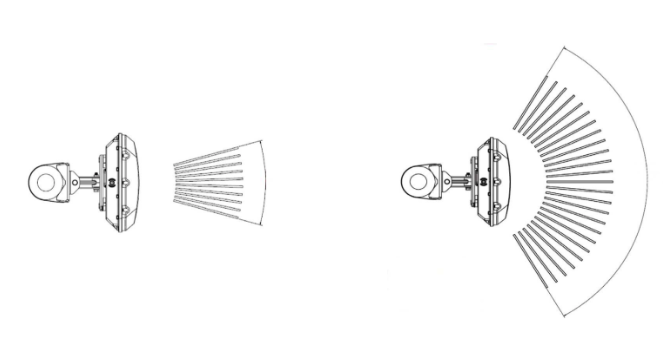
The RUCKUS T670sn is a high-end Wi-Fi 7, tri-band outdoor AP with a unique programmable directional antenna array that is software-configurable for either narrow-angle or wide-angle coverage.
T670sn Programmable Software Defined Coverage
This dynamic control minimizes interference while maximizing signal strength and data rates, leading to better connectivity and performance in targeted areas. Additionally, the ability to modify coverage patterns remotely eliminates the need for physical adjustments, making it ideal for scenarios with changing network demands, such as seasonal events or infrastructure expansions.
Key benefits include:
RUCKUS T670 Under-Seat Mounting Solution
RUCKUS Stadium Under-seat Mounting solution is purposely designed with stadiums and arenas in mind, enabling the deployment of the RUCKUS Wi-Fi 7 T670 Outdoor Access Point neatly under the stadium seating, on a riser or thread, keeping the access point and cables secure from access and from the elements, without impeding foot space. The mount is comprised of a heavy-duty cast aluminum bottom and durable reinforced polycarbonate top cover with a protective gasket for indoor /outdoor under-seat installation.
The solution is purposely designed to be transparent to RF signals and protects from liquid/water projected from pressure washer jets/hoses. It can be floor or wall-mounted with a 10° tilt, enabling cable pass-through for daisy-chaining access points. A second mounting bracket is available for flat mounting (0°tilt). The enclosure does not impede the thermal performance of the enclosed AP.
Benefits:
RUCKUS One® AI-Driven Management and Assurance Platform
While advanced access point (AP) technology and optimal AP placement are essential for providing reliable connectivity in large sports arenas, the management and assurance platform Under-Seat 10-degree Tilt Mounting Bracket Under-Seat 0-degree Flush Mounting Bracket is critical to delivering a complete, high-performing solution. Deploying RUCKUS One and RUCKUS AI solutions offer key benefits, including:
By leveraging both the T670 under-seat APs and T670sn programmable overhead APs, stadiums can achieve the most flexible, high-performance Wi-Fi network possible. Together with the RUCKUS One platform, these solutions enable stadiums to provide reliable, high-performance connectivity while improving efficiency and reducing costs.
Reliable Wi-Fi® has become a must-have in senior living communities—not just for entertainment, but for residents’ safety as well as their physical and mental health. More of today’s residents are tech-savvy and expect reliable, high-speed internet like they had in their own homes. Below are the five most common Wi-Fi challenges in senior living and how RUCKUS Networks provides easy-to-deploy solutions to keep your residents and staff connected, secure, and satisfied.
Reliable Wi-Fi® has become a must-have in senior living communities—not just for entertainment, but for residents’ safety as well as their physical and mental health.
More of today’s residents are tech-savvy and expect reliable, high-speed internet like they had in their own homes. Below are the five most common Wi-Fi challenges in senior living and how RUCKUS Networks provides easy-to-deploy solutions to keep your residents and staff connected, secure, and satisfied.
Inconsistent coverage in resident rooms and common areas
Senior living facilities situated in older buildings may have thick walls or outdated infrastructure that affects Wi-Fi coverage. This can lead to frustrating buffering, frozen video or dropped connections for online access or streaming services.
Fix it with: High-performance access points (APs) that are purpose-built for dense, complex environments. RUCKUS® APs offer our BeamFlex+® adaptive antenna system capabilities that deliver property-wide reliable, seamless coverage that can even extend to outdoor areas.
Congested networks
Today’s seniors are more connected than ever: 68% of baby boomers own smartphones[1], while adults 50-plus possess an average of seven tech devices, which they use daily[2]. Unfortunately, traditional legacy networks can’t intelligently prioritize traffic or manage bandwidth effectively across hundreds of connected devices. This is especially concerning when residents are conducting a telehealth Zoom call or losing signal to their smart watch that’s monitoring them for AFib.
Fix it with: Smart traffic management and QoS controls designed for high-density environments. RUCKUS solutions support high device density and smart traffic management so networks can automatically prioritize critical applications while offering fair bandwidth distribution to all users.
Complex onboarding and access management
Providing access for residents, guests, and staff can become a logistical headache, especially when it requires manual setup or IT intervention. What’s worse is that, when private passwords are shared, revoking permission later causes a whole new basket of issues.
Fix it with: Cloud-managed networking and self-service onboarding portals. RUCKUS offers several options such as the Cloudpath® Enrollment System that enables secure, easy logins and that separate user groups to simplify administration.
Privacy and data security
In senior living environments, privacy matters. But weak Wi-Fi security, such as outdated encryption or unsecured devices, puts sensitive medical data at risk, making it vulnerable to breaches. Legacy guest devices, staff tablets, IoT sensors and facility medical systems often coexist on the same network, exposing all of them if one is compromised.
Fix it with: Our Dynamic PSK™ (pre-shared keys) and role-based access control that isolates traffic based on user type—residents, guests, staff, and IoT. Built-in security features like network segmentation, policy enforcement, and configurations help keep data secure across devices and users. This helps reduce risk and give your staff peace of mind.
Limited IT resources
Many senior living properties don’t have a dedicated IT team on-site—which means troubleshooting, setup, and updates can overwhelm staff time or cause delays.
Fix it with: Simple, centralized network management with zero touch provisioning. RUCKUS offers several cloud-based solutions that allow for remote oversight, automation, and AI-driven troubleshooting that can identify and fix issues, often before residents even notice, so your team can focus on care and not connectivity.
Smarter Wi-Fi = happier residents
Wi-Fi isn’t just about connectivity; it’s about the quality of life it offers. It not only impacts resident happiness but also staff performance, operational efficiency and even safety. Modern senior living facilities need connectivity partners who understand these unique challenges and can deliver solutions that transform Wi-Fi from a source of complaints into a competitive advantage. RUCKUS delivers a smarter, stronger, and more secure solution tailored to the unique needs of multi-dwelling senior communities.
To learn more, download our Senior Living Network Checklist or visit our Senior Living Network page.
Simplify Network Operations Without Sacrificing Scalability: Smarter Network Design Starts Here. RUCKUS offers a free Design My Network session where you’ll connect with an expert, talk through what’s working (and what’s not), and walk away with a personalized plan that makes sense for your environment.
If you’re responsible for keeping your organization connected—whether it’s across a campus, a hospital system, a stadium, or multiple offices—you’re likely being asked to do more with less. More users. More devices. More expectations. Meanwhile, resources and headcount aren’t exactly scaling at the same pace.
And let’s be honest – Most networks weren’t built for this kind of pressure.
If your infrastructure feels like a patchwork of short-term fixes and aging equipment, now might be the time to rethink your network design. Not by starting from scratch, but by building something smarter, more scalable, and easier to manage.
When the Network Becomes the Bottleneck
It’s easy for networks to grow in pieces—one vendor here, a new platform there—until suddenly you’re juggling more tools than time. The result? Slower performance, inconsistent coverage, and troubleshooting that eats up half your day.
Simplifying how your network is built and managed frees up your team to focus on actual priorities—not putting out fires or dealing with user complaints. And the right design doesn’t just solve problems now. It gives you a solid foundation for what’s coming next.
Why Automation Isn’t Optional Anymore
If your team is constantly buried in manual tasks, configuring access, onboarding devices, managing security — you’re not alone. But you also don’t have to live that way.
When automation is baked into the network from day one, things just work better. Devices get online faster. Policies stay consistent. Problems get flagged before they become support tickets.
Done right, automation isn’t about replacing people;, it’s about giving them back time and control. And when your team has space to be strategic instead of reactive, everything runs smoother.
Build It for How You Actually Work
There’s no one-size-fits-all when it comes to networks. What works for a hospital won’t work for a convention center. What works for your HQ might not work for your branch offices.
That’s why design matters. It should reflect how your people work, how your spaces are used, and where performance matters most. A smart design makes it easier to scale, maintain, and support without overcomplicating things.
When changes occur, as they inevitably do, you are prepared to adapt without needing to start from scratch.
See What’s Possible
Take Dr Pepper Ballpark. RUCKUS helped them rethink their network to handle packed stadium crowds, on-site vendors, and day-to-day operations—without adding complexity for their IT team.
Better coverage, smoother performance, less stress. That’s what smart design looks like.
Read the full story if you’re curious.
Let’s Make Your Network Easier to Run
If your current setup feels clunky or like it’s barely holding on, this is a chance to reset. RUCKUS offers a free Design My Network session where you’ll connect with an expert, talk through what’s working (and what’s not), and walk away with a personalized plan that makes sense for your environment.
No pressure. Just a chance to figure out what “smarter” could look like for you.
Here are three crucial factors that make Wi-Fi 7 essential for a superior guest experience: 1. It’s a mobile-first world, and business travelers are upgrading every 24-30 months; 2. New wearable devices like XR glasses need a snappy and nimble Wi-Fi® network; and 3. Wi-Fi 7 delivers a real-world 4x performance gain over Wi-Fi 6.

Business travelers are already upgrading to Wi-Fi 7-ready devices
The world is mobile-first, and business travelers are consistently at the forefront of technology adoption. While the general smartphone refresh cycle has slowed, business travelers continue to upgrade their phones every 24-30 months. This is due to:
This rapid refresh cycle means a significant portion of your guests are already carrying Wi-Fi 7 with their mobile devices. While Wi-Fi is backward compatible, newer phones are optimized for the latest Wi-Fi protocol and many traveling executives’ devices already support 6 GHz Wi-Fi, a key component of Wi-Fi 7. Projections indicate that over 50% of hotel guest devices will support Wi-Fi 7 by early 2027. Your network needs to be ready for this shift now.
New wearable devices demand a high-performance Wi-Fi network
The rise of wearable technology, such as XR (extended reality) and spatial computing glasses, is transforming how people interact with digital content. While these devices are often tethered to a smartphone or a compute puck, they require a low-latency and error-resilient Wi-Fi network.
Devices like Ray-Ban Meta glasses are leading a strong trend toward hands-free content creation and AI-assisted interaction with the physical world. Leading tech firms and numerous startups are rapidly developing “what’s next” in wearable technology, and each relies on a constant, reliable network connection that older Wi-Fi standards simply aren’t designed to deliver.
Wi-Fi 7 addresses these demands with advanced technologies like Multi-Link Operation (MLO), preamble puncturing, Multiple Resource Units (MRU), and deterministic Quality of Service (QoS) enhancements. These innovations create an invisible backbone that adapts to changes so that data flows without delay, providing the “snappy and nimble” experience required by these new devices.
Wi-Fi 7 delivers a real-world 4x performance gain over Wi-Fi 6
Previous Wi-Fi generations offered incremental speed increases. Wi-Fi 7, however, represents a generational leap in performance over previous generations. This significant improvement is based on several key advancements:
To fully utilize these advantages, Wi-Fi 7 adds MLO, MRU, preamble puncturing and deterministic QoS. Collectively, Wi-Fi 7 delivers faster speed and lower latency.
Partner with RUCKUS to deliver an exceptional guest experience where guests can effortlessly open their door with their phone, instantly stream 4K movies, join crystal-clear video calls with family, and update work files in seconds. This isn’t a futuristic dream; it’s the reality Wi-Fi 7 is poised to deliver for your hotel.