As sales of EV continue to grow, infrastructure must be rolled-out to meet the needs of drivers, providing a network of rapid charging stations that will allow them to complete their journeys quickly and without ‘range anxiety’. Requirements in this sector are rapidly evolving, requiring power levels in excess of 350 kW and efficiencies of 95% becoming the ‘norm’. Given the diverse environments and locations in which these chargers are deployed, compactness, robustness and enhanced reliability are all challenges that designers face.
The new 1200 V M1 full SiC MOSFET 2 pack modules, based upon planar technology and suited to a drive voltage in the range of 18-20 V, are simple to drive with negative gate voltages. The larger die reduces thermal resistance compared to trench MOSFETs, thereby reducing die temperature at the same operating temperature.
Configured as a 2-PACK half bridge, the NXH010P120MNF1 is a 10 mohm device housed in an F1 package while the NXH006P120MNF2 is a 6 mohm device in an F2 package. The packages feature press-fit pins making them ideal for industrial applications and an embedded negative temperature coefficient (NTC) thermistor facilitates temperature monitoring.
As part of the ON Semiconductor EV charging ecosystem, the new SiC MOSFET modules have been designed to work alongside driver solutions such as the NCD5700x devices . The recently introduced NCD57252 dual channel isolated IGBT/MOSFET gate driver offers 5 kV of galvanic isolation and can be configured for dual low-side, dual high-side or half-bridge operation.
The NCD57252 is housed in a small SOIC-16 wide body package and accepts logic level inputs (3.3 V, 5 V & 15 V). The high current device (source 4.0 A / sink 6.0 A at Miller plateau voltage) is suitable for high-speed operation as typical propagation delays are 60ns.
Complementing the new modules and gate driver are the ON Semiconductor SiC MOSFETs that provide superior switching performance and enhanced thermals when compared to similar silicon devices. This results in improved efficiency, greater power density, improved electromagnetic interference (EMI) and reduced system size and weight.
The recently-announced 650 V SiC MOSFETs employ a novel active cell design combined with advanced thin wafer technology enabling a best-in-class figure of merit (FoM) for (RDS(on)*area). Devices in the series such as the NVBG015N065SC1, NTBG015N065SC1, NVH4L015N065SC1 and NTH4L015N065SC offer the lowest RDS(on) in the market for D2PAK7L / TO247 packaged MOSFETs.
The 1200 V and 900 V N-channel SiC MOSFETs feature a small chip size that reduces device capacitance and gate charge (Qg – as low as 220 nC), reducing switching losses when operating at the high frequencies demanded by EV chargers.
Subsidiary of the country’s second-largest electric cooperative realizes impressive jump in Net Promoter Score and grows its value by adding thousands of new subscribers after launching its premium Wi-Fi 6 service on GigaSpire BLAST systems and the branded CommandIQ mobile app
SAN JOSE, CA – June 3, 2021 – Calix, Inc. (NYSE: CALX) today announced that United Communications, a subsidiary of Middle Tennessee Electric, the second-largest electric cooperative in the United States, has boosted its Net Promoter Score (NPS) to an incredible +72 just one year after deploying Calix Revenue EDGE as the foundation for its premium managed Wi-Fi offering. This far exceeds the average NPS of zero for the industry, which has long struggled with a reputation for poor customer experience. United Communications’ service is powered by the full Revenue EDGE portfolio, including GigaSpire® BLAST systems and UControl—the company’s branded CommandIQ® mobile app—and leverages the insights from the tight integration between CommandIQ and Calix Support Cloud, giving the broadband service providers (BSP) unprecedented visibility into subscribers’ home networks. This has simplified the troubleshooting process significantly, yielding fewer truck rolls, improvements in first-call resolution, and increased operational efficiency and subscriber satisfaction—the exact metric that directly tracks to higher NPS.
Collectively, these successes have helped United Communications:
Surpass their goal of achieving a +65 NPS in 2020—a score that, according to Consumer Guru, goes well beyond the Net Promoter Scores of direct-to-consumer companies worth trillions, such as Google (NPS 11) and Amazon (NPS 7).
Achieve a 77 percent adoption rate of the UControl mobile app, which now offers a premium tier called Ultimate UControl that includes ExperienceIQ™ and ProtectIQ™, EDGE Suites applications that give subscribers everything they need to manage and protect their connected homes, at their fingertips.
Accelerate the rollout of new, fully managed service offerings that excite its growing subscriber base, which is increasing by thousands.
United Communications joins other Calix customers that have secured market-leading NPS rankings by leveraging Revenue EDGE. To help maximize the benefits of Support Cloud—which provides the visibility and automated diagnostics needed to create highly efficient customer support—United Communications also invested in EDGE Enablement and Calix Education Services. Support teams and field technicians are now armed with the knowledge and resources they need to fully optimize their use of Revenue EDGE and operate at a world-class level. The company plans to grow its value further by adopting Calix Marketing Cloud, which uses contextual, behavioral data to help marketers create relevant, targeted, and event-driven marketing campaigns for customized, cutting-edge services that will excite subscribers and build brand loyalty.
“The success of the communities we serve is at the heart of every decision we make, and the recent NPS feedback has more than proven that our decision to go with Calix was the right one for our customers and our business,” said Josh Lynch, chief customer officer of United Communications. “The Revenue EDGE helps us deliver a world-class, premium managed Wi-Fi experience to rural and previously underserved Tennesseans that rivals that of their urban counterparts, exciting our subscribers. Our branded mobile app not only helps them control their in-home experience, but also simplifies and lowers the cost of our operations by giving us added visibility into subscriber behavior through Support Cloud. We were already thrilled with the analytics and automation Support Cloud provides; with the most recent updates Calix has made, we now have the added layer of visibility that helps us proactively identify, understand, and resolve issues in real time. These capabilities, together with the dedicated, local support we’ve built our business on, will continue to be key differentiators for us as we grow our value by expanding into new, competitive markets.”
Founded in 1947, United Communications was acquired by Middle Tennessee Electric in 2018. Since then, it has worked diligently to bridge the digital divide by bringing high-speed broadband service to residents and businesses across seven counties. As its fiber footprint grows, the company will face competition in new markets. With the portfolio of Revenue EDGE solutions and services—and its fierce focus on customer service and satisfaction—United Communications is well-positioned to compete successfully.
“In less than a year, United Communications has managed to realize a Net Promoter Score that far outranks those of direct-to-consumer competitors, while signing up thousands of new subscribers,” said Michael Weening, president and chief operating officer of Calix. “These business metrics are market leading and clearly speak to their unwavering commitment to subscribers, who are benefiting from United Communications’ investment in the mature Wi-Fi 6 platform from Calix, a stunning mobile app that delivers value-added applications while highlighting their brand, world-class support, and the training and resources to deliver a superior in-home experience. We believe United Communications will continue to dominate their market as more subscribers eagerly embrace these exciting offerings, and the Calix team is proud to support United Communications on the next leg of their expansion journey.”
Calix, Inc. (NYSE: CALX) – Calix cloud and software platforms enable service providers of all types and sizes to innovate and transform. Our customers utilize the real-time data and insights from Calix platforms to simplify their businesses and deliver experiences that excite their subscribers. The resulting growth in subscriber acquisition, loyalty, and revenue creates more value for their businesses and communities. This is the Calix mission; to enable broadband service providers of all sizes to simplify, excite, and grow.
This press release may contain forward-looking statements that are based upon management’s current expectations and are inherently uncertain. Forward-looking statements are based upon information available to us as of the date of this release, and we assume no obligation to revise or update any such forward-looking statement to reflect any event or circumstance after the date of this release, except as required by law. Actual results and the timing of events could differ materially from current expectations based on risks and uncertainties affecting Calix’s business. The reader is cautioned not to rely on the forward-looking statements contained in this press release. Additional information on potential factors that could affect Calix’s results and other risks and uncertainties are detailed in its quarterly reports on Form 10-Q and Annual Report on Form 10-K filed with the SEC and available at www.sec.gov.
The new product family leverages Wi-Fi 6/6E, BT/BLE 5.2 and Celeno’s novel Wi-Fi Doppler Radar to provide a connectivity and sensing solution for IoT end points, multimedia devices, and commercial applications
Celeno’s Doppler Radar can accurately locate people and distinguish complex types of movement such as falls, gestures and postures. It can even monitor motions that are difficult to detect like breathing
Ra’anana, Israel – May 25, 2021 – Celeno Communications, a leading provider of smart, innovative Wi-Fi solutions, is launching the world’s first single chip solution for client devices combining Wi-Fi 6/6E, BT/BLE (Bluetooth® / Bluetooth® Low Energy) 5.2 and Celeno’s novel Wi-Fi Doppler Radar.
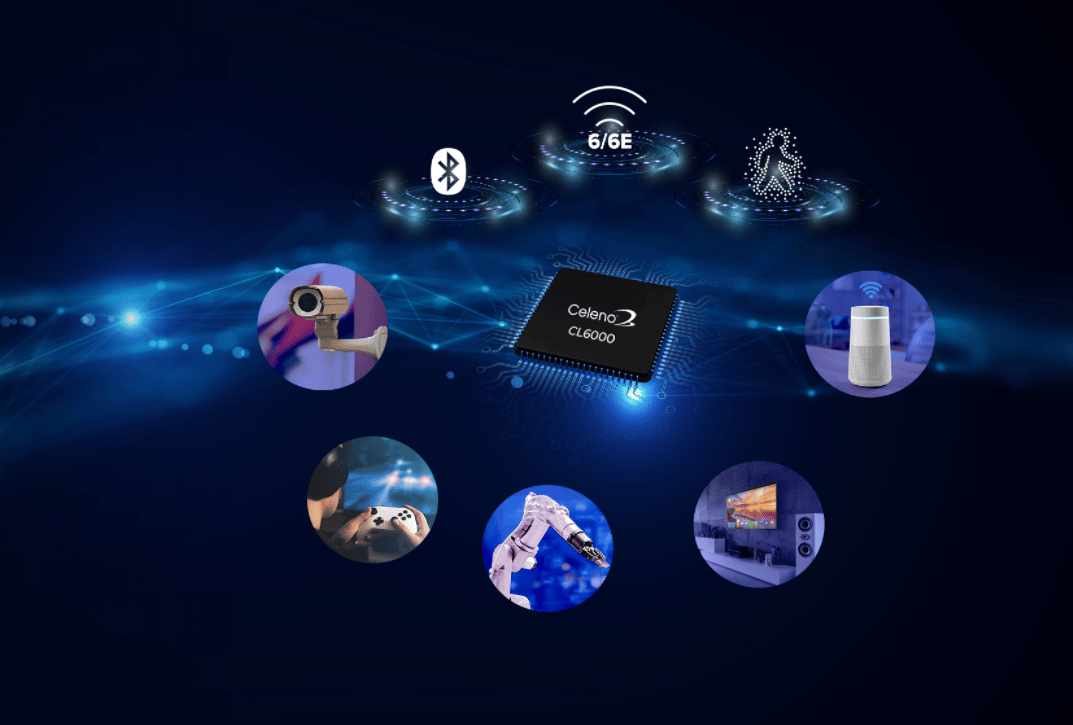
Celeno’s new CL6000 “Denali” product family provides a connectivity and sensing solution for devices such as consumer multimedia devices, IoT end points, home automation, industry automation, healthcare applications, etc. These new chips enable cloud connectivity with the latest Wi-Fi 6/6E standard, audio streaming and on-boarding use cases with BT and BLE 5.2 support, and sensing functions to enrich edge AI with valuable sensed data through its Doppler Radar function.
The product family supports both Wi-Fi 6 and Wi-Fi 6E standards with the latest advancements driving superior latency and robust connectivity, even in the most crowded Wi-Fi deployments. These include high bandwidth 160MHz channels, the new, recently approved 6-7GHz spectrum band, MU-OFDMA, MU-MIMO, Beamforming, 1024QAM, WPA3 encryption and Target Wake Time (TWT) for more efficient device power saving.
The CL6000 product family supports true simultaneous operation of Wi-Fi connectivity and Doppler Radar. The Doppler Radar is a Wi-Fi based, high-resolution sensing technology, that employs the Doppler effect and standard Wi-Fi packets.
The technology can track an object’s location or sense its presence or motion characteristics by using a single Wi-Fi device, without requiring the assistance of multiple devices or additional Wi-Fi clients. The solution leverages standard Wi-Fi and operates in the 5GHz and 6GHz bands, to “see” through walls without requiring line of sight and/or dependence on light conditions. In addition, the technology does not depend on any Wi-Fi clients, wearables of any kind and does not invade privacy.
Application examples
The CL6020/10 can provide high speed Wi-Fi and BT/BLE connectivity for smart TVs and smart speakers to enable cloud connectivity and video share use cases.
The CL6025 can be selected to add sensing capabilities to multimedia devices, such as identifying human presence near the device or even for counting the number of TV viewers for driving various operational and monetization applications.
The CL6020/10 enables connectivity of IoT functions in sensors and cameras, to drive cloud-based security, safety and preemptive maintenance applications in smart buildings and factories.
Alternatively, by using the CL6025, the added radar function enables presence location and even posture recognition for supporting additional useful applications in buildings and homes, including human monitoring, elderly care and fall detection.
“We are excited to bring this disruptive solution to the Wi-Fi industry,” said Gilad Rozen, CEO and Founder of Celeno. “Celeno has been recognized for its innovative Wi-Fi solutions for home networking infrastructure applications. Our new CL6000 product family extends our product portfolio into the large Wi-Fi client markets, bringing together connectivity and sensing into smart home, IoT and multimedia devices.”
Main product variants
The product family consists of three main variants which offer optimized solutions for both high performance and price conscious applications:
CL6025 – Supports 2T2R (2 Transmit and 2 Receive) MIMO configuration, tri-band selectable (2.4 / 5 / 6 GHz), BT/BLE 5.2 and Wi-Fi Doppler Radar – combined connectivity and sensing chip.
CL6020 – Supports 2T2R (2 Transmit and 2 Receive) MIMO configuration, tri-band selectable (2.4 / 5 / 6 GHz), and BT/BLE 5.2 connectivity chip.
CL6010 – Supports 1T1R (1 Transmit and 1 Receive) MIMO configuration, tri-band selectable (2.4 / 5 / 6 GHz) and BLE 5.2 connectivity chip.
The “Denali” CL6000 product family also shares the following main characteristics:
Maximum traffic throughput of 2.4Gbps
Internal RF Front End
Host interfaces: PCIe-2 / USB3 / USB2 / UART
Wafer Level Chip Scale Package (WLCSP)
The CL6000 product family will start sampling with customers in the first quarter of 2022.
About Celeno
Celeno offers advanced Wi-Fi chipsets and edge software to deliver smart, innovative Wi-Fi connectivity and Wi-Fi Doppler Imaging technology into the realm of high-performance home networks, smart buildings, enterprise, and industrial solutions. Celeno’s field-proven chips and software technologies have been successfully integrated into numerous OEM Wi-Fi devices and have been deployed in tens of millions of homes around the world. Celeno is headquartered in Raanana, Israel, with global presence and offices. For more information, visit www.celeno.com
BlueportiQ, a technology and services innovator, today announced the signing of a business partnership with UAE headquartered value-added security distributor SCOPE Middle East. The partnership supports its regional expansion strategy to make Wi-Fi available everywhere through a simplified, cost-efficient, and totally secure roaming mechanism to the Middle East.
BlueportiQ provides top-tier technology across multiple markets, including multifamily, hospitality, carriers, commercial, healthcare, and more. Its cloud-hosted software solution, VAULT™, provides global Wi-Fi roaming throughout multiple business locations over secure Wi-Fi access. VAULT enables frictionless onboarding Wi-Fi access to multiple user types when visiting these locations.
The platform enables a better way of authenticating and creating a customized user experience for subscribers on IP based networks. Through use of a Wi-Fi key, VAULT enables seamless roaming across networks while facilitating cost savings for the operator.
SCOPE Middle East and BlueportiQ will be launching through a series of webinars and technical workshops across the Middle East throughout the year.
“We are delighted to add BlueportiQ VAULT onto our security portfolio. Its capability to securely enter into roaming agreements with a single sign-on process for encrypted Wi-Fi access across multiple venues is unique and efficient,” said Fadi AbuEkab, Founder, CEO SCOPE Middle East.
VAULT makes use of existing technology and does not require unique device onboarding or specialized Wi-Fi infrastructure compliance.
“It is a great privilege to announce our partnership with SCOPE Middle East to spearhead sales for the region. SCOPE is renowned for outstanding expertise in all aspects of cybersecurity, and they offer great value-added services to their partners. We believe VAULT authentication and roaming service is exactly what the Middle East has been looking for,” said Urbino Lobo, VP Sales EMEA for BlueportiQ.
About BlueportiQ
BlueportiQ is a cloud-software manufacturer based in Massachusetts, USA. They develop unique patent-pending technology for device connectivity into Wi-Fi networks at any location in the globe. BlueportiQ is a recognized Wi-Fi NOW partner for roaming technologies. Visit www.blueportiq.com to learn more.
About SCOPE Middle East
SCOPE Middle East is an award winning specialty value-added distributor (VAD) in Middle East, Turkey and Africa (META) region specializing on innovative and best of breed Cyber Security, Networking Performance, Mobility and Cloud Solutions. SCOPE Middle East aims at creating value through demand generation, access to markets and efficiency.
SCOPE Middle East has business units around Middle East and GCC countries with significant sales channels for BlueportIQ, WALLIX, iboss, ESET, Commscope – Ruckus Networks, C3M Cloud Control, SOTI, Stormshield, Niksun, Nomadix, Netscout, Array Networks, Ruijie Networks, mlytics & Encloud.
CarrierWave by WCI assists properties seeking high-quality digital and print design and multimedia production.
HOUSTON, May 26, 2021 – World Cinema (WCI), a leading technology provider for properties nationwide, today announced its full-service creative agency CarrierWave, further highlighting WCI’s unique position to meet the needs of hotels, multifamily properties, student housing properties and senior living communities. CarrierWave creative services are available for existing WCI customers as well as new clients.
“At WCI, we are constantly listening and anticipating the needs of our customers so we can develop strategic solutions that help them exceed their goals,” said Robert Grosz, Chief Commercial Officer and Executive Vice President of WCI. “CarrierWave enables us to continue to be a trusted partner that properties can come to for the resources and solutions they need to be a disruptive player in their industry.”
CarrierWave’s creative services include graphic design, branding, print and digital design, and web development in addition to audio and video production. Already servicing hospitality customers through innovative compendium designs for in-room entertainment solutions, CarrierWave is a team of best-in-class creative and strategic minds who understand the specific needs of properties.
“WCI is committed to delivering industry-leading creative solutions and insights to help our customers build and sustain their position as industry leaders as well,” said Grosz. “CarrierWave is dedicated to setting brands up for long-term success through engaging assets that add value and drive meaningful results.”
WCI has over 45 years of experience servicing guest-centric properties through entertainment, connectivity and professional services. CarrierWave adds to WCI’s growing suite of solutions as part of the Company’s strategic initiative to serve as a dedicated resource for properties looking to provide a one-of-a-kind immersive guest and resident experience.
Headquartered in Houston, World Cinema is a market leader innovating and delivering technology and services to guest-centric properties. The Company was the first technology service provider to hotels nationwide, beginning in 1974. Today, World Cinema is building on that legacy as a stable and trusted provider of video, data and connectivity services to some of the largest owners and managers of hotel and multifamily brands in the world. The Company serves 4,200 properties nationwide with nearly 600,000 rooms under management and over 300 million guest encounters per year.
LitePoint’s Eve Danel is the author of this two-part blog series. Throughout these posts, you’ll learn about the key RF-PHY changes made in Wi-Fi 6/802.11ax compared to Wi-Fi 5 and older generations: the addition of a new frequency band, higher modulation rate, smaller subcarrier spacing, longer guard interval and the introduction of the OFDMA modulation technique providing capacity improvements and latency reduction.
Drivers for Wi-Fi 6 vs. Wi-Fi 5: Capacity Improvement
In previous generations, updates to the Wi-Fi standard were mainly focused on increasing the raw throughput. Wi-Fi 6 is faster as well, but different in that it also focuses on improving user experience, especially in dense, congested environments with a large number of users, such as airports, stadiums or educational settings. In these environments, the user experience suffers from inefficiencies when too many users are competing for bandwidth, and multiple overlapping networks interfere with each other.
Wi-Fi 6 adds features that improve average throughput per user by up to four times over Wi-Fi 5 in these highly congested environments. Wi-Fi 6 is also very well suited for use in home networks, where phones and tablets join televisions, home automation controls and other systems in competing for bandwidth. Wi-Fi 6 is particularly important in applications such as video conferencing and content streaming that require very low latency.
Wi-Fi 6 vs. Wi-Fi 5: Key Changes to the RF Physical Layer
Wi-Fi 6, also known as high efficiency (HE) Wi-Fi, is based on the 802.11ax standard and operates in the 2.4 GHz and 5 GHz frequency bands. Wi-Fi 6E, also based on the 802.11ax standard, operates in the 6 GHz frequency band.
Wi-Fi 6 vs. Wi-Fi 5 and Wi-Fi 4
The chart above summarizes the key RF-PHY changes made to increase capacity and efficiency in Wi-Fi 6 vs. Wi-Fi 5. Some new features are designed to improve Wi-Fi top speeds. Other new features are designed to improve the user experience in outdoor spaces or in high multipath fading environments. Other features are designed to improve capacity and reduce latency.
Other features not listed in the table, but that still have an impact on the network and devices include target wake time (TWT) for better battery savings and BSS coloring that is designed to improve spatial reuse in congested environments.
802.11ax Modulation
Wi-Fi 6 increases the modulation rates to improve peak data rates. The 802.11ax standard uses 1024 – quadrature amplitude modulation (1024QAM) with a peak data rate that is 25% higher than the peak data rate in the 802.11ac standard, which utilized 256QAM. 1024QAM used in Wi-Fi 6 encodes 10-bits of data per subcarrier, while 256QAM used in Wi-Fi 5 encodes 8-bits of data per subcarrier.
Wi-Fi QAM Rate Evolution
When encoding data at 1024QAM, the main challenge is ensuring high transmitter performance so that signals are correctly demodulated at the receiver. Error vector magnitude (EVM) is the metric that is used to ensure modulation accuracy. EVM measures the difference in dB between the ideal and the actual I/Q positions on a constellation diagram. The IEEE-defined EVM requirements for 1024QAM require a minimum EVM of -35dB, which is 3 dB better than 256QAM.
When measuring the EVM for a device with a tester, that tester’s EVM floor is critical. To ensure accuracy, the tester’s EVM floor should be 10 dB better than the device that is being measured. For 802.11ax, a tester that can achieve at least -45 dB to -48 dB residual EVM is needed.
OFDM Subcarrier Spacing and Symbol Duration
Another change to the PHY layer is that 802.11ax adds 4 times more subcarriers than 802.11ac, resulting in the subcarrier spacing becoming ¼ of what it was in 802.11ac. For 802.11ax, there is now a spectral spacing of 78.125 kHz between subcarriers. The symbol duration is inversely proportional to carrier spacing and increases four times over Wi-Fi 5, from 3.2 µs in 802.11ac to 12.8 µs in 802.11ax.
There are a few advantages from this change to the subcarrier spacing. The first is that with more subcarriers there can be finer resource unit (RU) granularity. The resource units are allocated in OFDMA to divide the channel bandwidth into smaller sub-channels assigned to different users. The smallest RU size contains 26 subcarriers (around 2 MHz), and allows up to 74 users in a 160 MHz channel (each user being assigned a 26 tones RU).
The second advantage is that 802.11ax is designed with a higher ratio of subcarriers that carry data vs. those that don’t carry data (null and pilot). The increase in the number of data subcarriers increases the efficiency of the transmission. This change results in about 10 percent improvement over 802.11ac.
It is important to keep in mind that because subcarrier spacing has decreased and the signal processing required is also more complex, Wi-Fi 6 devices need better frequency accuracy for proper demodulation.
Guard Interval / Cyclic Prefix
The standard also introduces new guard interval options. In Wi-Fi 6, longer guard intervals are designed to provide improved performance in environments with multi-path and delay spread. These longer guard intervals help to prevent inter-symbol interference in outdoor environments and therefore improve coverage and performance. 802.11ac had two Guard Interval (GI) options – long GI (0.8µs) and short GI (0.4µs). 802.11ax has three types of GI – the normal GI (0.8 µs), double (1.6 µs) GI and quadruple (3.2 µs) GI. Overall efficiency is preserved since in 802.11ax the symbol duration is four times longer than in 802.11ac, therefore the overhead generated by even the longest guard interval is the same percentage of the symbol time as in the previous generation, but with the added benefits of longer guard interval.
OFDMA
Wi-Fi 6 utilizes orthogonal frequency division multiple access (OFDMA). This is a fundamental change to the way that Wi-Fi operates. In previous OFDM-based Wi-Fi standards, bandwidth could be increased, but a user transmission would take the full channel for each transmission whether or not there was enough data to fill the bandwidth of the entire channel. Other senders would queue for access to the channel; creating a big problem in networks that supported a lot of simultaneous users.
By contrast, in OFDMA the channel is divided into subchannels called resource units (RUs). Each RU is made of a pre-defined number of subcarriers. The smallest RU can have 26 subcarriers, which is a little less than 2 MHz of spectrum and the largest RU can be as wide as 996 subcarriers, which is close to 80 MHz of spectrum. There is one user per RU for OFDMA;
Each RU is assigned to a different client station and the size and number of RUs allocated to each station is determined by the access point (AP), based on the data transmission requirements of each station.
For example, an application that requires a lot of data, such as content streaming, can be assigned a large RU. A device that requires less data, an IoT sensor for example, can be assigned a very small RU. Each RU can use a different modulation scheme, encoding rate and power level. RU assignments can vary on a frame-by-frame basis, based on what the AP determines is the most efficient use of the spectrum.
OFDMA does not directly impact Wi-Fi’s raw link speed, but instead, it increases its efficiency and will reduce delay for users that are sharing the spectrum. This provides benefits, especially in congested environments.
In my next blog post, I will expand on OFDMA and how it works, and will present important test considerations for Wi-Fi 6 vs. Wi-Fi 5. In the meantime, please visit LitePoint’s Wi-Fi 6 page to learn more about our test and measurement solutions for Wi-Fi 6 and click here for a replay of my webinar on this topic.
In the last decade, video streaming has become essential to how we consume entertainment, how students learn, and how businesses cooperate. The evolution of streaming habits and technology has changed significantly along the way. This blog will shed light on the technology behind online videos, including multicast, unicast, and broadcast, and introduces which technology is the best for your streaming habits.
What is broadcast, and how is it utilized?
When we think of broadcasting, we often think first of television and radio. However, the capacity of broadcasting technology is underestimated in two crucial ways. To start, let’s take a look at the definition of broadcasting.
Broadcast transmission is a “one-to-all” technique that ensures all nodes on a network receive the signal or message.
Given its power and convenience of mass distribution, the broadcasting industry has a role in all three venues of the convergence marketplace –content, distribution, and processing. In terms of content, broadcasting is already the dominant producer of digital content to the public.
Here are some examples of successful use cases of broadcasting in different media:
Why have other technologies like unicast or multicast flourished if broadcasting can do it all?
Apart from broadcast, there are two other technologies, called unicast and multicast, both of which serve very distinct purposes. Here are the requirements that you’ll need to understand each of them better.
Unicast Explained
Let’s take a look at Netflix – one of the pioneers of how unicast helps in the modern online streaming world.
In a nutshell, unicast is a “one-to-one” streaming. Typically, it is used in Over-the-Top (OTT) streaming applications (OTT is a term used to describe streaming over the internet), such as Netflix, Amazon Prime, and other streaming providers of this type.
More specifically, the advantage of unicast streaming is the ability for the endpoints to receive video based on the device being served and the available bandwidth. For example, getting a 4K/8K feed for the smart TV, a full-HD feed on the smartphone, or a low-res feed for an older device – or anyone with lower bandwidth.
In a word, the internet is unpredictable, and without the right tools (in this case, using unicast technology) to mitigate potential bandwidth fluctuations and limitations, the end-user experience can end up being less than optimal.
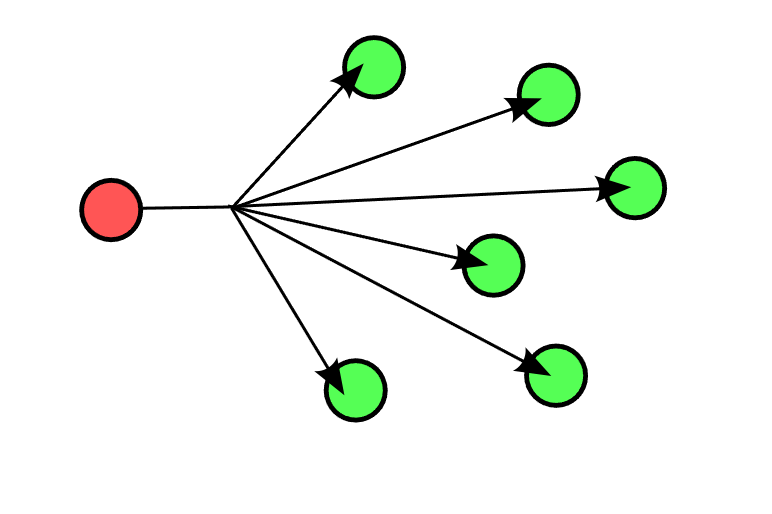
Multicast Explained:Opposite to unicast, multicast is one-to-many streaming. You send information from one point to many endpoints simultaneously, and the most common example of a multicast application is Internet Protocol Television (IPTV). There is one centralized server, and that server sends a single, continuous stream to many endpoints.
Here are some other examples of multicast applications:
Voice over IP (VOIP)
Video on demand (VOD)
Video conferencing
The IP network offers far more flexibility within the network, enabling two-way interactions that traditional, one-way cable or satellite broadcast networks. It allows end-users to have more control and options to interact and personalize their experience.
Multicast routing is a networking method for the efficient distribution of one-to-many traffic. It specifically tackles live audio and video transfers such as live video conferences. Thankfully, routers could have this function built-in for the most optimal internet experience with audio and video transfers.
In conclusion, IP has three fundamental types of addresses: unicast, broadcast, and multicast.
The differences among unicast, broadcast, and multicast can be summarized as follows for you in a key takeaway:
Broadcast: One-to-all, from one source to all possible destinations, applications such as television, radio, websites, blogs, and podcasts.
Unicast: One-to-one, from one source to one destination, for applications like Netflix and Amazon Prime.
Multicast: One-to-many, from one source to multiple destinations expressing an interest in receiving the traffic, applications such as IPTV.
What to learn more about wireless security? Read our WPA3 blog and find more!
For more information about Mercku’s Connectivity Suite, our hardware and how you can partner with Mercku, please reach out to the team at [email protected]
Thank you for reading our blog! Mercku Blogs covers the latest in wireless technology – subscribe to our newsletter to make sure you don’t miss our newest releases!
IPv6 support within the Intelligent Access EDGE paves the way for broadband businesses to simply and securely scale their networks to meet skyrocketing demand for the new IPv6 devices that are exciting subscribers and driving service growth of more than 40 percent
SAN JOSE, CA – May 19, 2021 –Calix, Inc. (NYSE: CALX) today announced the addition of end-to-end Internet Protocol Version 6 (IPv6) support within the Intelligent Access EDGE solution, enabling broadband service providers (BSPs) to eliminate the high costs and challenges of expanding their networks using IPv4 addresses to meet accelerating subscriber demand. Service providers continue to struggle to acquire new IPv4 addresses, often having to pay high fees to secure them. By supporting IPv6 throughout the subscriber facing network, the Intelligent Access EDGE ensures that BSPs can eliminate this requirement and focus on growing their businesses. With this new ability to route IPv6, BSPs gain the benefit of a network that is both extremely scalable and secure all the way to the subscriber premises. This important next step in the evolution of the Intelligent Access EDGE augments the solution’s ability to incorporate additional functionality into the subscriber-facing network and save BSPs more than 40 percent on initial CAPEX and up to 50 percent on operational expenses.
Simplified Migrations from IPv4 to IPv6: Support for existing IPv4 networks in combination with IPv6 and enable an easy migration to an all-IPv6 network in the future.
Secure Network: Support for IPv6 enhances network security from the access edge all the way into the subscriber premises thanks to the inherent security benefits of IPv6 such as integrated encryption and integrity-checking.
Intelligent, Scalable Routing: Layer 3 routing using IPv6 enables BSPs to keep up with subscriber demand by rapidly and cost-effectively expanding their networks.
San Luis Valley Rural Electric Cooperative broadband subsidiary Ciello sought to expand its network to cover more of its southern Colorado footprint. Working with the Calix Professional Services Network Consulting team, Ciello determined the E9-2 system was the ideal choice for the upgrade, as it would integrate seamlessly into its existing network, built with the E7-2 Intelligent Modular System. The rural cooperative recognized that its expansion plans necessitated migrating to higher bandwidth aggregation as well as 10G PON. Ciello also sought to increase its network security while minimizing cost increases. The answer was to deploy a solution that would deliver dramatically greater capability, long-term operational savings and support its migration to IPv6.
“With the expansion of our services and the increasing demands of our subscribers, it became obvious that we needed to take a holistic view of our network to determine the best path forward,” said Monroe Johnson, chief technology officer for Ciello. “The Calix Network Consultant sat down with us and helped us map out our network topology, and—especially given our active transition to IPv6—the high-density E9-2 system built on the AXOS platform was the clear answer. Not only did it deliver the density required for this migration to 10G, but it also gave us the future flexibility to continue upgrading as necessary to account for a growing number of subscribers and their devices. We look forward to continuing this partnership with Calix, as we grow our network with the Intelligent Access EDGE to address the subscriber demands of today or tomorrow.”
Calix has established itself as the leader in 10G PON deployments in North America with more than 150 BSPs deploying award-winning Intelligent Access EDGE 10G PON solutions. As subscriber demands continue to grow, BSPs are looking to add capabilities to their access networks, and an increasing number are moving forward with the E9-2 system for its ability to simplify network architectures while providing enhanced aggregation capabilities. The unique combination of port-density, 40G and 100G uplink capacity, swappable line cards that are easily upgradeable, and the comprehensive, unified management capabilities of AXOS offer BSPs a truly future-proof network.
“The increasing complexity of delivering services to meet the rising demands and expectations of subscribers have exacerbated the need to simplify the architecture and operation of the subscriber-facing network,” said Michel Langlois, chief development officer, Intelligent Access EDGE products for Calix. “Consolidating network functions to eliminate systems while adding support for capabilities like IPv6, enable service providers to expand their networks securely and cost effectively. The unique combination of the high-density E9-2 system, the Always On AXOS platform, and the proven and unmatched expertise of Calix network consultants gives service providers the only comprehensive solution to truly reimagine their access networks. Calix can help service providers of any type and size to build and grow a simplified next-generation network for virtually any deployment scenario, all while optimizing operational investments.”
Calix, Inc. (NYSE: CALX) – Calix cloud and software platforms enable service providers of all types and sizes to innovate and transform. Our customers utilize the real-time data and insights from Calix platforms to simplify their businesses and deliver experiences that excite their subscribers. The resulting growth in subscriber acquisition, loyalty, and revenue creates more value for their businesses and communities. This is the Calix mission; to enable broadband service providers of all sizes to simplify, excite, and grow.
This press release may contain forward-looking statements that are based upon management’s current expectations and are inherently uncertain. Forward-looking statements are based upon information available to us as of the date of this release, and we assume no obligation to revise or update any such forward-looking statement to reflect any event or circumstance after the date of this release, except as required by law. Actual results and the timing of events could differ materially from current expectations based on risks and uncertainties affecting Calix’s business. The reader is cautioned not to rely on the forward-looking statements contained in this press release. Additional information on potential factors that could affect Calix’s results and other risks and uncertainties are detailed in its quarterly reports on Form 10-Q and Annual Report on Form 10-K filed with the SEC and available at www.sec.gov.
Mercku and Aerial Partner to provide Best in Class Wi-Fi Sensing Services
Montreal, May18th, 2021 – Aerial Technologies, a Montreal-based AI company and Mercku, a Waterloo Canada-based Smart Home Connectivity company, announced today their partnership to bring best-in-class Wi-Fi Sensing to service providers.
“At Mercku, we pride ourselves on leading the world’s most innovative smart home products,” says Alex Qi CEO of Mercku, “and with our new partnership alongside Aerial and their vision for ubiquitous sensing intelligence, together, we can enhance daily life globally.”
Mercku is excited to welcome Aerial as their official Wi-Fi Sensing partner with Mercku’s award-winning M6 AX system. The M6, Mercku’s latest Wi-Fi 6 mesh router, was designed with the vision to connect the world through cutting-edge advancements in wireless communication technology, using their founders’ decades of expertise in networking technology and their Red Dot Award winning design team. Mercku is laser-focused on pushing wireless technology boundaries to realize its mission to leverage the most advanced technology, building powerful smart home products to enhance daily life globally.
Aerial as the pioneer of Wi-Fi Sensing (with foundational patents dating back to 2010) has developed a Wi-Fi based Motion Intelligence platform with the mission to provide the most robust and advanced suite of ambient sensing-based applications to their service provider customers and partners.
“At Aerial we believe that great partners are key to experiencing the exciting true potential of Wi-Fi sensing and the services and applications it enables” says Steve Sifferman, Aerial’s CEO. “Mercku has a great platform and an innovative spirit which is akin to Aerial’s qualities, and we are very excited to be working together.”
As homes become more autonomous and connected, a robust Wi-Fi foundation is necessary in providing the ability to sense, simplify and secure their inhabitant’s lives. This progressive outlook on the future of connectivity is at the core of the design and functionality of all Mercku products, and the M6 will serve as the platform for Aerial to push the limits of motion intelligence.
For their customers, this combination of Mercku’s specialized RF hardware design and Aerial’s AI powered software, ensures market leading Wi-Fi Sensing performance as well as provides a future-proof platform for deploying the most advanced services and applications in the industry.
About Aerial Technologies
Established in 2015 endorsed by industry leaders, Aerial Technologies is the pioneer in Wi-Fi Motion Intelligence. Aerial’s patented and award-winning AI based technology analyzes wireless infrastructure to infer human activities and enable customers and partners to develop practical applications that improve daily life. The company is headquartered in Montreal, Quebec, Canada with offices in USA and Europe. To learn more, view the website at www.aerial.ai
Founded in 2017 in Waterloo, Canada, Mercku is revolutionizing the foundation for wireless sensing and smart homes. Built on decades of design and engineering expertise, Mercku’s founders have over 450 patents in networking technology and bring proprietary innovation to the world of connectivity. With their latest Connectivity-as-a-Service suite of hardware, software, and premium features, Mercku’s relentless innovation and thought leadership will transform the IoT and wireless sensing space. To learn more, visit their website at www.mercku.com
Thanks to the new Intelligent System Monitoring capabilities of the E3-2 Intelligent PON Node that automatically sense temperature thresholds and respond, the Calix Intelligent Access EDGE is the Ideal solution for delivering an Always On network to remote subscribers even under the harshest conditions
SAN JOSE, CA – May 18, 2021 –Calix, Inc. (NYSE: CALX) today introduced the Intelligent System Monitoring capability, a major enhancement to the AXOS®E3-2 Intelligent PON Node that protects broadband service providers’ (BSPs) network investments by streamlining system troubleshooting and dramatically reducing truck rolls to remote areas. The E3-2 node is often deployed in the most remote areas with extremely harsh external conditions. In these locations, the E3-2 node enables BSPs to reduce deployment costs by up to 50 percent compared to traditional cabinet installs while accelerating construction and service activation. With the new capabilities, The E3-2 node can intelligently sense dangerous increases to the internal temperature of the system and automatically take corrective action dramatically reducing operating costs. As this new capability is incorporated into the management model, operational workflows and Always On operating model that is common to all systems in the Intelligent Access EDGE portfolio, the E3-2 node is a fantastic addition to existing networks.
The AXOS E3-2 Intelligent PON Node with Intelligent System Monitoring will deliver significant value by:
Eliminating Truck Rolls: With Intelligent System Monitoring, the system monitors for high temperature situations and automatically enters a low-power mode to avoid hardware damage and prolonged network outages. The system automatically returns to normal operation when it has cooled to acceptable operating temperatures. This eliminates the need for a technician to travel to a remote site to fix the issue.
Reducing Network Downtime: With the E3-2 self-monitoring BSPs can be assured that systems are not overheated to the point of permanent damage and services are restored to subscribers in minutes rather than hours or—in some cases—days.
“Calix has given us a simple platform to deliver next-generation network services to remote locations that would otherwise be extremely difficult—if not impossible—to reach,” said Robbie Farmer, CTO for North Carolina-based SkyLine Telephone Membership Corporation. “The deployment flexibility of the E3-2 system and the versatility of the AXOS platform, extend our reach by delivering an adaptable solution we can attach to existing infrastructure and use to turn subscriber services up rapidly. This product update also gives us the confidence that we are investing in a system that is reliable and will perform under adverse conditions and eliminate the need to roll a truck for system repairs or replacements in our remote serving areas.”
The E3-2 Intelligent PON Node dramatically simplifies network deployment and is ideally suited to connect rural areas quickly. With an infusion of capital from the recent RDOF auctions, and additional funding on the way, BSPs can leverage the AXOS E3-2 to capitalize on opportunities that help bridge the digital divide and deliver broadband to the unserved and underserved without the need for costly cabinet installations and right-of-way challenges. The E3-2 node’s modular form factor makes it a truly cost-effective option that can be deployed anywhere—mounted in a pedestal, on a pole or strand mounted. It enables BSPs to simplify network architectures and operations while delivering the versatility to run and support everyPON technology including a rapid migration from GPON to XGS-PON.
“Remote areas present unique challenges but are common for rural service providers who often need to overcome difficult physical locations and harsh environmental conditions,” said Michel Langlois, chief development officer, Intelligent Access EDGE products for Calix. “The E3-2 Intelligent PON Node enables them to address these challenges with a modular, upgradeable, and hardened form factor that can be mounted in various ways to ensure that even their most remote locations will have access to outstanding, reliable fiber broadband service and experience. The Calix Intelligent System Monitoring in this AXOS cadence release is just the latest capability in our never-ending pursuit to simplify network operations by ensuring service issues can be resolved in minutes, rather than hours or days.”
Calix, Inc. (NYSE: CALX) – Calix cloud and software platforms enable service providers of all types and sizes to innovate and transform. Our customers utilize the real-time data and insights from Calix platforms to simplify their businesses and deliver experiences that excite their subscribers. The resulting growth in subscriber acquisition, loyalty, and revenue creates more value for their businesses and communities. This is the Calix mission; to enable broadband service providers of all sizes to simplify, excite, and grow.
This press release may contain forward-looking statements that are based upon management’s current expectations and are inherently uncertain. Forward-looking statements are based upon information available to us as of the date of this release, and we assume no obligation to revise or update any such forward-looking statement to reflect any event or circumstance after the date of this release, except as required by law. Actual results and the timing of events could differ materially from current expectations based on risks and uncertainties affecting Calix’s business. The reader is cautioned not to rely on the forward-looking statements contained in this press release. Additional information on potential factors that could affect Calix’s results and other risks and uncertainties are detailed in its quarterly reports on Form 10-Q and Annual Report on Form 10-K filed with the SEC and available at www.sec.gov.