





Breaking News

GLOBAL Wi-Fi NEWS bulletin

Plume Strengthens Executive Leadership Team

— Plume appoints a new Chief Human Resources Officer,
Chief Legal & Sustainability Officer and Chief Development Officer —
PALO ALTO, USA, July 12, 2022 — Plume®, the personalized communications services pioneer, today announced that it has appointed three new executives to its leadership team: Iman Abbasi as Chief Human Resources Officer, Shari Piré as Chief Legal and Sustainability Officer, and Kiran Edara as Chief Development Officer. These senior level appointments enhance Plume’s executive team as the company continues to scale its global footprint of over 41 million locations and expands its market leadership position globally.

“A strong HR organization is a core pillar and a critical function particularly for hyper-growth companies like Plume,” said Iman Abbasi. “Plume’s people-first culture, leadership, and commitment to thinking out-of-the box are what drew me here. I will focus on attracting, developing and retaining a diverse and global talent base, establishing and continuously tuning modern HR practices responsive to the new norms, and growing a solid people team as a key business partner to all of our leaders.”

“I was captivated by Plume’s vision and culture of innovation which, coupled with the opportunity to stand-up the company’s first in-house legal team, sold me on Plume,” said Shari Piré. “As Plume matures, it’s important that we build robust policies, practices, and procedures consistent with our unconditional commitment to compliance, privacy, and data security, as well as our ambitious environmental, social, and governance (ESG) goals, including sustainability, responsible resource utilization, and the #PlumeStrong initiative.”

“Plume’s proven track record of innovation, ‘think big culture’, and huge market opportunity drew me in,” said Kiran Edara. “With unique access to a massive set of proprietary data, core competence in drawing valuable insights, novel technology, and world-class engineering talent, Plume is ideally positioned to solve complex technical problems to deliver unparalleled levels of service personalization. I’m excited to lead and scale a multi-disciplinary, global engineering team.”

“We are thrilled to welcome Iman, Shari, and Kiran to Plume,” said Fahri Diner, Founder and CEO of Plume. “All three are incredibly talented individuals, exceptional leaders, and subject matter experts who will propel us to new heights.”

About Iman Abbasi
Abbasi most recently was Chief Human Resources Officer at Symbotic where she spearheaded the growth and scalability of the business through Talent Acquisition, Talent Development, Rewards, Benefits, Policies, Culture, and Employee Engagement. Prior to that, she was at LexisNexis Risk Solutions (NYSE: RELX), where she worked as VP of HR and before that, she was VP of HR at Thomson Reuters (NYSE: TRI).

About Shari Piré
Piré has been a trusted legal advisor for 20+ years, including at Skadden, Arps, Slate, Meagher & Flom LLP in New York City and Paris, along with Willkie Farr & Gallagher LLP, where she represented public and private companies and their owners on “bet-the-company” M&A transactions. Before Plume, Piré was Chief Legal Officer & Global Head of Sustainability at Cognate BioServices, a cell and gene therapy CDMO. Piré serves on the board of directors of Precision BioSciences, Inc. (NASDAQ: DTIL).

About Kiran Edara
Edara has more than 25 years of software development experience, including ten years at Amazon (NASDAQ: AMZN) and ten years at Motorola Mobility LLC, a Lenovo Company (OTC: LNVGY). He also holds over 60 granted patents. Most recently, Edara served as Director of Software Development/GM Connectivity Services, EC2 Edge at Amazon Web Services, Inc. (AWS). Prior to that, he held the roles of Senior Software Development Engineer, Software Development Manager, and Senior Software Development Manager at Amazon Lab126.

About Plume®
Plume® is the creator of the world’s first SaaS experience platform for Communications Service Providers (CSPs) and their subscribers, deployed in more than 41 million active locations globally. As the only open and hardware-independent, cloud-controlled solution, Plume enables the rapid delivery of new services for smart homes, small businesses, and beyond at massive scale. On the front end, Plume delivers self-optimizing adaptive WiFi, cyber-security, access and parental controls, and more. CSPs get robust data- and AI-driven back-end applications for unprecedented visibility, insights, support, operations, and marketing. Plume leverages OpenSync™, an open-source framework that comes pre-integrated and supported on the leading silicon, CPE, and platform SDKs.

Plume’s investors include Insight Partners, SoftBank, Liberty Global Ventures, Qualcomm and Samsung.

Visit plume.com, plume.com/homepass, plume.com/workpass, and opensync.io.
Follow Plume on LinkedIn and Twitter.

Plume and OpenSync are either trademarks or registered trademarks of Plume Design, Inc. Other company and product names are used for informational purposes only and may be trademarks of their respective owners.

Broadband service providers efficiently plan and deliver reliable service and meet FCC reporting requirements

ROLLING MEADOWS, Ill., July 12, 2022 – Cambium Networks (NASDAQ: CMBM), a leading global provider of wireless networking solutions, today announced that the cnHeat network planning software now makes it easy for all fixed wireless broadband service providers to meet their FCC-mandated Broadband Data Collection (BDC) reporting requirements. cnHeat and the integrated BDC reporting is manufacturer agnostic and can be exercised with Cambium Networks fixed wireless broadband infrastructure, as well other available fixed wireless infrastructure providers’ solutions. The platform is particularly beneficial for service providers seeking to deliver reliable fixed wireless connectivity using the Citizens Broadband Radio Service (CBRS) frequency band in the context of the NTIA Broadband Equity, Access and Deployment (BEAD) program.

“Broadband service providers are deploying fixed wireless connectivity to rapidly provide cost-effective connectivity,” said Scott Imhoff, Senior Vice President of Product Management and Planning. “The precise information provided by cnHeat enables a great opportunity for broadband service providers in the United States to extend their network coverage using PMP 450 technology in the CBRS spectrum while making it easy to meet BEAD program reporting requirements. In addition to CBRS-based networks, cnHeat can be applied to networks utilizing 2 GHz, 5 GHz, 60 GHz, and 28 GHz including Cambium Networks ePMP and cnWave platforms.”

“We have been serving thousands of business and residential subscribers with fixed wireless technology for over 20 years,” says Caleb Wiemann, Broadband Support Specialist at Evertek Wireless in Iowa. “Cambium Networks’ cnHeat improves the efficiency of providing connectivity to our customers and future growth. End customers will have better connectivity faster and this is good for everyone.”

The BEAD program defines “Reliable Broadband Service” as broadband service that the Broadband Data Maps show is accessible to a location. Service providers can use cnHeat planning software with integrated automatic Broadband Data Collection (BDC) to submit high quality data to the FCC and to save time and resources meeting the bi-annual FCC reporting requirements.

“Reporting requirements can be an obstacle. cnHeat with BDC gathers the reporting data we need and enables our planning team and technicians to get installations planned precisely and done right the first time,” said Kevin Simms, Wireless Director, GTEK Communications in Portland, TX. “We can rapidly expand our coverage and deliver broadband that makes for happy customers.”

Service providers can use cnHeat with integrated Broadband Data Collection to provide 1-meter precise coverage predictions based on LIDAR data that meets BDC requirements and delivers consistently reliable service to subscribers. Built upon Cambium Networks’ expertise in fixed wireless Radio Frequency (RF) planning, propagation, and modeling and integrated with GIS data down to one-meter precision, cnHeat enables network operators to generate highly accurate RF predictions and offer reliable service with fixed wireless broadband technology.

Now through September 30, Cambium Networks is offering a special starter kit promotion to service providers in the United States on PMP 450 equipment in the CBRS frequency band.

Join us on July 13 to learn about how ease the pain of Broadband Data Collection and make plans to grow your FWA network within the expanded subsidy environment. Register here.

Cambium Networks provides a comprehensive suite of hardware, software and managed solutions that support multi-gigabit connectivity for service provider, municipal, enterprise and federal defense applications. The comprehensive wireless fabric portfolio of Wi-Fi access points, switches and fixed wireless technologies—all unified by the cnMaestro™ cloud management system—enables networks to run efficiently and easily scale to meet increasing demand.

Find out more about fixed wireless solutions for the CBRS frequency band:

About Cambium Networks

Cambium Networks delivers wireless communications that work for businesses, communities, and cities worldwide. Millions of our radios are deployed to connect people, places, and things with a unified wireless fabric that spans multiple standards and frequencies of fixed wireless and Wi-Fi, all managed centrally via the cloud. Our multi-gigabit wireless fabric offers a compelling value proposition over traditional fiber and alternative wireless solutions. We work with our Cambium certified ConnectedPartners to deliver purpose-built networks for service provider, enterprise, industrial, and government connectivity solutions in urban, suburban, and rural environments, with wireless that just works.

Consumers are leaning heavier on Wi-Fi to meet their connectivity needs, making comprehensive Wi-Fi network and device testing more important than ever.

Going on two decades, Wi-Fi has delivered simple, inexpensive wireless connectivity for the masses. It was never perfect, but the convenience and generally fine performance for most applications made it good enough for most.

Now, the stakes are higher.

Consumers are requiring more demanding use cases and more powerful apps. Despite its promises, 5G connectivity remains limited. This has meant everyone from personal to enterprise users have been leaning heavier than ever on Wi-Fi to meet connectivity needs.

This has been a driving force behind a whole new generation of Wi-Fi tech and adoption. Whether working or playing from home, we expect Wi-Fi to operate flawlessly with high performance and reliability. This is especially true as Wi-Fi cements a role in mission-critical private networks that support emerging industry applications.

Wi-Fi 6 and 6E are being positioned to meet these new roles and requirements. The new Wi-Fi standards provide distributed connectivity, high throughput, and low latency. In particular, the radio interface has received an overhaul, with modulation and spectral efficiency on a completely new level.

Wi-Fi 6 routers, extenders, and mesh networks are being installed in homes and offices to provide wider coverage, support more users, and accommodate a growing range of devices. Each brings pros and cons, but whichever is chosen, it is safe to say Wi-Fi networks have evolved far beyond initial roles as simple routers.

In fact, the changes seen in Wi-Fi 6/6E introduce challenges that are in some ways more significant than the migration from 4G to 5G.

New Wi-Fi complexity means device testing has grown in complexity, too
As expectations of Wi-Fi surge, so too does the need for precise, comprehensive Wi-Fi network testing. As always, testing must address conformance to standards, interoperability, and performance. With Wi-Fi, many factors can impact performance, such as walls, electrical interference, , signal reflection, and other Wi-Fi and wireless usage in the area. All Wi-Fi 6/6E devices must be tested against these factors in controlled, repeatable ways.

Wi-Fi 6/6E sees multiple standards in play, including TR-398 performance for routers and access points, RFC-2544 network device benchmarking specification, and others in the offing. Still, as this next generation of Wi-Fi comes to market quickly, comprehensive test and interoperability standards have yet to be developed.

Example of RFC-2544 test to determine maximum throughput behavior of the device under test

As such, testing Wi-Fi 6/6E devices has become more complicated than traditional Wi-Fi device testing. Trying to test manually not only makes little economic sense, but it has become nearly impossible.

Automated testing of Wi-Fi 6/6E devices
To overcome the complexity of testing a growing number of Wi-Fi 6/6E devices, automated device hardware and software testing is essential for cost-efficient, scalable, accurate, timely, and repeatable results.

Traditionally, test teams must research and keep up to date with evolving standards to create and execute tests. Alternatively, automated Wi-Fi automation packages from test experts like Spirent can be leveraged. Such automated test packages reflect existing standards and, where standards don’t yet exist such as for mesh networks, expertly define appropriate tests. Executing automated test software on your testbed enables fast, 24×7 testing. And all those resources that were grinding through test scenarios can instead put energies into evaluating results.

Spirent Wi-Fi 6/6E automated test packages
Spirent, the Wi-Fi testing market leader, offers a wireless test bed that validates Wi-Fi networks and devices. Its software automation packages automate standards-based Wi-Fi test plans to assess conformance, interoperability, and performance.

To accelerate Wi-Fi 6/6E testing, test automation packages spanning mesh interoperability performance testing of devices and device performance evaluation through RFC 2544 benchmark tests have been developed.

Learn more about how Spirent automated Wi-Fi test packages can enable you to quickly assess Wi-Fi device conformance to standards, interoperability, and performance.

The combination of World Cinema and Hospitality WiFi creates a converged services powerhouse serving approximately 7,000 properties representing over 900,000 rooms

HOUSTON, June 27, 2022—World Cinema, Inc.(“WCI”), a leader in deploying and serving property technology for over forty years, today announced it has entered an agreement to acquire Ohio-based Hospitality WiFi LLC, a global leader in delivering Internet Protocol-based wired and wireless networking experiences to the hospitality industry. The combination creates the most customer-centric, well-rounded, and qualified technology services partner for brands, owners, and managers in the institutional real estate industry.

Hospitality WiFi was formed over 21 years ago to satisfy the then-emerging need for hotels to add Wi-Fi connectivity to their guest experiences. Growing to over 2,800 properties on over 5 continents, they have been instrumental in satisfying the growing needs of guest connectivity.

“A real attraction to Hospitality WiFi is the team and their attitude towards their customers. It’s the same culture that has allowed World Cinema to deliver substantial organic growth and success over the past four decades. This is the beginning of a powerful combination which will deliver benefits to our clients and create opportunities for the employees and loyal partners of each company. We are excited to build the future of property technology together.”

– Tommy Fatjo, President of World Cinema

The two companies share the commitment to delivering customer-centric solutions. The promise of both companies is to deliver every time, with no exceptions. The combination is a catalyst to deliver convergence of in-room entertainment, seamless wireless networking experiences, and transformative connected applications like digital signage, smart building, and common area video intelligence services. By maintaining cost leadership and high levels of customer satisfaction, this partnership can increase financial returns for clients by improving top-line occupancy and RevPAR and increasing income by adding operating efficiencies.

“When I founded Hospitality WiFi in 2001, we had a vision to be the number one choice of hotel owners and brands. I’m so proud Hospitality WiFi is joining World Cinema, a company that is known for its long successful track record of delivering hospitality technology services to some of the largest properties and enterprises in the U.S. I’m looking forward to taking our customers to the next level with the combination of our two companies.”

– Jason Szuch, President and Chief Executive Officer of Hospitality WiFi

About World Cinema, Inc.
Founded in 1974, WCI is a privately held company headquartered in Houston, Texas. The company serves over 7,000 properties with nearly 900,000 rooms under management.

World Cinema, Inc. (WCI) is a trusted provider of video, advanced connectivity and professional services to properties and enterprises across the U.S., Canada, Mexico and the US Virgin Islands. With a dedication to customer service, WCI is leading the way in delivering innovative technology solutions that enhance the resident, guest, and staff experience. From managed services to digital transformation, WCI is a single point of contact for all a property’s technology needs.

For more information, visit www.wcitv.com

About Hospitality WiFi
Hospitality WiFi (HWF) has been providing guest WiFi and other services since 2001. With the goal of offering a better guest experience for hospitality properties, MDUs, restaurants, offices, and other locations on multiple continents, HWF designs, installs, and supports wired and wireless networks, including site surveys, equipment selection and purchase, installation, and ongoing maintenance and management. HWF’s expertise with converged networks enables simplified management and an improved customer experience, with services including:

  • HSIA/WiFi Managed Solutions
  • 24x7x365 Guest Support
  • Voice, Video, and Data Solutions for Communications and Guest Entertainment

For more information, please visit www.hospitalitywifi.com

Transaction Details
This transaction is subject to customary closing requirements. Derick Schaudies led the TI Partners team as exclusive financial advisors to Hospitality WiFi.

Media Contacts:

World Cinema
Ella Steele
[email protected]

Hospitality WiFi
Melanie Swiderek
[email protected]

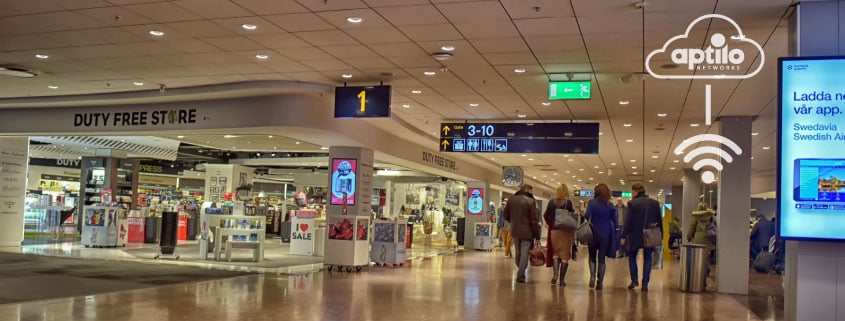
STOCKHOLM – July 1,  2020 – Swedavia, the state-owned Swedish Airport developer and operator, has further enhanced their Wi-Fi service and moved to the cloud with Aptilo Networks.

The ten largest airports in Sweden, with 42 million passengers yearly, are owned and operated by Swedavia. Since 2005, Swedavia has put their trust in Aptilo’s experts managing the Wi-Fi service from servers in Swedavia’s data center.

Now Swedavia has renewed the contract for another three years and is moving from in-house operations to the Aptilo private cloud offering on Amazon Web Services (AWS).

Swedavia can now use the latest Aptilo features for Wi-Fi marketing, analytics, and Internet of Things (IoT). This includes the new Wi-Fi access method using an icon-based survey. It provides enhanced insights about the user with the smallest user effort. The login page (Wi-Fi Captive Portal) is split into several screens. The user provides data by clicking on icons, rushing on to the next page. One of Aptilo’s other airport customers gained 15% more Wi-Fi users overnight by using this approach instead of a traditional login.

“We are proud to have earned Swedavia’s trust for another three years,” said Paul Mikkelsen, CEO, Aptilo Networks. “We will continue to help them deliver state-of-the-art connectivity services at their airports. It is also wonderful that Swedavia has joined our cloud-first strategy. Our new IoT offerings, Aptilo Wi-Fi Zero-touch and Aptilo IoT CCS, are both by default delivered as services on AWS.”

About Aptilo Networks

Aptilo Networks is a leading provider of carrier-class systems to manage data services with advanced functions for authentication, policy control and charging. Aptilo Service Management Platform™ (SMP) has become synonymous with Wi-Fi service management and Wi-Fi offload in large-scale deployments with 100+ operators in more than 75 countries, and is a critical component of Wi-Fi calling and IoT.

# # #

What is World Wi-Fi Day?

This past Monday, June 20, we celebrated World Wi-Fi Day, but what exactly is it, and where did it come from?

World Wi-Fi Day is a global event orchestrated by the Wireless Broadband Alliance that shines a light on the many communities and cities worldwide that remain without Wi-Fi access. Wi-Fi is a vital service that keeps economies moving, and by working to address the digital divide, The WBA hopes to bring governments and companies together to close the gap.

Why is Access to Wi-Fi Important?
The advancement of Wi-Fi has improved the quality of everyday life. Although people have operated without Wi-Fi for decades, almost everything has shifted to online spaces such as media, banking, shopping, and much more. Now more than ever, people need reliable access to the internet to do their jobs, attend school, or work on homework. Without access to the internet, people’s ability to learn, grow, and thrive is extremely limited. Only 55% of households worldwide have internet, while 80% of households in many developing nations do not have internet access.

Wi-Fi is often seen as a luxury when it should be treated as a commodity to be easily accessible; it can have tremendous social, economic, and environmental impacts. During the Covid pandemic, the reliance on global Wi-Fi increased as people shifted to working from home, doctors’ appointments were held digitally, and online schooling became the only way children could receive an education safely. More importantly, it casts a light on those without convenient access to Wi-Fi and their challenges.

While governments and corporations created initiatives to help connect people worldwide by providing free services and devices, these initiatives were to provide temporary relief. The HOPE for Connectivity, organized by the Wireless Broadband Alliance under the leadership of the Connected City Advisory Board, aims to connect local government, vendors, the internet, and tech companies in extending these efforts.

HOPE for Connectivity How to Get Involved
The HOPE for Connectivity calls for action from local government and industry leaders to recognize and celebrate Wi-Fi’s role in advancing our society. The goal is to accelerate the availability of affordable connectivity for those who remain unconnected. There are four critical themes rooted in the WBA’s vision for World Wi-Fi Day:

  • Help: funding Wi-Fi deployments to connect the unconnected communities
  • Offer: affordable Wi-Fi access in both rural and urban areas
  • Promote: how Wi-Fi has been successful in connecting cities and communities
  • Engage: and address the role of Wi-Fi in the digital divide

The first World Wi-Fi Day was held on June 20, 2016, and continues to gain popularity each year. World Wi-Fi day is working to create several activities for stakeholders to get more involved and support their initiative based on their expertise. Getting involved can be as simple as raising awareness and calling upon the local government and tech companies to help do their part to close the gap in the digital divide. If companies worked together to offer affordable Wi-Fi service and equipment, they could help close the gap and connect communities in need of innovation.

Wi-Fi is a significant contributor to the success of the global economy. Providing access to those who remain unconnected can ensure people can live high-quality lives. On World Wi-Fi Day, bring awareness and help close the gap where you can.

Research by Parks Associates shows that 43% of U.S. MDU residents use smart home technology in their apartments. However, only 34% of MDU property owners currently offer smart home devices to residents. “Smart” devices can include everything from sensors and IoT to cloud-based services and remote computing and analytics. This increasing demand makes now the best time to invest in smart home technology for MDU communities.

ImpruviX by WCI provides services including remote access control, cloud-connected common area cameras and water and leak sensors. Smart apartments are in high demand, with residents expecting reliable connectivity and property-wide internet. Smart apartments are also valuable for property owners both financially and for convenience-sake. Providing IoT technology in apartments is increasingly necessary to improve resident satisfaction and retention.

Managed Wi-Fi
Apartment complexes can offer property-wide internet access as a value-added service, increasing retention rates and improving the resident experience. Managed Wi-Fi is beneficial for residents and property managers, as outsourced connectivity is a simplified service for both groups. For residents, managed Wi-Fi eases the strain around moving in and out of their dwelling. Residents can move into their space and immediately connect to the internet, avoiding the hassle of negotiating with internet providers.

Furthermore, managed Wi-Fi is an opportunity for an additional stream of revenue for communities. Charging a slightly higher fee for monthly Wi-Fi is commonplace, especially considering the contractual obligations and costs associated. Residents are willing to pay more to avoid the hassle of installing and managing their own internet service. According to the aforementioned report, over a third of residents say they will pay an additional 15% per month for smart amenities. The ImpruviX managed Wi-Fi solution looks at reliability and redundancy, customer support and the simple use of move in, plug in by InstaOn®.

Property-Wide Internet Access
Managed Wi-Fi reaches beyond each individual apartment and encompasses property-wide Wi-Fi services as well. Property-wide internet access is also important for residents, as they are increasingly reliant on constant connectivity. Today’s residents expect to stream content and use the internet seamlessly throughout the property, moving beyond their respective dwellings into community areas like parking garages, laundry rooms and on-site gyms and pools.

In addition to charging for uninterrupted Wi-Fi, apartment managers can advertise property-wide connectivity as an added-value, safety-focused initiative. Connected safety devices include access control and common area cameras, both valuable features for apartment dwellers. Property-wide Wi-Fi, therefore, is an additional safety amenity, setting the property apart from local competition.

Internet-Connected Community Safety
Safety is an important amenity to residents. ImpruviX is the all-inclusive property safety solution, offering both common area cameras and cloud-connected access control. Smart access control systems improve safety throughout a community, providing residents with additional freedom and security through their personal devices.

Residents expect apartment communities to provide safety across the property, but especially within their individual units. Today’s renters expect apartments to come fully equipped with smart sensors to detect carbon dioxide and water leaks. Smart sensors are an essential amenity, as fires and flooding are an extreme financial strain on apartment buildings. Additionally, leak detectors enable properties to locate and repair water leakage issues before they affect the building structure, potentially saving thousands of dollars for future repairs.

Smart Apartment Devices
Smart sensors and leak detectors mitigate insurance concerns as they are preventative security measures. Additionally, apartment communities can save on insurance through clean energy initiatives and energy usage tracking. Smart apartments that are equipped with temperature control and smart lighting can monitor energy usage in real-time, providing insight into how the property is consuming energy.

Likewise, residents are also interested in smart home devices for their money-saving opportunities. A report from the National Multifamily Housing Council showed that residents are most interested in smart home technology that can save them money. This includes solutions like smart thermostats, sensor lighting and digital door locks. Additionally, smart thermostats reduce energy consumption with “eco-friendly” options to control the temperature and improve efficiency while the resident is away. Furthermore, today’s smart thermostats can adapt to a user’s typical schedule through artificial learning, motion detectors, and pattern recognition, creating a seamless experience for residents.

Do You Have the Network to Support These Devices?
Installing smart devices inside apartment buildings is a significant investment, and properties need to ensure they have the right bandwidth and network infrastructure capable of supporting these upgrades. Internal wiring has changed drastically throughout the years and historic or existing properties may have fallen behind on infrastructure updates.

The ImpruviX solution can be installed in a heritage building just as easily as a modern luxury building with minimal structural impact. Our solution accommodates existing hardware like coax cabling, ethernet and copper lines. ImpruviX will evaluate the current infrastructure of a property and determine the best, customized solution with respect to cost and unique needs.

Our solution enables fast, easy, virtually invisible fiber deployment in properties. The ImpruviX low voltage cabling system is cost-effective, and our hardware can convert older CAT cabling and coax solutions into usable and robust IP for Wi-Fi and networking.

20-Year Anniversary Celebration Coincides with Promotion of Wireless Broadband Alliance’s Hope For Connectivity Initiative and World WiFi Day

ST. PETERSBURG, Fla., June 22, 2022–(BUSINESS WIRE)–GoZone WiFi, the leader in monetizing and managing guest WiFi, and its CEO Todd Myers are celebrating his pioneering efforts and involvement in the first passenger installation of WiFi technology in the Toledo Express Airport in 2002. The twenty-year anniversary also coincides with World WiFi Day and GoZone’s activities with the Wireless Broadband Alliance (WBA) promotion of HOPE for Connectivity.

Myers is a WiFi industry pioneer and serial entrepreneur. He is responsible for creating four successful WiFi technology companies. In 2001, he created Airpath Wireless, the first cloud-based roaming, captive portal and payment system in the WiFi Industry. While at Airpath, he was behind the first passenger WiFi installation at Toledo Express in Toledo, Ohio. Now after twenty years, Myers is clearly dedicated to the WiFi industry and understands that WiFi has allowed people to stay connected wherever they go.

“From sharing information with loved ones to banking, shopping, and accessing news and critical data, the advancement of WiFi truly has improved the quality of everyday life. We are thrilled to celebrate our twenty-year anniversary of the first passenger installation of WiFi in an airport, and to help promote World WiFi Day and the WBA’s HOPE for Connectivity initiative. GoZone will continue to innovate and provide advanced WiFi technology solutions to our customers that can continue to help provide critical connectivity to consumers in a multitude of venues globally.”

GoZone WiFi, created in 2014 by Myers, offers industry-leading solutions to venue owners that enhance WiFi networks to provide revenue opportunities through venue analytics, guest intelligence, marketing automation and advertising. GoZone’s Smart WiFi Suite of products essentially enable WiFi monetization through rich location data, marketing engagements, and third-party sponsorships. These venues include sports and entertainment complexes such as stadiums and event locations, outdoor environments such as campgrounds and marinas, cities and communities, resorts and lodging, casinos and gaming, transportation, retail, and food and beverage establishments.

What is World WiFi Day?

World WiFi Day is a global event orchestrated by the Wireless Broadband Alliance that shines a light on the many communities and cities worldwide that remain without WiFi access. WiFi is a vital service that keeps economies moving, and by working to address the digital divide, the WBA hopes to bring governments and companies together to close the gap.

What is HOPE for Connectivity?

The HOPE for Connectivity calls for action from local government and industry leaders to recognize and celebrate WiFi’s role in advancing our society while helping to accelerate the availability of affordable connectivity for those who remain unconnected. There are four key themes rooted in the WBA’s vision for World WiFi Day:

Help: funding WiFi deployments to connect the unconnected communities
Offer: affordable WiFi access in both rural and urban areas
Promote: how WiFi has been successful in connecting cities and communities
Engage: and address the role of WiFi in the digital divide

For more information, please visit https://wballiance.com/world-WiFi-day-get-involved/.

About GoZone:

GoZone WiFi is a SaaS company and leader in monetizing and managing Guest WiFi. The company offers business analytics, venue intelligence and guest engagement by using WiFi networks to deliver branded content, provide customer analytics, and display advertising. GoZone’s Smart WiFi Suite of products enables WiFi monetization through rich location data, marketing engagements, and third-party sponsorships. GoZone’s venue intelligence enables enterprises to strategically refine operations, bridging the gap between marketing and IT. Learn more at GoZoneWiFi.com.

See full article on Yahoo! Finance: https://finance.yahoo.com/news/gozone-wifi-celebrates-20-anniversary

Enea Aptilo WiFi SMP as a Service

Nearly 18 billion Wi-Fi devices will be in use in 2022, with another 4.4 billion shipping over the course of the year, according to the Wi-Fi Alliance. The enormous installed base highlights why mobile operators, telcos, and other communications service providers (CSPs) need to double down on their support for Wi-Fi — and fast.
More developments in Wi-Fi industry last few years than the last decade.

But that’s easier said than done. For starters, Wi-Fi technology is continually evolving to meet the needs of consumers and businesses, such as with Passpoint and OpenRoaming to simplify authenticating and connecting. Meanwhile, the marketplace is rapidly growing and diversifying as enterprises, smart cities, and other organizations increasingly use Wi-Fi for their IoT applications.

CSPs struggle to keep up with these new technologies and market opportunities. Often it’s because they’re saddled with a homegrown or legacy Wi-Fi service management system that’s incapable of changing with the times. For example, those systems may not support key processes such as SIM authentication and serving as a 3GPP AAA for Wi-Fi Calling. They may also be unable to support ad-hoc onboarding of Passpoint profiles or enable participation in the OpenRoaming consortium. As a result, those CSPs miss out on the revenue and market-differentiation opportunities that those processes enable.

SaaS Lowers Barriers to New Services and Market Opportunities

Enea Aptilo SMP Wi-Fi SaaS enriching existing service management systems
To help service providers overcome those and other challenges, Enea recently launched the Aptilo Wi-Fi Service Management Platform as a Service (SMP-S). It’s the industry’s first comprehensive software-as-a-service (SaaS) solution for launching and monetizing Wi-Fi services.

Hosted as a dedicated instance per customer at Amazon Web Services (AWS), SMP-S gives each CSP a self-contained, secure service that also can be deployed as a hybrid service to enhance their existing Wi-Fi service management software. This design provides a fast, cost-effective way to modernize their back-end because they simply add the functionality they need from SMP-S in the cloud on top of their existing infrastructure.

For years, over 100 CSPs worldwide have deployed Aptilo SMP Wi-Fi software on-premise to support service delivery, security, administration, monitoring, and other key processes. With SMP-S, they now can have all of those capabilities provided as a cloud-based service.

For example, SMP-S includes multi-tenancy business-to-business (B2B) support, which enables CSPs to sell managed Wi-Fi services to owners of venues such as malls, stadiums, airports, and multi-tenant office campuses. Those enterprise customers can choose from various login methods to onboard guests to their Wi-Fi service, including social media accounts, Office 365, surveys, and online payments.

SMP-S also provides CSPs with the tools that enable their enterprise customers to monetize Wi-Fi, such as with GDPR-compliant targeted advertising via banner ads, SMS, or email. The Enea Aptilo Venue Wi-Fi Manager (VWM) included with SMP-S lets CSPs manage their multi-tenant B2B guest Wi-Fi services and provide their business customers with tools for analytics, captive portals, and Wi-Fi marketing and end-user privacy.

Predictability, Scalability, and Security

As a service rather than on-premise software, SMP-S also frees CSPs to focus on their core business. For example, Enea staff manage the operation of the SMP platform — including a 24/7/365 SLA.

Financial predictability is another key benefit. CSPs know up front what to expect from each monthly invoice — no surprise costs. The pay-as-you-grow model also lets CSPs expand their Wi-Fi service footprint and add functions that complement their existing solution instead of doing a forklift upgrade.

Finally, SMP-S also allows CSPs to provide another layer of secure Wi-Fi SSID (802.1x) at every access point and then combine that with mobile core integration and SIM authentication. This enables CSPs to offload subscribers securely and seamlessly to Wi-Fi and boost indoor coverage while freeing up much-needed additional capacity.

Analysts are already lauding SMP-S as an industry-first solution. One example is Sue Rudd, Strategy Analytics Director of Networks and Service Platforms, who says: “Wi-Fi service management ‘in the cloud’ should immediately accelerate CSPs’ ability to launch new functionality and add services alongside existing systems to secure new revenues. Enea’s Wi-Fi service management offers multitenant B2B customer self-management while ensuring the correct handling of consent and use of personal data. These capabilities now make it far easier to monetize Wi-Fi and create valuable experiences for subscribers. Carrier Wi-Fi SaaS is a game-changer for CSPs and their business customers.

Please go here to learn more about Enea Aptilo SMP-S.

This is an excerpt from ENEA’s white paper Wi-Fi in the 5G Era – Strategy Guide for Operators. The full white paper is available here if you like what you read. Don’t hesitate to contact ENEA if you have any questions.

Based on twenty years of Wi-Fi industry evolution, carrier Wi-Fi monetization strategies are both well-known and evolving continuously to match B2B and B2C needs.

In our previous blog posts, we have addressed how operators can monetize indirectly by making the most of their Wi-Fi assets and integrating Wi-Fi with their cellular 4G and 5G networks.

This blog post will dwell on how service providers can monetize Wi-Fi directly through B2B and home Wi-Fi services.

Enea, through the Aptilo Product Line, has been actively participating in this service evolution process from the start.

So how do you monetize Wi-Fi? The question has loomed large for years, particularly since, from a consumer point of view, Wi-Fi is typically offered as a free amenity. This does, however, not mean that service providers cannot monetize Wi-Fi services. Apple founder Steve Jobs once elegantly pointed out that “if you’re not paying for the product, you are the product.” And this is indeed true specifically for Wi-Fi.

The service provider will receive significant revenues from venues that want to provide carrier-grade Wi-Fi to guests or workers to stay competitive and relevant. Users receive the free service in return for their engagement with the brand and as a result of surrendering some personal details. The service providers may even agree to subsidize the B2B Wi-Fi service at particularly attractive venues to secure a valuable indoor Wi-Fi footprint for their subscribers’ use.

For years operator-managed Wi-Fi has been a specialized but growing telecom market segment. Most Wi-Fi monetization strategies and methods are not new. Still, in the coming years, we expect them to grow in value and importance as they are boosted, particularly by the mass-market arrival of new Wi-Fi technology.

This strategy is driven by the continuous increase in demand for quality Wi-Fi services by businesses everywhere. Hardly a public or private venue exists without the need for Wi-Fi. So business customers can now benefit by offering their visitors and staff top-quality carrier-grade Wi-Fi delivered by expert service providers.

OPERATOR MANAGED B2B GUEST WI-FI

B2B-Guest-WiFi-operated-by-service-provider

B2B Wi-Fi offers not only a significant revenue stream but also a needed service ‘stickiness’ that keeps businesses and consumers coming back. Enea believes B2B Wi-Fi is a business-critical contribution to an all-encompassing 5G strategy, including high-speed, low-latency indoor services delivered over Wi-Fi.

Businesses want to provide an easy-to-use, high-quality Wi-Fi service for their visitors. In many cases, venue owners see value in using Wi-Fi to engage with their guests and clients, for example, by asking clients to complete a short survey, create and verify accounts, or presenting them with Internet access sponsorship options, coupon offers, and so on.

In some cases, venues will still request payment for Wi-Fi services, often according to a ‘freemium’-type business model. In other instances, venues may accept guests accessing their network via Passpoint-based auto-connect Wi-Fi either for free or via a paid settlement agreement between operators.

It is a well-established fact that venue owners benefit from collecting and analyzing Wi-Fi data. They can use the data for targeted marketing of products and services. Care must be exercised to act only in accordance with GDPR or other relevant privacy regulations.

When operators provide such sophisticated Wi-Fi-based tools to businesses, they are typically also engaging their clients at the decision-making level, which is conducive to building stronger, higher-value, and more fruitful client relationships.

Operator-B2B-a-win-times-five

B2B Wi-Fi is a win x 5. The service provider’s B2B department gets a profitable service, business customers get analytics and a tool to engage their visitors, and visitors get a carrier class Wi-Fi service. If an additional SSID or Passpoint service is implemented for the operator’s subscribers, then the consumer department will receive the benefits of reduced churn and network operations will get much needed indoor coverage.

All of these things are not easy for business owners to accomplish on their own. In most cases, they are best provided by experts – meaning operators.

Suppose operator B2B Wi-Fi doubles as a service offered to consumers. In that case, both operators and consumers will benefit from the high-capacity deep indoor wireless coverage – provided that the Wi-Fi networks are built on Wi-Fi 6 and follow carrier-grade quality standards. The same applies to any businesses relying on indoor coverage.

Last but not least: Mobile operators can, in some cases, leverage the strong demand for Wi-Fi from businesses to introduce small cells or DAS systems into indoor locations owned by such businesses. In some instances, venue owners may more readily accept such installations when also provided with the quality Wi-Fi that their businesses and their guests need. In this way, the operator’s B2B Wi-Fi services can also become an indirect means of achieving better indoor cellular coverage.

OPERATOR HOME WI-FI
Residential Wi-Fi delivered by ISPs is right now one of the most significant growth opportunities not just in Wi-Fi but within all of the tech world. A big driver is the need for much better home connectivity to accommodate an avalanche of devices. More and more individuals are transforming their homes into work-from-home offices.

Most ISP-delivered home Wi-Fi services are today managed with simple WPA2 or WPA3 passkey access. However, in more sophisticated cases, smart home services are delivered to Wi-Fi devices at the endpoints. For example, a smart home Wi-Fi configuration app can provision not only Internet connectivity but many other services, such as parental controls, security monitoring, motion detection, and more.

In a few relatively new use cases, the classic world of residential Wi-Fi (as provided by ISPs) and public Wi-Fi (such as managed services enabled by Passpoint or SIM-based authentication) are to some extent merging.

These include, for example, Wi-Fi services offered at MDU (Multi-Dwelling Unit) housing complexes such as senior living facilities, long-stay resorts and condominiums, college campuses, and more.

Wi-Fi services for MDUs – because they are often deployed to cover a wide area similar to classic campus Wi-Fi – often require carrier-grade authentication and service management so guests and residents can enjoy high-quality, secure, and reliable Wi-Fi services anywhere on the property and on any connected device they choose.

We believe the service provider industry in the coming years will see new products or even new companies emerge to serve many such specialized MDU (or new emerging enterprise) segments. Many such new business opportunities will be driven by the hugely improved and more sophisticated Wi-Fi technology and services based on Wi-Fi 6 and Wi-Fi 6E.

Click here to download the white paper.