




Breaking News

GLOBAL Wi-Fi NEWS bulletin

What is a Captive Portal?

What is Captive Portal?

Many people have come across captive portals and may not have even realized it. When people log into the guest WiFi in a place of business, a captive portal is what they must go through to use the WiFi network. A captive portal is a splash page on their mobile device, tablet, or laptop that displays information asking users to the web.  

Most captive portals will contain a list of the terms and services, or they may ask for some simple personal details before they prompt users to agree to the terms before allowing access.

Once guests agree, the captive portal can manage users’ access and engage at critical points in the visit. Businesses use these portals to capture essential insights into customers that physically access their location versus their webpage. 

In today’s highly tech-savvy world, people demand easy access to fast internet anywhere they go. Even in the age where telecommunications companies offer unlimited data, that data can only stretch so far, and sometimes, service can be a little spotty. We can all relate to being at a sports game, a festival, or a concert without a signal – it’s the worst. 

When people visit a coffee shop, hotel, or event venue and want to access the internet without using their data plan, they will opt to connect to the business’s guest WiFi. In utilizing captive portals, enterprises have begun to use a way to accommodate the growing needs for accessible WiFi while collecting essential data on their guests to help with their marketing efforts. 

Benefits of Using a Captive Portal 

Businesses worldwide can use captive portals to support their marketing strategies and help companies make changes needed to increase customer or guest satisfaction and loyalty. Using captive portals can benefit businesses by: 

Use Captive Portal to Collect essential Customer Data and Contact Data 

Businesses can customize captive portals to include fields to request additional information to collect accurate and rich data to build robust customer profiles. Collect data such as name, age, location, emails, gender, etc. Making a detailed customer profile can help marketing teams create more targeted marketing strategies.   

Providing a Level of Security 

Using a captive portal protects both the user and the business. The built-in security features can secure online business assets and protect users from phishing scams. The firm is also protected by freeing itself from liability for illegal online behavior. 

Set Limits to Prevent Users from Hogging Bandwidth 

Many public places can attract people who might sit for extended periods of time, and bog down the internet with their increased use. Setting up time limits can prevent users from staying connected for too long or set download limits to avoid large downloads to free up bandwidth – giving other users access.  

Using GoZone Smart WiFi captive portals at your place of business can be a convenient way to collect insights on the customers visiting your physical locations. Captive portals can help increase engagement, brand awareness, and customer profiles, improving businesses’ ROI and increasing overall revenue.  

GoZone Helps Gaming Industry Understand Players’ Behaviors and Preferences to Drive Additional Revenue Opportunities featured image

Casinos Experience Unprecedented Success by Utilizing GoZone’s Smart Suite of Innovative Guest Analytics Solutions

ST. PETERSBURG, Fla. & LAS VEGAS–(BUSINESS WIRE)–GoZone WiFi, the leader in monetizing and managing guest WiFi, today announced at the Casino Marketing and Technology Show 2022 in Las Vegas that the company is working with casinos across the country to help drive revenue and improve player engagement using GoZone’s Smart WiFiℱ Suite of guest analytics solutions. Primary use cases include helping to understand players’ behavior patterns to increase their engagement and loyalty by converting non-players club members into players club members, as well as identifying slow vs. high traffic gaming areas around the clock. This provides casinos with specific data to identify the most profitable slot and gaming areas on the casino floor.

Improve House Odds with Insights from Guest Analytics

Tweet this

“We are thrilled to help our casino customers create long-standing player loyalty through more personal engagement by providing insights into what their players love, how they navigate throughout the property, and even how those traffic patterns fluctuate over time,” said Todd Myers, Founder and CEO, GoZone WiFi. “Our casino customers are experiencing newfound success because they can truly understand their players’ behaviors and habits, and how to best utilize that information to create additional revenue opportunities. We look forward to continuing to innovate and provide the most sophisticated guest analytics solutions to our gaming industry customers.”

Overview of GoZone’s SmartSuite of Guest Analytics and Engagement Solutions for Casinos:

  • Improve the Gaming Experience: Provide instant access to “while you are here” resources like floor layout, rewards programs and food/beverage amenities.
  • Foster Relationships: Utilize and apply player data while they are onsite to improve player engagement and loyalty.
  • Drive Rewards/Loyalty Programs: Encourage participation in rewards and players club memberships by offering VIP WiFi access and promote other benefits over guest WiFi and via campaigns.
  • Collect Unique Data Points: Survey players to gain new understanding, and then customize the guest experience based on their feedback.
  • Extend Existing Digital Marketing Investments: Add highly impactful on-premise player engagement at larger properties or introduce those tools into smaller ones who are more challenged to justify the investment.
  • Monitor Traffic Patterns: Collect insights on dwell times, traffic flow and density and send real-time triggered alerts to operations or real-time campaigns to guests based on their presence.
  • Collect Payments and Offer Vouchers: Provide VIPs with unique access codes or charge for premium WiFi access, leveraging multiple payment integrations.

GoZone is also offering a free webinar to gaming establishments interested in learning more:

Webinar – “Improve House Odds with Insights from Guest Analytics”
August 17, 2022 3pm EST

To register for the webinar, go to: GoZoneWiFi.com/jackpot

About GoZone:

GoZone WiFi is a SaaS company and leader in monetizing and managing Guest WiFi. The company offers business analytics, venue intelligence and guest engagement by using WiFi networks to deliver branded content, provide customer analytics, and display advertising. GoZone’s Smart WiFi Suite of products enables WiFi monetization through rich location data, marketing engagements, and third-party sponsorships. GoZone’s venue intelligence enables enterprises to strategically refine operations, bridging the gap between marketing and IT. Learn more at GoZoneWiFi.com.

The world of Wi-Fi sensing is evolving fast – and leading sensing technology vendor Cognitive Systems is leading the charge when it comes to new use cases. Cognitive’s ‘Caregiver Aware’ solutions lets caregivers – for example children or others – keep a gentle ‘watchful eye’ on seniors in their homes by analysing disturbances in Wi-Fi signals around the house.

Watch the full interview above – and don’t forget: Meet Taj Manku and Cognitive Systems at the Wi-Fi World Congress in Stockholm this September 26-28! Click here for more information and registration.

/Claus.

Elon Musk’s SpaceX launched more than 1,000 satellites into orbit to test its internet service across the globe. And Amazon announced its plans to launch more than 3,200 satellites for its own service, Kuiper Systems.

But even with these corporations encroaching on their space, CSPs shouldn’t be ready to resign their market share just yet. With the right tools and strategies, they can better position themselves for longevity and secure a future-proofed spot as the comprehensive, go-to provider for their target customers. Additionally, President Biden recently signed a new executive order to increase regulation for big tech companies, which could open up competition in the space. So, here’s what CSPs need to know about the battle with big tech—and how to survive it.

CSPs still have the upper hand

Despite big tech’s big plans, CSPs still have a major advantage: They got here first. When people made that initial decision to bring connected devices and experiences into their homes, who did they turn to for help? CSPs. As a result, they’ve been using internet routers, cable boxes, and phone systems longer than they’ve been streaming Amazon shows and driving Teslas.

Senior women using smart home app in her kitchen

That means CSPs have an important opportunity to build on those relationships and offer even more value to their customers. And that’s why we think CSPs are actually in a great position—not only to keep their market share but also to gain more share in the digital space, which is currently going to big tech through their video and streaming platforms. They just need to know how to do it.

What CSPs can do to reclaim—and expand—their market

CSPs can use these key strategies to get ahead of big tech and maintain their positions as leaders in the broadband space.

woman controlling the lights of her smart home with a tablet

Build a new bundle with additional services

CSPs already provide a broadband connection, but that’s no longer enough when they’re competing with big tech. They now need to offer additional services, such as:

As more people are working and learning from home, they need WiFi that works consistently— in every room and on any device. Beyond that, however, CSPs can offer WiFi that adapts to customer usage patterns and predicts where and when they’ll need coverage, so they’re never left buffering in a meeting or a class.

smiling woman having a video call

Essentially, CSPs need to build a new bundle—one that goes beyond just delivering internet, phone, and cable packages. With these new digital services, CSPs will be better positioned to compete with big tech and differentiate their offerings—and, of course, increase revenue. Also, remember that CSPs are uniquely positioned to deliver a new services bundle because they’re already in the home. Sure, Amazon is in the home, too, but only as a virtual assistant or a streaming platform. The CSP is still the customer’s gateway to a broadband connection and, thus, a more accessible portal to these new services.

woman working at home

Use a cloud-based system

While offering new smart services might sound overwhelming, CSPs don’t have to launch them all at once. Instead, they can make incremental changes by moving to a cloud-based system.

With this setup, CSPs can easily update customers’ firmware at scale, quickly launch new services, and gather real-time data about each user’s preferences and behaviors. From there, they can make better-informed decisions about what customers need and how to provide it.

Think about it. If you’re eager to launch a cyber-security service, for example, you don’t have to create an entirely new line of business or even deliver new hardware to your interested customers. You can use your cloud-based platform to gradually launch updates across your networks—making small changes to the systems you’ve already worked hard to put in place. So, where do you start? That’s where Plume comes in. Just like big tech companies, we grew up in the cloud. And we have the resources CSPs need to deliver more value to their customers at speed and scale. With the tools we have now—and the ones yet to come—we’re confident that CSPs will be well prepared to succeed in the battle with big tech. They just have to start now. You know, before any new satellites are launched.

Wi-FiÂź delivers strong IoT advantage

Wi-Fi inherent strengths and extensive portfolio drive its leading role in IoT  

Austin, TX – July 14, 2022 – Global ubiquity and prominence in delivering the internet make Wi-Fi¼ an obvious choice for connecting Internet of Things (IoT) devices in both residential and industrial environments. Wi-Fi is uniquely suited to support IoT products and applications with its wide-ranging capabilities and proliferation as a global standard. Wi-Fi will play a role in almost every IoT environment, either alone or alongside more specialized protocols or technologies.

“Wi-Fi has been delivering the “internet” in Internet of Things to more applications, more use cases, and more environments than any other IoT technology option,” said Edgar Figueroa, president and CEO, Wi-Fi Alliance¼. “The IoT is meant to enrich people’s lives, and Wi-Fi CERTIFIED solutions deliver the quality, reliability, and security that enable the IoT’s full potential.”

“Wi-Fi addresses the needs of various device types and use cases in the IoT market,” said Phil Solis, research director, IDC. “Wi-Fi can deliver a wide range of data rates and ranges at varying price points because there are an abundance of Wi-Fi chips supporting different levels of complexity and several unlicensed spectrum bands from sub-1 GHz to 6 GHz. It is this diversity in chips designs that allow Wi-Fi to meet the broadest array of IoT product and network requirements.”

Wi-Fi Alliance outlines eight Wi-Fi competencies that should be considered when selecting an IoT technology:

  • Standards-based, interoperable technology: The promise of IoT is founded on a wide range of device manufacturers. Wi-Fi provides a common platform to deliver a growing range of IoT applications that vary in performance, power, and latency requirements. Wi-Fi CERTIFIEDℱ delivers confidence that billions of devices will interoperate and provide a quality user experience regardless of product brand.
  • Pervasive connectivity: IoT systems are often controlled through mobile devices, and Wi-Fi allows seamless control of smartphones, tablets, and 18 billion Wi-Fi devices already in use today to help unlock the full potential of the IoT. Pervasive global connectivity empowers users and network operators to connect and control a unified system.
  • Proven WPA3ℱ security: Sensitive government, industrial, and personal information is exchanged through IoT applications. Wi-Fi delivers proven, WPA3ℱ security to protect information exchanged in personal and enterprise environments. Choosing Wi-Fi CERTIFIED IoT devices ensures data is protected with the latest, enterprise-grade security protocols.
  • Cost effective, simple deployment: Wi-Fi is an easy-to-deploy and cost-effective foundation that requires no separate gateways or specialized skills to deliver IoT applications. Wi-Fi is relied on and deployed by users worldwide every day, and continues to evolve to simplify device pairing, network authentication, and more.
  • Backward compatibility: Wi-Fi is a smart investment for IoT product architects who consider cost, reliability, and support in future-proofing their technology investment. Wi-Fi will stand the test of time which minimizes the risk of premature obsolescence and ensures legacy devices can easily connect to home networks.
  • Location awareness: Wi-Fi Locationℱ delivers sub-meter-level location information that allows a range of location-aware IoT services for industrial and smart city environments, enabling enhanced benefits such as asset management, network management, and geo-fencing.
  • Reliable, sophisticated connectivity: Home and industrial IoT networks require consistent and reliable connectivity. Wi-Fi 6 networks deliver sophisticated network efficiency, diagnostics, management, and optimization capabilities. Wi-Fi 6 and Wi-Fi 6E handle many simultaneously connected devices and heavy data throughput while delivering high performance and low latencies for applications including 4K video streaming and AR/VR. Wi-Fi 6 and Wi-Fi 6E also allows devices, such as manufacturing robots, and drones, to remain connected even as they move or “roam” throughout home or industrial networks.
  • Flexible network topology: In addition to a traditional Wi-Fi connection through access points, Wi-Fi CERTIFIED EasyMeshℱ, Wi-Fi CERTIFIED Wi-Fi Awareℱ, and Wi-Fi CERTIFIED Wi-Fi DirectŸ offer a variety of network topologies to different IoT environments for scalable and customizable options to meet IoT network and IoT application needs. Wi-Fi offers more flexible topology options to network managers for IoT network connections than solely star or mesh topologies.

The role of Wi-Fi CERTIFIEDℱ

Wi-Fi’s extensive portfolio addresses IoT use cases that support high throughput and low latency applications, such as AR/VR, and long range, low power requirements for asset tracking applications or rural irrigation systems. Wi-Fi Alliance certifications, including Wi-Fi CERTIFIED 6ℱ, Wi-Fi CERTIFIED HaLowℱ, Wi-Fi CERTIFIED Easy Connectℱ, and Wi-Fi CERTIFIED QoS Managementℱ deliver capabilities to meet unique IoT requirements across residential, industrial, and other IoT environments. The enormous potential of the IoT market has resulted in devices brought to market without sufficient testing, delivering a less-than-optimal user experience. Wi-Fi CERTIFIED devices meet high quality standards for the latest security, interoperability, and a range of application-specific protocols to deliver a good experience for users and network operators.

“Wi-Fi 6 is ideal for connecting the smart home, and a notable benefit for IoT is a feature called Target Wake Time (TWT), helping ensure that client devices can save power and extend their battery life—a critical advantage for IoT devices. Wi-Fi 6 uses a combination of technologies—including OFDMA and 1024 QAM modulation—to improve spectral efficiency, boost speed and support many devices in a confined area, which is now an important consideration in the home where many appliances and other IoT devices are connected to the home hub and several users may be consuming high quality video, gaming, or AR/VR at the same time,” said Adlane Fellah, senior analyst, Maravedis Research. “Wi-Fi 6 can now also support many of the requirements for industrial use cases, with enhancements to latency, determinism and power efficiency. In a smart factory, Wi-Fi might deliver the optimal cost/performance for high bandwidth cameras that power augmented reality services and Wi-Fi HaLow might be optimal for machinery monitoring, which needs very low power and low bandwidth.”

Industry support for Wi-Fi’s IoT advantage

“Wi-Fi plays a crucial role in enabling industrial IoT use cases and helping companies achieve desired business outcomes in this important market sector. At Aruba, as part of Aruba ESP, we are working with our customers and our partner ecosystem to ensure secure, seamless IoT connectivity to enable hyper-aware facilities. By building GPS and Wi-Fi Location capabilities into our wireless technology, our wireless access points are equipped to automatically locate themselves and provide highly accurate indoor positioning — empowering wayfinding, asset tracking, and people tracking use cases in industrial IoT environments.” – Chuck Lukaszewski, VP and Wireless CTO at Aruba, a Hewlett Packard Enterprise company

“With the introduction of Smart Homes, Smart Cities, and the increase in monitoring of manufacturing facilities, Wi-Fi offers the best solution to communicate with the IoT devices that make these possible. Wi-Fi provides the range required for effective service to IoT devices while maintaining privacy and security, and it is already in use within these ecosystems. Features such as Wi-Fi Easy Connect, Wi-Fi EasyMesh and WPA3 support simple and secure deployment. Coupled with Wi-Fi 6 and Wi-Fi 6E, the increase in useable spectrum results in a longer life cycle and a more productive experience.” – Luther Smith, Distinguished Technologist and Director of Wireless at CableLabs

“Wi-Fi has been fundamental to IoT devices in residential environments, providing a foundation to power Wi-Fi devices and also provide backhaul for battery operated devices using other low power technologies. CommScope backhauls billions of IoT devices with Wi-Fi gateways, access points and extender solutions across cable, optical and fixed wireless access connected homes. With the imminent deployment of the Matter IoT solution and the incorporation of Wi-Fi as a primary protocol for connected IoT devices, we expect to see even more relevance for the specific IoT features added to 2.4 GHz Wi-Fi 2 MHz channels, which was a new Wi-Fi 6 capability added to extend the reach of Wi-Fi narrow band Smart Home solutions.” – Charles Cheevers, CTO of CommScope Home Networks

“As IoT is becoming instrumental in digital transformation, we see the possibilities that result from innovating at the intersection of Wi-Fi and IoT. Ruckus Networks enables our customers to leverage their existing wired and Wi-Fi infrastructure to deliver new IoT technologies securely and economically across enterprise and industrial markets. Specifically, the global adoption of Wi-Fi has allowed Ruckus Networks to accelerate the delivery and adoption of IoT solutions such as environmental controls, industrial automation and enhanced security to name a few examples.”– Bart Giordano, SVP and GM of Ruckus Networks, CommScope

“With the mass connections of IoT devices, Wi-Fi is evolving to deliver built-in controlling capabilities to various environments. Wi-Fi capabilities now support a wider range of products, many of which require more advanced management platforms to control and ensure the highest level of performance.” – Mr. Ashish Keshari, Senior Manager of R&D at GX Group

“Wi-Fi is everywhere; it allows direct connections to the internet and provides reliable and robust connectivity for IoT applications, which require a range of data rates, and offers a low power profile for battery-operated devices. Over the last 20 years, Wi-Fi has evolved greatly, advancing through Wi-Fi 4, 5 and now, 6 and 6E, improving performance and customer experience with each advancement. Infineon is committed to delivering high-performance Wi-Fi for industrial and consumer IoT applications.” –Sivaram Trikutam, Vice President of Wi-Fi Product Line at Infineon

“Leveraging the broad scope of Wi-Fi as a solution for IoT, including Wi-Fi 6 and the new 6GHz spectrum, our technology enables everything from low speed, long range devices in 2.4GHz to high speed, low latency devices in both 5 and 6GHz all at low power. We look forward to continuing to work alongside the Wi-Fi Alliance to further expand capabilities in the IoT space.” Rahul Patel, Senior Vice President and General Manager of Connectivity, Cloud and Networking at Qualcomm Technologies, Inc.

“As one of the most widely used IoT connectivity technologies, Wi-Fi gives a solid foundation to begin building IoT deployments. As a leader in pure-play IoT, we believe in leveraging multiple protocols like Wi-Fi, Zigbee, Thread, and more to meet the needs of our customers and Wi-Fi plays a critical role in how we integrate them together.” – said Mitch Klein, Director of Alliances Strategy at Silicon Labs, Inc.

“Wi-Fi is a ubiquitous technology that continues to create opportunities for innovation within the internet of connected things. The Wi-Fi CERTIFIED program provides interoperability assurance, which enables connectivity leaders – such as Texas Instruments – to offer reliable and secure Wi-Fi solutions for industrial and residential applications, whether that’s in smart buildings, smart grid infrastructure, or medical applications.” – Marian Kost, Vice President and General Manager of Connectivity at Texas Instruments


About Wi-Fi AllianceŸ |  www.wi-fi.org
Wi-Fi Alliance¼ is the worldwide network of companies that brings you Wi-Fi¼. Members of our collaboration forum come together from across the Wi-Fi ecosystem with the shared vision to connect everyone and everything, everywhere, while providing the best possible user experience. Since 2000, Wi-Fi Alliance has completed more than 70,000 Wi-Fi certifications. The Wi-Fi CERTIFIEDℱ seal of approval designates products with proven interoperability, backward compatibility, and the highest industry-standard security protections in place. Today, Wi-Fi carries more than half of the internet’s traffic in an ever-expanding variety of applications. Wi-Fi Alliance continues to drive the adoption and evolution of Wi-Fi, which billions of people rely on every day.

Plume Strengthens Executive Leadership Team

— Plume appoints a new Chief Human Resources Officer,
Chief Legal & Sustainability Officer and Chief Development Officer —
PALO ALTO, USA, July 12, 2022 — PlumeÂź, the personalized communications services pioneer, today announced that it has appointed three new executives to its leadership team: Iman Abbasi as Chief Human Resources Officer, Shari PirĂ© as Chief Legal and Sustainability Officer, and Kiran Edara as Chief Development Officer. These senior level appointments enhance Plume’s executive team as the company continues to scale its global footprint of over 41 million locations and expands its market leadership position globally.

“A strong HR organization is a core pillar and a critical function particularly for hyper-growth companies like Plume,” said Iman Abbasi. “Plume’s people-first culture, leadership, and commitment to thinking out-of-the box are what drew me here. I will focus on attracting, developing and retaining a diverse and global talent base, establishing and continuously tuning modern HR practices responsive to the new norms, and growing a solid people team as a key business partner to all of our leaders.”

“I was captivated by Plume’s vision and culture of innovation which, coupled with the opportunity to stand-up the company’s first in-house legal team, sold me on Plume,” said Shari PirĂ©. “As Plume matures, it’s important that we build robust policies, practices, and procedures consistent with our unconditional commitment to compliance, privacy, and data security, as well as our ambitious environmental, social, and governance (ESG) goals, including sustainability, responsible resource utilization, and the #PlumeStrong initiative.”

“Plume’s proven track record of innovation, ‘think big culture’, and huge market opportunity drew me in,” said Kiran Edara. “With unique access to a massive set of proprietary data, core competence in drawing valuable insights, novel technology, and world-class engineering talent, Plume is ideally positioned to solve complex technical problems to deliver unparalleled levels of service personalization. I’m excited to lead and scale a multi-disciplinary, global engineering team.”

“We are thrilled to welcome Iman, Shari, and Kiran to Plume,” said Fahri Diner, Founder and CEO of Plume. “All three are incredibly talented individuals, exceptional leaders, and subject matter experts who will propel us to new heights.”

About Iman Abbasi
Abbasi most recently was Chief Human Resources Officer at Symbotic where she spearheaded the growth and scalability of the business through Talent Acquisition, Talent Development, Rewards, Benefits, Policies, Culture, and Employee Engagement. Prior to that, she was at LexisNexis Risk Solutions (NYSE: RELX), where she worked as VP of HR and before that, she was VP of HR at Thomson Reuters (NYSE: TRI).

About Shari Piré
PirĂ© has been a trusted legal advisor for 20+ years, including at Skadden, Arps, Slate, Meagher & Flom LLP in New York City and Paris, along with Willkie Farr & Gallagher LLP, where she represented public and private companies and their owners on “bet-the-company” M&A transactions. Before Plume, PirĂ© was Chief Legal Officer & Global Head of Sustainability at Cognate BioServices, a cell and gene therapy CDMO. PirĂ© serves on the board of directors of Precision BioSciences, Inc. (NASDAQ: DTIL).

About Kiran Edara
Edara has more than 25 years of software development experience, including ten years at Amazon (NASDAQ: AMZN) and ten years at Motorola Mobility LLC, a Lenovo Company (OTC: LNVGY). He also holds over 60 granted patents. Most recently, Edara served as Director of Software Development/GM Connectivity Services, EC2 Edge at Amazon Web Services, Inc. (AWS). Prior to that, he held the roles of Senior Software Development Engineer, Software Development Manager, and Senior Software Development Manager at Amazon Lab126.

About PlumeÂź
PlumeÂź is the creator of the world’s first SaaS experience platform for Communications Service Providers (CSPs) and their subscribers, deployed in more than 41 million active locations globally. As the only open and hardware-independent, cloud-controlled solution, Plume enables the rapid delivery of new services for smart homes, small businesses, and beyond at massive scale. On the front end, Plume delivers self-optimizing adaptive WiFi, cyber-security, access and parental controls, and more. CSPs get robust data- and AI-driven back-end applications for unprecedented visibility, insights, support, operations, and marketing. Plume leverages OpenSyncℱ, an open-source framework that comes pre-integrated and supported on the leading silicon, CPE, and platform SDKs.

Plume’s investors include Insight Partners, SoftBank, Liberty Global Ventures, Qualcomm and Samsung.

Visit plume.com, plume.com/homepass, plume.com/workpass, and opensync.io.
Follow Plume on LinkedIn and Twitter.

Plume and OpenSync are either trademarks or registered trademarks of Plume Design, Inc. Other company and product names are used for informational purposes only and may be trademarks of their respective owners.

Broadband service providers efficiently plan and deliver reliable service and meet FCC reporting requirements

ROLLING MEADOWS, Ill., July 12, 2022 – Cambium Networks (NASDAQ: CMBM), a leading global provider of wireless networking solutions, today announced that the cnHeat network planning software now makes it easy for all fixed wireless broadband service providers to meet their FCC-mandated Broadband Data Collection (BDC) reporting requirements. cnHeat and the integrated BDC reporting is manufacturer agnostic and can be exercised with Cambium Networks fixed wireless broadband infrastructure, as well other available fixed wireless infrastructure providers’ solutions. The platform is particularly beneficial for service providers seeking to deliver reliable fixed wireless connectivity using the Citizens Broadband Radio Service (CBRS) frequency band in the context of the NTIA Broadband Equity, Access and Deployment (BEAD) program.

“Broadband service providers are deploying fixed wireless connectivity to rapidly provide cost-effective connectivity,” said Scott Imhoff, Senior Vice President of Product Management and Planning. “The precise information provided by cnHeat enables a great opportunity for broadband service providers in the United States to extend their network coverage using PMP 450 technology in the CBRS spectrum while making it easy to meet BEAD program reporting requirements. In addition to CBRS-based networks, cnHeat can be applied to networks utilizing 2 GHz, 5 GHz, 60 GHz, and 28 GHz including Cambium Networks ePMP and cnWave platforms.”

“We have been serving thousands of business and residential subscribers with fixed wireless technology for over 20 years,” says Caleb Wiemann, Broadband Support Specialist at Evertek Wireless in Iowa. “Cambium Networks’ cnHeat improves the efficiency of providing connectivity to our customers and future growth. End customers will have better connectivity faster and this is good for everyone.”

The BEAD program defines “Reliable Broadband Service” as broadband service that the Broadband Data Maps show is accessible to a location. Service providers can use cnHeat planning software with integrated automatic Broadband Data Collection (BDC) to submit high quality data to the FCC and to save time and resources meeting the bi-annual FCC reporting requirements.

“Reporting requirements can be an obstacle. cnHeat with BDC gathers the reporting data we need and enables our planning team and technicians to get installations planned precisely and done right the first time,” said Kevin Simms, Wireless Director, GTEK Communications in Portland, TX. “We can rapidly expand our coverage and deliver broadband that makes for happy customers.”

Service providers can use cnHeat with integrated Broadband Data Collection to provide 1-meter precise coverage predictions based on LIDAR data that meets BDC requirements and delivers consistently reliable service to subscribers. Built upon Cambium Networks’ expertise in fixed wireless Radio Frequency (RF) planning, propagation, and modeling and integrated with GIS data down to one-meter precision, cnHeat enables network operators to generate highly accurate RF predictions and offer reliable service with fixed wireless broadband technology.

Now through September 30, Cambium Networks is offering a special starter kit promotion to service providers in the United States on PMP 450 equipment in the CBRS frequency band.

Join us on July 13 to learn about how ease the pain of Broadband Data Collection and make plans to grow your FWA network within the expanded subsidy environment. Register here.

Cambium Networks provides a comprehensive suite of hardware, software and managed solutions that support multi-gigabit connectivity for service provider, municipal, enterprise and federal defense applications. The comprehensive wireless fabric portfolio of Wi-Fi access points, switches and fixed wireless technologies—all unified by the cnMaestroℱ cloud management system—enables networks to run efficiently and easily scale to meet increasing demand.

Find out more about fixed wireless solutions for the CBRS frequency band:

About Cambium Networks

Cambium Networks delivers wireless communications that work for businesses, communities, and cities worldwide. Millions of our radios are deployed to connect people, places, and things with a unified wireless fabric that spans multiple standards and frequencies of fixed wireless and Wi-Fi, all managed centrally via the cloud. Our multi-gigabit wireless fabric offers a compelling value proposition over traditional fiber and alternative wireless solutions. We work with our Cambium certified ConnectedPartners to deliver purpose-built networks for service provider, enterprise, industrial, and government connectivity solutions in urban, suburban, and rural environments, with wireless that just works.

Consumers are leaning heavier on Wi-Fi to meet their connectivity needs, making comprehensive Wi-Fi network and device testing more important than ever.

Going on two decades, Wi-Fi has delivered simple, inexpensive wireless connectivity for the masses. It was never perfect, but the convenience and generally fine performance for most applications made it good enough for most.

Now, the stakes are higher.

Consumers are requiring more demanding use cases and more powerful apps. Despite its promises, 5G connectivity remains limited. This has meant everyone from personal to enterprise users have been leaning heavier than ever on Wi-Fi to meet connectivity needs.

This has been a driving force behind a whole new generation of Wi-Fi tech and adoption. Whether working or playing from home, we expect Wi-Fi to operate flawlessly with high performance and reliability. This is especially true as Wi-Fi cements a role in mission-critical private networks that support emerging industry applications.

Wi-Fi 6 and 6E are being positioned to meet these new roles and requirements. The new Wi-Fi standards provide distributed connectivity, high throughput, and low latency. In particular, the radio interface has received an overhaul, with modulation and spectral efficiency on a completely new level.

Wi-Fi 6 routers, extenders, and mesh networks are being installed in homes and offices to provide wider coverage, support more users, and accommodate a growing range of devices. Each brings pros and cons, but whichever is chosen, it is safe to say Wi-Fi networks have evolved far beyond initial roles as simple routers.

In fact, the changes seen in Wi-Fi 6/6E introduce challenges that are in some ways more significant than the migration from 4G to 5G.

New Wi-Fi complexity means device testing has grown in complexity, too
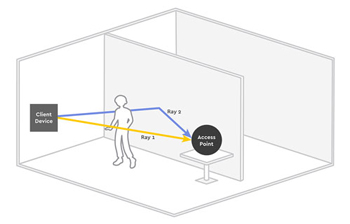
As expectations of Wi-Fi surge, so too does the need for precise, comprehensive Wi-Fi network testing. As always, testing must address conformance to standards, interoperability, and performance. With Wi-Fi, many factors can impact performance, such as walls, electrical interference, , signal reflection, and other Wi-Fi and wireless usage in the area. All Wi-Fi 6/6E devices must be tested against these factors in controlled, repeatable ways.

Wi-Fi 6/6E sees multiple standards in play, including TR-398 performance for routers and access points, RFC-2544 network device benchmarking specification, and others in the offing. Still, as this next generation of Wi-Fi comes to market quickly, comprehensive test and interoperability standards have yet to be developed.

Example of RFC-2544 test to determine maximum throughput behavior of the device under test

As such, testing Wi-Fi 6/6E devices has become more complicated than traditional Wi-Fi device testing. Trying to test manually not only makes little economic sense, but it has become nearly impossible.

Automated testing of Wi-Fi 6/6E devices
To overcome the complexity of testing a growing number of Wi-Fi 6/6E devices, automated device hardware and software testing is essential for cost-efficient, scalable, accurate, timely, and repeatable results.

Traditionally, test teams must research and keep up to date with evolving standards to create and execute tests. Alternatively, automated Wi-Fi automation packages from test experts like Spirent can be leveraged. Such automated test packages reflect existing standards and, where standards don’t yet exist such as for mesh networks, expertly define appropriate tests. Executing automated test software on your testbed enables fast, 24×7 testing. And all those resources that were grinding through test scenarios can instead put energies into evaluating results.

Spirent Wi-Fi 6/6E automated test packages
Spirent, the Wi-Fi testing market leader, offers a wireless test bed that validates Wi-Fi networks and devices. Its software automation packages automate standards-based Wi-Fi test plans to assess conformance, interoperability, and performance.

To accelerate Wi-Fi 6/6E testing, test automation packages spanning mesh interoperability performance testing of devices and device performance evaluation through RFC 2544 benchmark tests have been developed.

Learn more about how Spirent automated Wi-Fi test packages can enable you to quickly assess Wi-Fi device conformance to standards, interoperability, and performance.

The combination of World Cinema and Hospitality WiFi creates a converged services powerhouse serving approximately 7,000 properties representing over 900,000 rooms

HOUSTON, June 27, 2022—World Cinema, Inc.(“WCI”), a leader in deploying and serving property technology for over forty years, today announced it has entered an agreement to acquire Ohio-based Hospitality WiFi LLC, a global leader in delivering Internet Protocol-based wired and wireless networking experiences to the hospitality industry. The combination creates the most customer-centric, well-rounded, and qualified technology services partner for brands, owners, and managers in the institutional real estate industry.

Hospitality WiFi was formed over 21 years ago to satisfy the then-emerging need for hotels to add Wi-Fi connectivity to their guest experiences. Growing to over 2,800 properties on over 5 continents, they have been instrumental in satisfying the growing needs of guest connectivity.

“A real attraction to Hospitality WiFi is the team and their attitude towards their customers. It’s the same culture that has allowed World Cinema to deliver substantial organic growth and success over the past four decades. This is the beginning of a powerful combination which will deliver benefits to our clients and create opportunities for the employees and loyal partners of each company. We are excited to build the future of property technology together.”

– Tommy Fatjo, President of World Cinema

The two companies share the commitment to delivering customer-centric solutions. The promise of both companies is to deliver every time, with no exceptions. The combination is a catalyst to deliver convergence of in-room entertainment, seamless wireless networking experiences, and transformative connected applications like digital signage, smart building, and common area video intelligence services. By maintaining cost leadership and high levels of customer satisfaction, this partnership can increase financial returns for clients by improving top-line occupancy and RevPAR and increasing income by adding operating efficiencies.

“When I founded Hospitality WiFi in 2001, we had a vision to be the number one choice of hotel owners and brands. I’m so proud Hospitality WiFi is joining World Cinema, a company that is known for its long successful track record of delivering hospitality technology services to some of the largest properties and enterprises in the U.S. I’m looking forward to taking our customers to the next level with the combination of our two companies.”

– Jason Szuch, President and Chief Executive Officer of Hospitality WiFi

About World Cinema, Inc.
Founded in 1974, WCI is a privately held company headquartered in Houston, Texas. The company serves over 7,000 properties with nearly 900,000 rooms under management.

World Cinema, Inc. (WCI) is a trusted provider of video, advanced connectivity and professional services to properties and enterprises across the U.S., Canada, Mexico and the US Virgin Islands. With a dedication to customer service, WCI is leading the way in delivering innovative technology solutions that enhance the resident, guest, and staff experience. From managed services to digital transformation, WCI is a single point of contact for all a property’s technology needs.

For more information, visit www.wcitv.com

About Hospitality WiFi
Hospitality WiFi (HWF) has been providing guest WiFi and other services since 2001. With the goal of offering a better guest experience for hospitality properties, MDUs, restaurants, offices, and other locations on multiple continents, HWF designs, installs, and supports wired and wireless networks, including site surveys, equipment selection and purchase, installation, and ongoing maintenance and management. HWF’s expertise with converged networks enables simplified management and an improved customer experience, with services including:

  • HSIA/WiFi Managed Solutions
  • 24x7x365 Guest Support
  • Voice, Video, and Data Solutions for Communications and Guest Entertainment

For more information, please visit www.hospitalitywifi.com

Transaction Details
This transaction is subject to customary closing requirements. Derick Schaudies led the TI Partners team as exclusive financial advisors to Hospitality WiFi.

Media Contacts:

World Cinema
Ella Steele
Esteele@onewci.com

Hospitality WiFi
Melanie Swiderek
Melanie@hospitalitywifi.com

STOCKHOLM – July 1,  2020 – Swedavia, the state-owned Swedish Airport developer and operator, has further enhanced their Wi-Fi service and moved to the cloud with Aptilo Networks.

The ten largest airports in Sweden, with 42 million passengers yearly, are owned and operated by Swedavia. Since 2005, Swedavia has put their trust in Aptilo’s experts managing the Wi-Fi service from servers in Swedavia’s data center.

Now Swedavia has renewed the contract for another three years and is moving from in-house operations to the Aptilo private cloud offering on Amazon Web Services (AWS).

Swedavia can now use the latest Aptilo features for Wi-Fi marketing, analytics, and Internet of Things (IoT). This includes the new Wi-Fi access method using an icon-based survey. It provides enhanced insights about the user with the smallest user effort. The login page (Wi-Fi Captive Portal) is split into several screens. The user provides data by clicking on icons, rushing on to the next page. One of Aptilo’s other airport customers gained 15% more Wi-Fi users overnight by using this approach instead of a traditional login.

“We are proud to have earned Swedavia’s trust for another three years,” said Paul Mikkelsen, CEO, Aptilo Networks. “We will continue to help them deliver state-of-the-art connectivity services at their airports. It is also wonderful that Swedavia has joined our cloud-first strategy. Our new IoT offerings, Aptilo Wi-Fi Zero-touch and Aptilo IoT CCS, are both by default delivered as services on AWS.”

About Aptilo Networks

Aptilo Networks is a leading provider of carrier-class systems to manage data services with advanced functions for authentication, policy control and charging. Aptilo Service Management Platformℱ (SMP) has become synonymous with Wi-Fi service management and Wi-Fi offload in large-scale deployments with 100+ operators in more than 75 countries, and is a critical component of Wi-Fi calling and IoT.

# # #