Unlike previous generations that focused on peak speeds, Wi-Fi 8 is all about reliability, intelligence, and context-aware networking. It’s designed to deliver ultra-high reliability, deterministic performance, and smarter traffic management—even in congested environments like busy homes, offices, and airports.
Here are some key takeaways from the white paper:
The white paper also outlines real-world use cases—from immersive XR collaboration and smart enterprise environments to AI-powered meeting rooms and connected homes. Whether you’re a gamer, a remote worker, or an enterprise IT manager, Wi-Fi 8 promises a more seamless and intelligent wireless experience.
Intel’s white paper doesn’t just scratch the surface—it provides a detailed technology overview, including multi-AP coordination, spectrum optimization, and power efficiency improvements. It’s a must-read for anyone looking to understand how Wi-Fi 8 will transform connectivity in the AI era.
The white paper is now available for download. Don’t miss your chance to explore the future of wireless networking with the industry’s most thorough guide to Wi-Fi 8.

Driven by public-private partnership, the City of Los Angeles, Cisco and a network of LA nonprofits unveil new public Wi-Fi, addressing previous gaps in internet access and equipping LA’s public infrastructure ahead of major events.
News Summary:
Los Angeles, Calif., October 23, 2025 – Today, Cisco (NASDAQ: CSCO) alongside government and nonprofit partners including the City of Los Angeles, Destination Crenshaw, the California Community Foundation and Digital Equity LA announce a new community Wi-Fi initiative that will provide free internet access along major streets, parks and public gathering places in LA’s historic Crenshaw Corridor.
The initiative, called the Crenshaw Community Connectivity Pilot, is the result of years of collaboration across government, industry and nonprofits working together and led by direct input from the community. This Wi-Fi not only benefits South LA residents and businesses but supports visitors to the area ahead of major events and celebrations in LA.
“Every Angeleno deserves access to reliable, high-speed internet – no matter their ZIP code,” said Los Angeles Mayor Karen Bass. “This initiative in the Crenshaw Corridor shows what’s possible when the public, private and nonprofit sectors come together with the community to bridge the digital divide. As Los Angeles prepares to welcome the world in the years ahead, investments like this will ensure opportunity and connectivity reaches every neighborhood across the city.”
“Access to secure, reliable internet is essential to full participation in democracy. The Crenshaw Community Connectivity Pilot is more than infrastructure; it is digital justice.” said LA City Council President Marqueece Harris-Dawson. “This initiative is a blueprint for other cities showing what is possible when government, nonprofits and the private sector work together – guided by the community.”
“Cisco’s purpose is to power an inclusive future for all, and expanding internet access directly translates to educational and economic opportunity,” said Gary DePreta, Senior Vice President for U.S. Public Sector, Cisco. “This initiative not only helps bridge the digital divide but sets LA up with the connectivity platform needed for future public sector innovation.”
“As Los Angeles prepares to host multiple major events, piloting the city’s first free community Wi-Fi network along Crenshaw Boulevard will fuel economic opportunity for our artists and small business owners,” said Jason Foster, President & CEO of Destination Crenshaw. “This is a model for how neighborhoods across LA can continue to address digital inequity in partnership with city leadership and Cisco.”
The new Wi-Fi network was announced at an event with project partners and champions including LA City Council President Marqueece Harris-Dawson, the LA Bureau of Street Lighting (BSL), Cisco, the California Community Foundation, Destination Crenshaw and Digital Equity LA.
In partnership with Destination Crenshaw and Council President Harris-Dawson, BSL installed 1.5 miles of underground fiber optics cable stretching from Leimert Park Plaza to the Hyde Park Metro Station. Building on top of existing city-owned street lighting assets, BSL worked with Cisco to deploy cloud-managed Cisco outdoor access points and Cisco Ultra-Reliable Wireless Backhaul (URWB), enabling the free Wi-Fi at public spaces along the corridor. URWB ensures ultra-secure, ultra-reliable connectivity in areas where fiber is still being rolled out. The Crenshaw Community Connectivity Pilot offers internet access across the Crenshaw Corridor and benefits residents, businesses and visitors to the Crenshaw, Hyde Park, Park Mesa and Leimert Park neighborhoods.
As LA prepares to host some of the world’s largest sporting and cultural events—including FIFA World Cup 26, Super Bowl LXI and the LA28 Olympic & Paralympic Games—investing in community Wi-Fi supports LA residents and visitors, spurring economic opportunity. The Wi-Fi infrastructure was designed as a platform to support future smart cities use cases, such as data-driven traffic management, increased pedestrian and public safety, improved emergency response and environmental sensing technology. As the Official Network Equipment Partner for the LA28 Olympic & Paralympic Games, Cisco is committed to supporting LA now and into the future by creating opportunities for people in Los Angeles through both new and existing social impact programming and the company’s history supporting public sector innovation.
About Cisco
Cisco (NASDAQ: CSCO) is the worldwide technology leader that is revolutionizing the way organizations connect and protect in the AI era. For more than 40 years, Cisco has securely connected the world. With its industry leading AI-powered solutions and services, Cisco enables its customers, partners and communities to unlock innovation, enhance productivity and strengthen digital resilience. With purpose at its core, Cisco remains committed to creating a more connected and inclusive future for all. Discover more on The Newsroom and follow us on X at @Cisco.
Cisco and the Cisco logo are trademarks or registered trademarks of Cisco and/or its affiliates in the U.S. and other countries. A listing of Cisco’s trademarks can be found at http://www.cisco.com/go/trademarks. Third-party trademarks mentioned are the property of their respective owners. The use of the word ‘partner’ does not imply a partnership relationship between Cisco and any other company.

WASHINGTON, D.C. – Oct. 23, 2025 – Amid the near four-year high unemployment rate, new research from DNSFilter finds that scams related to hiring are proliferating. New data from the company’s networks shows an alarming trend in domain activity related to domains that include terms like “careers,” “hiring,” “jobs,” and “talent,” which have seen a significant uptick since the start of 2025.
These new insights from DNSFilter underscore the need for job seekers, who average 180 job applications to land a single offer, to remain vigilant when navigating job boards and receiving messages from so-called recruiters.
Over the last 6 months:
Researchers also discovered that a number of suspicious domain practices are being used to lure victims into clicking malicious links, including:
.top, .tk, .ml, .xyz, .af).Attackers are increasingly registering new domains in short bursts to evade detection, following them up with phishing campaigns containing those links to target job seekers, human resources teams and recruitment platforms.
Job seekers and organizations can help protect themselves from these types of hiring scams by remembering to:
Gregg Jones, intelligence analyst lead, DNSFilter, said: “All aspects of our lives are vulnerable to bad actors given the right mix of emotions, timing, and environmental factors. Being vulnerable to a scam can take many forms, often in ways we least expect. Taking stock of things that seem too good to be true and implementing security best practices are key to reducing unexpected angles of exploitation.”
About the company:
DNSFilter is a cybersecurity company that protects every click, leveraging AI-driven content filtering and threat protection to block threats 10 days earlier than competitors. DNSFilter’s solution secures workers anywhere they are, helping to boost productivity, minimize compliance risk, and protect corporate brands on public Wi-Fi networks. Unlike traditional filtering solutions, DNSFilter deploys in minutes instead of days and is trusted by more than 43,000 organizations worldwide. Learn more about how DNSFilter is the first and last line of defense for corporate and hybrid networks at dnsfilter.com.
Silicon Labs SiWx917 ultra-low-power Wi-Fi 6 SoC offers truly IoT-optimized Wi-Fi connectivity and was recently validated by an independent test house to provide multi-year battery life on IoT devices. Energy efficiency is a key criteria for many of our customers, but Wi-Fi’s reputation for being power-intensive has made IoT device makers skeptical about using it. This is one of the reasons we’re thrilled to announce our new SiWx917 power estimator. This tool makes it possible to estimate how much battery life you can squeeze out of the SiWx917, the lowest power Wi-Fi 6 chip available.
The SiWx917 Changed What’s Possible With Wi-Fi 6 Battery Life
It’s no wonder consumers and companies are craving more Wi-Fi IoT devices. They don’t require separate gateways or hubs,. you can simply connect them to your Wi-Fi access point (AP) and voilà, they are on the cloud, and in your favorite ecosystem.
Historically, the short battery life and recharging interval of Wi-Fi devices turned off some buyers. Then came the Silicon Labs SiWx917 ultra-low-power Wi-Fi 6 microcontroller, introducing energy-efficient Wi-Fi. Thanks to its extremely low connected sleep power consumption, multi-year battery life is now possible on Wi-Fi devices.
Despite its popularity in the market, we still hear doubts about whether multi-year battery life on Wi-Fi devices is realistic. To put an end to this debate, we SiWx917 Power Estimator, an online tool for estimating the battery life on your IoT device.
SiWx917 Tested to Deliver Multi-year Battery Life on Wi-Fi IoT Devices
The SiWx917, launched in 2023, was designed from the ground up for IoT-optimized Wi-Fi. It provides the lowest Wi-Fi 6 power consumption in its class for cloud-connected sleep mode, only 22µA. Its combined system power consumption for Wi-Fi 6 connected sleep and the application MCU in sleep is just 37µA. Its intelligent power management gives product developers more possibilities for optimizing Wi-Fi power for energy-efficient IoT applications. The ultra-low-power (ULP) peripherals allow sensor applications to operate while the rest of the chip is idle. The dedicated network wireless processor (NWP) independently manages wireless and networking operations, allowing the application MCU sleep. These, and many other power saving features on SiWx917 solve the battery life challenge for IoT device makers. As a matter of fact, Novus Labs, an independent testing provider, estimated that SiWx917 can enable smart locks to reach a 5-year battery life with four 3000mAh AA batteries.
However, achieving years of battery life on Wi-Fi IoT devices is not straightforward.
Can I Achieve Multi-year Battery Life on My Wi-Fi IoT Device?
We hear device makers asking this question frequently. The answer is yes, but Wi-Fi access points, physical environment, RF conditions, battery chemistry, application characteristics, and many, many other things. Most of these variables are beyond your control. They are derived by the environment where the device operates and the impact on your device’s battery life cannot be estimated in advance.
The SiWx917 Power Estimator allows you to estimate how your application characteristics will impact the battery life.
Estimating the Battery Life of Your Wi-Fi Device
The SiWx917 Power Estimator User Guide walks you through the application related variables affecting the battery life of your device, asking the relevant questions and facilitating your responses with multi-select drop down menus, default values, and value ranges. Here’s a snapshot of variables you are required to enter in the tool:
IoT-optimized Wi-Fi is about More than just Battery Life
We hope our new SiWx917 power estimator tool will help you to estimate how well your Wi-Fi device will score on one of the most critical IoT metrics, battery life.
However, IoT is about much more than just low power consumption and battery life. The SiWx917 was designed for IoT-optimized Wi-Fi connectivity, meeting the requirements of the future IoT, such as powerful compute, large memory, robust security, AI/ML acceleration, ecosystem support, and a broad set of peripherals. Learn about our IoT-optimized Wi-Fi solutions!

Industry expert joins to spearhead NETGEAR Enterprise sales and channel management across the region
October 22, 2025, San Jose, Calif. – NETGEAR® Inc. (NASDAQ: NTGR), a global leader in intelligent networking solutions designed to power extraordinary experiences, today announced the appointment of Luca Marinelli, who joins the company as Head of Europe, overseeing the development of NETGEAR’s enterprise customer portfolio and channel partnerships in the region as well as nurturing its expanding European team.
Marinelli has extensive experience in the technology industry, having held senior roles at Citrix, Microsoft, Cisco, Exclusive Networks, Check Point and Alludo. He spent nine years at Cisco, becoming Managing Director of Channels for the EMEA region, and seven years at Microsoft in Italy where he became Senior Director Enterprise Major and Global Accounts. Following this, he joined Exclusive Networks Italia as CEO and General Manager, taking responsibility for all aspects of the cybersecurity-focused business. At Citrix, Marinelli was VP Partners & Field Marketing for EMEA, and at Alludo he ran the EMEA & ANZ regions.
As NETGEAR embarks on the next chapter of its journey to grow its enterprise networking business in Europe, Marinelli will be instrumental in driving the next phase of the company’s channel strategy, expanding collaborations with a new generation of partners and strengthening its Managed Service Providers (MSP) ecosystem. Building on a robust enterprise networking portfolio — recently enhanced with the integration of Exium’s SASE Security solutions — he aims to accelerate NETGEAR’s growth in the Small and Medium Enterprise (SME) segment.
Eric Law, Vice President, Worldwide Sales at NETGEAR, said: “Luca brings an impressive background steeped in the European tech industry and he has a deep knowledge of how to build a loyal and proactive channel, support customers and inspire sales teams to achieve great results. He is experienced in delivering strong leadership alignment and we are confident that Luca will be instrumental in driving our vision for enterprise companies across Europe.”
“I am delighted to join NETGEAR at such a pivotal point for the company,” said Marinelli. “As NETGEAR expands its business, I will be looking to develop a sales team focused on success and best practice, working in tandem with our channel to deliver high-powered, memorable experiences to customers.”
With a solid partner foundation already in place, NETGEAR is now shaping a channel-driven approach tailored to today’s business environments. Marinelli’s leadership will help to deliver on the vision outlined for the enterprise business earlier this year.
NETGEAR, Inc.
Founded in 1996 and headquartered in the USA, NETGEAR® (NASDAQ: NTGR) is a global leader in innovative networking technologies for businesses, homes, and service providers. NETGEAR delivers a wide range of award-winning, intelligent solutions designed to unleash the full potential of connectivity and power extraordinary experiences. For businesses, NETGEAR offers reliable, easy-to-use, high-performance networking solutions, including switches, routers, access points, software, and AV over IP technologies, tailored to meet the diverse needs of small and medium enterprises. NETGEAR’s consumer products deliver advanced connectivity, powerful performance, and enhanced security features right out of the box, designed to help keep families safe online, whether at home or on the go. More information is available from the NETGEAR Press Room or by calling (408) 907-8000. Connect with NETGEAR: Facebook, Instagram and the NETGEAR blog at NETGEAR.com.
©2025 NETGEAR, Inc. NETGEAR and the NETGEAR logo are trademarks and/or registered trademarks of NETGEAR, Inc. and/or its affiliates in the United States and/or other countries. Other brand and product names are for identification purposes only and may be trademarks or registered trademarks of their respective holder(s). The information contained herein is subject to change without notice. NETGEAR shall not be liable for technical or editorial errors or omissions contained herein. All rights reserved.

Not that long ago, if you asked someone what defines loyalty in hospitality, they might have said reward points or checkout surveys. And while hotel loyalty program membership continues to surge, savvy hoteliers know that loyalty isn’t truly about how many points you add to a guest’s rewards account. Hotels shape guest loyalty through every interaction, both digital and personal, that makes a guest feel recognized, understood, and in control of their stay.
Today’s travelers expect properties to deliver experiences that mirror the convenience and personalization of their daily lives. A large majority of consumers now expect, as a baseline, interactions and experiences that reflect their preferences. Hotels are not an exception to this trend, and those who strive to remain competitive will use technology to deliver a personalized, connected guest experience.
We designed Compass by WorldVue™ for this new era of connected hospitality.
As a next-generation mobile platform built on the proven foundation of the WorldVue HUB®, Compass unites the guest journey into a single, cohesive experience. It empowers hotels to deliver personalization at scale, turning everyday interactions into lasting relationships while unlocking operational and revenue opportunities across every property type.
The Shift Toward Connected Hospitality
Guest expectations are shifting rapidly. The new standard of hospitality isn’t just about amenities; it’s about access and connection. Whether they’re traveling for business, leisure, or an extended stay, guests want to feel seen, known, and in control of their experience.
Compass by WorldVue bridges mobile devices, in-room systems, and hotel services to make that possible. Guests can manage entertainment, lighting, and climate from their smartphones. They can pair devices instantly, browse a fully digital hotel compendium, and receive curated messages about property events or local attractions.
For hoteliers, this digital integration means more than convenience – it means consistency and insight. From boutique properties creating high-touch, customized experiences to large-scale brands managing complex portfolios, Compass adapts to every operation. It aligns technology with brand identity and service philosophy, ensuring that every digital touchpoint feels intentional, not transactional.

Traditional loyalty programs rely on transactions; guests earn points, redeem them, and move on. Compass by WorldVue changes that by making loyalty experiential.
When a returning guest checks in, Compass recognizes them immediately, greets them by name, displays their loyalty tier status, and recalls their preferences for entertainment, language, and room environment. For frequent travelers or brand-loyal guests, this sense of familiarity translates directly into satisfaction and repeat business.
Hotels can also tailor offers by loyalty tier, such as premium content access, late check-out options, or personalized recommendations. Whether a guest is a business traveler on a quick stay or a long-term guest in an extended-stay suite, Compass adjusts the interaction to their habits and priorities.
This kind of responsive recognition was once reserved for luxury brands with dedicated concierge staff. Now, it’s scalable across any hotel type, from boutique hotels cultivating personal touches to select-service properties that depend on efficient, tech-forward engagement.
The result: a redefined loyalty model where personalization itself becomes a valuable reward.
Engagement That Reaches Beyond the Room
Compass by WorldVue extends engagement beyond the guestroom, connecting guests to everything the property and surrounding areas have to offer. Through its mobile interface, hotels can:
This approach creates new revenue opportunities while improving the guest experience. For full-service properties, Compass can serve as a digital marketplace that showcases brand offerings. For limited-service and extended-stay hotels, it helps staff communicate efficiently, promote available upgrades, and strengthen brand engagement without increasing workload.
In every case, Compass empowers hotels to reach guests at the right moment – not through broad messaging, but through meaningful, personalized recommendations that drive satisfaction and spend.
Personalization with Purpose
The power of Compass lies in its ability to use real-time insights responsibly. It turns anonymous data into actionable intelligence that helps hotels anticipate needs and streamline operations.
For example:
This dual value – guest-facing engagement and operational intelligence – makes Compass a strategic investment. It enables hotels to personalize experiences while also improving efficiency, training, and decision-making.
And because Compass integrates directly with the existing WorldVue HUB® ecosystem, it does so without the need for costly rewiring or disruptive system overhauls.
A Unified Experience Across Brands and Borders
For multi-property brands, consistency matters. Guests expect the same seamless experience whether they’re in Austin, Athens, or Abu Dhabi.
Compass ensures consistency through brand customization and cross-property recognition. Hotels can maintain logos, fonts, and color palettes across all guest interfaces while adapting messaging to local markets and languages. Guest preferences follow them across stays, creating a sense of familiarity that builds trust and strengthens brand identity.
This capability is particularly powerful for:
By combining the mobile power of Compass with the in-room experience of WorldVue HUB, properties can finally deliver a consistent, high-quality journey worldwide without compromising individuality or local flavor.

Where Technology Enhances Hospitality, Not Replaces It
Hospitality has always been about people – ensuring their comfort and making connections. Technology should enrich that experience, not make it colder.
Compass by WorldVue does exactly that. It frees staff from repetitive inquiries, helps guests find information faster, and keeps every interaction aligned with brand feel and service standards. That means more time for personal engagement where it matters most, in human connections.
Our thoughtful approach to innovation recently earned Compass by WorldVue the Gold Award for Technology Innovation from the Merit Awards. This award recognizes Compass’s impact in redefining how hotels connect with guests through intelligent, personalized, and integrated technology.
As guest expectations continue to evolve, the most successful hotels will be those that blend technology and empathy, using platforms like Compass to deliver both precision and warmth.
Ready to Redefine Guest Loyalty?
Compass by WorldVue empowers hotels of every type to deliver seamless, hyper-personalized experiences that strengthen loyalty and drive long-term value across devices, properties, and borders.
Discover how Compass can help your property turn connection into loyalty. Visit www.worldvue.com/compass to find out more and view a demo.

New threat preventative updates enable SMBs and MSPs to focus on growth while staying secure.

Battlefield 6 promises the ultimate all-out warfare experience, aiming to take the top spot in the FPS genre. But to get the best performance during the beta or full launch, you’ll need more than just skill—you’ll need a fast and stable connection.
Whether you’re boots-on-the-ground infantry or an ace in aerial dogfights, a bad connection can ruin your experience. That’s why knowing the best Battlefield 6 server locations is key to dominating the battlefield.
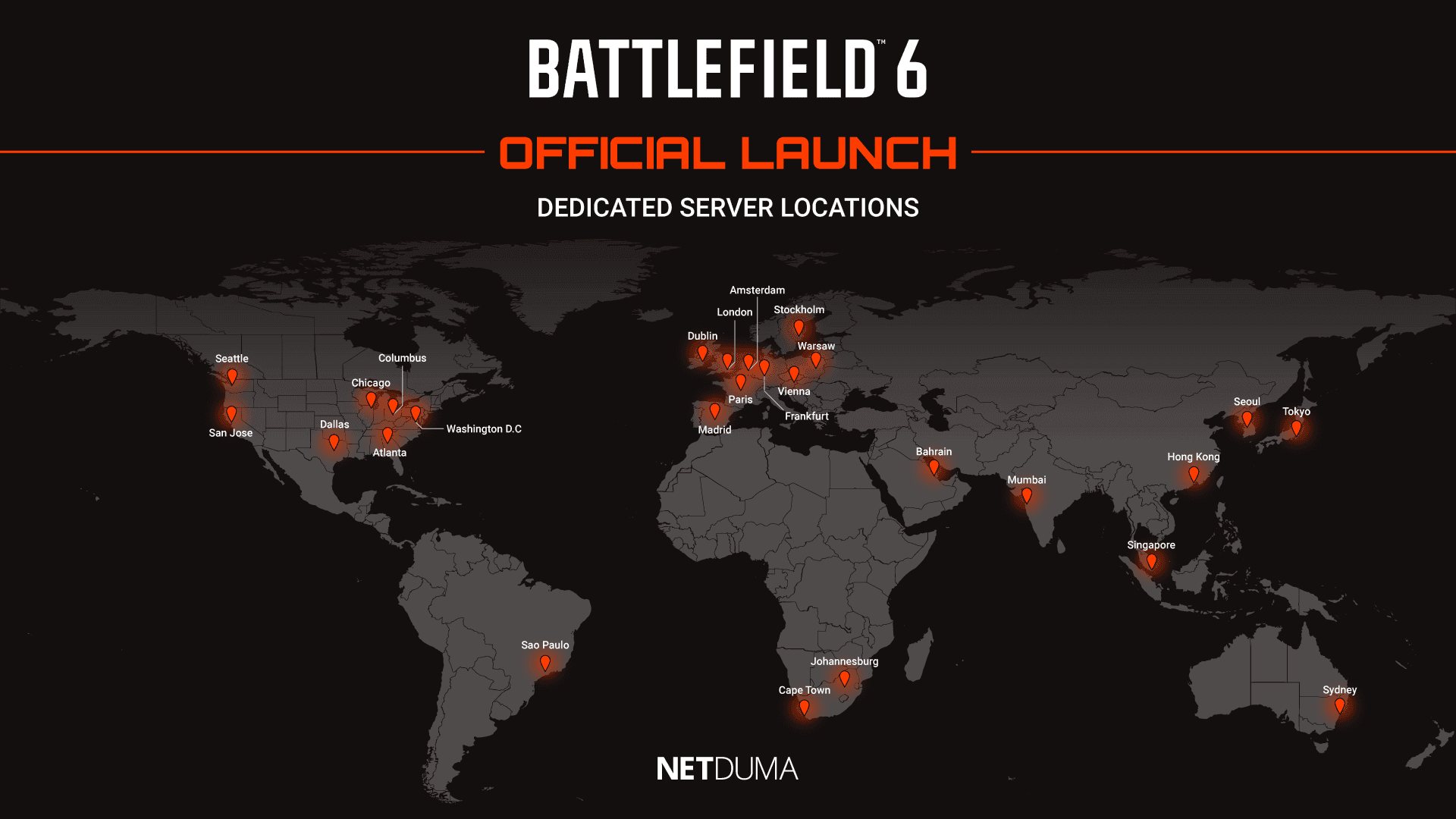
We’ve tested the Battlefield 6 beta to identify all available server locations so you can connect to the closest and fastest server. We’ll also update this guide at launch if any new servers are added or existing ones change.
What Are The Best Battlefield 6 Servers?
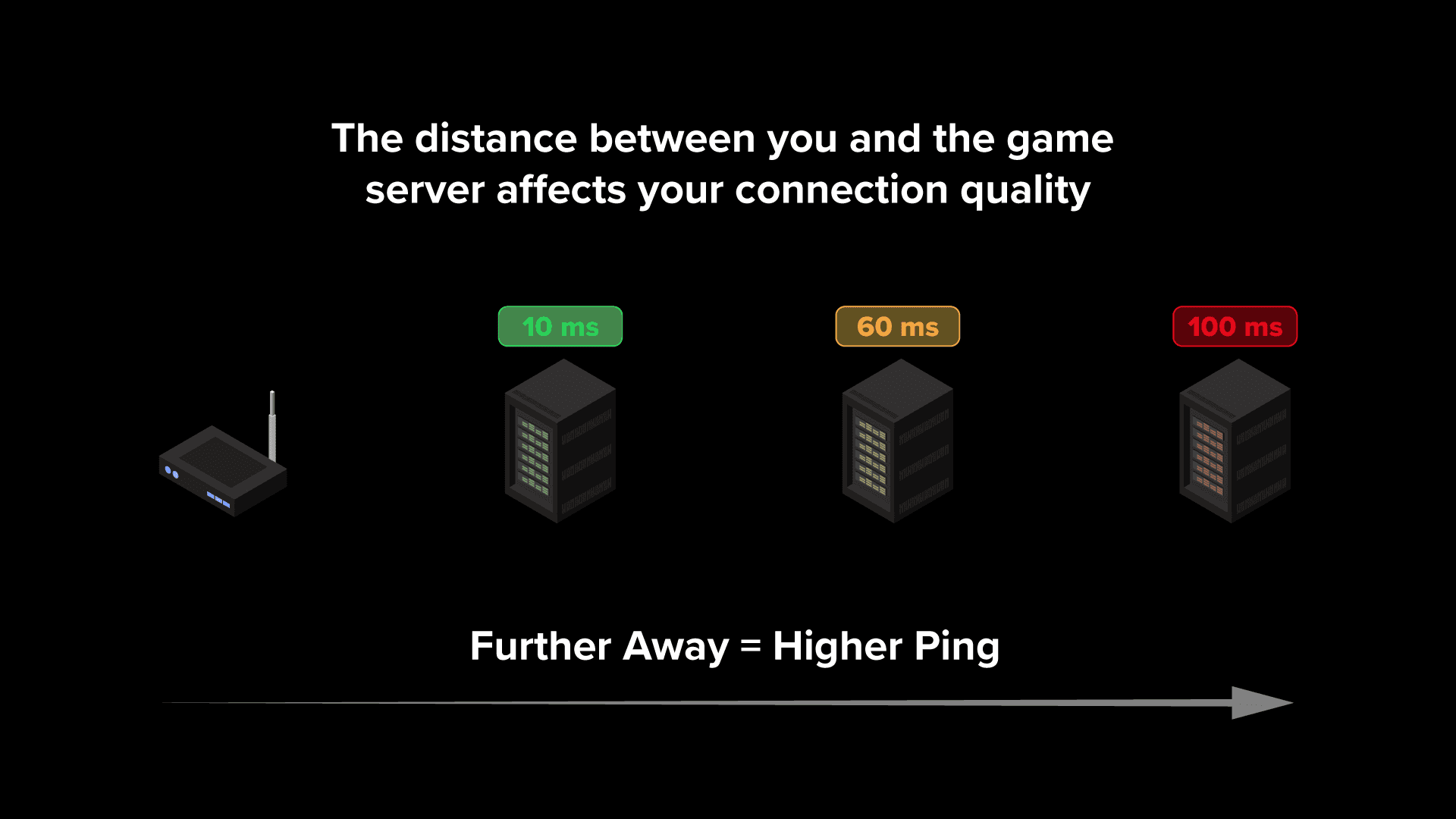
The best Battlefield 6 servers are the ones closest to your physical location. The shorter the distance between you and the server, the lower your ping will be. A low ping means faster response times, smoother gameplay, and fewer lag spikes.
Fortunately, Battlefield 6 has a solid global spread of servers, so most players should have access to at least one or two nearby options for a great connection.
How to Select the Best Battlefield 6 Server
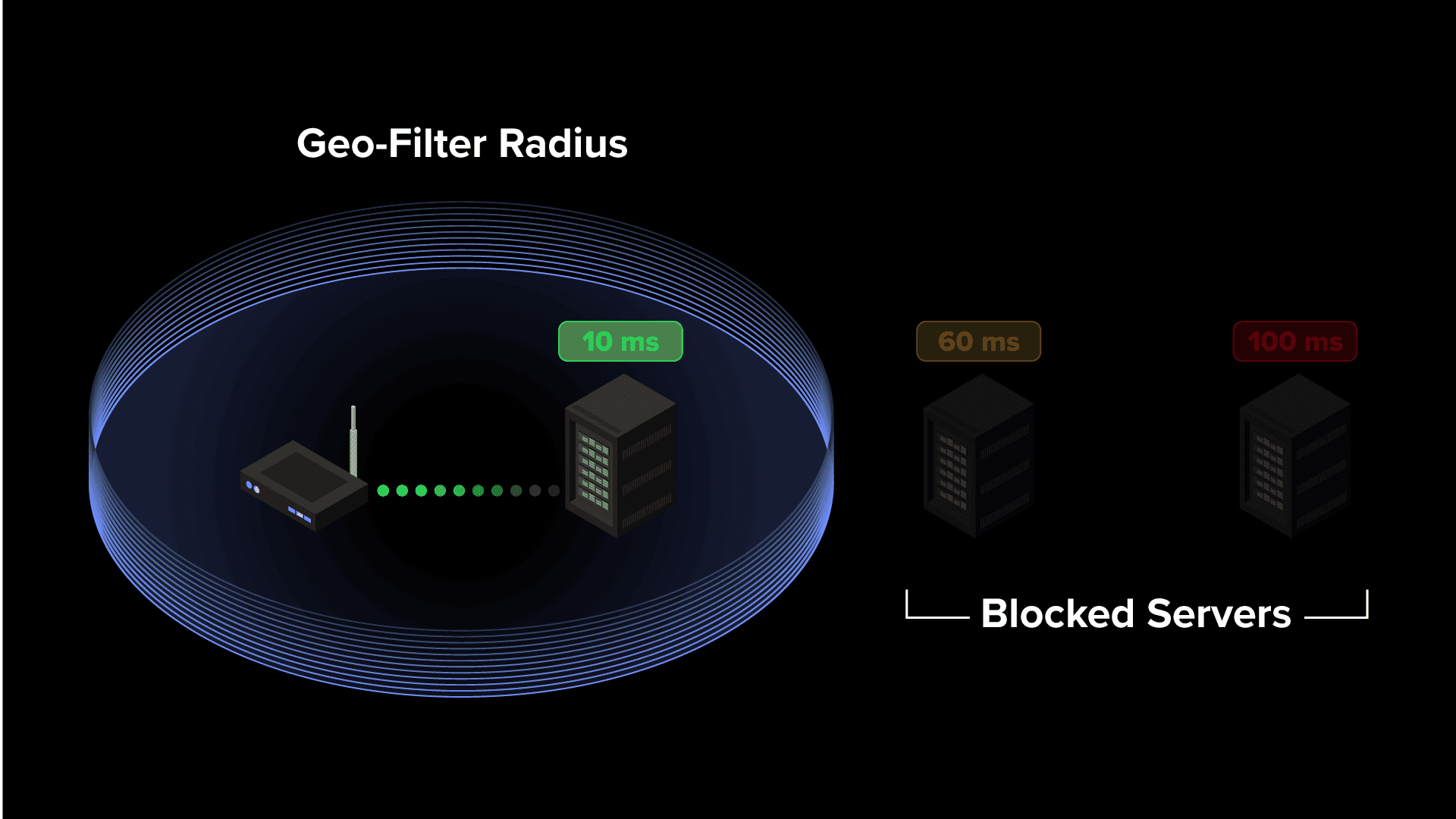
Currently, Battlefield 6 doesn’t include a traditional server browser in core multiplayer modes (outside of Portal). That means you can’t manually choose a server—unless you’re using the Geo-Filter feature on the Netduma R3 gaming router.
This feature allows you to connect to specific servers to ensure you always get a low ping connection. You can use the server map from this blog, or the Ping Heatmap feature to find the closest Battlefield 6 servers to you. With this information you can adjust your Geo-Filter radius to block unwanted high ping servers and force connection to the best Battlefield 6 servers.
We have a full Geo-Filter ultimate guide that covers everything you can do with the feature. If you want to learn more about it or see it in action, check the guide out here.
Battlefield 6 Server Status
With so much hype around the beta and launch of Battlefield 6, we expect the servers to be filled with players which may overload them. This could lead to server issues like higher base ping, disconnections or problems logging into the games online service.
If you are experiencing any of these connection issues, it worth checking the Battlefield 6 server status with these links below:
If servers are experiencing issues, there’s not much you can do—it’s up to EA to scale server capacity or apply fixes. But checking first can save you from unnecessary troubleshooting on your end.

About Ubiquiti
Ubiquiti is a leader in enterprise networking, delivering scalable Wi-Fi 7 solutions that enable seamless, multi-gigabit connectivity for environments from small offices to global stadiums. Their vision addresses the demands of today’s high-performance, connected devices and the hyper-connected world of modern business.
Use Case Spotlight
Ubiquiti’s Wi-Fi 7 portfolio — including the E7 series — delivers enterprise-grade connectivity at scale, proven in high-density venues like convention centers and arenas. These solutions provide reliable, content-rich wireless experiences for thousands of users, even under heavy traffic and with a wide range of devices.
Qualcomm Innovation
Ubiquiti’s latest access points are built on the scalable Qualcomm Dragonwing Networking Infrastructure Wi-Fi 7 platforms, leveraging advanced features like Multi-Link Operation, ultra-wide 320MHz channels, and 4K QAM for high throughput, low latency, and robust reliability. The Dragonwing N7 Platform’s modular architecture and automated frequency coordination enable both indoor and outdoor deployments, supporting diverse market needs.
From large stadiums to small offices, today’s high-performance devices require multi-gigabit speeds and real-time responsiveness. Ubiquiti’s Wi-Fi 7 access points (APs) lineup deliver multi-gigabit connectivity directly to client devices, ensuring seamless performance across diverse environments. With scalable, license-free networking solutions, Ubiquiti is enabling the hyper-connected world of modern business.
To bring its breakthrough vision for Wi-Fi 7 access points to life, Ubiquiti turned to a long-time trusted collaborator: Qualcomm Technologies. Powered by the Dragonwing Networking Wi-Fi 7 platforms, Ubiquiti’s access points lineup integrates the full capabilities of Wi-Fi 7 and offers significant advantages over previous generations, including:
With its advanced and modular networking architecture, the Dragonwing N7 Platform and Dragonwing NPro 7 Platform align perfectly with Ubiquiti’s software-driven innovation strategy.
“The Dragonwing Wi-Fi 7 Networking Platforms combine powerful quad-core processing with advanced high-speed networking to deliver exceptional performance,” said Tom Hildebrand, Ubiquiti Engineer. “Its ability to seamlessly route and shape traffic provides the flexibility our customers need to scale and adapt with confidence.”
The scalable Dragonwing platforms support both dual- and tri-band configurations. This enables Ubiquiti to bring the core innovations of Wi-Fi 7 to more cost-sensitive markets and regions (including those that do not have 6GHz spectrum available) through other solutions in their lineup, such as UniFi U7 Lite.
Next-gen connectivity even outdoors
A leader in enterprise connectivity transformation, Ubiquiti further expanded the reach and flexibility of its next-gen wireless networks with its first 6GHz outdoor Wi-Fi solution. The U7 Pro Outdoor and Enterprise APs enable this breakthrough connectivity in large open-air settings, such as stadiums and campuses.
While 6GHz spectrum has traditionally been limited to indoor use due to spectrum regulations, outdoor deployments in North America are now possible with automated frequency coordination (AFC) systems. Ubiquiti once again turned to Qualcomm innovation. The Dragonwing AFC Suite, a complete turnkey solution integrating geolocation technology, was integrated to manage spectrum sharing with 6GHz spectrum incumbent users.
“With Dragonwing AFC Suite, 6 GHz Wi-Fi can now meet the indoor and outdoor deployment needs of our customers, including extended range unheard of with Wi-Fi 6E,” said Hildebrand.

Real-world impact: From convention centers to stadiumsUbiquiti’s expanding Wi‑Fi 7 portfolio is already delivering enterprise-grade connectivity at scale across diverse, high-density environments. And the results speak for themselves.
More than 6,000 attendees to a week-long event hosted in a Canadian convention center enjoyed flawless wireless connectivity, even under heavy traffic and with 40% of clients using 6GHz. One of the largest 6GHz deployments they’ve done in North America, Ubiquiti used their E7 and E7 Campus APs to provide users with reliable, content-rich experiences across their devices, including smartphones and laptops.
Also in North America, Ubiquiti is upgrading an 18,000-person-capacity arena, both inside and out, to Wi-Fi 7 from an increasingly inadequate Wi-Fi 5. Early results already show over 120 users per AP with seamless performance. Once the full deployment of UniFi Enterprise APs is complete, it will be a gamechanger.
Through its collaboration with Qualcomm Technologies, Ubiquiti is bringing the full promise of Wi-Fi 7 to life. From flagship enterprise deployments with the high-capacity E7 series to cost-conscious rollouts with the U7 Lite and super-compact 10G Cloud Gateway Express 7, customers can meet the connectivity needs of today and into the future.
Deep within a cutting-edge Planet Farms factory environment, nestled not on sprawling fields but towering upwards in layers, produce is being farmed in tightly controlled conditions. This is where traditional agriculture is being revolutionized, within a highly automated, data-driven, vertical farming model.
“If we want to set new standards in vertical farming, we must start with a radical change of perspective,” says Massimo Mistretta, CISO, Planet Farms. “We want to change the way the world thinks about agriculture.”
Creating efficiency through a seamlessly connected network
The change is to shift from supply-led farming to demand-led. The Planet Farms model is not restricted by seasonal growing cycles, geography, or access to water. For Planet Farms, the work isn’t done by tractors, but by robots moving on the plant and automated guided vehicles (AGVs). This is critical to maintaining the highly efficient processes Planet Farms has developed to grow fresh, nutritious, flavorful food. Robots transport everything from seedlings to harvested produce, ensuring minimal human contact and maximum speed. No soil, no pesticides, and minimal water.
“The customer is the first to open the bag and touch the product,” Mistretta points out. “Everything else is completely automated, from seeding to primary and secondary packaging. The product doesn’t need to be washed; it arrives ready to eat.”
However, keeping everything seamlessly connected posed a challenge. For critical, latency-sensitive communications required by AGVs, a dropped connection or even a pause during handoff could disrupt operations, potentially leading to delays or errors.
Real-time data access through automation
Enter Cisco Ultra-Reliable Wireless Backhaul (URWB). Planet Farms discovered that URWB was designed precisely for connecting moving assets, providing a level of performance that standard Wi-Fi couldn’t guarantee for its critical operations. URWB offers ultra-reliable, low-latency wireless connectivity with seamless handoffs and zero packet loss, essential for uninterrupted movement of their robots and AGVs.
“Cisco URWB enables our AGVs and 3D cameras to collect data in real time without interruption. This data is vital for advanced agentic AI models to make informed decisions.” – Massimo Mistretta, CISO, Planet Farms
Unlike Wi-Fi, URWB employs a “make before break” roaming mechanism, establishing the connection to the next access point before dropping the connection to the current one. Its Multipath Operations (MPO) technology allows traffic, especially critical data, to be sent to multiple access points simultaneously. This means that even with obstacles and interference common in complex industrial environments, such as a multi-level vertical farm, if one connection is interrupted, the traffic still gets through via another path.
Deploying URWB felt surprisingly familiar to Planet Farms’ existing IT team. The solution is built on 802.11 standards and deploys just like Wi-Fi, making it quick for teams to get connected. Planet Farms now has a wireless network that can finally keep pace with its ambitious automation. The network is then centrally monitored and maintained using tools such as Cisco Industrial Wireless Monitor, providing real-time data and alerts.
“We want to show that vertical farming is not only feasible but can be profitable.” – Massimo Mistretta, CISO, Planet Farms
Innovation and increased sustainability
For Planet Farms, Cisco URWB enables the high level of automation necessary to run its vertical farms efficiently, reducing downtime, complexity, and manual intervention. It supports the precise, sub-millisecond latency needed for AGVs to navigate tightly controlled paths. This technological leap isn’t just about connectivity; it enables Planet Farms’ mission of producing delicious, healthy, and sustainable vegetables without pesticides, minimizing its environmental impact.
By going vertical and embracing technologies like Cisco URWB, Planet Farms is truly shaping the future of agriculture.