





Breaking News

GLOBAL Wi-Fi NEWS bulletin

PALO ALTO, Calif. — Aug. 19, 2024 — Now in its fourth year, #PlumeStrong is proud to announce two significant fundraising events: the #PlumeStrong Cycling Challenge (#PSCC24) and a Gala Philanthropic Dinner. Plume and its employees, with the help of generous corporate sponsors and individuals, are seeking to raise €1,000,000 to continue #PlumeStrong’s mission to provide education and opportunity to communities in need.

Recently, #PlumeStrong and Street Child committed to continue their partnership. This year, the focus shifts to Sierra Leone, a country where access to secondary education in rural areas remains a critical need. The funds raised during the #PSCC24 will benefit Street Child’s work in Sierra Leone. The collaboration will focus on developing 15 rural secondary schools, providing quality education to over 1,500 children annually, teacher training, and the establishment of a community agriculture project to help sustain the school.

#PSCC24 will be held from September 2-6, 2024. Riders will begin in Zurich, Switzerland and finish in Venice, Italy, covering a distance of 824 km and traversing famous mountain passes through the Alps and the Dolomites.

Returning #PlumeStrong Ambassador, three-time Tour de France champion, and recent winner of the Giro d’Italia, Tadej Pogačar, will join the ride for the first leg. Additional #PlumeStrong Ambassadors joining the ride include cyclists Urška Žigart, Scott Ogden and Marko Baloh.

The 2023 #PlumeStrong Cycling Challenge (#PSCC23) raised over €550,000 and was used to provide much-needed educational support for children affected by the Turkey-Syria earthquakes. Through the support of our riders, partners, and all of our generous donors, #PlumeStrong is building a school in one of the most impacted regions in the area.

Following the ride, #PlumeStrong will host its first-ever Gala Philanthropic Dinner in California on October 19, 2024. The Gala will raise funds to support the work of our U.S.-based partner, the Ron Brown Scholar Program, for the creation of the Ron Brown Venture Lab (RBVL). It is an innovative initiative designed to provide the essential resources that Ron Brown Scholars, Captains, and Alumni need to launch and grow their entrepreneurial ventures. The event will include both a silent and a live auction.

The Ron Brown Venture Lab will create a robust support network to address the significant challenges Black founders often face in securing the resources needed to bring their business ideas to life. By providing social, human, and financial capital, RBVL supports developing and scaling ventures within the community. The initiative aims to ignite a new generation of socially-minded innovators to drive transformative change in their communities and beyond.

“What started as an internal program has grown beyond even our own expectations. We started #PlumeStrong to assist our employees and support one another at a time when people felt isolated and alone. Now, we have extended #PlumeStrong’s reach all over the world and have created a program that actively provides resources for education and community building. Our employees, business partners, and sponsors have played a vital role in this endeavor, and we are so grateful for their continued support. Our extraordinary #PlumeAmbassadors, including cycling star Tadej Pogačar, have helped to spread the word about the #PlumeStrong Cycling Challenge and the aims of our global mission. #PlumeStrong has gone from strength to strength, and I am so proud of this team.” – Fahri Diner, Founder and CEO, Plume

  • Follow along for #PSCC24 updates on Instagram
  • Learn more about how to sponsor our individual #PSCC24 riders here
  • For details on the Ron Brown Venture Lab click here
  • Get more information on the Gala Philanthropic Dinner Ticket & Sponsorship information here
  • For details on how to partner with us or take part in #PSCC24 please visit the #PlumeStrong website

The World’s Only Wireless Bridge That Goes Through Concrete

The introduction of any new technology or a new application of an existing technology comes with a “lessons learned” phase. We have been shipping and deploying with customers the innovative WaveTunnelTM system for more than a year now. This experience, which includes numerous trials, testing sessions and commercial deployments, has proven that 60GHz broadband wireless technology has truly found its home as an indoor wireless backbone. As a result, we have proven that the WaveTunnel provides pervasive Gigabit-speed connectivity in MDUs, factories, warehouses, conference centers and other similar large properties.

This success is based on our first-in-the-industry accomplishment of achieving NLOS connectivity for 60GHz systems. NLOS in the case of the WaveTunnel means it can indeed penetrate interior walls such as plasterboard and wood, glass windows and partitions of various types. Advances in beam steering capabilities mean that WaveTunnel signals can also go down long corridors (distances of 150 meters are no problem, with transmission rates averaging 1 Gbps – distances of 100 – 125 meters average 1.8 Gbps) and “bend” around corners (even 90-degree ones). All of this has resulted in tremendous cost and time savings in terms of Ethernet cables and other equipment (such as conduits and IDFs), labor and permitting processes.

However, there is one obstacle that we just cannot avoid and “get around” – and that is thick concrete walls, which average 20 cm / 8 in. or more in Commercial Real Estate (CRE) buildings around the world. These types of walls can form a building’s perimeter, serve as interior load bearing walls and as protection for spaces such as fire control or network server rooms. Connecting rooms or production areas separated by such walls can be even more problematic than connecting scores of Wi-Fi APs and other equipment in a wide open and spacious factory floor, as it often involves drilling a fairly good-sized hole through the wall, which is known as “core” drilling.

Obviously, this type of task requires additional expertise (not the “average” cable installation company) and can entail additional considerations. For example, if the wall is classified as a firewall, then permits and x-ray style inspections become part of the process – which adds time and money to the project. Another issue is that of fire alarm control rooms. Any CRE structure of a certain size (which varies from one locality to another) must contain a fire control system and often they are located in the basement and surrounded by thick concrete walls.

These rooms are mandated to have connectivity to the outside world (to the fire department and perhaps other first responder entities) and 3G wireless connections have been used to accomplish this vital link since the introduction of that technology more than 20 years ago. However, 3G is now being phased out. Furthermore, newer fire control systems require more of a broadband connection and 3G does not have the required bandwidth. 5G does have the required bandwidth, but its signal propagation characteristics prevent it from penetrating the walls and making a connection. In this situation, our analysis shows that the core drilling required to run an Ethernet cable through the wall would cost between $3000 and $10,000 and require a Professional Engineer sign-off — all of which can extend the project time by weeks or months.

And this is only looking at the problem from a “sideways” perspective – what about “up and down” (as in floors and ceilings)? Almost all floors in CRE structures are made up of concrete and rebar with a thickness of 4 to 5 inches minimum. To connect the floors, present mode of operations today consists of either routing cables to the nearest elevator riser shaft or existing riser or drilling through the floor. In the case of the latter, structural integrity requirements call for permits and inspections that add an average of $3000 to the cost and a month added to the project timeline.

After being confronted with this reality over the last year, we went back to the lab to see how we could develop a solution that, combined with the proven effectiveness of the WaveTunnel, would result in an all-inclusive and pervasive broadband backhaul solution within any large structure. The goal was to be able to provide a 2+ Gbps connection through a minimum of 12” of concrete.

We completed our in-house testing in May 2024 and over the last few months we have been trialing the system with select customers, some in conjunction with our North America distributor Power & Tel (P&T). These were our “proof of concept” deployments and the new WaveCore systems passed with flying colors. In one trial we connected through 8” of concrete in the middle of a 54’- link at 3Gbps. In another we were able to connect through a 12” concrete wall in a garage in a 6-foot link at just under 4Gbps.

WaveCore Tested on a 8” Cinderblock Wall

Backed by these impressive results, we are now excited to announce the commercial availability of the new WaveCore product. It is available for immediate shipment and you can see it in action at the SCTE Cable Tec Expo next month in Atlanta (in the booth of our partner P&T). Thanks to the efforts of our engineering team, our technology partners and customers, Airvine now has a complete product portfolio and the combination of the WaveTunnel and WaveCore product lines replaces the need for what can be miles of Ethernet cabling in a wide variety of settings – and the associated labor costs to deploy it.

Our innovations in wireless engineering enable gigabit speed connections that now can go around corners, through floors and walls (including thick, load-bearing walls) and other formerly impenetrable barriers. Gone are the days of conduit, drilling, permits, structural inspections and other hassles that come with deploying cables to connect Wi-Fi APs, IoT equipment and other Ethernet devices. The introduction of the WaveCore represents the culmination of efforts at Airvine since the founding of the company—that is, solutions that can be deployed in Any Building, with Any Floor Plan and Anywhere.

The Smart City Living Lab Wi-SUN Challenge is a dynamic platform that aims to support hardware innovators, start-ups, and academic institutions in developing workable prototypes utilizing the Wi-SUN RF mesh. The challenge encourages them all to harness the potential of the Wi-SUN network. By doing so, they contribute to smarter cities, efficient utilities, and innovative healthcare solutions. With over three hundred members across forty-six countries, the Wi-SUN Alliance drives interoperability and standardization in IoT applications. This challenge aligns with this greater vision.

The thematic areas eligible for the scheme covered domains such as smart cities, energy, water utilities, healthcare, smart parking, metering, smart streetlighting, and more. Focus areas included edge intelligence, predictive maintenance, battery-powered smart utility solutions, etc. We received an overwhelming number of submissions, a total of 266 which consisted of a diverse pool – students, researchers, working professionals, entrepreneurs, and startups—all eager to tackle real-world problems using Wi-SUN technologies. All the teams provided not only their ideas but also detailed plans for executing their projects including budgetary and component requirements.

A thorough screening process was undertaken by our esteemed judge panel – Dr. Aftab Hussain, Mrs. Anuradha Vattem – Lead Architect from IIITH, Venkatesh Narasimhan, and Srinivasa Dukkipati from Silicon Labs, which took place in three stages, the first based on the relevance to the smart city applications, the second based on their understanding on sensors and cloud connectivity, and the final round, which was an online interview round designed to check their capability to ready their concept in the stipulated amount of time, their experience with IoT applications and their understanding on Wi-SUN.

Our expert panel narrowed down the submissions, after thorough review and discussions and announced the chosen Top 10. Consisting of six teams from startups and four from college students, the ideas were innovative and fresh. These finalists, spanning four Indian States, are poised to make a difference with their ideas. Ranging from smart dustbins, particulate matter monitoring devices, and real-time water quality monitoring systems to warehouse management bots and real-time soil monitoring, they have it all covered.

In the first week of August, a one-day workshop will have been planned for the ten finalists to give them hands-on experience with the LFN (Limited Function Node) HW kit and SW development platform, following which the participants will begin the development of the application.

Once the concepts are built, in the final leg of their journey, the ten teams will evaluate the PoC at the Living lab using the existing Wi-SUN backbone network in the IIIT Hyderabad campus.

The winners would then be finalized by the panel of experts followed by the award ceremony where the winners will take home grand cash prizes worth Rs. 8 lakhs (9.6 k in USD).

The Wi-SUN Challenge is a collaborative effort between IIITH Smart City Living Lab and Silicon Labs, as part of their campus-wide Wi-SUN network initiative. The Wi-SUN Challenge has been a tremendous success so far. However, this is not just a competition—it is a catalyst for real-world impact. It is about working together and striving to make substantial changes in the world around us.

A Q&A with Khushboo Kalyani, Product Manager, Wireless Connectivity and Cellular Test Systems, LitePoint

Q1: You’ve been representing LitePoint at various Wi-Fi industry events. What is Wi-Fi 7 bringing to the table that’s new and interesting?

Khushboo: At LitePoint, we expect to start seeing Wi-Fi 7 used more widely in IoT applications, which will be a key growth driver, in addition to more conventional uses in clients such as smartphones, access points, gateways, laptops and tablets. These emerging IoT uses cases could include Wi-Fi 7 adoption in devices such as smart TV speakers, home door locks and other smart home sensors.

Today, there are different technologies used by IoT devices. Approximately a third of them operate on low-power long range wide area network technologies like Sigfox, LoRa, HaLow, NB-IoT, CAT-M and such. Another third uses wireless personal area network (WPAN) technologies like Bluetooth, Zigbee, Z-Wave or similar. The remaining third or less use Wi-Fi. Based on what I’m hearing from customers, I think people are concluding that Wi-Fi can easily – and equally – serve the IoT category.

That is especially true among applications that are latency-sensitive, which will benefit from Wi-Fi 7’s new low-data-rate modulation coding schemes, MCS14 and MCS15. These schemes were introduced to increase reliability and maximize transmission range in the 6GHz band for low-power IoT devices.

Q2: What are the broader implications for IoT adoption of Wi-Fi 7?

Khushboo: In many applications today, Wi-Fi is already omnipresent. That has sparked a larger conversation on the adoption of Wi-Fi across IoT devices, where they can leverage existing Wi-Fi infrastructure and simplify deployment within industrial, home and enterprise applications. This, in turn, will facilitate scalability and minimize interoperability issues.

Key chipset companies around the globe are already leading the way with low-power W-Fi solutions.

Q3: How are these emerging Wi-Fi 7 chipsets for IoT applications keeping a tight rein on power budgets?

Khushboo: IoT devices do not require a constant active internet connection. With that in mind, Wi-Fi 6 introduced a feature called target wake time (TWT). This feature allows devices to negotiate when and how often they will wake up to send or receive data, significantly reducing power consumption by minimizing unnecessary wakeups. Although the feature was introduced in Wi-Fi 6, we expect it to take off in Wi-Fi 7 and beyond.

Additionally, chipsets can implement custom low-power listening modes, which enhance efficiency when listening for network activity and further reduces power consumption when monitoring signals.

Q4: What are some of the underlying technical advantages of Wi-Fi 7?

Khushboo: Three features stand out for me. First, is the new 4096-QAM modulation scheme, which allows for higher data rates by packing more bits together but requires higher signal-to-noise ratio or clean-channel conditions and increases radio complexity.

Another feature that is more functional is multi-link operation, which allows more efficient use of spectrum. This feature was not available in previous generations of Wi-Fi and will truly improve practical Wi-Fi deployment and can be used in Wi-Fi 7 and beyond.

For me, this is a differentiating feature compared to previous-generation technology, because it allows you to aggregate multiple channels, whether it’s a 2.4GHz, a 5GHz or a 6GHz channel, or whatever combination of spectrum you have available. This allows you to do a few of things:

  • Send different data streams across channels to increase overall throughput
  • Send the same data stream across multiple channels to increase redundancy
  • Perform dynamic channel switching in real-time to improve the opportunities for high-priority transmission.

The other thing multi-link operation enables is a more optimized use of the 6GHz band, which has not been adopted uniformly across all countries for unlicensed use. Now, whichever geographic region you’re serving, Wi-Fi 7’s multi-link operation will allow you to fully utilize your available spectrum efficiently.

The third important feature is preamble puncturing, a very useful capability that enables efficient spectrum utilization. It is particularly beneficial in the 5GHz band where an incumbent would otherwise prevent the entire channel’s use. By allowing transmissions to occur even in the presence of narrowband interference, preamble puncturing enhances overall throughput and spectral efficiency.

Q5: With the proliferation of Wi-Fi 7, what do customers need to know about test requirements?

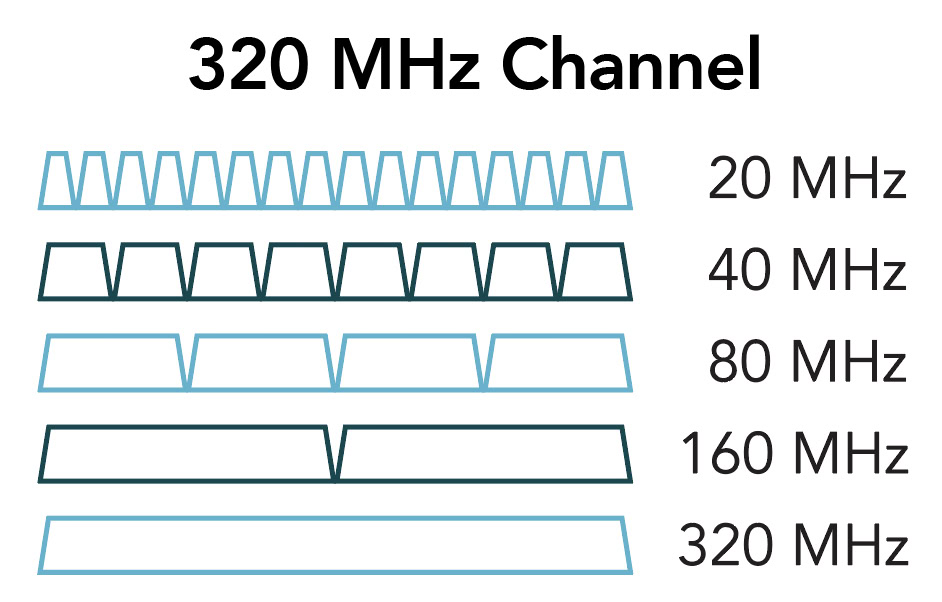
Khushboo: What is driving change is the need for 160MHz and 320MHz test capability. In the past, 20MHz, 40MHz and 80MHz were the channel bandwidths available in the 2.4GHz and 5GHz spectrum and were deployed in a typical enterprise access point or home set-up.

With Wi-Fi 7, despite the lack of practical deployment, customers are still eager to highlight the capability of 320MHz or 160MHz Wi-Fi across six or seven channels. For that reason, they need equipment with the capability to test that much bandwidth either during R&D or as part of manufacturing or design validation testing. LitePoint has the equipment capable of testing with supreme accuracy at 320MHz and 160MHz.

Customers also need equipment with excellent error vector magnitude (EVM) performance that is at least 8dB to 10dB better than the device’s performance. This is to ensure that the tester does not introduce any inaccuracies to the device measurement.

Another critical aspect to test is UL-OFDMA. For this feature to work accurately, client devices must be synchronized to avoid interference and align correctly within the allocated subcarriers. From a testing perspective, this involves measuring carrier frequency offset and transmission timing accuracy to ensure synchronization within a specific tolerance.

Another important aspect to validate is spectrum mask for a PPDU containing punctured channel(s). The IEEE spec has defined a definitive list of puncturing patterns for OFDMA and non-OFDMA transmissions based on PPDU and puncturing bandwidth. When testing this, the idea is to measure the leakage from the occupied subchannel(s) into the punctured subchannel(s) to ensure it is low and will not cause any interference.

In addition to all the standard tests on power, transmit center frequency leakage, receiver sensitivity, spectral flatness and more must be performed to ensure accurate calibration and transmit and receiver RF parametric verification.

Q6: How is LitePoint engineering your test equipment to keep ahead of customer requirements? As they integrate multiple wireless standards into their chipsets, for example, are they expecting a similar level of integration with your test platforms?

Khushboo:  We have seen integrated chipsets and modules supporting Wi-Fi and Bluetooth for a while now in the market and recently some chipset companies have announced solutions that integrate Ultra-wideband (UWB) technology as well into the mix. From a test perspective each of these technologies needs to be tested well, as their underlying implementation is different thus requiring different RF PHY characteristics to be validated, they operate on different frequency ranges, bandwidths and thus they may have different test times.

While integrated chipsets are advancing, the choice of test equipment depends on many factors, since the requirements vary significantly between R&D to production. As an example, generally R&D & design validation groups tend to have dedicated teams specifically focusing on characterization and validation of a specific technology which requires purpose-built testers with advanced features and accuracy. QA teams on the other hand may find some value in an integrated platform as their test plan includes end product performance validation, interoperability tests or coexistence tests as some of these technologies share antennas and common frequency bands. If you look at manufacturing there KPI’s are centered around equipment reliability, longevity, yield, throughput, support for customized automation tool, cost of test and test times as they can vary drastically for each of these technologies. As you can see there are multiple factors that play a role in designing a tester and the requirements vary based on the product development stage.  So honestly there is no one-size tester that fits all and hence we work closely with our customers to see what makes sense for them in terms of technology, cost and more.

Q7: In closing, what sets LitePoint apart from other companies offering Wi-Fi test?

Khushboo: Our motto is “simplifying test through innovation”.  As each generation becomes more complex, we strive to provide a simplified testing solution so you can focus on your product. We achieve this by building high-performance test systems and offering strong, continued customer support.

LitePoint’s comprehensive availability of automation solutions, the most extensive in the industry, sets us apart. Our IQfact+ software tool is known in the industry for simplicity and ease of use. Additionally, we’ve been the first movers in test to offer a fully integrated non-signaling solution for every Wi-Fi standard that’s come along. Our close collaboration with leading chipset vendors enables us to develop turnkey, chipset-specific solutions that meet your testing needs effectively.

At RUCKUS Networks, we understand the challenges you face as a higher education IT professional. Whether it is reduced funding, onboarding difficulties, outdoor connectivity, and more, RUCKUS is here to help. With our higher education-tailored products and solutions, you can overcome these challenges and achieve pervasive campus connectivity that elevates the student experience.

Elevating the Student Experience with Pervasive Campus Connectivity

In the dynamic world of higher education, you face myriad challenges when it comes to managing your network. Some of these challenges include working with limited resources and the need to achieve campus-wide connectivity. At RUCKUS, we understand these challenges and offer solutions to help you get pervasive connectivity and ultimately elevate the student experience on your campus.

Limited Resources: Maximizing Value with Resource-Effective Solutions 

A major challenge for IT teams is operating within tight budget constraints. With demands on the campus network increasing while budgets remain the same, finding cost-effective solutions is critical.

RUCKUS® solutions, which are powered by a broad range of access points (APs), switches, and AI-driven technology, are designed to scale easily so you can expand your network without significant additional costs. This scalability allows the network to grow with the institution’s needs without substantial investments. RUCKUS solutions are also built to last—they are specifically designed to handle high-density environments and data-intensive applications to reduce the need for frequent upgrades. One solution, in particular, RUCKUS One®, is key to lowering operational expenses. This AI-driven network management program provides network management from a single pane of glass, helping lower costs by eliminating the need for multiple, costly management tools.

Another challenge facing higher education IT teams is staffing. Managing a complex campus network requires heavy resources, but many institutions struggle with short-staffed teams.

Resolving staffing issues is another key benefit of our network management solution, RUCKUS One. RUCKUS One can act as an additional team member by automating routine tasks, identifying and resolving network issues, providing analytics and insights into your network, and offering AI-driven recommendations to enhance network operations. With these tasks now taken off your team’s daily workload, you can focus on more strategic initiatives to enhance your campus. For more information on the benefits of managing your network with RUCKUS One, click here.

RUCKUS One is not the only way we can help your team; we also offer 24/7 customer support to make sure any issues are resolved accurately and promptly.

Campus Connections: Achieving Pervasive Connectivity

To properly serve students, staff, and faculty, your network needs to reach every corner of campus. Although this can pose a major challenge to IT teams, leveraging our suite of higher education products can help.

Our indoor and outdoor APs can help users get a strong connection no matter where they are on campus. In addition to this, RUCKUS One helps unify fragmented applications and services for easier management of the network and student use. Whether it is professors teaching in a lecture or fans sharing gameday clips from the stadium, RUCKUS products and solutions have your entire campus covered and ultimately help you enhance the student experience through your network infrastructure.

An Improved Campus with RUCKUS

Higher education IT teams face many challenges, but RUCKUS offers purpose-driven network solutions to address these issues. At RUCKUS, we are committed to helping you overcome these challenges and ultimately have a network with high-performing, pervasive connection that elevates the campus experience. For more information on how to achieve this, click here.

VIA Technologies has launched its powerful new range of IoT platforms, the SOM-5000, VAB-5000, and ARTiGO A5000, designed for industrial, commercial, and consumer applications that require highly capable edge AI.

Product designers have the option of the VIA SOM-5000, an advanced system-on-module that mounts into a carrier board; the VAB-5000, a pico-ITX form factor with built-in flexible I/O, a 40-pin RPi compatible connector, and direct DC power; and the ARTiGO A5000, an ultra-compact full system. All three are fanless designs, offering exceptional power-efficiency and extensibility.

At their heart, the MediaTek Genio 700 provides a powerful octa-core CPU featuring two Arm Cortex-A78 processors, plus a highly capable Mali-G57 GPU, dual display support, and advanced AV1/H.265/H.264 video decoding. Its multi-core NPU accelerates edge AI applications, enabling immediate responsiveness with on-chip processing. The integrated ISP supports very high-resolution cameras via the dual MIPI CSI interface. Connectivity includes Gigabit Ethernet MAC, plus options for WiFi-6 and 5G wireless connectivity. Applications can be developed using popular Android, Yocto Linux, or Ubuntu OS, and benefit from MediaTek’s NeuroPilot SDK for accelerating AI integration.

Learn more about VIA Technologies’ new Genio 700 powered platforms >

ANAHEIM, California (August 7, 2024) Zyxel Networks, a leader in delivering secure, AI- and cloud-powered business and home networking solutions, announced today that CRN®, a brand of The Channel Company, has named Zyxel Networks a winner of two 2024 CRN Tech Innovator Awards. Zyxel Networks is being recognized for its WBE660S BE22000 WiFi 7 Triple-Radio NebulaFlex Pro Access Point in the Wireless Networking category and the USG FLEX 700H Security Firewall Appliance in the Security category.

This annual award showcases innovative vendors in the IT channel across 37 distinct technology categories ranging from cloud to storage to networking to security. The 2024 winners were selected by a panel of CRN editors who reviewed hundreds of vendor entries and solution provider testimonials. Standout innovations were determined using multiple criteria, including key capabilities, uniqueness, technological ingenuity, and ability to address customer and partner needs.

Zyxel WBE660S BE22000 WiFi 7 Triple-Radio NebulaFlex Pro Access Point is the first shipping WiFi 7 access point designed for the SMB market and is the only SMB WiFi 7 access point that incorporates Smart Antenna technology. NebulaFlex provides users with the flexibility of managing the access point as a standalone device, with an on-premises controller, or via the cloud for free using the intuitive Nebula Control Center which enables users to manage a complete network of Nebula-compatible access points, security firewalls, and switches, from a single pane of glass. WBE660S incorporates a 10G Ethernet uplink that enables the access point to translate the BE22000-class wireless speeds into wired speeds on the rest of the network. In addition to 802.3bt PoE, WBE660S can also be powered from a standard USB-C power source. WBE660S integrates with Zyxel Networks security gateways to offer Collaborative Detection & Response (CDR) to block or quarantine compromised client devices at the network edge.

Zyxel USG FLEX 700H Security Firewall Appliance is a multi-gigabit 2.5G and 10G port advanced security firewall with built-in 30W PoE+ for high-speed UTM threat protection that supports increased WAN speeds without compromising network security. The firewall provides 15,000 Mbps SPI firewall throughput, 4,000 Mbps UTM throughput, and support for 2,000,000 concurrent sessions, bringing high-speed security for 2.5G WAN connections down to an SMB price point. USG FLEX 700H, which can be managed via the Nebula Cloud Management system, includes a complete suite of security services including anti-malware, intrusion prevention system (IPS), application patrol, web filtering, reputation filter, SecuReporter, sandboxing, device insight, and Secure WiFi. The versatile firewall features two multi-gigabit 2.5G ports, 2 multi-gigabit 10G ports with 802.3at 30W PoE++ support, eight 1G ports, and two 10G SFP+ ports with independently configurable ports for added flexibility.

“We are inspired by the commitment to continuous innovation among this year’s CRN Tech Innovator Award winners and finalists. Each of these technology vendors delivers cutting-edge offerings that meet evolving customer needs and create new opportunities for solution providers,” said Jennifer Follett, VP, U.S. Content, and Executive Editor, CRN, The Channel company. “We look forward to future innovations from the recipients and to seeing how they advance success across the channel.”

“We are honored to be recognized as winners in both the wireless networking and security categories by the CRN staff,” explained David Soares, Executive Vice President Channel Sales and Marketing North America for Zyxel Networks. “Zyxel is dedicated to delivering innovative networking products and solutions that maximize the performance, productivity, and security of SMBs, while providing the value, features, and support that enable our partners to grow and flourish. The receipt of the CRN Tech Innovator Awards in two categories definitely validates our efforts.”

The Tech Innovator Awards will be featured in the August issue of CRN and can be viewed online at crn.com/techinnovators.

For more information about Zyxel, its connectivity solutions, and the Zyxel Authorized Partner Program, visit www.zyxel.com/us and follow us on Facebook, X(formerly Twitter) and LinkedIn.


About Zyxel:

Zyxel Networks is a technology provider with over 30 years of experience, specializing in delivering solutions for small to medium-sized businesses and the enterprise-edge in partnership with VARs, MSPs and System Integrators. We enable network professionals to connect and protect organizations with greater ease by bringing together intuitive, scalable and secure cloud management with a complete portfolio of network devices.

About The Channel Company

The Channel Company enables breakthrough IT channel performance with our dominant media, engaging events, expert consulting and education, and innovative marketing services and platforms. As the channel catalyst, we connect and empower technology suppliers, solution providers, and end users. Backed by more than 40 years of unequaled channel experience, we draw from our deep knowledge to envision innovative new solutions for ever-evolving challenges in the technology marketplace. www.thechannelcompany.com

Follow The Channel Company: LinkedIn, Facebook, and X.

© 2024 The Channel Company, Inc. The Channel Company logo is a registered trademark of The Channel Company, Inc. All other trademarks and trade names are the properties of their respective owners. All rights reserved.

San Jose, Calif. – Aug. 6, 2024 – NETGEAR®, Inc. (NASDAQ: NTGR), the leading provider of networking products that power businesses of any size, announced the launch of the WBE710 Insight Manageable Tri-band WiFi 7 Access Point, the newest addition to the company’s WiFi 7 business access point lineup.

The number of devices with multi-gig capabilities is increasing, and upgrades to a business’s network must be made to meet the volume of data. As businesses scale and more WiFi 7-enabled devices enter the market, this need will only continue to become more critical. Based on the latest WiFi 7 technology, the WBE710 improves data throughput across multiple bands and reduces network congestion, surpassing older access points in speed, latency, and capacity. The access point will also solve issues around signal interference with preamble puncturing, which will soon be available, and will allow devices to use parts of different channels to transmit data, greatly reducing network congestion.

“We have only started to see the power of WiFi 7 since its announcement earlier this year,” said Iphie Chen, director of Product Management at NETGEAR. “Businesses of all sizes need to be considering not only how to handle the growth of existing devices but also the inevitable influx of WiFi 7-enabled devices into their work environments. The WBE710 offers the flexibility to have a powerful access point today, while being prepared for the needs of tomorrow.”

The WBE710 provides easy local management, plus optional centralized cloud management, with no additional hardware needed through NETGEAR’s Insight management solution. It also offers backwards compatibility with all the other NETGEAR Insight Manageable Wireless Access Points and with previous generation WiFi devices, ensuring that businesses that rely heavily on wireless internet for day-to-day operations can easily integrate it into their existing infrastructure.

Additional Capabilities

  • Unmatched 802.11be performance with up to 9.4Gbps throughput.
  • 8 separate wireless networks (SSIDs) can be configured. Ideal for businesses with many connected devices, such as wireless printers, laptops, cell phones, tablets, and more.
  • Includes a 2.5Gbps PoE+ Ethernet port for fast speed and easy wiring (ideal NETGEAR switches to power WBE710 are MS108TUP, MS324TXUP and MS510TXUP).
  • Simultaneously send and receive data on multiple bands with WiFi 7’s Multi-Link Operation.
  • Seamless roaming and load balancing for unrivaled user experience throughout the coverage area.
  • Dedicated wireless backhaul shared between other Pro WiFi APs to form a reliable Instant WiFi Mesh network.
  • MU-MIMO enables maximum client density deployments with no interference.
  • Compactly designed with fast ceiling or wall mounting to stylishly blend into any environment.
  • Optimized, omni-directional, integrated antennas for maximum RF performance and coverage.
  • One year of Insight Remote Management included.

NETGEAR’s Total Network Solution

The WBE710 is the latest addition to NETGEAR’s Total Network Solution. Combined with the PR60X Pro Router, the latest Multi-Gig PoE switches and NETGEAR Insight, this access point brings value and leading-edge functionality to a complete networking ecosystem that is easy to deploy, manage and monitor from a single pane of glass.

Available today, the WBE710 can be found at major retailers for $349.99.

About NETGEAR, Inc.

NETGEAR® (NASDAQ: NTGR) has pioneered advanced networking technologies for homes, businesses, and service providers around the world since 1996 and leads the industry with a broad range of award-winning products designed to simplify and improve people’s lives. By enabling people to collaborate and connect to a world of information and entertainment, NETGEAR is dedicated to delivering innovative and advanced connected solutions ranging from mobile and cloud-based services for enhanced control and security, to smart networking products, video over Ethernet for Pro AV applications, easy-to-use WiFi solutions and performance gaming routers to enhance online game play. The company is headquartered out of San Jose, Calif. with offices located around the globe. More information is available from the NETGEAR Press Room or by calling (408) 907-8000. Connect with NETGEAR: Facebook, Instagram and the NETGEAR blog at NETGEAR.com.

©2024 NETGEAR, Inc. NETGEAR, NETGEAR Insight and the NETGEAR logo are trademarks and/or registered trademarks of NETGEAR, Inc. and/or its affiliates in the United States and/or other countries. Other brand and product names are for identification purposes only and may be trademarks or registered trademarks of their respective holder(s). The information contained herein is subject to change without notice. NETGEAR shall not be liable for technical or editorial errors or omissions contained herein. All rights reserved.

 Source: NETGEAR-G

U.S. Media Contact:

Valerie Motis

[email protected]

[email protected]

U.S. Sales Inquiries: (408) 907-8000, [email protected]

Broadband internet subscriptions once seemed like a forever-growing cash generator for service providers. Unfortunately, the growth has plateaued in most developed markets, and the leading ISPs and telcos are now integrating new IoT capabilities on their Wi-Fi gateways in anticipation of the Smart Home transformation. However, simply putting a Thread 802.15.4 wireless chip in a CPE and rolling it out to millions of subscribers is not yet enough for a viable smart home business. In this blog, Christopher Ince from Silicon Labs explains seven aspects of IoT that ISP and telco leaders should consider in order to build a stickier smart home business.

Smart home vision

The Broadband Plateau

In just two decades, the number of global fixed broadband connections increased nearly eight-fold from 200 million to 1.5 billion. This historical growth era, which really took off at the advent of the millennium, has churned fortunes for internet service providers (ISPs) and telcos worldwide. Great cash cow, you might think. Well, it had its moment. Today, the fixed broadband markets in most developed countries have saturated, according to the OECD Broadband Portal. This has led to intense competition, increasing customer acquisition costs, price erosion, and churn, hitting the service providers’ bottom lines. In the USA alone, nearly 3,000 broadband ISPs are fighting for the dollars Americans pay every month to get the information highway flowing into their homes.


Smart Home Benefits to Internet Service Providers (ISPs)

The global ISP market was valued at USD 390 billion in 2022 and is projected to reach USD 566 billion by 2032, expanding at a CAGR of 3.9% during this period. Despite promising industry forecasts, the old broadband growth strategies do not apply anymore, and service providers need new ways to grow business.

Bundling new smart home services and IoT connectivity technologies into broadband subscriptions has quickly become one of the most promising ways for the leading ISPs and tTelcos to accelerate their business.

Smart home and IoT provide many clear benefits to service providers – they can become the complete provider of wireless IoT home connectivity alongside Wi-Fi, managing and optimizing connectivity for all types of IoT devices used in homes today and in the future. Owning the home IoT infrastructure, e.g., OpenThread Border Router (OTBR) capability, allows service providers to claim a strategic position in the greater smart home ecosystem and do meaningful and sustained business alongside global smart home brands such as Amazon, Apple, Google, and Samsung. Smart Home and IoT services also help service providers enable new revenue sources, improve customer value-add, and strengthen customer retention, thus improving subscription business and reducing churn.

Facts isp and telecom leaders should know about iot fig1

Figure 1 Internet Service Providers are transforming their legacy Wi-Fi CPE base into a multi-protocol IoT home infrastructure by adding Thread 802.15.4 and other low-power wireless protocols to complement Wi-Fi.

Seven IoT Aspects ISP and Telco Leaders Should Consider

We are witnessing a trend of ISPs and telcos recognizing that it is their role to own the wireless IoT infrastructure of connected smart homes. However, simply integrating a Thread 802.15.4 wireless chip inside Wi-Fi home gateways and rolling them out to millions of subscribers is not yet enough. There are seven critical aspects of IoT that ISP and telecom leaders should consider before locking their smart home strategies:

  1. IoT Infrastructure – The existing legacy CPEs typically support Wi-Fi connectivity only. However, the smart home IoT device market is proliferating rapidly, and Wi-Fi is not optimal for all device types. In fact, many emerging IoT devices will use a more energy-efficient and lightweight mesh connectivity technology such as Thread. So, building a scalable and future-proof IoT home infrastructure that supports Wi-Fi, Thread, and even other wireless IoT connectivity technologies such as Bluetooth Low Energy (LE), is the first step service providers should consider. How to choose the right set of IoT technologies that allow you to cover all home IoT connectivity needs today and in the future? Silicon Labs has years of experience in helping service providers and gateway manufacturers to enable optimized wireless multi-protocol IoT solutions such as OpenThread Border Router (OTBR) on gateways.
  2. Matter Gateway – As described earlier, enabling wireless IoT infrastructure is the first step toward a scalable and future-proof smart home business. However, if you want to enhance your business from a mere IoT connectivity provider to offering value-added smart home applications to your customers, Silicon Labs’ multiprotocol wireless SoCs, MG21 and MG24, enable the Matter Gateway capability on your CPE, allowing you to increase revenue through your own, branded Matter ecosystem, bundle devices of any manufacturer via the Matter protocol, and allow users to control them all via your App, Amazon, Apple, Google, and, Samsung.
  3. Wireless Performance – Every home imposes a unique combination of wireless challenges to service providers – concrete walls, metal surfaces, windows, and other sources of interference can deteriorate user experience, burden your customer service centers, and increase operational costs. As a service provider, you must optimize IoT wireless performance on your gateways to enhance user experience, regardless of where the gateway sits in any given home environment. Silicon Labs IoT solutions are renowned for their superior wireless performance – such as the MG24 multi-protocol chip that offers the market-leading link budget and antenna diversity, delivering efficient connectivity in every corner of the home and beyond.
  4. Wi-Fi Co-existence – With the legacy Wi-Fi-only home gateways, service providers didn’t have to worry about 2.4 GHz multi-radio/multi-protocol interference. However, with smart home gateways combining Wi-Fi and IoT radios such as Thread, you will face a new challenge: how to manage Wi-Fi co-existence? Silicon Labs can help you to design the most effective Wi-Fi co-existence solution on your gateway using, e.g., our advanced Packet Transmission Arbitration (PTA) and the patent-pending Signal Identifier capabilities.
  5. Energy Consumption – Energy regulations such as the new, stricter EU Ecodesign Standby Regulation 2023/826 (HiNA) effective 2027, will limit the standby power consumption of consumer CPE down to ≤7W, forcing service providers to reduce the gateway power consumption radically. Silicon Labs provides you with many innovations for more energy-efficient gateway design – for example, you can allow users or network operators to turn the power-hungry Wi-Fi transceiver off and on remotely during nights, weekends, or vacations using our patent pending Thread solution, or Bluetooth LE.
  6. Platform Integration – Building an IoT infrastructure that scales to millions of homes and supports new devices, services, and connectivity technologies for years to come requires seamless integration of dozens of building blocks. Managing them can become an integration nightmare. To make things easier for service providers, Silicon Labs offers an end-to-end one-stop-shop solution for building a scalable and future-proof IoT home infrastructure. This includes high-performance and ultra-low-power multiprotocol wireless processors, pre-verified wireless software stacks, tools, security, always up-to-date Matter implementation, online Matter Developer Journey, and a Connectivity Lab where you can test your gateways and devices in a friendly environment before taking the official certification tests.
  7. Interoperability – A smart home solution without seamless interoperability between gateways, devices, protocols, and ecosystems is like a symphony orchestra without a conductor. If the devices are not playing the same tune, the user experience suffers, customers are frustrated, and vote with their feet. Silicon Labs has worked for decades to become the conductor of the smart home industry – we provide tested and verified wireless IoT and Matter solutions to both, gateway and device makers, allowing us to perfect our standards compliancy and system interoperability, ensuring that you can build a smart home experience where every component plays the same tune.
In today’s digital age, businesses are constantly seeking innovative ways to connect with their customers. One of the most effective yet often overlooked methods is WiFi marketing. This powerful tool leverages an existing WiFi network to create a seamless and engaging customer experience while providing businesses with valuable data and marketing opportunities. As we move into 2024, here are six compelling reasons why businesses should implement WiFi marketing solutions.

1. Enhanced Customer Experience with WiFi Marketing

Seamless Connectivity: Offering free WiFi to customers can significantly enhance their experience. Whether they are waiting in a restaurant, shopping in a store, or staying in a hotel, access to fast and reliable WiFi allows customers to stay connected and entertained. This convenience can lead to increased satisfaction and longer dwell times, which can translate into higher sales.

Personalized Engagement: WiFi marketing platforms, such as GoZone WiFi, allow businesses to create personalized engagement opportunities. When customers log in to the WiFi network, they can be greeted with tailored messages, promotions, and recommendations based on their preferences and previous interactions.

2. Data Collection and Analytics Through WiFi Marketing

Valuable Insights: WiFi marketing solutions enable businesses to collect valuable data on customer behavior, preferences, and demographics. This information can be used to understand customer patterns, identify popular products or services, and tailor marketing strategies accordingly.

Improved Decision Making: With detailed analytics, businesses can make data-driven decisions to optimize their operations and marketing efforts. For instance, analyzing foot traffic data can help retailers determine peak shopping times and adjust staffing levels accordingly.

3. Targeted Marketing Campaigns via WiFi Marketing

Effective Promotions: WiFi marketing allows businesses to create highly targeted marketing campaigns. By analyzing the data collected through WiFi networks, businesses can segment their audience and send personalized promotions, offers, and advertisements directly to customers’ devices.

Increased Conversion Rates: Targeted marketing campaigns are more likely to resonate with customers, leading to higher engagement and conversion rates. For example, a coffee shop can send a discount code for a popular drink to customers who have previously purchased similar items.

4. Customer Loyalty and Retention with WiFi Marketing

Loyalty: WiFi marketing platforms can drive engagement with loyalty platforms, making it easy for customers to sign up and participate. Businesses can reward customers for their loyalty with exclusive offers, discounts, and points that can be redeemed for future purchases.

Enhanced Customer Relationships: By consistently engaging with customers through WiFi marketing, businesses can build stronger relationships and foster loyalty. Regular communication and personalized offers show customers that their business is valued, encouraging repeat visits.

5. Increased Brand Awareness Through WiFi Marketing

Brand Visibility: Offering free WiFi can increase brand visibility and awareness. When customers connect to a business’s WiFi network, they often encounter a branded splash page with the company’s logo, promotions, and other information. This consistent exposure reinforces brand identity and keeps the business top of mind.

Social Media Integration: WiFi marketing can also encourage social media engagement. For example, businesses can prompt customers to check in on social media or share their experience in exchange for free WiFi access, further amplifying brand reach and visibility.

6. Competitive Advantage with WiFi Marketing

Stand Out from Competitors: In a competitive market, offering free WiFi and leveraging WiFi marketing can set a business apart from its competitors. Customers are more likely to choose a location that provides free WiFi, especially if it enhances their overall experience.

Innovative Marketing Strategies: Implementing WiFi marketing solutions demonstrates that a business is forward-thinking and innovative. Staying ahead of technological trends can attract tech-savvy customers and position the business as a leader in its industry.

Conclusion: Why WiFi Marketing is Crucial for Business Success in 2024

As businesses continue to seek innovative ways to connect with their customers and stay ahead of the competition, WiFi marketing emerges as a powerful tool. By enhancing customer experiences, collecting valuable data, creating targeted marketing campaigns, fostering loyalty, increasing brand awareness, and gaining a competitive edge, WiFi marketing offers numerous benefits that can drive business growth and success in 2024 and beyond.

Implementing WiFi marketing solutions like GoZone WiFi can help businesses unlock the full potential of this technology, providing a seamless and engaging customer experience while delivering actionable insights and marketing opportunities. As we move into 2024, now is the perfect time for businesses to embrace WiFi marketing and reap the rewards of this innovative approach. Get started FREE today!

For more information on how to optimize your business with WiFi marketing, visit GoZone WiFi today. Discover how WiFi marketing can transform your business and set you apart in a competitive market.