


Breaking News

GLOBAL Wi-Fi NEWS bulletin

19th European Spectrum Management Conference

Brussels, Belgium

Across 2 days attendees will have the opportunity to be involved in discussions on the key spectrum topics for the region and beyond, through interactive sessions, networking opportunities, an exhibition area and much more.

This event is part of The Global Spectrum Series. The world’s largest collection of regional spectrum policy conferences.

Register

View Event Website 

Everton Football Club has signed a multi-year agreement that will see HPE Aruba Networking, a leading provider for enterprise network infrastructure, become an Official Supplier of Everton Stadium, providing a secure and intelligent networking infrastructure solution.

The system, currently being installed at the Club’s new waterfront home, will include switches, access points, WI-FI and wired network management and security software, as well as network design, management and monitoring services.

HPE Aruba Networking is a business unit of Hewlett Packard Enterprise and a leading provider of next-generation networking solutions. The deal means the global edge-to-cloud company will provide a comprehensive networking infrastructure across the footprint of the Blues’ new 52,888-capacity home.

HPE Aruba Networking’s solutions will enable Everton to develop its connected stadium strategy and use state-of-the-art digital technologies to create an engaging fan experience for all visitors once the venue opens at the start of the 2025/26 season, inviting supporters to stay longer and enjoy the impressive facilities that the new stadium has to offer.

A leader in security-first, AI-powered networking, HPE Aruba Networking has a long history in providing key infrastructure for sports and event venues across the world.

Building on this experience, HPE Aruba Networking will deliver a comprehensive solution, enabling Everton to offer high connectivity everywhere across the stadium, new fan services and real-time offers, and increased speed of service at all digital interaction points.

Richard Kenyon, Chief Commercial and Communications Officer at Everton Football Club, said: “Working with HPE Aruba Networking will give Everton Stadium a best-in-class Wi-Fi network infrastructure and we are delighted to have them as an Official Supplier. Their expertise in networking some of the biggest venues in the UK, Europe and North America will be important as we develop the digital infrastructure and potential of Everton Stadium.

“A big positive of the move to our new home will be connectivity for supporters and the opportunities that will provide us to engage our partners in delivering the latest in digital experiences and services, both on matchdays and during other events held at the venue.

“I would like to thank our Partnerships and Technology teams as well as our colleagues at Elevate for the work they have put in over recent months to secure this exciting deal.”

Mark Weeks, director of UK & Ireland, HPE Aruba Networking, said: “We are proud to be joining the project to deliver a world-class venue and a world-class home for Everton.

“At HPE Aruba Networking, we know that technology is a key element to every fan experience, from the point when they enter the stadium, at times when they want to share their excitement with loved ones outside of the stadium, at half-time, when leveraging local services like restaurants and bars, and even after the match has ended.

“HPE Aruba Networking’s custom-designed and reliable network infrastructure enables Everton to stay connected with their fans throughout their matchday experience and beyond, helping the Club create a modern, interactive matchday experience.”

To find out more about Everton Stadium, one of Europe’s largest ongoing construction projects, visit evertonstadium.com

-ENDS-

NOTE TO EDITORS

About Everton Football Club
One of the 12 Founder Members of the Football League, Everton has spent more seasons in England’s top division than any other club (121) and been crowned league champions on nine occasions.    

Founded in 1878 as St Domingo, the Club has also lifted the FA (Football Association) Cup five times and, in 1985, added the European Cup Winners’ Cup to its prestigious haul.     

Throughout its 146-year history, Everton has been known as a family-oriented club based on proud traditions, affectionately referred to as ‘The People’s Club’. Those traditions have also encouraged innovation, ensuring Everton has remained one of the great pioneering clubs in the history of the game. The first club to construct a purpose-built football stadium, its home, Goodison Park, is one of the most revered stadiums in England. In the coming years, the Club will be looking to maintain those traditions in a new 52,888-capacity stadium at Bramley-Moore Dock, ensuring the Club’s roots remain in north Liverpool for generations to come.    

As a pioneer, the Club is renowned for many firsts that we take for granted in today’s game. Everton was the first club to see its players wear shirts numbered 1 to 11 in a high profile fixture, the first club to go on an overseas tour, the first English club to install dugouts and undersoil heating, the first club to feature in a televised match, the first club to introduce a regular matchday programme, the first club to present its players with medals for winning the Football League championship and the first club to have a player, Dixie Dean, break the 60 goals barrier in a single league season. 

About Hewlett Packard Enterprise

Hewlett Packard Enterprise (NYSE: HPE) is the global edge-to-cloud company that helps organizations accelerate outcomes by unlocking value from all of their data, everywhere. Built on decades of reimagining the future and innovating to advance the way people live and work, HPE delivers unique, open, and intelligent technology solutions as a service.  With offerings spanning Cloud Services, Compute, High Performance Computing & AI, Intelligent Edge, Software, and Storage, HPE provides a consistent experience across all clouds and edges, helping customers develop new business models, engage in new ways, and increase operational performance.

For more information, visit: www.hpe.com

By Yuka Muto

June 11, 2024

Diverse wireless technologies require car manufacturers to adopt comprehensive test support

The automotive industry is experiencing an unprecedented integration of wireless connectivity, which is transforming the driving experience by improving vehicle accessibility, safety, security, convenience and reliability.

In-vehicle wireless technologies are broadly categorized into three groups: secure access/digital key, infotainment and vehicle-to-everything (V2X). These technologies enable features ranging from real-time traffic updates, navigation and entertainment options to more discrete tasks like tire pressure monitoring, digital key secure access and vehicle diagnostics.

The adoption rates of different wireless standards vary significantly across regions, manufacturers and vehicle models, influenced by factors like infrastructure readiness, regulatory environments, consumer preferences and price sensitivity toward new features.

Automotive Connectivity Market Growth

Source: Future Market Insights Inc.

1) Secure Access and Digital Key

Providing secure access to our cars is a major use case for wireless technologies. Technologies like Near Field Communication (NFC) and Ultra-Wideband (UWB) enable secure keyless entry with features such as opening the nearest door to the user, underscoring the dual role of connectivity in enhancing both convenience and security.

The Car Connectivity Consortium (CCC) was formed to facilitate interoperability and reduce market fragmentation in automotive connectivity. Its emerging Digital Key 3.0 specification is a remarkable advancement in vehicle access and ignition, incorporating multiple wireless technologies to enhance security, accessibility and convenience.


In a typical digital key application, Bluetooth® is used for the initial connection, UWB is for the actual locking/unlocking, and NFC is available as a backup if needed. NFC can still function, even if the device’s battery is depleted, ensuring access in nearly all situations. A digital key also enables more flexibility and convenience where multiple users may need to access a car, for example rental vehicles and car-sharing.

UWB is a cornerstone of the Digital Key 3.0 specification, offering precise, secure and hands-free access control. By providing centimeter-level accuracy in determining the distance between the car and the digital key device (such as a smartphone), UWB ensures that the vehicle can only be accessed or started when the authorized user is in close physical proximity. This level of precision, together with UWB’s robust built-in cryptographic encryption, significantly enhances security by mitigating relay attacks where unauthorized users amplify or relay signals from a legitimate key to gain access to the vehicle.

2) Infotainment

In addition to secure access, wireless technology has many other uses in our cars. Bluetooth has already become ubiquitous in on-vehicle infotainment systems, thanks to the universal driver demand to connect their phones to the infotainment system for audio transfer. Although only premium cars are equipped with Wi-Fi® today, the latest trends show carmakers are adding Wi-Fi to infotainment systems to all classes of vehicles.


Some of the technical challenges come from wireless channel conditions due to the vehicle’s small, confined space and the presence of various materials that can potentially interfere with signal propagation. In heavy traffic, wireless signals from other vehicles can also interfere with the intra-vehicle transmission. And, most importantly, as on-vehicle Wi-Fi relies on internet connectivity via cellular data plans, the on-vehicle Wi-Fi speed is limited by the cellular connectivity speed.

Despite these technical challenges, on-vehicle connectivity around infotainment continues to evolve, as consumers have a strong desire for the same connectivity and user experience they enjoy in their homes and offices.

3) Promises and Challenges of V2X

Vehicle-to-Everything (V2X) promises to revolutionize road safety by facilitating communication among cars, pedestrians, other road users, networks and surrounding infrastructure. But its widespread adoption faces challenges, such as regulatory hurdles, compatibility concerns and significant infrastructure investment.

Despite these obstacles, technology and automotive companies are actively developing semiconductors and conducting V2X trials, aiming for broader adoption as semi-autonomous driving features and sensors, including radar and LiDAR, become increasingly standardized.


Given that car owners typically hold onto their vehicles for much longer than their consumer electronics, automakers are prioritizing future-proofing on-vehicle wireless technologies to prevent obsolescence before the next purchase cycle.

As part of this process, the automotive industry is navigating the convergence of similar yet competing wireless technologies. Consequently, many carmakers are hedging their bets by supporting both cellular-based C-V2X and 802.11p-based Dedicated Short-Range Communications (DSRC), because neither technology has yet to “win” the standards battle. Even within C-V2X, in addition to the current LTE-based C-V2X, automakers are already gearing up for the adoption of 5G NR-based C-V2X in the near future.

Future Use Cases

Overall, there is disparity in adoption rates which highlights a challenge: while luxury cars increasingly standardize features like keyless entry (digital key) and onboard Wi-Fi, the full potential of connectivity is yet to be realized across the entire vehicle spectrum. Keeping up with changes in wireless technology is a challenge for carmakers, who are used to the more gradual pace and ten-year buying cycle of the automotive industry.

The evolution of wireless technology promises further applications, such as automatic trunk opening/closing, and “Child Presence Detection (CPD),” a UWB-based application that leverages motion sensors to alert vehicle owners to the presence of children or pets inside the vehicle.

As the industry moves towards EVs and automated driving, our cars are constantly producing more data. This all needs to be transferred, and monitored, efficiently, and wireless standards will increasingly replace cables – helping to reduce weight and decrease costs.

Wireless Testing Has Never Been More Important

The diversity and pace of this growing interconnectedness underscore the importance of rigorous testing of wireless components in cars – quality is vital, not least to avoid recalls. As continuous advancements redefine vehicular communication and access, wireless parametric testing – both during design and production – is at the heart of this evolution. More complex systems rely heavily on advanced processing, communications and control, making comprehensive testing necessary to ensure flawless connectivity performance.

Moreover, the integration of multiple connectivity protocols within vehicles is increasingly complex. These wireless technologies must collaborate rather than compete, resulting in higher levels of integration across communication standards. Such integration is essential to enhance functionality, improve user experience and ensure the seamless operation of increasingly autonomous vehicles.

As the leader in wireless test solutions, LitePoint provides comprehensive wireless test coverage, including V2X, Wi-Fi, Bluetooth, UWB, and NFC. In fact, LitePoint is the only test vendor equipped to cover all three critical technologies in the CCC digital key 3.0 specification: UWB, Bluetooth, and NFC. With this comprehensive test solution portfolio, LitePoint ensures a future where cars not only communicate more effectively with external devices and infrastructure but also enable enriched, customizable experiences for drivers and passengers alike.

Published by on 

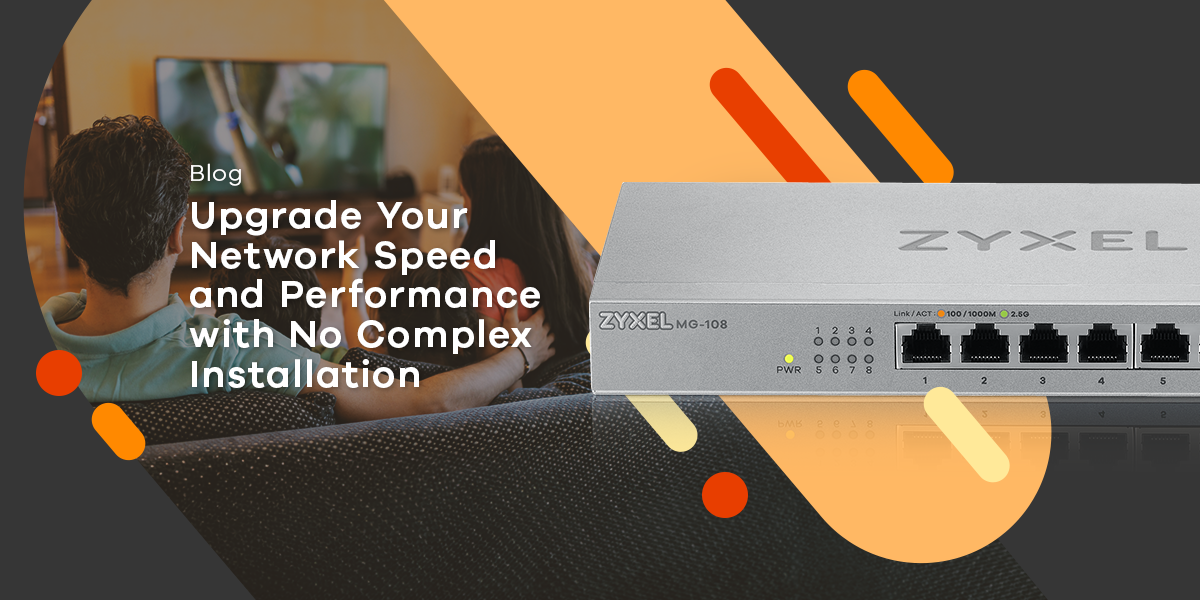
Why settle for slow network speeds when you can upgrade your network by adding the Zyxel 2.5 Gigabit Switch? Designed to deliver up to 2.5 times the speed of today’s Gigabit networks using your existing cables, this switch is the perfect solution for home or small office users who need more bandwidth for online gaming, multimedia streaming, or faster wireless connectivity—all without the hassle of complex configuration.

Key Features

  1. 8 Multi-Gigabit Ports: Supports speeds up to 2.5 Gigabit (100M/1G/2.5G)
  2. Cost-Efficient Upgrade: Boost your network speed by 2.5 times without additional cabling costs.
  3. Plug-and-Play: Simple setup with no complex installation required.
  4. Silent Operation: Fanless design ensures quiet performance at all times.
  5. Flexible Mounting: Easily place the 2.5G switch in your preferred environment.

mg108Blog-MG108-1200x600

Don’t let outdated network speeds hold you back. With the Zyxel 8-Port 2.5 Multi-Gigabit Unmanaged Switch (MG-108), you can effortlessly enhance your network’s performance and enjoy a faster, more reliable connection. Whether you’re gaming, streaming, or working from home, this switch provides the bandwidth you need without the complications. Upgrade today and experience the convenience and efficiency of a top-tier network solution.

For more info, click here.

San Jose, Calif. – June 11, 2024 – NETGEAR®, Inc. (NASDAQ: NTGR), the leading provider of innovative and secure solutions for people to connect and manage their digital lives, today expanded its WiFi 7 mesh and standalone router lines with the new Orbi 770 Tri-band Mesh System and Nighthawk RS300 Router. NETGEAR’s most affordable WiFi 7 products to date build on the company’s promise to provide powerful WiFi performance and secure connectivity.

WiFi 7 Changes the Game

WiFi 7 unlocks 2.4 times faster speeds than WiFi 6, delivers low latency and better handles WiFi interference for families to seamlessly enjoy next gen 4K/8K streaming, video conferencing, gaming, and more. Since the launch of NETGEAR’s first WiFi 7 offerings – Nighthawk RS700 and Orbi 970 – multi-gig internet speeds have become more affordable, work from home demands have remained steady, and more devices such as AR/VR headsets or AI-focused platforms like CoPilot+ have been introduced that require extreme low latency and higher throughput.

While WiFi 7 adoption is growing and new generations of smartphones, laptops, and other devices are hitting the market at a rapid pace, IoT threats are increasing and router security at the device level is critical to keep digital lives and homes protected.

“NETGEAR’s singular focus has always been to create and provide industry-leading solutions with powerful performance and secure WiFi connectivity,” said David Henry, president and GM of Connected Home Products and Services at NETGEAR. “Our newest WiFi 7 additions, Orbi 770 and Nighthawk RS300, deliver these connectivity benefits to a wider audience, helping them experience unprecedented speed and performance on their devices and applications with the strongest possible security available today.”

The Mesh System – Orbi 770 Series

Orbi WiFi 7 Tri-band mesh system provides exceptional performance and lightning-fast speeds up to 11Gbps[1] for up to 100 devices across homes of up to 8,000 square feet with a 3 pack. It improves connection speeds by combining the 5Hz and 6GHz bands using Multi-Link Operation for both fronthaul to connect to devices and backhaul to connect the router & the satellites. Its 2.5 Gig internet port unlocks the ability to fully experience the multi-gig internet speeds available today, making it future proof for a new era of entertainment, hybrid work, and next generation devices and applications. The ample 2.5Gig LAN ports on the router and satellite can be used for multi-gig wired connections between the two or to connect a shared storage or a gaming PC/console.

The slim, cylindrical bodies of the Orbi router and satellites are purposefully designed for optimal performance and make them a subtle addition to any desk, shelf, or entertainment unit. Each unit features four high-performance internal antennas with high-powered amplifiers for 360-degree coverage, regardless of the home layout, from the front door to the backyard. Orbi 770 offers a robust WiFi connection using preamble puncturing which selectively blocks interference for a stable connection, keeping the home network functioning flawlessly.

The Standalone Router – Nighthawk RS300

The Nighthawk RS300 Tri-band router introduces blazing-fast WiFi 7 for speeds up to 9.3Gbps to budget-conscious but high-tech and gadget users. Its sleek new body and patented omni-directional internal antenna design improves coverage and pushes signals to the farthest range, providing up to 2,500 square feet of WiFi coverage across a max of 100 devices.

Everyone in the household can access the latest multi-gig internet speeds with the 2.5 Gig internet port, and the additional 2.5Gig and two 1Gig LAN ports can be used for fast wired connections for latency intolerant, devices such as a gaming PC or console.

Peace of Mind with Cutting-Edge Security

Home network devices see an average of 10 attacks on home networks every 24 hours[2], making it critical to safeguard your digital life starting at the router. Powered by state-of-the-art encryption protocols and advanced threat detection mechanisms, NETGEAR routers stand as the first line of defense against evolving cyber threats and include security features such as automatic firmware updates, VPN support, cutting-edge WPA3 security, access control, and guest WiFi network options.

The Orbi 770 series will be the first product to have an additional layer of security with the new Advanced Router Protection feature, only available from NETGEAR. This feature protects the router from not only known threats but also from most unknown threats using a combination of AI heuristics and advanced exploit prevention to recognize and block exploitation attempts. Additionally, it enables the capability to quickly release live patches for threats without needing to wait for a new firmware release. This significantly improves response times compared to the traditional method of releasing firmware updates for each specific router model and further strengthens our commitment to provide industry leading security protection for our router/mesh products from cyberattacks. Advanced Router Protection which has been developed in partnership with Bitdefender will be rolled out to the rest of the WiFi 7 lineup later this year.

For added protection, both Orbi 770 and Nighthawk RS300 include a 30-day trial for NETGEAR Armor™ Powered by Bitdefender, providing an automatic shield of security for connected devices and added privacy with VPN. Unlike traditional endpoint antivirus products, Armor is built into the router as an all-in-one security solution, protecting computers, security cameras, baby monitors and other IoT devices on the network and eliminating the need for multiple security subscriptions or software.

Both also come with NETGEAR Smart Parental Controls™ to easily manage kids’ time online across their connected devices and promote good online habits for the family. Basic features are available free of charge. A subscription fee applies for a Premium Plan after a 30-day trial.

Orbi 770 Technical Specifications:

  • Ultra-Fast WiFi 7 Tri-Band Speeds up to 11Gbps – Experience combined Multi-Gigabit speeds up to 11Gbps with 2.4GHz, 5GHz, and 6GHz bands.
  • Higher Capacity & Robust WiFi – Supports WiFi 7 technology enhancements like 320 MHz, 4K QAM and preamble puncturing.
  • Multi-link Operation – Combines two WiFi bands at once, for both backhaul (shared 5GHz & 6GHz) and fronthaul (5GHz & 6 GHz) to improve network reliability, reduce latency, and ensure data is delivered with maximum speed.
  • Multi-Gig Speeds with 2.5 Gig Internet Port – Use the 2.5 Gig internet port for multi-gig cable and fiber plans. Compatible with any internet service provider.
  • More Multi-gig Wired ports on Router and Satellites – Plug in wired devices to improve performance or setup a multi-gig wired connection between the router and satellites via three 2.5Gbps Ethernet ports on the router, and two 2.5Gbps Ethernet ports on the satellites.
  • Do It All with the Orbi® App –Easily manage your network from anywhere, including pausing the Internet, running Internet speed tests, tracking your Internet data usage, setting up separate guest networks, and more.

Nighthawk RS300 Technical Specifications:

  • Blazing-Fast WiFi 7 Tri-Band Speeds up to 9.3Gbps – Experience combined Multi-Gigabit speeds up to 9.3Gbps with the ultra-fast 6GHz WiFi band for smoother WiFi experiences and less interference from neighboring networks.
  • 4x Faster Speeds – WiFi 7 delivers 2.4x faster speeds than WiFi 6 with ultra-wide 320MHz high-capacity channels and 4K QAM to maximize performance across your connected devices.
  • Multi-Gig Speeds with 2.5Gig Internet Port – Use the 2.5Gbps internet port for today’s faster cable and fiber plans. Or link one LAN port and the internet port together for speeds up to 2Gbps for a modem that does not have a multi-gig port but supports link aggregation. Compatible with any internet service provider.
  • Improved Performance with 2.5Gig Wired Ports – Enjoy improved performance on your gaming and entertainment devices by plugging them into the two 2.5Gbps ports for faster wired connections. And link the two 1Gbps LAN ports together for speeds up to 2Gbps for a NAS device.
  • Easy file sharing – Plug a thumb drive to the router’s USB port to easily share files.
  • Do It All with the Nighthawk® App – Configure your WiFi for peak performance on priority devices. Easily manage your network from anywhere, including pausing the Internet, running Internet speed tests, tracking your Internet data usage, setting up separate guest networks, and more.

Availability

The NETGEAR Orbi 770 Series® is available for pre-order now on NETGEAR.com and at other major retailers subsequently.

  • RBE773: Router and 2 Satellites – 3 pack, $999.99 MSRP
  • RBE772: Router and 1 Satellite – 2 pack, $699.99 MSRP
  • RBE770: Add-on Satellite, $399.99 MSRP

The NETGEAR Nighthawk RS300® is available now on NETGEAR.com and at other major retailers subsequently.

  • RS300: Router – $329.99 MSRP

About NETGEAR, Inc.

NETGEAR® (NASDAQ: NTGR) has pioneered advanced networking technologies for homes, businesses, and service providers around the world since 1996 and leads the industry with a broad range of award-winning products designed to simplify and improve people’s lives. By enabling people to collaborate and connect to a world of information and entertainment, NETGEAR is dedicated to delivering innovative and advanced connected solutions ranging from mobile and cloud-based services for enhanced control and security, to smart networking products, video over Ethernet for Pro AV applications, easy-to-use WiFi solutions and performance gaming routers to enhance online game play. The company is headquartered out of San Jose, Calif. with offices located around the globe. More information is available from the NETGEAR Press Room or by calling (408) 907-8000. Connect with NETGEAR: Facebook, Instagram and the NETGEAR blog at NETGEAR.com.


©2024 NETGEAR, Inc. NETGEAR, NETGEAR Insight and the NETGEAR logo are trademarks and/or registered trademarks of NETGEAR, Inc. and/or its affiliates in the United States and/or other countries. Other brand and product names are for identification purposes only and may be trademarks or registered trademarks of their respective holder(s). The information contained herein is subject to change without notice. NETGEAR shall not be liable for technical or editorial errors or omissions contained herein. All rights reserved.

Source: NETGEAR-G

Q: What are the primary risks associated with unsecured Wi-Fi networks?

CL: The biggest risk with unsecured Wi-Fi networks is the lack of encryption. When you connect to an unsecured network, anyone else on that network can easily intercept the data you’re sending or receiving. This includes personal and financial information, which can further lead to identity theft and other types of fraud.

Q: What methods do attackers use to exploit these vulnerabilities?

CL: Attackers use a number of tools to exploit these vulnerabilities. One common method involves devices known as Pineapples. These devices can mimic legitimate Wi-Fi networks, tricking devices into connecting to them instead of the genuine network. Once they are connected, attackers can monitor all traffic, extract sensitive data, and even inject and spread malware.

Q: How can individuals and organizations protect themselves from such attacks?

CL: To protect against these types of attacks, it’s important to use secure Wi-Fi protocols that include encryption, like the ones offered by modern Wi-Fi standards such as Wi-Fi 6 and 7. Additionally, individuals should be extremely careful about connecting to public Wi-Fi networks without using a VPN to encrypt their data. For organizations, implementing strong network security measures, training, and educating the employees about the risks and how to avoid them is crucial.

Q: Can you suggest any best practices for using public Wi-Fi safely?

CL: Always verify the network name with the establishment providing the Wi-Fi. This avoids any chance of connecting to mimic networks set up by attackers. Using a VPN is a must when connecting to public Wi-Fi as it encrypts your internet traffic, making it more difficult for anyone else on the network to see what you’re doing or steal your information without your knowledge. Also, keeping your device’s software and security features up to date is critical in protecting against the latest threats.

Wi-Fi networks provide valuable connectivity. At the same time, they come with significant security risks that should not be underestimated. Hear more from this interview with DNSFilter’s Carl Levine about the security of public Wi-Fi in the replay of Why Securing Public Wi-Fi is More Important Than Ever.

Brussels, Belgium – June 18, 2024 – Europe is at risk of missing its target[1] of delivering 1 Gbps connectivity across all EU households by 2030. With the limited spectrum currently available for Wi-Fi®, only about half of a typical residential building will have gigabit coverage, according to a study by Plum Consulting, commissioned by Wi-Fi Alliance®.

European consumers depend on Wi-Fi for broadband connectivity. With European governments prioritizing significant resources to expand broadband across the continent, the shortage of Wi-Fi spectrum undermines gigabit infrastructure investments and benefits.

Wi-Fi is the primary technology by which Europeans access broadband, but connectivity is only as good as its narrowest bottleneck. With the rapidly growing number of Wi-Fi devices and exponentially increasing data traffic, congestion is degrading broadband connections – particularly in densely populated areas where such connections are needed most. While other countries, such as the U.S., South Korea, and Canada, have addressed this issue by enabling the latest generation of Wi-Fi in the entire 6 GHz frequency band, European regulators continue to delay this critical decision, depriving Europe of the latest Wi-Fi capabilities and benefits.

“There is no plan B to support Wi-Fi in Europe,” said Alex Roytblat, Vice President of Regulatory Affairs at Wi-Fi Alliance. “As European regulators continue to ponder the future of the 6 GHz band, this study provides clear evidence that without Wi-Fi access to sufficient frequency spectrum, Europe’s connectivity goals are in jeopardy.”

While the study focused on residential scenarios, it is evident that the Wi-Fi spectrum shortfall similarly impacts enterprise deployments, reducing connectivity and the industrial potential of broadband in Europe.

Download the Wi-Fi Spectrum Requirements study or learn more from our 6 GHz Wi-Fi Information Center.


About Wi-Fi Alliance®  |  www.wi-fi.org
Wi-Fi Alliance® is the worldwide network of companies that brings you Wi-Fi®. Members of our collaboration forum come together from across the Wi-Fi ecosystem with the shared vision to connect everyone and everything, everywhere, while providing the best possible user experience. Since 2000, Wi-Fi Alliance has completed more than 80,000 Wi-Fi certifications. The Wi-Fi CERTIFIED™ seal of approval designates products with proven interoperability, backward compatibility, and the highest industry-standard security protections in place. Today, Wi-Fi carries more than half of the Internet’s traffic in an ever-expanding variety of applications. Wi-Fi Alliance continues to drive the adoption and evolution of Wi-Fi, which billions of people rely on every day.

– TurkNet SmartyFi leverages Airties Smart Wi-Fi portfolio, including Airties Edge, Airties Cloud and Wi-Fi 6 mesh extenders to support GigaFiber users


Paris, France – June 6, 2024 – Airties, a global leader of managed Wi-Fi solutions for broadband service providers, today announced that TurkNet has deployed its portfolio of Smart Wi-Fi software and services to deliver TurkNet SmartyFi to their GigaFiber users across Turkey.


TurkNet GigaFiber is a fiber internet service with download and upload speeds of 1,000 Mbps. TurkNet GigaFiber users can further extend their coverage and quality with TurkNet SmartyFi. TurkNet SmartyFi uses Airties’ Smart Wi-Fi SaaS offering, which includes Airties Edge smart Wi-Fi software for gateways; Airties Cloud management platform and a customized version of Airties’ companion app; as well as Wi-Fi 6 mesh extenders to offer users a faster and smarter Internet experience in every corner of the home. Specific details about availability and pricing of TurkNet SmartyFi are available at: https://turk.net/akilli-wifi-deneyimi-smartyfi.

“TurkNet is committed to delivering the highest quality, innovative and affordable Internet experience powered by our advanced infrastructure,” said Cem Çelebiler, CEO of TurkNet. “Working with Airties, we are able to deliver super-fast, high-performance home Wi-Fi designed to meet the evolving needs of consumers today and tomorrow. TurkNet SmartyFi provides our customers with the best way to stay connected for work, home productivity, entertainment, IoT, and so much more.”    

“TurkNet is a true technology leader, dedicated to providing ultra-fast connectivity to consumers throughout Turkey,” said Metin Taskin, CEO and founder of Airties. “TurkNet’s GigaFiber offers an exceptional service, and Airties’ Smart Wi-Fi serves as the ideal complement to maximize performance throughout the entire home. Airties is very proud to help TurkNet enhance the quality, reliability, and coverage of their subscribers’ home connectivity.”

Airties’ unique hybrid cloud-edge architecture leverages both the embedded intelligence in customer premises equipment (CPE) and the cloud to maximize responsiveness and performance. Airties Edge, smart Wi-Fi software for TurkNet’s gateways/routers, intelligently directs consumers’ devices (laptops, tablets, smartphones, game consoles, IoT, smart home devices, etc.) to the best available Wi-Fi access point and frequency band based on real-time network conditions. Airties Cloud monitors and orchestrates Wi-Fi across homes, optimizing TurkNet’s broadband gateways and mesh extenders to ensure a better quality of experience for consumers, while providing critical insights on performance and connected devices. The TurkNet SmartyFi application, powered by Airties, allows consumers to visualize and intuitively manage their home network, control who has access via parental and guest controls, and provides step-by-step guidance for customers to self-install Wi-Fi mesh extenders. Airties Orbit, is a continuous test automation platform for broadband service providers, customer premises equipment (CPE) manufacturers, and system-on-chip (SoC) manufacturers to support Smart Wi-Fi integrations and deployments.

Airties has been recognized with many prestigious industry awards for its innovative work serving broadband operators, including: “Best Home Wi-Fi Solution Award” from Broadband World Forum; “Best Wi-Fi Service Provider Solution” and “Best Home Wi-Fi Product” awards from Wi-Fi NOW; “Best Wi-Fi Innovation” and “Best-In Home Wi-Fi Network” awards from Wireless Broadband Alliance; “Best Broadband Customer Experience” from Cable & Satellite International; and many others.

Additional information about Airties can be found at: www.airties.com. More information about TurkNet is available at: https://turk.net/.


About Airties

Airties is a leading provider of managed Wi-Fi solutions to operators around the globe. The Smart Wi-Fi portfolio from Airties includes Airties Edge, smart Wi-Fi software for gateways; Airties Cloud management platform and its companion app; Airties Orbit, a continuous test automation platform; and Wi-Fi mesh extenders. Operators turn to Airties for the design, implementation, and ongoing optimization of their customers’ broadband experience. Airties’ customers include AT&T, Deutsche Telekom, Sky, Telia, Telstra, T-Mobile US, Vodafone, and many others. More information is available at www.airties.com.   


About TurkNet

Founded in 1996, TurkNet is Turkey’s most powerful independent next generation telecom operator providing access, fixed telephone, private virtual network, data center, cloud computing and hosting services to meet the communication needs of individuals and businesses in the telecom market. TurkNet, one of Turkey’s 100 largest IT companies, is always expanding its local, national and international connections to offer innovative products; large-scale broadband and fiber-based infrastructure investments. TurkNet’s widespread, strong backup and high-capacity backbone is designed to provide quality and reliable services in accordance with the people and institutions needs in every region of Turkey. With its continuous investments, innovations and the principle of unconditional customer satisfaction with technical expertise, TurkNet continues to be one of the important players in the Turkish Telecom market. https://turk.net/

Aprecomm’s AI-powered solution uses self-healing and optimization algorithms to enable a superior quality of experience for internet subscribers

Bengaluru, May 31, 2024: ACT Fibernet (Atria Convergence Technologies Ltd.), India’s largest fiber-focused wired broadband ISP, today announced a major strategic investment in Aprecomm Private Limited (Aprecomm), India’s fastest-growing network intelligence solutions startup. This investment aims to further fortify ACT Fibernet’s ability to provide the best home Wi-Fi experience for its customers.

ACT Fibernet will integrate Aprecomm’s advanced technology into its Wi-Fi products roadmap. This will provide real-time network visibility into Wi-Fi performance and enable rapid, proactive resolution of last-mile connectivity challenges.

Talking about the investment, ACT Fibernet CEO Mr. Bala Malladi said, “In line with our strategy of providing the best in-home Wi-Fi experience to our customers, we are happy to announce a strategic investment in Aprecomm to further strengthen our experience proposition. Aprecomm’s AI-based, self-optimizing technology and advanced Wi-Fi analytics allow us to continuously optimize our network and significantly enhance our customer experience. This partnership underscores our commitment to delivering a seamless and delightful experience to our customers.”

“We are delighted to welcome ACT Fibernet as a strategic partner,” said Mr. Pramod Gummaraj, CEO of Aprecomm. “This investment will significantly enhance our mission to transform the internet landscape by revamping the quality of internet services for subscribers worldwide. ACT Fibernet’s expertise and commitment to innovation perfectly align with our vision, making them the ideal partner to revolutionize the in-home Wi-Fi experience for broadband subscribers.”

Guharajan Sivakumar, CTO of Aprecomm said, “With this investment, ACT Fibernet, a valued customer, is now also one of our esteemed partners. Through this significant and positive development, ACT has reaffirmed its trust in Aprecomm. We are thrilled about this partnership, as it will allow us to continue pushing the boundaries of technological advancements and provide our subscribers with the best possible experience.”

About Aprecomm

Aprecomm was established in 2016 with the mission to enhance the network consumer’s quality of experience. Powered by artificial intelligence (AI), Aprecomm’s network optimization solutions provide ISPs and MSPs visibility into broadband performance and, using a single pane of glass approach, enable remote monitoring, evaluation and resolution of issues in a cost-effective, quick and efficient manner.

Aprecomm has collaborations with leading global internet service providers and is now deployed in over 5 million devices worldwide. For more information, visit: www.aprecomm.ai

About ACT Fibernet

ACT Fibernet is one of India’s largest wired ISPs, headquartered in Bengaluru, with operations in 25 cities and serving 2.2 million customers. Known for its cutting-edge technology and high-speed broadband connectivity, the company made waves in 2019 with the launch of its consumer product, ACT stream TV 4K. ACT Fibernet pioneered 1 Giga-speed connectivity in India, first in Hyderabad in 2017, followed by Bengaluru and Chennai in 2011.

For further details please contact:

Aprecomm
● Headquarters: Bangalore, India
● Website: https://www.aprecomm.ai
● LinkedIn: https://linkedin.com/company/aprecomm

Designing and building an IoT-enabled product means implementing embedded systems that require tight cohesion between multi-functional hardware components, standards-based network connectivity, and increasingly significant levels of integrated compute, AI, and ML, right at the edge. If the C-Suite is asking you to assess the engineering effort, it may be an opportunity to “manage up” to help leadership make a realistic decision, by reviewing the challenges you’ll face from concept through design, prototype, and production.
Once your company commits to integrating IoT features into your products, and especially when your key stakeholders are firmly aligned on a set of functional requirements, the question arises, how does the requisite embedded system come to be – that is, “do we build it or buy it”?
It’s a familiar dilemma in product engineering, whether you’re developing hardware or software, and by definition, IoT entails both. Whether your leadership leans one way or another, it all ultimately falls on you and your team.
There’s a learning curve to mastering the selection and use of both hardware and purpose-built frameworks and libraries, which is why you can also ask the “build or buy” question at more granular levels – at different phases in the project and about individual components. There is arguably no time when you should not ask this question. Yet too many engineering managers fail to do so frequently enough. Too bad for them, if they are sacrificing opportunity for ego.

No expertise – you have no choice

Getting products to market on time and on budget is a never-ending challenge, especially when new technologies and frameworks are involved. If you have neither the embedded systems expertise or the development capacity required for IoT development in-house your best option is to partner with the most experienced embedded systems developer you can find.

Some expertise – what to build vs. buy?

The discussion that follows focuses on the “close call”, when you already have some or all of the right expertise and your goal is making the right tradeoffs between outsourcing and insourcing options, for the whole project or for individual elements.
To help guide your key stakeholders along the best path to successful IoT adoption, let’s review some IoT-specific facts regarding the challenges, costs, and hidden risks in development.

How “build / buy” decision-making usually goes

Typically, before you even complete the requirements list, there’s already simmering enthusiasm for the internal build option, and not only because of the “not invented here syndrome”.
The prospect of an IoT build-out can be enticing for your team. After all, engineers gravitate towards “build” like surgeons gravitate towards “cut”. It’s what they do.
You know your team better than anyone, and even If you do have some or most of the skills and capacity you need, on paper at least, the calculus behind “build or buy” is very often more nuanced than it appears, and the level of effort to “build” can often look deceptively small. Worse, overconfidence often leads to inadequate research into what is a very nuanced challenge.
But this really is the critical evaluation – your readiness for full-throttle IoT development. it’s all too easy to under-estimate the learning curve, and to downplay the exceptional challenges inherent to IoT development.
In recent years, the reported success rate for internal IoT projects – just those that make it to market at all – has been routinely under 25%, with many study respondents echoing the theme that what “looked good on paper” turned out to be far more challenging than anticipated.
As a general rule, just tackling new technologies in-house commonly means risking 30-50% schedule slippage – know what you’re committing to directors and VPs. Those are statistics, and clearly some organizations have made first-time IoT projects successful, and maybe your company will be one of them.

Time to market or time to MVP should be your North Star.

Understanding the Level of Effort

To establish a realistic picture of the total effort, let’s look at both the extent of the technical challenges in IoT development along with those ancillary concerns, like governance, security and associated topics, that rarely interest engineers.

Design Imperatives for IoT

Despite the abundance of literature to the contrary, IoT isn’t a new “technology”, but rather a mash-up of existing ones.
Any given deployment consists of one or more embedded systems devices, and sometimes an intermediate layer of fog computing between the edge and the cloud. Like any engineering project, successful IoT projects require setting clear objectives and tightly defining requirements, while accommodating design themes like interoperability, security, scalability, and cost-functionality-reliability tradeoffs.

So what’s unique about IoT Projects?

On the device-side, the big challenge is orchestrating multiple components into a tightly packaged system of embedded software and (typically modular) hardware like a microcontroller unit (MCU), all in an environment with scarce computing resources – almost always constrained by tight physical dimensions and low power.
The nice thing is that the board-level hardware components, like the MCU, are available off-the-shelf. But selecting those components as part of holistic hardware and software architectural design is quite an art – not only to meet functional goals, but to optimize trade-offs among cost, performance, and reliability criteria. A mistake here is a big one, because every constraint or capability in the final product is locked-in by your hardware choices.

Engineering Effort

The fact that IoT systems draw so much on multiple existing technologies makes it easy to downplay the real risks that arise from integrating all the pieces.

Complexity of IoT Embedded System Development

For OEMs just entering the market, the embedded systems used in IoT pose new engineering challenges, and frequently means clearing a series of unfamiliar hurdles along the way.
Aside from the tight integration of specialty components – networking, MCU, and communication modules – “scarcity” is a big constraint. Power and computing resources are at a premium on the edge. Firmware runs “close to the metal”, so it often must be written in assembler or C, requiring developers to grasp concepts like pin-level signaling, direct management of hardware registers, and the power consumption implications of a given set of instructions – the kinds of things application programmers rarely have to contend with.
IoT systems frequently require running multiple asynchronous tasks. Depending on your hardware choices, there may or may not be a real-time operating system (RTOS) available. When there is, it usually amounts to a glorified task scheduler rather than an extensive library of system management functions. When there isn’t, your developers may find themselves managing tedious task scheduling in C or in machine code, and directly contending with low level timing issues, events, and interrupts.
Those are just a few distinctions between development of embedded systems and almost every other kind. Project leaders need to make realistic assessments of all facets of IoT development to ensure your capability to wrangle all the requirements for functionality, development costs, the ultimate unit cost and time to market, balancing those with the risk-reduction benefits of engaging an experienced IoT developer.

Some Engineering-Specific Pros and Cons

If you have rock-star embedded systems engineers, the upside of building in-house is that you know better than anyone how to integrate to your core product, what your internal standards are, and how you like to manage projects.
When your capacity and expertise is truly aligned your internal project may well be a go for launch.
Beecham Research has found that having the necessary in-house expertise for IoT is rare—87% of companies they surveyed felt that they lacked the right expertise to select and procure the right approach to device connectivity.
Either way, as IoT devices bring AI/ML to the edge, you’ll need developers and engineers with a broad range of skills to connect IoT devices, create user-friendly platforms, and align IoT services with business goals. Expertise is scarce, so it’s critical to assess whether or not you can attract and retain that talent.
Not all of the effort is in engineering. The technical part of development comes with responsibilities for governance, and some elements are often lost when initial research doesn’t go deep enough.

DevOps and Governance

Even with high confidence in your technical capabilities, everyone up and down the org chart should understand that all those novel challenges in IoT also come with a responsibility for the legal and logistical issues that support development.
Some examples:
  • Quality Assurance
    Stress and load testing that involves heavy iteration and monitoring numerous potential points of failure in both hardware and software. Effective embedded systems QA requires direct experience. This often requires development of simulators for real-world testing.
  • Risk Management
    Mitigating all aspects of risk. As a rule of thumb, successful risk management is roughly proportional to the team’s experience – your designer, developer, and DevOps all participate in identifying, assessing, and mitigating risks in software development and at run-time.
  • Data Governance
    Managing the security and integrity of the data generated and ingested by the system is a common requirement across many types of systems. But in IoT, it often demands careful trade-offs between allocating compute resources at the edge versus in the cloud.
  • Logging and Reporting
    Time-stamped logging of and run-time events and even software development activities related to compliance. In industrial applications that may also entail generating real time status of components and other telemetry.
Governance in IoT product development is crucial for a stable DevOps environment, but as you commit to the engineering strategy, verify that you’ll get the organizational support you need to guide your team through the labyrinth of legal and compliance concerns that the system and firmware complies with both existing and emerging regulation, and guidelines. That means a promise that you’ll get the resources to ensure conformity with ethical, privacy, and fairness considerations to adhere to general privacy laws like GDPR, industry-specific regulations, or internal compliance policies.
Your leadership will also need to ensure that your team isn’t burdened with getting certifications required for your IoT components to comply with industry, ISO, regulatory, and security standards – CE marking in England and the EU, FCC certification in the US, and RoHS everywhere, to name just a few.

The Team Decision

Frequently the business case for IoT adoption at the C-suite level is clear. But the separate question of “build or buy” is full of trade-offs for the technical team tasked with actually doing it – some obvious, some not. The underlying calculus clearly involves assessing both qualitative and quantitative variables, many of which are not readily apparent up front.
That’s why, in many cases the decision to buy comes down to comparative advantage: by partnering with a seasoned embedded systems developer, you can be confident that the end-product will meet your requirements, on time and on budget. It’s about mitigating the risk of missing target dates, not putting over-committed resources through endless crunch-time, only to produce a design that doesn’t scale, or worse, not even reaching MVP at all.
When it comes to architecting and engineering the whole, there’s no substitute for experience. The right partner can provide a level customization you would expect with an in-house build, accommodate scaling issues, and navigate your project around the standard pitfalls. Full service embedded systems developers can catalyze a nascent internal development practice.
For now, if you fall into the group that feels that don’t have all the required skills in-house for IoT, partnering with an experienced developer can get you to market quickly while helping you team ease into it and acquire new skills along the way.