
Among the growing uses of AI, one potential application is industrial systems. AI extends the capabilities of machines to sense, learn, reason, and interact with humans in ways that are natural, intuitive, and complementary to the way we work. By pairing AI with IoT to create edge-AI, and connecting insights across production processes, manufacturers can achieve higher quality final products, while also increasing the safety, efficiency, and sustainability of industrial processes. In fact, a recent McKinsey survey found that AI has the potential to unlock approximately $1 trillion in value from the global industrial sector.1
Several use cases have been identified outlining how industrial manufacturers can capture value from AI through technologies such as vision systems, speech-to-text, enhanced connectivity and smart power management:
Read on to learn how MediaTek Genio can bring effective edge-AI technologies into your industrial processes. >

The following blog was authored by Cognitive’s CTO & Co-Founder, Oleksiy Kravets.
Many of us often take Wi-Fi for granted, considering it an essential tool for our daily tasks. In an increasingly digital world, Wi-Fi has transformed from a luxury into a necessity, with many of us unable to imagine our routines without it. However, it’s not just about accessibility; we want Wi-Fi to enable us to do anything, anywhere, and in any way we wish. This collective demand continually pushes Wi-Fi to its technological limits, driving a cycle of continuous development and progress.
The reality is that most people don’t pay much attention to how Wi-Fi standards change over time, like going from Wi-Fi 5 to Wi-Fi 6. Given that few can distinguish key features between these standards, the question naturally arises: why the sudden excitement over Wi-Fi 7, and what does this mean practically for Wi-Fi technology?
What is Wi-Fi 7?
Wi-Fi 7 (IEEE 802.11be), the upcoming Wi-Fi standard set to be ratified by the end of 2024, is highly anticipated. Its potential to earn the “carrier-class” label from ISPs due to its exceptional reliability, performance, and scalability makes Wi-Fi 7 crucial for meeting strict telecommunications standards and delivering top-notch wireless connectivity. For ISPs and telcos, Wi-Fi 7 is not just a new standard—it’s a strategic asset. It promises robust performance in challenging network environments and addresses the growing demand for faster and more reliable internet experiences. Moreover, Wi-Fi 7’s advanced capabilities align perfectly with customers’ expectations for enhanced functionalities, making it a significant driver of customer satisfaction and competitive advantage in today’s digital landscape.
With Wi-Fi 7 looming on the horizon, let’s look at what’s changing in Wi-Fi and its impact on Wi-Fi Sensing solutions, like, for example, our own WiFi Motion™.
What’s New with Wi-Fi 7?
While the official list of features for hasn’t been finalized yet, some features have been announced in earlier drafts. Among the anticipated features of Wi-Fi 7 are the following:
Together, these features are expected to bring many advantages, such as better efficiency, less delay, faster speeds, smarter spectrum usage in congested areas, less interference, higher data flow, improved dependability, and stronger security measures. These improvements are set to boost overall performance and user satisfaction with wireless networks, making Wi-Fi 7 a notable upgrade from earlier standards.
To delve deeper into the technical aspects of Wi-Fi 7, you can refer to the latest standard drafts available from the IEEE.
How Will Wi-Fi Sensing Evolve?
Wi-Fi Sensing leverages the existing Wi-Fi network. Therefore, naturally, any improvements to the network will translate to improvements in our technology. Specifically, the enhancements from Wi-Fi 7 at the chipset level are expected to result in more powerful devices for motion sensing. Though we’re still exploring the full scope of these enhancements, we anticipate seeing the following improvements in Wi-Fi Sensing:
1) Improved Responsiveness: Lower latency and improved responsiveness, facilitated by faster device communication, optimized device selection, and faster data transmission, could enable Wi-Fi Sensing systems to deliver more accurate and timely data. The reduced latency in Wi-Fi Sensing systems ensures quick detection and reporting of motion events, enabling swift responses in security systems that need to detect and react promptly to intrusions or unauthorized movements. This leads to a real-time response and a more responsive experience with minimal delay.
2) Enhanced Coverage: The increased capacity to efficiently handle more data and operations could similarly aid Wi-Fi Sensing in managing more concurrent connections and data streams from devices. This seamless coordination among sensors could enhance coverage and accuracy in detecting, analyzing, and localizing motion events across a monitored space. Such scalability would be especially advantageous for applications requiring simultaneous tracking of numerous devices in crowded environments or across larger areas.
3) Improved Reliability: By optimizing channel allocation and minimizing interference, Wi-Fi Sensing systems experience fewer signal disruptions, leading to consistent and reliable data. This ensures that sensing data is more accurate and dependable by reducing interruptions caused by interference from other devices or networks, as well as false alarms.
4) Scalability: Wi-Fi 7 is designed to support emerging sensing technologies such as advanced sensors, IoT devices, and edge computing systems, facilitating the integration of more sophisticated sensors into Wi-Fi Sensing networks. Its robust wireless infrastructure not only boosts scalability and flexibility but also caters to an increasing number of sensors and devices through multi-band operation, wider bandwidth, and dynamic frequency band selection. This scalability plays a crucial role in extending Wi-Fi Sensing applications across various environments, leading to improved efficiency, better user experiences, and innovative solutions across different industries. Additionally, Wi-Fi 7’s backward compatibility seamlessly integrates new Wi-Fi Sensing capabilities with existing infrastructure, allowing for smooth upgrades and expansions without disruptions or the need for extensive hardware changes.
5) Precise Localization: Wi-Fi 7 has the potential to greatly improve signal reception and accuracy in Wi-Fi Sensing applications, particularly in localization tasks, by reducing signal distortions and reflections, which in turn leads to more precise localization, tracking, and detection capabilities. In motion detection scenarios, better signal reception and less interference lead to increased accuracy and precision in detecting motion events. This upgrade is pivotal in enhancing the overall performance and reliability of Wi-Fi Sensing systems, making them more effective in various applications.
What’s Next for Wi-Fi 7?
We are excited about the potential of Wi-Fi 7’s advancements to enhance Wi-Fi Sensing technology. The improvements made at the chipset level, focusing on optimizing data transmission, reducing latency, and enhancing system stability and security, are expected to result in a more responsive, reliable, and precise sensing experience.
As Wi-Fi 7 gains traction in the industry, the future of wireless communication appears promising. Anticipated widespread adoption of Wi-Fi 7 in the coming years brings enhanced capabilities, promising unprecedented levels of responsiveness, reliability, and precision in Wi-Fi Sensing technology. In line with this, Cognitive is partnering with chipset manufacturers like MediaTek, Qualcomm, MaxLinear, and Broadcom to ensure their Wi-Fi 7 chips are compatible with WiFi Motion.
Within the next few years, we expect to see many new devices and Wi-Fi networks incorporating Wi-Fi 7 capabilities, with even broader adoption projected in the following years. This gradual transition is aimed at ensuring compatibility, stability, and widespread availability of Wi-Fi 7 technology across various sectors and applications, ultimately establishing it as the leading wireless communication technology by 2027.
About the Author
As the Chief Technology Officer of Cognitive since it was founded in 2014, Oleksiy Kravets brings a wealth of experience as a software engineer and technology executive. With nearly 25 years of expertise in algorithms and software engineering, Oleksiy has led engineering teams and companies to develop innovative products, resulting in mass-market growth across business development, R&D, chip design, and radio systems. Most notably, OIeksiy joined Blackberry’s RIM Cellular Technology team, where he was responsible for developing and deploying radio/RF solutions for BlackBerry’s most successful smartphones between 2005 and 2010. Following this success, he became the Director and Founder of Blackberry’s Advanced Radio Systems Group, where he developed a production-ready cellular radio/RFIC and an RF front-end that outperformed all known competitive solutions at the time.

– Airties extends market leadership in Fixed Wireless Access through deployment with T-Mobile, the fastest growing Internet provider in the USA
Paris – May 14, 2024 – Airties, a global leader of managed Wi-Fi solutions for broadband service providers, today announced it is deploying Airties’ suite of Smart Wi-Fi software to T-Mobile 5G Home Internet customers across the United States, including for T-Mobile’s new Home Internet Plus plan, to help further optimize the broadband experience. Today’s announcement builds upon Airties’ growing market leadership in optimizing home Wi-Fi performance with fixed 5G wireless access networks around the world.
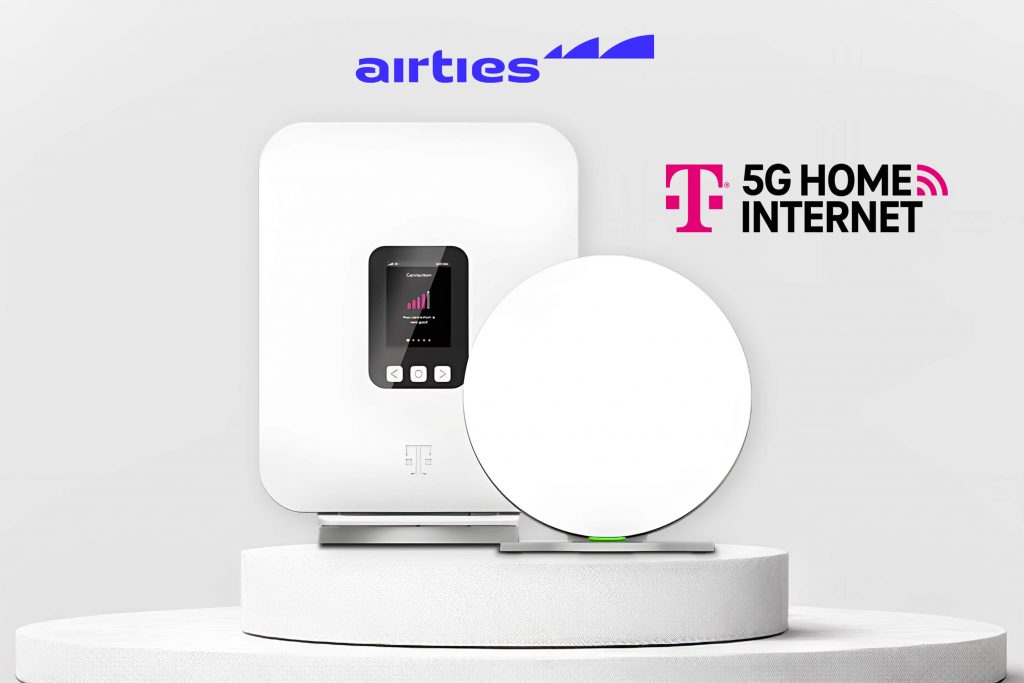
“Fixed wireless continues to reshape the home broadband market, and we’re proud to be at the forefront of enabling service providers to enhance performance across their 5G and home Wi-Fi networks,” said Metin Taskin, CEO of Airties. “We are very honored that T-Mobile selected Airties to help them provide an exceptional managed home Wi-Fi experience to their customers, and we are excited to support their vision now and into the future.”
Airties is currently working with leading service providers around the globe on 5G fixed wireless deployments, in addition to their vast deployments with wired access technologies (fiber, cable, etc.). Airties also recently announced an advanced technical collaboration with Qualcomm for fixed wireless access to simplify OEM product development and enhance quality of experience. Airties’ unique hybrid cloud-edge software architecture leverages both the embedded intelligence in customer premises equipment (Wi-Fi 7, Wi-Fi 6E, Wi-Fi 6, etc.) and the cloud to maximize responsiveness and performance. Airties Edge, smart Wi-Fi software for gateways/routers/extenders, intelligently directs consumers’ devices (laptops, tablets, phones, game consoles, IoT, smart home devices, etc.) to the best available Wi-Fi access point and frequency band based on real-time network conditions. The software, based on industry standard Wi-Fi EasyMeshTM, also turns existing home gateways into an intelligent Wi-Fi mesh access point, improving the quality and stability of connectivity within the home. Airties Cloud helps monitor and orchestrate Wi-Fi across homes, optimizes broadband gateways and mesh extenders to ensure a better quality of experience, delivers insights on connected devices, and provides APIs to power operator’s customer facing support apps.
Airties has been recognized with many prestigious industry awards for its innovative work serving broadband operators, including: “Best Home Wi-Fi Solution Award” from Broadband World Forum; “Best Wi-Fi Service Provider Solution” and “Best Home Wi-Fi Product” awards from Wi-Fi NOW; “Best Wi-Fi Innovation” and “Best-In Home Wi-Fi Network” awards from Wireless Broadband Alliance; “Best Broadband Customer Experience” from Cable & Satellite International; and many others.
Additional information about Airties can be found at: www.Airties.com.
About Airties
Airties is a leading provider of managed Wi-Fi solutions to operators around the globe. The Smart Wi-Fi portfolio from Airties includes Airties Edge, smart Wi-Fi software for gateways; Airties Cloud management platform and its companion app; Airties Orbit, a continuous test automation platform; and Wi-Fi mesh extenders. Operators turn to Airties for the design, implementation, and ongoing optimization of their customers’ broadband experience. Airties’ customers include Deutsche Telekom, Singtel, Sky, Telia, Telstra, Vodafone, and many others. More information is available at www.airties.com.

WorldVue, the trusted platform for guest-centric technology such as video entertainment and wireless connectivity, and OpenWiFi, a community-developed open-source platform designed to lower the cost of developing and operating Wi-Fi networks, are excited to spotlight their first joint installation. This install brings a better Wi-Fi experience to The Emory apartment community in Historic Downtown Plano, Texas.
The alliance between WorldVue and OpenWiFi began in January 2024, with a focus on offering properties greater flexibility and the ability to streamline network operations. This first installation at The Emory incorporates TIP OpenWiFi-certified software and hardware, including Edgecore’s OpenWiFi-Ready Access Points (APs) and switches and NetExperience’s vendor-agnostic OpenWiFi Cloud Controller that support OpenRoaming™ for greater flexibility, seamless connectivity, and easier setup.
“We are proud to partner with WorldVue and NetExperience on this OpenWiFi deployment,” said TengTai Hsu, VP of Edgecore Networks. “Secure, fast, and reliable Wi-Fi is an essential amenity, and this OpenWiFi network provides a first-class connected experience for residents of The Emory.”
This installation supports WorldVue’s goal of advancing global connectivity and innovation through open collaboration.
“WorldVue is committed to delivering high-quality services and seamless connectivity. We believe wireless connectivity is a major catalyst for economic growth and industry development,” said Robert Grosz, President and COO of WorldVue. “Embracing OpenWiFi in the MDU space allows us to break free from vendor lock, rapidly innovate in the wireless space to develop deep integrations with mission-critical applications, and offer our clients at The Emory the most flexibility and lowest total cost of ownership.”


Leading OpenWiFi Access Point suppliers continue to dominate OpenWiFi innovation with first-to-market Wi-Fi 7 product launches
SARASOTA, Fla.–(BUSINESS WIRE)–Actiontec, a global industry leader and supplier of connectivity devices, and Edgecore, a world leader in innovative network solutions for enterprises, data centers, and telecommunication service providers, today announced the first OpenWiFi Wi-Fi 7 Access Points (APs) available for global deployments.
“Wi-Fi 7 delivers numerous benefits including higher throughput, lower latency, improved reliability, and reduced power consumption”
By announcing their concurrent releases of Wi-Fi 7 AP’s for OpenWiFi deployments, Actiontec and Edgecore demonstrate the power of open and disaggregated technology that encourages suppliers and service providers to collaborate on development and integration in Wi-Fi infrastructure.
The new Wi-Fi 7 APs will be a featured discussion point of the panel “Transforming architectures and services with OpenWiFi” on April 24th on the Wi-Fi World Congress North America Main Stage. The APs will also be demonstrated at the TIP OpenWiFi booth in the Expo Hall.
Actiontec’s OpenWiFi Wi-Fi 7 AP, the WF-189, is a 2x2x2 indoor unit. The Edgecore OpenWiFi Wi-Fi 7 AP, the EAP105, is also for indoor use. These Wi-Fi 7 APs will be available for commercial deployments in the second quarter of 2024. Edgecore will also be introducing several new Wi-Fi 7 APs supporting OpenWiFi throughout 2024 that cover a range of specifications and market segments, meeting the deployment needs of customers with a variety of use cases.
“Wi-Fi 7 delivers numerous benefits including higher throughput, lower latency, improved reliability, and reduced power consumption,” said Kevin Robinson, President and CEO of Wi-Fi Alliance. “Actiontec and Edgecore support for Wi-Fi 7 in APs used in OpenWiFi deployments demonstrates commitment to cutting edge technology that benefits the end-user.”
WiFi 7, also known as IEEE 802.11be, is the next-generation Wi-Fi standard that supports all three frequency bands – 2.4GHz, 5GHz, and 6GHz.
Actiontec and Edgecore’s OpenWiFi APs have been deployed across multifamily housing, hospitality venues, student housing and military barracks with managed service providers including Single Digits, Pavlov Media, Boingo Wireless and WorldVue, among others.
Launched in 2021, OpenWiFi is a community-developed open-source platform designed to lower the cost of developing and operating Wi-Fi networks. The platform’s unique approach to Wi-Fi creates an open-source disaggregated technology stack without vendor lock-in, ensuring a cost-effective and seamless way to deploy connectivity. OpenWiFi was created through the Telecom Infra Project (TIP), a global community of companies and organizations driving open and disaggregated infrastructure solutions to advance global connectivity.
About Edgecore Networks
Edgecore Networks Corporation is a wholly owned subsidiary of Accton Technology Corporation, the leading networking ODM. Edgecore Networks delivers wired and wireless networking products and solutions through channel partners and system integrators worldwide for data center, service provider, enterprise, and SMB customers. Edgecore Networks is the leader in open networking, providing a full line of open 1G-800G Ethernet switches, core routers, cell site gateways, virtual PON OLTs, optical packet transponders, and Wi-Fi access points. Edgecore offers a choice of commercial and open-source NOS and network application solutions. For more information, visit www.edge-core.com
About Actiontec
With more than 30 years of experience providing state-of-the-art home connectivity devices, Actiontec is one of the largest suppliers in North America. Our products have been adopted by the leading Service Providers, who have always relied on our innovation and quality. Actiontec’s state-of-the-art portfolio of 2.5G/10G PON and Wi-Fi 6E products has achieved strong market adoption. With the launch of our first Wi-Fi 7 devices in 2023, the 25G PON ONT solutions in 2024, as well as extending our portfolio of 3GPP Open RAN Compliant 4G & 5G RAN and small cell products, new customers are joining Actiontec’s family of partners. Learn more at: https://www.actiontec.com
Lauren de la Fuente
Pearl Street Marketing for Actiontec and Edgecore
[email protected]
310-283-8488
Austin, TX – April 23, 2024 – In the ongoing effort to enable a robust Wi-Fi® ecosystem, Wi-Fi Alliance® successfully enhanced its Automated Frequency Coordination (AFC) Device (DUT) Compliance Test Plan and AFC DUT Test Harness Tool for 6 GHz standard power devices to comply with the Innovation, Science and Economic Development (ISED) Canada’s Radio Standards Specification (RSS-248)Radio Standards Specification RSS-248. This update streamlines the regulatory approval process for 6 GHz standard power devices in Canada and underscores Wi-Fi Alliance’s commitment to maximizing unlicensed spectrum availability and delivering wireless connectivity to the Canadian consumers and enterprises.
Wi-Fi Alliance appreciates the guidance and collaboration provided by the ISED Canada in this effort.
For additional information, please visit Wi-Fi Alliance 6 GHz AFC Resources.

Understandably, there is a tradeoff between having WiFi-enabled devices connected around the clock and the energy cost required for this level of convenience. For many devices, there is no real functional need to be connected to a network 24/7. Most TVs, gaming devices, and laptops have dormant periods where they are off or revert to a sleep mode and conserve electricity. However, that doesn’t happen with the WiFi gateways, routers, and extenders that power networks – these all typically stay at the same level of network supply even as demand from devices lowers.
Plume IQ examines how WiFi networking gear can be a surprising place for energy savings with no noticeable degradation in the consumer experience. WiFi networks not managed intelligently broadcast their signals constantly using unnecessary amounts of energy – however, if the equipment was proactively analyzing the network, it could potentially manage resources resulting in significant energy conservation.
Recently, Plume examined options for energy conservation and tested a new way to use intelligence to reduce energy demand when the needs of a network are low. The details are explained in the whitepaper linked below — here are some highlights:
When consumers are asleep or not at home, Plume is able to detect drops in usage, redirecting devices onto the same WiFi band, and then turn off unused channels to conserve energy.
For example, one of Plume’s SuperPods with WiFi 6E would typically use 9.9 watts. With this new technology – this can be lowered by about a third to 6.8 watts. When testing the feature in Europe across locations in February and March, Plume observed that for locations actively saving energy, the power-saving algorithm was active for at least six hours per day in 84% of locations – and for at least 12 hours per day in 21% of them. This shows that when a network is designed intelligently there is ample opportunity for improvement.
Admittedly, energy savings from a single SuperPod in one home may not seem like a lot, but Plume IQ measured what the scale may amount to if this feature were widely implemented. If one million SuperPods were deployed and provided eight hours of energy optimization per household, up to 7.9 gigawatts per hour over a year could be saved. According to the EPA’s calculations, this would amount to the equivalent of eliminating emissions from 1,240 cars or growing 91,070 trees over a decade.

Plume is thinking bigger. If this technology was deployed over every one of the 1.3 billion broadband connections worldwide, it could conserve the energy usage equivalent of 1.4 million homes. Conservation at this level could eliminate the need for 18 natural gas or 2 coal plants. Granted, this may seem ambitious, but using technology in this way could greatly benefit people and the planet.
To learn more about Plume’s energy optimization and reducing energy consumption, read the full white paper here.

OpenSync Lite
OpenSync Lite allows communication service providers (CSPs) to quickly integrate Plume’s smart services on legacy hardware. CSPs can transform their connected network into a fully managed platform and rapidly provide an improved consumer experience. Consumers will get access to the HomePass app to optimize connectivity in the home, improve device connection, and customize their WiFi networks.
Are you a CSP that’s interested in OpenSync Lite? Contact us here
Award: The Cablefax 100 List
We are delighted to share that Plume Founder and CEO Fahri Diner has been included on The Cablefax 100 List for the fifth consecutive year. This award recognizes influential executives across multiple media, cable, and broadband businesses who demonstrate exceptional leadership in leading teams, growing their companies, and driving innovation.
See The Cablefax 100 List here
News Roundup
“[Current MDU networking products present] both a problem and an opportunity for communication services providers (CSPs) and technology providers. The solutions in the market today serve a specific type of apartment building – big, shiny skyscrapers towering over the largest cities. But, in reality, 98% of multi-dwelling units are under one hundred units. CSPs can reach this large population by delivering a modern solution that is affordable, easily deployable, and provides a first-in-class experience for both tenants and property managers.”
“Traffic prioritization tools within the home, for instance, offer a potential solution for the bandwidth-constrained. In one example last month, Plume announced its Network Priority tool that allows people to prioritize a traffic category (streaming, gaming, video calls, etc.), a person or a device within a home for a period of time.”
#PlumeStrong
Preparations for the #PlumeStrong Cycling Challenge are in full swing. We are deeply grateful to our corporate sponsors, who have already committed to making this our best ride to date, and we are encouraged by our riders, who are training feverishly on their own, with one another in races around the world, and alongside our virtual coaching team.
Learn about our individual riders as they train to tackle the #PSCC24 from Zurich, Switzerland, to Venice, Italy, and make a pledge for a PlumeStrong cyclist today.
#PSCC24 donations are collected through our charity partner, Street Child, and 100% of the money raised goes toward providing a safe education for children around the world where schools and communities have been compromised by poverty, war, and natural disasters.
Get ready for #PSCC24 – watch the video here.
In the ever-advancing realm of the gaming industry, casinos are continuously seeking innovative ways to enhance customer satisfaction, streamline operations, and drive revenue. One of the most transformative trends gaining traction is the transition towards a cashless ecosystem, facilitated by the integration of mobile apps, robust Wi-Fi networks, and specialized solutions like GoZone WiFi. This holistic approach not only simplifies transactions but also presents unparalleled opportunities for casinos to boost player engagement and convert non-carded players into loyal patrons.
Embracing Cashless Transactions with Mobile Apps
The traditional reliance on cash within casinos poses numerous challenges, including security risks, operational inefficiencies, and limited insights into customer behavior. However, by embracing mobile apps, casinos can overcome these hurdles while offering patrons a seamless and secure payment experience.
Picture this: as a patron navigates the bustling casino floor, they effortlessly manage their gaming funds, dining reservations, and entertainment bookings—all from the convenience of their smartphone. Redirecting guests with a smart WiFi captive portal to download the casino app installed, patrons can securely link their preferred payment methods and conduct transactions with ease, eliminating the need for physical cash and reducing the risk of theft or fraud.
The Crucial Role of Secure Guest Wi-Fi
Central to the success of a cashless casino environment is the implementation of a robust and secure Wi-Fi infrastructure. A reliable Wi-Fi network not only ensures seamless connectivity for patrons but also serves as the backbone for powering the casino app’s functionalities.
By strategically deploying Wi-Fi access points throughout the premises, casinos can provide universal coverage, allowing patrons to access the app’s features anywhere on-site. Furthermore, advanced security measures, such as WPA3 encryption and network segmentation, safeguard sensitive data and transactions, instilling trust and confidence among patrons.
Leveraging Smart WiFi for Enhanced Player Engagement
In the quest to enhance player engagement and loyalty, casinos can leverage specialized Smart WiFi solutions to create personalized and immersive experiences for their patrons. Here’s how GoZone Smart WiFi can make a difference:
Converting Non-Carded Players into Loyal Patrons
One of the key challenges casinos face is converting non-carded players—those who have not signed up for a player’s card—into carded players who actively participate in loyalty programs and promotions. By leveraging the combined power of mobile apps, secure Wi-Fi, and GoZone WiFi, casinos can implement targeted strategies to attract and retain non-carded players:
Promoting Guest Wi-Fi Usage
Casinos that have guests utilizing their amenity Wi-FI will benefit the most in converting non-carded players into loyal carded players. This presents a different hurdle for casino operators to tackle: getting players to use the guest Wi-Fi. Many casinos have implemented unique solutions to encourage Wi-Fi utilization:
A Win-Win for Casinos and Players Alike
The convergence of cashless transactions, mobile apps, secure Wi-Fi networks, and specialized solutions like GoZone WiFi represents a paradigm shift in the way casinos engage with their patrons. By embracing this integrated approach, casinos can enhance the customer experience, streamline operations, and drive revenue growth while fostering long-term loyalty and satisfaction among players.
As technology continues to evolve, the casinos that leverage innovative solutions to create personalized, immersive, and frictionless experiences will emerge as leaders in the dynamic and competitive gaming industry. With GoZone WiFi as a strategic partner, casinos can unlock new possibilities for player engagement, conversion, and retention, ultimately shaping the future of the casino landscape.
SunPubs, a leading restaurant group with a diverse portfolio of restaurants & bars across the Tampa Bay area, has unveiled remarkable results from 2023 and its initiative to follow a growing trend amongst top-performing restaurants, prioritizing customer loyalty and celebrating the local community.
Facing the challenges of standing out in a competitive restaurant industry and cultivating loyal patrons, SunPubs sought to amplify sales across its establishments during peak seasons and orchestrated a series of strategic promotions tailored to each brand’s offerings and holiday specials. From enticing Christmas Dinner Plates to irresistible New Year’s Day Taco Specials.
Recognizing the potential of Wi-Fi marketing to engage customers on-site and increase recurring foot traffic, SunPubs partnered with GoZone WiFi to implement a comprehensive solution tailored to communicate enticing offers to local patrons that have visited SunPubs restaurants and bars for decades.
“The secret is restaurants that follow this strategy are targeting previously on-site customers with pre-determined interest in the restaurant. Instead of wasting advertising spend and time targeting cold audiences, these golden customers are already excited and more likely to convert.”
Wayne Newton, VP of Business Development – GoZone WiFi
Through the strategic deployment of GoZone’s Marketing4WiFi platform, SunPubs seamlessly integrated marketing enrollment into its venues by offering guests complimentary Wi-Fi access that successfully enrolled thousands of patrons into revenue-generating loyalty programs. Leveraging this new marketing channel, deployed targeted email and SMS blasts to captivate customers, build local excitement and drive traffic to its establishments.
The results of SunPubs’ eye-catching limited time offers and marketing promotions were profound, with remarkable limited time offer and revenue growth across its four participating restaurants.
For more information on how SunPubs achieved record sales with GoZone WiFi’s strategic marketing solutions, check out the full case study and comprehensive restaurant guide here.
About GoZone WiFi: GoZone Wi-Fi is a SaaS company offering restaurants business analytics, venue intelligence and guest engagement solutions. Through loyalty generating services like Marketing4WiFi, GoZone empowers small-to-medium-size enterprise businesses to strategically refine customer communication, turning one-stop patrons into loyal customers. Learn more at gozonewifi.com.
About SunPubs: SunPubs is a leading restaurant group based in Tampa, Florida, offering a diverse portfolio of bars and restaurants known for their exceptional dining experiences, unparalleled nightlife, and scenic coastal views. SunPubs iconic brands include Caddy’s Waterfront Dining, Macdinton’s Irish Pub & Restaurant, Sculley’s Waterfront Restaurant, Grove Kitchen Lounge, and Mad Beach Cantina. Learn more at sunpubs.com.

As one of the first adopters of Wi-Fi 7 technology, we wasted no time in establishing an ecosystem of fast, reliable and always-on products that enable MediaTek Filogic Wi-Fi 7 support. Recently, Verizon announced the launch of its network’s latest Business Internet Gateway, which marks the first product on Verizon’s network to use Wi-Fi 7, and is also one of the first devices in the world to support next-generation Wi-Fi connectivity features such as tri-band and 4×4 antenna capabilities.
The new Verizon Business Internet Gateway features MediaTek’s next-generation modem and router all in one device. In addition to Wi-Fi 7 support provided by the MediaTek Filogic 680, it utilizes the MediaTek T830 5G chipset, which comes with 4CC 300MHz 5G modem capability, 3GPP Release 16 functionality, and is capable of 5G speeds up to 7Gbps. The chip is made using a highly advanced 4nm process for significant power savings, and supports multiple Ethernet options, with speeds up to 10Gbps.
By working closely with Verizon to integrate MediaTek’s Wi-Fi 7 capabilities into the Gateway, users can now enjoy a router that comes with superior performance and design compared to competing FWA devices on the market. After years of development, we are looking forward to seeing the improved experiences that next-generation wireless technology enables for consumers and businesses in the United States.
The Verizon Business Internet Gateway is now available to its Business Internet customers. Learn more about MediaTek’s 5G Broadband and Wi-Fi 7 platforms >