
Across defense and aerospace programs, the expectations placed on RF power systems continue to intensify. Radar, SATCOM, electronic warfare (EW) and high-duty test environments demand various combinations of higher output power, wider bandwidth, improved linearity and increased operational reliability—often within shrinking size, weight and power consumption (SWaP) constraints.
These pressures create a set of design challenges that legacy RF power architectures can no longer solve. As programs evolve and timelines compress, engineering teams must rethink how they generate and manage RF power at the system level. The challenges include:
Half the size, Built for the Mission
Qorvo’s newest SSPAs enable up to 50 percent smaller and one-third lighter system-level solutions compared to legacy traveling wave tube amplifiers (TWTAs), supporting mission continuity and long-term reliability in demanding RF environments.
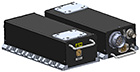
QPR3238: 32-38 GHz Wideband GaN SSPA Module
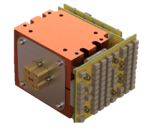

To address these challenges, a next-generation RF power amplifier must provide a combination of efficiency, reliability, integration and long-term availability that aligns with modern program requirements.

Among the various solid-state approaches available today, Qorvo’s wideband GaN-based amplifier technologies—including implementations that use spatial combining techniques—provide a practical illustration of how modern SSPA architectures can address the performance, reliability and integration needs described above. These solutions demonstrate how wideband GaN devices, efficient power combining and integrated control functions can be applied to meet system-level requirements across radar, SATCOM, EW and test environments.
Qorvo’s approach brings several characteristics that directly map to the needs of today’s radar, SATCOM and EW systems:
These characteristics make Qorvo solutions suitable for replacing aging TWTAs, improving system reliability and meeting the performance and SWaP-C expectations of modern defense and aerospace programs.

Modern RF systems demand more than incremental improvements—they require amplifier architectures that are efficient, reliable, broadband and simple to integrate. As TWTAs face supply limitations and higher sustainment costs, solid-state technology provides a compelling path forward. Solutions that combine high power, broad bandwidth, integrated functionality and rugged reliability will define the next generation of radar, EW, SATCOM and test platforms.
Qorvo’s GaN-based amplifier solutions are engineered to meet these exact demands, providing a field-proven, scalable technology path for programs seeking to modernize their RF power infrastructure.
For more information, read our press release on Qorvo’s new Spatium SSPAs replacing legacy TWTAs. Qorvo’s newest SSPAs enable up to 50 percent smaller and one-third lighter system-level solutions compared to legacy traveling wave tube amplifiers (TWTAs), supporting mission continuity and long-term reliability in demanding RF environments.
To learn more about Qorvo’s trusted RF solutions for defense and aerospace—including Spatium SSPAs and GaN-based front ends, visit www.qorvo.com/spatiumsspa.
Have another topic that you would like Qorvo experts to cover? Email your suggestions to the Qorvo Blog team and it could be featured in an upcoming post. Please include your contact information in the body of the email.
The enterprise branch has evolved from a simple extension of the data center into a critical gateway for cloud applications, Software-as-a-Service (SaaS) platforms, and an increasingly AI-driven workforce. But as encrypted traffic and threat volumes surge, IT leaders face an impossible choice: robust security or acceptable performance. Most branch deployments sacrifice one for the other.
To avoid compromising security or performance, branches have traditionally turned to a two-box model: a router for connectivity and a firewall for protection. This legacy approach increases complexity, costs, and operational risk. Cisco 8000 Series Secure Routers change that model by converging industry-leading routing and next-generation firewall into a single, purpose-built platform for the branch WAN edge.
Better yet, independent testing by NetSecOPEN proves that with Cisco 8000 Series Secure Routers, IT leaders no longer have to choose between performance and security.
NetSecOPEN is a widely trusted, vendor-neutral organization known for its rigorous security efficacy and performance testing. Their evaluations use real-world traffic mixes, enterprise workloads, and current threat samples following RFC 9411 open-standard testing methodology.
NetSecOPEN’s independent validation provides an objective, unbiased assessment. Transparency and impartiality are crucial in helping to inform vendor selection and confirm that products meet industry standards and perform as claimed in practical scenarios.
In NetSecOPEN’s rigorous evaluation, our latest generation 8375-E-G2 Secure Router sets a new benchmark for branch security and performance, with proven intrusion prevention system (IPS) effectiveness of 99.3%, 99.8% malware detection, and HTTPS and HTTP throughput of 1.63 Gbps and 8.01 Gbps, respectively. These results validate the router’s ability to block exploits, malware, and evasive threats under real-world conditions without compromising performance.
Figure 1: Test configuration: IPS + AMP + TLS + app ID + logging enabled
Powered by the new secure networking processor and unified Cisco platform, Cisco 8000 Series Secure Routers combine multi-threaded parallel processing, hardware-accelerated cryptography, an integrated artificial intelligence/machine learning (AI/ML) engine, hardware trust anchor, and a post-quantum cryptography (PQC)-ready encryption engine. It’s built to deliver high-performance encrypted traffic inspection without impacting application experience—game-changing capabilities in today’s AI-driven enterprise.
This also delivers end-to-end operational and business benefits to the branch:
The convergence of routing and secure access secure edge (SASE) with comprehensive security capabilities represents the future of branch connectivity. That future is available today with proven, independently validated performance.
by DNSFilter Team on Feb 3, 2026 8:03:00 AM
Users are encountering as many as 66 threats daily—and new domains are a top culprit
WASHINGTON, D.C. – Feb. 3, 2026 – DNSFilter announced today the release of its 2026 Annual Security Report, which reveals the massive surge in new malicious domains, child sex abuse material (CSAM) and other threats. Threat volume is rising, and that is becoming a daily, user-level problem. The report is available for download here.
DNSFilter processes over 200 billion DNS queries daily and blocks about 7% of all traffic. That includes hundreds of millions of threats each day. Every request that’s blocked means phishing attempts fail, and malware isn’t executed.
Key findings from the report include:
Ken Carnesi, CEO and co-founder, DNSFilter, said: “Our research continues to show that DNS filtering is one of the most effective ways to stop attacks before they ever reach users. Every blocked request isn’t just a data point; it’s a real attack prevented in real time. This report puts hard numbers behind the scale of that threat and the real-world harm organizations face every day.”
About the company:
DNSFilter is a cybersecurity company that protects every click, leveraging AI-driven content filtering and threat protection to block threats 10 days earlier than competitors. DNSFilter’s solution secures workers anywhere they are, helping to boost productivity, minimize compliance risk, and protect corporate brands on public Wi-Fi networks. Unlike traditional filtering solutions, DNSFilter deploys in minutes instead of days and is trusted by more than 43,000 organizations worldwide. Learn more about how DNSFilter is the first and last line of defense for corporate and hybrid networks at dnsfilter.com.

The fastest-growing products today are battery-powered, compact, and cost-sensitive, but building them is increasingly complex. Developers are under pressure to move quickly, minimize design risk, and deliver differentiated user experiences, all while working within tight power and size constraints.
This is driving strong adoption of pre-integrated, certified 2.4 GHz wireless modules as a way to reduce development cost, simplify system design, and accelerate time to market. A well-designed module eliminates the need to manage RF layout, component selection, and lengthy certification cycles, allowing teams to focus on real benefits: battery life, application features, sensor performance, and overall product differentiation.
Silicon Labs’ xGM270S wireless module family is purpose-built for this reality. These ultra-compact system-in-package (SiP) modules combine a high-performance wireless SoC, large on-chip memory, integrated RF components, and global regulatory certifications into an exceptionally small footprint. Compared to traditional PCB-based modules, xGM270S enables smaller end products, faster development cycles, and lower overall system cost, all without compromising performance or flexibility.
The BGM270S targets a broad set of Bluetooth (LE) end-node applications, including smart home devices, asset tracking and fleet monitoring, access control, industrial automation, sport and wellness products. With a compact 6.5 × 6.5 mm LGA SiP footprint, it’s well suited for space-constrained designs where fast integration and predictable development cycles are critical.
In industrial environments, the BGM270S Bluetooth LE module works well as a controller for sensors such as temperature, pressure, and water flow. For asset tracking tags, it enables reliable connectivity with long battery life, and for portable medical devices, including oximeters and other handheld diagnostic tools, it provides a practical path to connected health monitoring and data collection. In designs with sufficient PCB area to benefit from a fully integrated module, BGM270S SiP module simplifies RF design, reduces development risk, and accelerates time to market.
Long battery life is important for IoT end devices, but at scale—such as commercial buildings with thousands of deployed sensors—battery replacement becomes a significant operational cost. This is where the MGM270S stands out with support for Zigbee Green Power and battery-less operation.
With 768 kB of Flash and 64 kB of RAM, the MGM270S Zigbee module provides the memory footprint needed to support Zigbee Green Power while optimizing overall system cost. Its low RX and TX current enables operation from a wider range of ambient energy sources, and the compact SiP form factor makes it ideal for space-constrained devices such as sensors and switches. Combined with global regulatory certifications, MGM270S reduces both development effort and time to market for Zigbee Green Power designs.
Across competing 2.4 GHz module offerings in this class, customers often see similar connectivity features. Where xGM270S stands out is in its combination of an ultra-compact SiP footprint, support for both Bluetooth LE and Zigbee Green Power, and the practical advantage of global certifications and production-ready software. Together, these features reduce development risk and shorten the path from prototype to production.
For customers building smart home devices, patient health monitors, or Zigbee Green Power solutions, the xGM270S value proposition is simple: enable secure, reliable wireless connectivity while keeping system costs low and accelerating time to market—without spending months becoming wireless experts.
Explore the xGM270S wireless SiP module family (BGM270S and MGM270S) to see how quickly you can bring your next connected product to life.

January 6, 2026, San Jose, Calif. – NETGEAR® Inc. (NASDAQ: NTGR), a global leader in intelligent networking solutions designed to power extraordinary experiences, today announced that the new Nighthawk 5G M7 Portable WiFi 7 Hotspot (MH7150) with eSIM marketplace is now available for pre-order at www.netgear.com. Worldwide shipping and retail rollout are set to kick off on January 27, 2026. The innovative device combines reliable, portable connectivity with groundbreaking flexibility, allowing users to choose coverage that fits their needs and connect instantly to high-speed internet in up to 140 countries.
Designed for dynamic lifestyles, the M7 delivers fast, reliable WiFi 7 speeds up to 3.6 Gbps, supporting up to 32 devices. Its compact build, robust battery, and simple setup make it the ideal companion for travel, remote work, and secure connectivity on the go.
With the new NETGEAR eSIM Marketplace, users can buy and activate affordable, high-quality data plans in over 140 countries directly through the NETGEAR app, no roaming fees required. The M7 is unlocked, supporting both physical SIMs and third-party eSIMs for true flexibility worldwide.
Advanced security features, including WPA3 encryption, firewall protection, and automatic updates, safeguard your connection. For wired needs, connect via USB-C or add an Ethernet adapter (sold separately) for even faster speeds.
The M7 Portable WiFi Hotspot, featuring an integrated eSIM marketplace, is now available for pre-order on www.netgear.com at $499.99 MSRP. Worldwide shipping and rollout to retailers begins on January 27, 2026. For additional details and purchasing options, please visit https://www.netgear.com/on-the-go/hotspots/mh7150/.
Founded in 1996 and headquartered in the USA, NETGEAR® (NASDAQ: NTGR) is a global leader in innovative networking technologies for businesses, homes, and service providers. NETGEAR delivers a wide range of award-winning, intelligent solutions designed to unleash the full potential of connectivity and power extraordinary experiences. For businesses, NETGEAR offers reliable, easy-to-use, high-performance networking solutions, including switches, routers, access points, software, and AV over IP technologies, tailored to meet the diverse needs of small and medium enterprises. NETGEAR’s consumer products deliver advanced connectivity, powerful performance, and enhanced security features right out of the box, designed to help keep families safe online, whether at home or on the go. More information is available from the NETGEAR Press Room or by calling +1 (408) 907-8000. Connect with NETGEAR on LinkedIn, Facebook, Instagram and the NETGEAR blog at NETGEAR.com.
©2026 NETGEAR, Inc. NETGEAR, NETGEAR Insight and the NETGEAR logo are trademarks and/or registered trademarks of NETGEAR, Inc. and/or its affiliates in the United States and/or other countries. Other brand and product names are for identification purposes only and may be trademarks or registered trademarks of their respective holder(s). The information contained herein is subject to change without notice. NETGEAR shall not be liable for technical or editorial errors or omissions contained herein. All rights reserved.

COSTA MESA, Calif., January 22, 2026 — EnGenius Technologies Inc., a global leader in advanced connectivity and cloud-managed networking solutions, is pleased to announce the release of EnGenius Private Cloud (EPC)—a fully on-premises network management platform purpose-built for Managed Service Providers (MSPs) and system integrators who require full control over their deployments without relying on public cloud infrastructure. EPC runs on any standard PC, server, or virtual machine, giving partners the ability to manage enterprise-class networks while keeping all data inside their own environment.
Why EPC Is Essential for Today’s MSPs
MSPs and system integrators need EnGenius EPC because many of their customers cannot or do not want to use public cloud platforms due to data privacy, compliance, and security concerns. Many governments agencies mandate that all network management systems, logs, and user data remain strictly within their own infrastructure to meet data sovereignty, privacy, and security regulations. These policies prohibit the use of public cloud controllers, restrict external data transmission, and require full visibility and control over how information is stored, accessed, and audited. As a result, MSPs and system integrators serving government clients must deploy fully on-prem solutions like EnGenius EPC to ensure compliance, maintain operational independence, and protect sensitive information from being processed or stored outside government-controlled environments.

EPC solves these pain points by delivering a fully on-premises, multi-tenant management platform that keeps all data local, operates reliably even without internet, and significantly reduces long-term operational costs. As a 100% locally hosted and secure solution, EPC ensures that network management, logs, client data, and device credentials never leave the premises—giving partners complete control over customization, backups, policies, and overall performance.
EPC provides:
By combining cloud-level convenience with local, on-prem autonomy, EPC empowers MSPs to deliver premium managed services while maintaining the security, privacy, and performance their customers expect.
Key Features & Capabilities of EnGenius EPC
With EPC, EnGenius redefines what on-premises network management can achieve—delivering flexibility, privacy, and reliability that the cloud simply cannot match.
The EPC will be available for download on the EnGenius website starting in January 2026 for EnGenius customers. For additional product specifications and purchasing information, visit: EnGenius Private Cloud

Managed Service Providers are expected to do more than ever—support more customers, manage more devices, respond faster, and still protect margins. Managing multiple customer environments shouldn’t require juggling disconnected tools or increasing administrative overhead. That’s exactly where Zyxel’s Nebula Cloud Networking Solution—and specifically the Nebula MSP license—comes in.
Designed for modern MSP operations, Nebula delivers centralized, cloud-based network management with advanced cross-organization, multi-tenant capabilities, helping MSPs scale efficiently while unlocking new recurring revenue opportunities.
Built for MSP Scale
With the release of Nebula 19.30, Zyxel takes multi-tenant management to the next level. MSPs gain the ability to manage multiple organizations, sites, and devices from a single platform—without switching dashboards or duplicating work. This cross-organization visibility allows MSPs to scale services faster, simplify daily operations, and maintain consistent service quality across all customers.
“Nebula was built to help MSPs scale without adding complexity,” said Shawn Rogers, Sales Operations & Product Development Manager. “With advanced multi-tenant management, automation, and centralized visibility, the Nebula MSP license enables service providers to deliver consistent, high-quality services while creating new opportunities for recurring revenue.”
Automate More. Manual Less.
Staff shortages and repetitive configuration tasks can quickly erode MSP profitability. Nebula 19.30 introduces proactive workflows designed to eliminate manual work at scale. Features such as configuration templates, full-site replication, and bulk backup and restore allow MSPs to onboard new customers in minutes instead of days.
By turning best practices into reusable templates, MSPs can deliver consistent deployments while freeing up technical staff to focus on higher-value services.
One Dashboard. Every Customer.
Visibility is critical when managing multiple tenants. The refreshed Nebula MSP Portal consolidates previously siloed information into a single, unified view. MSPs can quickly see the status of organizations, sites, devices, and licenses across all customers—without jumping between tools.
This centralized insight enables faster decision-making, proactive issue resolution, and better overall service delivery.
Security & Collaboration—Built for MSP Teams
As MSP teams grow, shared logins and manual user management introduce both security risks and inefficiencies. Nebula 19.30 addresses this with role-based access control (RBAC), allowing MSPs to define staff roles and assign tiered permissions based on responsibilities.
With instant onboarding and offboarding, new team members can be granted access immediately, while departing staff can be removed just as quickly. Strategic customer grouping further simplifies operations by aligning access and service tiers across similar customer environments.
Faster Recovery, Less Downtime
Downtime impacts both customer satisfaction and SLA performance. Nebula’s bulk backup and quick restore capabilities help MSPs minimize service disruptions and accelerate troubleshooting. Whether responding to misconfigurations or recovering from unexpected issues, MSPs can restore environments quickly and confidently—keeping customers productive and satisfied.
Turn Best Practices into Repeatable Services
Nebula’s full-site replication enables MSPs to clone complete network configurations—including WiFi settings, switch profiles, and VPN policies—across customer environments. This transforms technical expertise into repeatable, scalable services, allowing MSPs to grow without increasing complexity.
More Than Management—More Opportunities
With over 100 Nebula-compatible devices across wired, wireless, security, and the Nebula MSP license creates opportunities far beyond management. MSPs can easily upsell and cross-sell solutions across diverse customer needs—from enterprise deployments to SMB environments using devices like the USG LITE 60AX.
By building flexible service tiers on a single cloud platform, MSPs can generate recurring revenue while maintaining operational consistency.
A Cloud Platform Designed for MSP Growth
Zyxel Nebula is more than a cloud management tool—it’s a platform built to help MSPs scale smarter, operate more efficiently, and grow profitably. With multi-tenant visibility, automation, secure collaboration, and a broad ecosystem of compatible devices, the Nebula MSP license empowers MSPs to deliver consistent, high-quality services—today and into the future.
Ready to Scale Your MSP Business with Nebula?
Discover how the Nebula MSP license can help you simplify operations, automate management, and unlock new recurring revenue opportunities—all from a single cloud platform.
Learn more about Zyxel Nebula and start building smarter, scalable managed services today.


Bluetooth® and ultra-wideband (UWB) are often discussed in isolation rather than as parts of a coordinated system. That framing no longer reflects how real systems are being designed or deployed. In practice, Bluetooth Low Energy (LE) and UWB are increasingly architected to work together, each addressing different technical objectives. Automotive digital keys are the clearest example today, but the same complementary pattern is emerging across other proximity-based applications.
At the same time, both technologies are evolving rapidly. Bluetooth is adding more sophisticated ranging capabilities, while UWB continues to advance accuracy, security and performance features. For manufacturers, suppliers and designers in the automotive and other markets, this convergence leads to a conclusion: wireless test methodologies must evolve from assessing individual radios to validating complete, multi-radio systems.
Why Bluetooth LE and UWB Coexist in Digital Keys
Modern digital key architectures grew out of early Bluetooth LE-only implementations that relied heavily on a Received Signal Strength Indicator (RSSI). RSSI is a relative measure of received signal strength that is used to infer proximity to the signal source. While effective for discovery and convenience, RSSI-based distance estimation is inherently vulnerable to relay and man-in-the-middle attacks, making it unsuitable as the sole mechanism for security-critical access decisions.

This limitation drove the industry toward UWB-based secure ranging, formalized through initiatives such as the Car Connectivity Consortium (CCC). Today’s digital key designs intentionally divide responsibilities:
This handoff is foundational. Bluetooth LE acts as the always-on, low-power sentinel. UWB acts as the high-confidence decision engine.
When Accuracy and Security Matter, UWB Is Essential
UWB’s advantage lies in how it measures distance. Instead of inferring proximity from signal strength, UWB uses time-of-flight techniques that deliver centimeter-level accuracy under typical operating conditions. Security is reinforced at the physical layer through mechanisms such as Scrambled Timestamp Sequence (STS), which significantly raises the bar against relay and replay attacks.

Equally important, Bluetooth LE and UWB do not compete for spectrum. Bluetooth LE operates in the 2.4 GHz band, while UWB occupies much higher frequencies, typically in the 6- to 10-GHz range depending on region. This allows both radios to operate concurrently without RF interference.
Bluetooth Is Evolving and Strengthening Coexistence
Bluetooth LE itself is not standing still. Technologies such as Bluetooth Channel Sounding are improving ranging accuracy by combining phase-based ranging and round-trip time measurements.
These advances do not replace UWB; they make coexistence more efficient. Improved Bluetooth LE ranging enables better intent detection and helps systems decide when to wake UWB, reducing unnecessary power consumption while maintaining responsiveness. In effect, improvements in Bluetooth enhance the effectiveness of UWB-based systems.
Automotive As a Proof Point
Automotive remains the most visible example of this complementary design approach because the consequences of failure are so high. Unlocking must be seamless, secure and repeatable across devices, environments and regions.

Orange: UWB, Blue: Bluetooth
At the same time, UWB adoption is expanding beyond access control. Applications such as indoor navigation, asset tracking and tap-free interactions are gaining traction. In vehicles, UWB-based sensing use cases, including child presence detection, intrusion alerts, and gesture or kick sensing, are already appearing, often through proprietary implementations. Over time, many of these sensing applications are expected to converge toward standardized approaches, increasing the importance of adaptable test strategies.
The Real World Is Not a Clean RF Lab
Even well-designed systems can fail if they’re only validated under ideal conditions. In practice, RF performance is affected by multipath, orientation and human factors. A phone in a back pocket, for example, can experience significant signal absorption by the human body, altering RSSI readings and delaying discovery or intent detection.
This variability reinforces a critical lesson: passing standards-based RF tests is not the same as delivering a reliable user experience. Over-the-air (OTA) test and system-level validation are essential, particularly for proximity-based applications where timing and behavior matter as much as raw RF performance.
What Changes for Test When Bluetooth LE and UWB Form a System
When Bluetooth LE and UWB are combined, test requirements expand beyond single-radio validation. During design and validation, teams must verify Bluetooth LE discovery and intent detection under realistic attenuation and orientation, as well as testing UWB ranging accuracy, timing determinism and secure ranging behavior. They also need to confirm the correct Bluetooth LE-to-UWB handoff across defined proximity zones.
In manufacturing, production test must adapt accordingly. Bluetooth LE still requires RF parametric checks such as transmit power verification and RSSI calibration. UWB introduces additional requirements, including power calibration to meet regulatory limits and antenna delay compensation to enable accurate time-of-flight measurements. Timing synchronization and intent verification increasingly become part of end-of-line testing.
Beyond the factory, field testing and regression validation – often linked to OTA software updates – play a growing role. CCC certification processes already emphasize real-world scenario testing, where OEMs and device makers jointly validate lock and unlock behavior. These results feed regression testing to ensure future updates do not introduce new failure modes.
Implications for Wireless Test Platforms
The message across all stages is clear: test must evolve with system complexity. As Bluetooth LE and UWB continue to advance through improved ranging, higher data rates and extended range, test platforms must adapt without forcing redesigns at every technology transition.
For LitePoint, this means enabling customers to validate Bluetooth LE and UWB together, over the air, with the timing, phase, power and security measurements these systems demand. The goal is not simply to test radios, but to verify complete proximity systems – from discovery to secure action. UWB and Bluetooth are not rivals. They are complementary technologies whose combined strengths enable secure, intuitive user experiences. Automotive shows how this coexistence works today – and why modern wireless test must evolve alongside it.

Employee safety devices (ESDs) did not start as a strategic investment for most hotels. They began as a requirement.
New laws. Updated brand standards. Growing awareness of the risks faced by associates working alone.
Panic buttons became the baseline response to a changing regulatory environment. Today, that baseline is no longer enough.
Hotel operations are more complex. Properties are larger. Teams are more diverse. Expectations around response, documentation, and accountability have increased.
Leadership teams now evaluate safety platforms not just on compliance, but on how well they perform in real situations.
ProSafe 26 reflects that shift. This redesigned safety platform instantly connects team members, responders, and management. It provides the clarity needed for modern hotel operations and a safer working environment.
Employee safety has become a permanent part of hospitality operations. Laws in multiple states require employee safety devices. Brand initiatives such as the AHLA 5-Star Promise reinforce associate protection as a shared responsibility across the industry.
State and local laws have made employee safety devices mandatory in many hotel markets in the United States. These safety regulations often apply to associates working alone, particularly housekeeping and overnight staff. While the specifics vary by jurisdiction, the direction is consistent. Hotels must demonstrate that safety systems are active, accessible, and reliable.
Brand safety standards have evolved alongside these laws. Many brands now expect more than the presence of a device. They look at response workflows, escalation paths, and documentation. In some cases, new hotels must confirm they have an employee safety solution before receiving approval to operate.
This shift changes how hotels evaluate safety platforms. Ensuring compliance alone is no longer the finish line. Hotels must show that alerts reach the right people to coordinate emergency response. They must also retain documentation to review incidents after the fact.
The quality of the system matters as much as the requirement itself.
Many early employee safety device programs focused on a narrow use case: Press a button, send an alert, and hope the message reaches the right person.
In practice, that model creates gaps:
These limitations slow response and increase uncertainty at the exact moment clarity is needed.
ProSafe 26 addresses one of the most persistent challenges in hotel safety: location accuracy.
Many employee safety systems rely on beacons or manual scanning to identify a location. In hotel environments, those approaches introduce risk. Beacons require installation, maintenance, and periodic replacement. Scanning depends on associate action during stressful moments, when it’s easy to miss key steps.
SafeGrid™ is ProSafe’s patented scanless location technology that removes those failure points. It delivers automatic room- and area-level accuracy without the need for beacons, QR codes, or additional hardware.
For hotel teams, the benefit is immediate. Associates do not need to remember what to scan or where to stand. Responders know precisely where to go with consistent, room-level information every time someone triggers an alert. The system operates continuously, providing precise location data with every alert.
For hotel operators, this approach also reduces complexity. Properties do not need to manage separate infrastructure or maintain ongoing hardware investments. The system scales more easily across properties and portfolios, while maintaining accuracy at the room level. This is still uncommon among ESD solutions today.
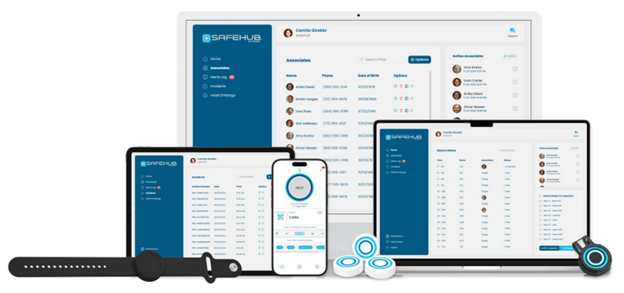
Effective safety programs extend beyond the moment the system sends an alert. ProSafe 26 supports the full incident lifecycle, from initiation through resolution. Each event follows a clear path, with defined status updates and an end state when staff no longer need assistance.
Once an employee triggers an alert, ProSafe 26 keeps communication inside a single incident experience.
Incident history remains accessible inside the platform. Alerts, messages, and captured evidence stay connected to the original event. This structure supports follow-up conversations, internal reviews, and ongoing training. It also reduces reliance on handwritten notes or disconnected reports.
Associates and response teams can chat live within the ProSafe app or the SafeHub dashboard. Messages update in real time as responders move and coordinate. Status changes remain visible to everyone involved.
This reduces confusion and eliminates the need for parallel calls, radios, or text threads. The entire response stays aligned from the first second through resolution.
Clear closure matters. When incidents end cleanly, teams know when to stand down. Records are complete. Leadership gains confidence that safety processes are consistent and repeatable across shifts and properties.
ProSafe 26 has added SafeStream to provide actionable insights in real-time.
This integration allows responders to see active incidents as they unfold. Video feeds provide immediate visual context, helping teams determine whether a situation is medical, security-related, behavioral, or environmental before arriving on scene.
The benefit is practical. Responders bring the right equipment. They approach with better awareness. Decisions happen sooner, not after arrival.
Video becomes a live operational tool, not just post-incident documentation.
ProSafe takes it even further through its partnership with TruePath Vision.
With this technology, the system can use CCTV footage to detect activity in real time and activate an alert to the SafeHub Dashboard. This means potential incidents are reported even when a human isn’t present to report them.
Any evidence captured via ProSafe is cross-analyzed with TruePath’s technology to identify a potentially bad actor, even if they have left the scene.
When incidents require external emergency services, ProSafe integrates with RapidSOS to support E911 response.
Alerts can automatically share associate details, SafeGrid room-level location data, GPS information, and available evidence with public safety agencies. This replaces vague phone calls with structured, real-time data.
The result is faster handoff and clearer communication between hotel teams and first responders.
Through integration with MappedIn, SafeHub provides a real-time, interactive 3D view of the property.
Response teams can see active alerts and associate locations by floor, supporting faster navigation and coordination. This level of visibility is especially valuable in large or complex properties where spatial awareness impacts response time.
Hotel teams are multilingual by default. ProSafe 26 reflects that reality.
The platform supports real-time translation across more than 100 languages, with voice, text, and automatic transcription. Emergency broadcasts can reach every associate in their primary language with a single command.
Clear communication reduces errors and improves safety outcomes, especially during high-stress situations.
ProSafe 26 includes two-way APIs designed for enterprise environments.
Security operations centers can ingest ProSafe data. IT systems can trigger alerts. Intelligence can flow upstream for reporting and oversight. For management companies, above-property visibility supports consistent standards across portfolios.
Safety no longer operates in isolation.
Employee safety devices may begin as a compliance requirement. How they perform determines whether they become an operational asset.
For hotel leadership, employee safety directly impacts risk, accountability, and operational readiness. Inconsistent response or incomplete documentation can expose gaps during audits, investigations, or legal review. A centralized platform helps reduce that exposure by standardizing how properties handle incidents.
Visibility also matters at scale. Management companies and ownership groups often oversee dozens or hundreds of properties. Without shared systems, safety performance varies by location. ProSafe 26 supports consistent standards by giving leaders insight into alerts, response times, and workflows across their portfolio.
This level of oversight supports better decisions. Patterns become visible. Training needs are easier to identify. Safety shifts from a reactive obligation to a managed operational discipline.
WorldVue helps hotels deploy ProSafe as part of a broader technology strategy. We assist properties in aligning with brand standards, operational needs, and evolving regulations.
Contact us to request a personalized demo to see how ProSafe 26 supports safer teams and stronger operations.

Richardson, TX, February 3, 2026 – RUCKUS Networks, a Vistance Networks (NASDAQ: VISN) business, today announced it has expanded its Pro AV ICX® network switch portfolio and introduced an AV-enhanced update to its management platforms. These advancements support the global market shift away from legacy video transport solutions toward Ethernet-based systems. RUCKUS Networks has also formed strategic partnerships with communications solutions leader Crestron, and joined as an adopting member of the SDVoE Alliance, a nonprofit consortium of technology providers collaborating to push the adoption of Ethernet to transport AV signals in professional AV environments.
The new Pro AV ICX switches are AV-optimized and pre-configured out-of-the-box, providing a broad compatibility with existing AV solutions across the industry and reduction in the resources needed to configure the switch to support AV protocols and endpoints. The expanded ICX portfolio can be managed by RUCKUS One®, SmartZone™ and as a standalone switch, allowing for integration across various commercial environments including professional residential, hospitality and education.
Pre-configured switches lower risk and enable faster deployments and effortless scaling of AV networks. Network operators can quickly onboard AV devices and manage AV traffic through our existing cloud or on-prem management platform, which also manage our standard switches and access points.
The expanded portfolio is also fully interoperable with Crestron’s DM NVX AV-over-IP platform. Crestron creates innovative content, collaboration, and control technologies for the Pro AV industry.
“At RUCKUS Networks, we pride ourselves on building advanced networking solutions, and our expanded Pro AV portfolio goes beyond the ordinary to make AV networking even simpler and easier to deploy for our customers,” said Bart Giordano, SVP & president, RUCKUS Networks. “We’re excited to be joining Crestron and the SDVoE Alliance in accelerating the transition to AV-over-IP for AV transport.”
“Crestron’s DM NVX is the industry-leading AV-over-IP solution, providing flawless distribution of networked video, audio, USB, and control,” stated Bob Bavolacco, strategic partnerships director at Crestron. “Our partnership with RUCKUS Networks is built on rigorous testing of their switches with DM NVX to ensure our mutual end clients experience the best in video and audio distribution paired with one of the industry’s leading switch manufacturers.”
The SDVoE Alliance is a nonprofit consortium of Pro AV technology providers collaborating to standardize the use of Ethernet-based, software-defined AV-over-IP systems to transport AV signals in professional AV environments.
For more information, please visit the RUCKUS website.
—END—
Vistance Networks, Aurora Networks, Ruckus Networks and their logos are registered trademarks of Vistance Networks, Inc. and/or its affiliates in the U.S. and other countries. For additional trademark information see https://www.vistancenetworks.com. All other product names, trademarks and registered trademarks are property of their respective owners.
About Vistance Networks:
Vistance Networks (NASDAQ: VISN) shapes the future of communications technology, pushing past what is possible. We deliver solutions that bring reliability and performance to a world always in motion. Our global team of innovators and employees are trusted advisors who listen to customers first, then deliver value. Discover more at www.vistancenetworks.com.